Portrait of Anton Graff

Anton Graff's Most Famous Paintings: All 79, Ranked

Updated Outubro 2026 · ranked by our popularity score (searches, visits and orders for each work) · 79 works by Anton Graff in our catalogue

In short

The Anton Graff painting most people know is Friedrich der Große (1786), and you can see it at the Palácio de Sanssouci, Potsdam. Right after it come Portrait of Johann Nepomuk von Schaffgotsch in military uniform. (1770) and Porträt der Isabella von Broizem (1783). Out of 79 works by Anton Graff in our catalogue, these 79 are the best known. Each one comes with its year, its museum and a short note on what makes it stand out.

1736 – 1813, Winterthur Neoclassicism Most works: Gemäldegalerie

Anton Graff's top 10: the pieces everyone knows

1
Friedrich der Große (1786) by Anton Graff

Friedrich der Große

1786 · Oil On Canvas · Palácio de Sanssouci, Potsdam

Anton Graff’s 1786 portrait of Frederick the Great is more than just a likeness; it’s a carefully constructed embodiment of power, intellect, and a touch of melancholy. This arresting image, housed within a relatively modest frame of 62 x 51 cm, captures the essence of a man who shaped Prussia into a formidable European force – a ruler renowned for his military brilliance, strategic mind, and surprisingly progressive policies. Graff’s…

2
Portrait of Johann Nepomuk von Schaffgotsch in military uniform. (1770) by Anton Graff

Portrait of Johann Nepomuk von Schaffgotsch in military uniform.

1770 · Oil On Canvas · Museu Nacional de Varsóvia, Varsóvia

The oil on canvas work titled Portrait of Johann Nepomuk von Schaffgotsch in military uniform. captures a specific moment of presence. Created by the artist Anton Graff, the painting focuses on the likeness of Johann Nepomuk Gotthard Freiherr von Schaffgotsch. It is a study of a man defined by his station and the heavy weight of his attire.

3
Porträt der Isabella von Broizem (1783) by Anton Graff

Porträt der Isabella von Broizem

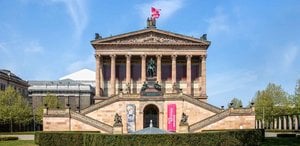
1783 · Oil On Canvas · Alte Nationalgalerie, Berlim

The face of Isabella von Broizem emerges from a void of deep, dark shadow. Light falls from the upper left, brushing against the porcelain smoothness of her skin and the delicate, translucent folds of a lace veil. She is positioned slightly off-center, her gaze directed toward the right of the frame. The composition is a bust-length portrait, quiet and still. Every line is soft, tracing the gentle contours of her…

4
Henriette Herz (1792) by Anton Graff

Henriette Herz

1792 · Oil On Canvas · Alte Nationalgalerie, Berlim

The gaze of Henriette Herz meets the viewer through this 1792 portrait by Anton Graff. She sits poised, a woman of twenty-seven years, captured in a moment of quiet presence. Her lineage traces back to a family that immigrated from Portugal, bringing a unique history to the social circles of Berlin. There is a sense of a life lived through intellect and conversation, a spirit that once anchored a famous…

5
Portrait of Johanna Henriette Louise Countess of Bestucheff-Rumin, née von Carlowitz (1717-1787) (?) (1774) by Anton Graff

Portrait of Johanna Henriette Louise Countess of Bestucheff-Rumin, née von Carlowitz (1717-1787) (?)

1774 · Oil On Canvas · Städel Museum, Frankfurt

This 1774 oil on canvas presents a bust-length portrait of a noblewoman, positioned in a three-quarter profile facing toward the left. The subject is depicted with a luminous complexion, her features defined by soft shadows created by directional lighting originating from the upper left. She wears a voluminous, high-piled wig in a light grey or powdered tone, which is adorned with a translucent, gauzy fabric draped over her shoulder. Her…

8
Self-portrait with green eyeshade (1813) by Anton Graff

Self-portrait with green eyeshade

1813 · Oil On Canvas · Alte Nationalgalerie, Berlim

The oil-on-canvas work titled Self-portrait with green eyeshade was executed by the Swiss-German portrait artist Anton Graff. Created in 1813, the painting captures the artist in his final year. It presents an elderly man, the artist himself, looking out from the frame. The subject's gaze meets the observer with a quiet, steady presence.

10
Portrait of Johann Georg Sulzer (1777) by Anton Graff

Portrait of Johann Georg Sulzer

1777 · Oil On Canvas · Alte Nationalgalerie, Berlim

The Portrait of Johann Georg Sulzer is an oil on canvas work by the Swiss artist Anton Graff. Created about 1777, the painting captures the philosopher and art historian Johann Georg Sulzer. The subject sits within a quiet, somber space, his presence defined by the steady weight of thought.

Keep exploring Anton Graff: 11 to 79

11Self-portrait (1780) by Anton GraffSelf-portrait1780 · Bavarian State Painting Collections 12Portrait of a Man (1798) by Anton GraffPortrait of a Man1798 · Museu Hermitage 13Self-portrait of Anton Graff (1736-1813) (1805) by Anton GraffSelf-portrait of Anton Graff (1736-1813)1805 · Staatliche KunstSammlungen Dresden 14Provost Johann Joachim Spalding in a House-Coat (1800) by Anton GraffProvost Johann Joachim Spalding in a House-Coat1800 · Alte Nationalgalerie 15Selbstporträt (1804) by Anton GraffSelbstporträt1804 · Alte Nationalgalerie 16Portrait of a lady (1761) by Anton GraffPortrait of a lady1761 17portrait of mother and child (countess Senfft von Pilsach and son) (1761) by Anton Graffportrait of mother and child (countess Senfft von Pilsach and son)1761 18Portr. of the Queen Friederike Luise of Prussia (1761) by Anton GraffPortr. of the Queen Friederike Luise of Prussia1761 19Self-Portrait (1764) by Anton GraffSelf-Portrait1764 · New York Historical Society 20Henriette von Carlowitz, 1772 (1772) by Anton GraffHenriette von Carlowitz, 17721772 · Alte Nationalgalerie 21Juliane Wilhelmine Bause (1785) by Anton GraffJuliane Wilhelmine Bause1785 · Alte Nationalgalerie 22Portrait of Georg Sachs (1768) by Anton GraffPortrait of Georg Sachs1768 · Museu Nacional de Varsóvia 23Lieutenant-General Sir Robert Murray Keith (1730-1795) (1770) by Anton GraffLieutenant-General Sir Robert Murray Keith (1730-1795)1770 · Royal Collection 24Portrait of Johann Nepomuk von Schaffgotsch in a bathrobe. (1770) by Anton GraffPortrait of Johann Nepomuk von Schaffgotsch in a bathrobe.1770 · Museu Nacional de Varsóvia 25Gotthold Ephraim Lessing (1771) by Anton GraffGotthold Ephraim Lessing1771 26The saxon Electoral Councilor of War Johann Gottlieb von Leyser (around 1698-1780) (1770) by Anton GraffThe saxon Electoral Councilor of War Johann Gottlieb von Leyser (around 1698-1780)1770 · Gemäldegalerie 27Doctor and Philosopher Johann Georg, Ritter von Zimmermann (1772) by Anton GraffDoctor and Philosopher Johann Georg, Ritter von Zimmermann1772 · Gemäldegalerie 28The Painter Christian Wilhelm Ernst Dietrich (1712-1774) (1767) by Anton GraffThe Painter Christian Wilhelm Ernst Dietrich (1712-1774)1767 · Gemäldegalerie 29Portrait Johann Adolf Freiherr von Thielmann by Anton GraffPortrait Johann Adolf Freiherr von Thielmann 30Portrait of Georg Jakob Decker (1783) by Anton GraffPortrait of Georg Jakob Decker1783 · Alte Nationalgalerie 31Portrait of a Gentleman with Sword (1782) by Anton GraffPortrait of a Gentleman with Sword1782 32Portrait of Michał Hieronim Radziwiłł (1785) by Anton GraffPortrait of Michał Hieronim Radziwiłł1785 · Museu Nacional de Varsóvia 33Portrait of Adam Friedrich Oeser (1776) by Anton GraffPortrait of Adam Friedrich Oeser1776 · Musée des Beaux-Arts de Strasbourg 34Portrait of Count Jan Potocki. (1785) by Anton GraffPortrait of Count Jan Potocki.1785 · Castelo Real de Varsóvia 35Portrait of Stanisław Kostka Potocki (1755-1821). (1785) by Anton GraffPortrait of Stanisław Kostka Potocki (1755-1821).1785 · Museu Nacional de Varsóvia 36Self-Portrait (1776) by Anton GraffSelf-Portrait1776 · Gemäldegalerie 37Mrs. von Martens (1780) by Anton GraffMrs. von Martens1780 · Gemäldegalerie 38Portrait of Georg Friedrich von Martens (1780) by Anton GraffPortrait of Georg Friedrich von Martens1780 · Gemäldegalerie 39Self-Portrait (1781) by Anton GraffSelf-Portrait1781 · Gemäldegalerie 40Heinrich Prince of Prussia (1786) by Anton GraffHeinrich Prince of Prussia1786 · Bavarian State Painting Collections 41Friederike Elisabeth Oeser (1795) by Anton GraffFriederike Elisabeth Oeser1795 · Bavarian State Painting Collections 42Portrait of Count Christophe Urbanowski (1791) by Anton GraffPortrait of Count Christophe Urbanowski1791 43Portrait of a Gentleman (Herr Schachmann) (1786) by Anton GraffPortrait of a Gentleman (Herr Schachmann)1786 44Portrait of Mr. B.G. (Gottlob Benno) von Heynitz (1790) by Anton GraffPortrait of Mr. B.G. (Gottlob Benno) von Heynitz1790 45Portrait of a Woman (1790) by Anton GraffPortrait of a Woman1790 · National Museum of Art, Architecture and Design 46Self-portrait (1787) by Anton GraffSelf-portrait1787 · Gemäldegalerie 47Portrait of Dorothea Schlegel, eldest daughter of the philosopher Moses Mendelsson (1790) by Anton GraffPortrait of Dorothea Schlegel, eldest daughter of the philosopher Moses Mendelsson1790 · Alte Nationalgalerie 48Prince Heinrich of Prussia (1726-1802) (1786) by Anton GraffPrince Heinrich of Prussia (1726-1802)1786 · Royal Collection 49Friedrich Ludolf Hansen (1738-1803) (1795) by Anton GraffFriedrich Ludolf Hansen (1738-1803)1795 · Gemäldegalerie 50Heinrich XIV. Reuss Elder Line (Reuß ältere Linie) (1749-1799) (1789) by Anton GraffHeinrich XIV. Reuss Elder Line (Reuß ältere Linie) (1749-1799)1789 · Gemäldegalerie 51Elizabeth Sophia Augusta Graff, born Sulzer (1753-1812) and her Daughter Caroline Susanne (1781-1828) (1790) by Anton GraffElizabeth Sophia Augusta Graff, born Sulzer (1753-1812) and her Daughter Caroline Susanne (1781-1828)1790 · Gemäldegalerie 52Daniel Chodowiecki (1800) by Anton GraffDaniel Chodowiecki1800 · Bavarian State Painting Collections 53Berlin Consistory Council Johann Joachim Spalding (1714-1804) (1800) by Anton GraffBerlin Consistory Council Johann Joachim Spalding (1714-1804)1800 · Gemäldegalerie 54Portrait of Freiherr von Lindemann-Just (1810) by Anton GraffPortrait of Freiherr von Lindemann-Just1810 · National Museum of Art, Architecture and Design 55Portrait of the Landscape Painter Carl Anton Graff (1809) by Anton GraffPortrait of the Landscape Painter Carl Anton Graff1809 · National Museum of Art, Architecture and Design 56Self-portrait (1808) by Anton GraffSelf-portrait1808 57Portrait and History Painter Carl Friedrich Demiani (1768-1828) (1810) by Anton GraffPortrait and History Painter Carl Friedrich Demiani (1768-1828)1810 · Gemäldegalerie 58Portrait of George Leopold de Gogul (1796) by Anton GraffPortrait of George Leopold de Gogul1796 · Museu Hermitage 59Heinrich XIII, Graf Reuss (1775) by Anton GraffHeinrich XIII, Graf Reuss1775 · Neue Pinakothek 60Portrait of the Painter Daniel Nikolaus Chodowiecki (1785) by Anton GraffPortrait of the Painter Daniel Nikolaus Chodowiecki1785 · Staatliche Museen zu Berlin 61Portrait of Saxon Duke Karl August with his wife Sophie and their daughter by Anton GraffPortrait of Saxon Duke Karl August with his wife Sophie and their daughterMuseu Nacional de Varsóvia 62Portrait of Frederick Augustus, Duke of Warsaw by Anton GraffPortrait of Frederick Augustus, Duke of WarsawMuseu Nacional de Varsóvia 63Self-Portrait at the Age of 58 (1794) by Anton GraffSelf-Portrait at the Age of 581794 · Gemäldegalerie 64Portrait of the three daughters of Julius Johann von Vieth und Gossenau (1773) by Anton GraffPortrait of the three daughters of Julius Johann von Vieth und Gossenau1773 · Staatliche Kunsthalle Karlsruhe 65Portrait of Conrad Ekhof, theatre director and historian of drama by Anton GraffPortrait of Conrad Ekhof, theatre director and historian of dramaAlte Nationalgalerie 66Actor Christian Wilhelm Opitz by Anton GraffActor Christian Wilhelm OpitzFinnish National Gallery 67Portrait of a Gentleman by Anton GraffPortrait of a Gentleman 68Adrian divov by Anton GraffAdrian divov 69Portrait of Elisabeth Sulzer by Anton GraffPortrait of Elisabeth Sulzer 70Portrait of Jakob Foss by Anton GraffPortrait of Jakob FossArt Museum Riga Bourse 71Портрет князя Александра Михайловича Белозельского-Белозерского (1790) by Anton GraffПортрет князя Александра Михайловича Белозельского-Белозерского1790 · Georgia Museum of Art 72Writer julie clodius by Anton GraffWriter julie clodius 73Bildnis henriette herz by Anton GraffBildnis henriette herz 74Prince Henry of Prussia by Anton GraffPrince Henry of Prussia 75The Elbe at blowing joke above Dresden in the morning by Anton GraffThe Elbe at blowing joke above Dresden in the morningGemäldegalerie Alte Meister 76Queen Elisabeth Christine in Widow's Weeds by Anton GraffQueen Elisabeth Christine in Widow's WeedsOpera House 77Portrait of Anna Dorothea von Medem, duchess of Courland. by Anton GraffPortrait of Anna Dorothea von Medem, duchess of Courland.Museu Nacional de Varsóvia 78Portrait Peter August von Schoenberg anagoria by Anton GraffPortrait Peter August von Schoenberg anagoria 79Portrait of Princess Maria Carolina of Bourbon with Diadem (1792) by Anton GraffPortrait of Princess Maria Carolina of Bourbon with Diadem1792 · Galleria Nazionale

Anton Graff's paintings, period by period

What Anton Graff painted most

The four subjects that come up most often in these pieces, each with its best-known example.

Where you can see Anton Graff's paintings

The 8 museums that hold the most of the paintings on this page.

Museum City Works by Anton Graff Paintings from this list
Gemäldegalerie, BerlimGemäldegalerie Berlim 13 The saxon Electoral Councilor of War Johann Gottlieb von Leyser (around 1698-1780), Doctor and Philosopher Johann Georg, Ritter von Zimmermann, The Painter Christian Wilhelm Ernst Dietrich (1712-1774)
Alte Nationalgalerie, BerlimAlte Nationalgalerie Berlim 12 Porträt der Isabella von Broizem, Henriette Herz, Self-portrait with green eyeshade
Museu Nacional de Varsóvia, VarsóviaMuseu Nacional de Varsóvia Varsóvia 8 Portrait of Johann Nepomuk von Schaffgotsch in military uniform., Portrait of Georg Sachs, Portrait of Johann Nepomuk von Schaffgotsch in a bathrobe.
Bavarian State Painting Collections, MuniqueBavarian State Painting Collections Munique 4 Self-portrait, Heinrich Prince of Prussia, Friederike Elisabeth Oeser
National Museum of Art, Architecture and Design, OsloNational Museum of Art, Architecture and Design Oslo 3 Portrait of a Woman, Portrait of Freiherr von Lindemann-Just, Portrait of the Landscape Painter Carl Anton Graff
Staatliche Kunsthalle Karlsruhe, KarlsruheStaatliche Kunsthalle Karlsruhe Karlsruhe 2 Portrait of Friedrich Gottlob Benno von Heynitz, Portrait of the three daughters of Julius Johann von Vieth und Gossenau
Staatliche KunstSammlungen Dresden, DresdenStaatliche KunstSammlungen Dresden Dresden 2 Youthful self-portrait, Self-portrait of Anton Graff (1736-1813)
Museu Hermitage, São PetersburgoMuseu Hermitage São Petersburgo 2 Portrait of a Man, Portrait of George Leopold de Gogul

One famous Anton Graff piece for every decade

Works per decade

Pick a decade to see its standout piece.

Anton Graff paintings: what people want to know

What painting is Anton Graff best known for?See the answer

Top of the list is Friedrich der Große (1786), Palácio de Sanssouci, Potsdam. Right behind it: Portrait of Johann Nepomuk von Schaffgotsch in military uniform. (1770) and Porträt der Isabella von Broizem (1783).

How old was Anton Graff at the time of Friedrich der Große?See the answer

50 years old. Anton Graff was born in 1736, and Friedrich der Große dates from 1786.

Which 10 Anton Graff paintings are the most famous?See the answer

Friedrich der Große, Portrait of Johann Nepomuk von Schaffgotsch in military uniform., Porträt der Isabella von Broizem, Henriette Herz, Portrait of Johanna Henriette Louise Countess of Bestucheff-Rumin, née von Carlowitz (1717-1787) (?), Portrait of Friedrich Gottlob Benno von Heynitz, Youthful self-portrait, Self-portrait with green eyeshade, The Poetess Elisa von der Recke and Portrait of Johann Georg Sulzer. You'll find the year and the museum of each in the list above.

How many Anton Graff works are there?See the answer

We have 79 works by Anton Graff in our catalogue, dated 1761 to 1813.

Which museums have Anton Graff's best-known paintings?See the answer

You'll find most of them in Gemäldegalerie (Berlim), Alte Nationalgalerie (Berlim) and Museu Nacional de Varsóvia (Varsóvia). The museum list above has the full breakdown.

When were Anton Graff's most famous pieces painted?See the answer

In 1780s, more than any other time: 18 of the 79 pieces on this page date from then, Friedrich der Große among them.

What are the oldest and newest famous paintings by Anton Graff?See the answer

The earliest piece here is Portrait of a lady (1761); the most recent is Self-portrait with green eyeshade (1813).

What did Anton Graff paint most?See the answer

Man (13), Portrait (13) and Woman (7), out of the 79 pieces on this page.

What did Anton Graff usually paint with?See the answer

Oil On Canvas, used in 22 of the 79 pieces on this page.

Which art movement is Anton Graff linked to?See the answer

Neoclassicism, as you can see in the pieces on this page.

What can you see by Anton Graff at the Gemäldegalerie?See the answer

You can see 13 of the pieces on this page at the Gemäldegalerie, Berlim, including The saxon Electoral Councilor of War Johann Gottlieb von Leyser (around 1698-1780), Doctor and Philosopher Johann Georg, Ritter von Zimmermann and The Painter Christian Wilhelm Ernst Dietrich (1712-1774).

Can I order a Anton Graff reproduction for my home?See the answer

Yes. Every painting on this page is available as a hand-painted oil reproduction or a print, in the size that suits you. Just open the painting's page to order.

Meet Anton Graff

Uma Vida Gravada em Semelhanças: O Mundo de Anton Graff

Anton Graff, nascido em Winterthur, na Suíça, em 1736, emergiu como um dos retratistas mais celebrados de sua era — um período definido pelo fervor intelectual do Iluminismo e pela estética emergente do Neoclassicismo. Sua história não é meramente uma crônica de habilidade artística, mas uma jornada fascinante pelas paisagens sociais e culturais da Europa dos séculos XVIII e início do XIX, intimamente conectada com algumas das mentes mais brilhantes da época. Os primórdios de Graff foram humildes; ele recebeu seu treinamento inicial em Winterthur sob a tutela de Johann Ulrich Schellenberg, antes de aventurar-se em Augsburg, onde seu talento rapidamente superou o nível de conforto da guilda local. Forçado a partir devido às ansiedades de contemporâenes menos dotados, encontrou mentoria com Johann Jakob Haid e, mais tarde, com Leonhard Schneider em Ansbach, aperfeiçoando suas técnicas enquanto absorvia diversas influências artísticas. Essas experiências precoces instilaram nele não apenas proficiência técnica, mas também uma resiliência que caracterizaria sua carreira. Viagens frequentes a Munique permitiram-lhe estudar obras primas, lançando as bases para seu estilo distinto — uma mistura de detalhe meticuloso, percepção psicológica e uma sensibilidade neoclássica em ascensão.

De Pintor da Corte de Dresden a Cronista de uma Era

O momento crucial na carreira de Graff chegou com sua nomeação como pintor da corte do eleitorado saxão em Dresden, em 1766. Esta posição proporcionou-lhe não apenas segurança financeira, mas também o acesso a um vibrante círculo intelectual e um fluxo constante de modelos proeminentes. Ele rapidamente se tornou o retratista de escolha para as figuras de liderança do Iluminismo alemão, imortalizando indivíduos como Friedrich Schiller, Christoph Willibald Gluck, Gotthold Ephraim Lessing, Moses Mendelssohn e Johann Gottfried Herder em telas. Estes não eram meramente semelhanças; Graff possuía uma habilidade notável de capturar a vida interior de seus sujeitos — seu intelecto, suas paixões e suas vulnerabilidades. Ele não estava apenas pintando rostos; ele estava documentando uma revolução intelectual. Seus retratos tornaram-se encarnações visuais das correntes filosóficas e artísticas da época. O convite de Christian Ludwig von Hagedorn, diretor da Academia de Artes de Dresden, inicialmente recebido com a própria insegurança de Graff, diz muito sobre sua humildade apesar do talento inegável. Foi um autorretrato que, em última análise, garantiu sua posição, demonstrando uma confiança e habilidade que ressoaram profundamente na corte.

Um Mestre da Luz, da Sombra e da Nuance Social

A técnica artística de Graff era caracterizada por um domínio magistral da luz e da sombra, influenciada significativamente pela obra de Ján Kupecký, cujas pinturas ele estudou intensamente. Ele empregava essa habilidade para atrair a atenção aos rostos de seus modelos, imbuindo-os de profundidade e complexidade psicológica. No entanto, Graff não era alheio às convenções sociais de seu tempo; enquanto focava no rosto para os sujeitos masculinos, ele frequentemente destacava sutilmente o decote das modelos femininas — um gesto em conformidade com as expectativas estéticas vigentes. Sua atenção aos detalhes estendia-se além da forma humana, abrangendo as texturas de tecidos e drapeados com uma precisão que remete aos pintores de corte franceses, como Hyacinthe Rigaud. Inicialmente favorecendo fundos monocromáticos, Graff mais tarde abraçou cenários ao ar livre, refletindo a crescente tendência no retrato inglês. O preço de seus retratos refletia não apenas seu tempo, mas também a complexidade do traje do modelo — um testemunho da importância atribuída ao status social e à riqueza material durante aquele período. Ele era um observador aguçado da natureza humana, sendo famoso por notar a dificuldade de Schiller em permanecer imóvel durante uma sessão — uma anedota encantadora que revela tanto sua paciência quanto seu olhar perceptivo.

Legado e Significância Histórica

A influência de Anton Graff estendeu-se para além do reino do retrato. Como professor na Academia de Artes de Dresden, ele nutriu os talentos de futuras gerações de artistas, incluindo Emma Körner, Philipp Otto Runge e Karl Ludwig Kaaz. Sua obra representa uma ponte crucial entre os estilos Rococó e Neoclássico, incorporando tanto a elegância e ornamentação do primeiro quanto a clareza e o decoro do segundo. Ele pintou quase 1.000 retratos durante sua vida, criando um registro visual inestimável do Iluminismo alemão e de suas figuras principais. Talvez sua obra mais celebrada seja o retrato de Frederico, o Grande, uma obra-prima criada sem que o rei jamais tivesse posado diretamente para ele. Graff observou astutamente o monarca durante desfiles militares, capturando sua presença imponente e seu olhar de aço com uma precisação notável. Esta pintura, abrigada no Schloss Charlottenburg, permanece como uma imagem icônica do poder e da liderança prussiana. O legado de Anton Graff perdura não apenas através de seus retratos deslumbrantes, mas também como um testemunho do poder da arte em capturar o espírito de uma era. Ele foi mais do que apenas um pintor; foi um cronista, um comentador social e um mestre da representação humana cujo trabalho continua a ressoar com o público até hoje.

Uma Impressão Duradoura

Apesar de receber ofertas lucrativas de outras academias, incluindo uma em Berlim, Graff permaneceu comprometido com Dresden, consolidando sua posição como o principal pintor de retratos na Alemanha durante o final do século XVIII e início do XIX. Sua clientela estendeu-se além da nobreza alemã para incluir aristocratas russos, poloneses e bálticos, cimentando ainda mais sua reputação internacional. Ele era o favorito entre poetas, músicos, diplomatas e estudiosos — indivíduos que apreciavam sua capacidade de capturar sua essência na tela. Os retratos de Graff oferecem uma janela única para um período crucial da história europeia, proporcionando percepções inestimáveis sobre as vidas, os pensamentos e as aspirações daqueles que moldaram o Iluminismo e lançaram as bases para a era Romântica. Sua obra permanece como um tributo duradouro ao poder do retrato de transcender a mera representação e tornar-se uma expressão profunda da experiência humana.

All 79 works by Anton Graff →