Portrait of Alexander Roslin

Meet the 86 Most Famous Paintings by Alexander Roslin

Updated Outubro 2026 · ranked by our popularity score (searches, visits and orders for each work) · 86 works by Alexander Roslin in our catalogue

In short

If you know one Alexander Roslin painting, it's probably The Lady with the Veil (also known as The Artist's Wife) (1768), which hangs in the Nationalmuseum, Estocolmo. Gustav III of Sweden (1777) and Jean-François Marmontel (1767) round out the three pieces people recognise right away. Our catalogue has 86 works by Alexander Roslin. Below are the 86 people know best, each with its year, where to find it and what makes it special.

1718 – 1793, Malmö Rococo Most works: Nationalmuseum

Start here: the top 10 Alexander Roslin paintings

1
The Lady with the Veil (also known as The Artist's Wife) (1768) by Alexander Roslin

The Lady with the Veil (also known as The Artist's Wife)

1768 · Oil · Nationalmuseum, Estocolmo

Alexander Roslin’s “The Lady with the Veil,” painted in 1768, is more than just a portrait; it's a carefully constructed tableau of aristocratic life and subtle emotional depth. This captivating work, now residing within the Nationalmuseum in Stockholm, offers a window into the refined sensibilities of 18th-century Sweden – a period defined by intricate social rituals, burgeoning artistic expression, and a fascination with beauty and concealment. Roslin, a master of…

2
Gustav III of Sweden (1777) by Alexander Roslin

Gustav III of Sweden

1777 · Oil On Canvas · Nationalmuseum, Estocolmo

To gaze upon this portrait of Gustav III of Sweden is to step directly into the gilded salons and powerful courts of the late eighteenth century. Alexander Roslin, master chronicler of aristocratic life, has captured not merely a likeness, but an embodiment of royal authority. The subject is presented in magnificent regalia—a crown signifying divine right, draped robes speaking of immense wealth, and a formal cape lending him an almost…

3
Jean-François Marmontel (1767) by Alexander Roslin

Jean-François Marmontel

1767 · Oil On Canvas · Museu do Louvre, Paris

Alexander Roslin's 1767 portrait of Jean-François Marmontel stands as a quintessential example of Rococo elegance and psychological subtlety—a testament to the artist’s mastery of capturing not just likeness but also inner character. Executed in oil on canvas measuring 64 x 54 cm, this artwork transcends mere representation; it invites contemplation about intellectuality, social standing, and the contemplative spirit.

4
Fredrik Adolf (1750-1803), hertig av Östergötland (1775) by Alexander Roslin

Fredrik Adolf (1750-1803), hertig av Östergötland

1775 · Oil · Nationalmuseum, Estocolmo

The young nobleman sits poised, his body turned slightly to the right while his gaze meets the viewer with a calm, steady presence. He is draped in a heavy red velvet coat that catches the light, revealing the deep, soft pile of the fabric. A shimmering cerulean blue silk sash cuts across his torso, providing a cool contrast to the warmth of the crimson velvet. Beneath the coat, a white…

5
Portrait of Catherine II (1776) by Alexander Roslin

Portrait of Catherine II

1776 · Acrylic · Museu Hermitage, São Petersburgo

Portrait of Catherine II by Alexander Roslin – A Window Into Imperial Grace The painting “Portrait of Catherine II” by Alexander Roslin stands as an emblem of the Baroque era’s fascination with grandeur and psychological depth, capturing the essence of Empress Catherine II—the Great—who reigned over Russia from 1762 until her death in 1793. Executed in 1776-77 during Roslin's Parisian zenith, this monumental canvas transcends mere likeness; it’s a masterful…

6
Hedvig Elisabet Charlotta (1759-1818), Princess of Sweden, Duchess of Södermanland, later Queen of Sweden and Norway (1775) by Alexander Roslin

Hedvig Elisabet Charlotta (1759-1818), Princess of Sweden, Duchess of Södermanland, later Queen of Sweden and Norway

1775 · Oil On Canvas · Nationalmuseum, Estocolmo

A three-quarter length portrait captures a young Swedish princess seated with a poised, quiet dignity. The composition relies on a balanced arrangement, placing the subject slightly off-center to create a sense of natural movement within the formal setting. She is draped in a heavy silk gown of cream and champagne, layered with intricate lace and trimmed with soft ermine fur. The fabric's sheen suggests a tactile richness, rendered through meticulous…

7
Lovisa Ulrika (1720-1782), Dowager Queen of Sweden (1775) by Alexander Roslin

Lovisa Ulrika (1720-1782), Dowager Queen of Sweden

1775 · Oil On Canvas · Nationalmuseum, Estocolmo

In this 1775 portrait, we encounter Lovisa Ulrika, the Dowager Queen of Sweden, captured in a moment of quiet, formidable dignity. The composition is a three-quarter length study, positioning her slightly off-center against a dark, muted background. This choice of backdrop creates a sense of depth, ensuring that the eye remains fixed upon the sitter. There is a palpable weight to her presence, an aura of immense wealth and royal…

10
Portrait of Count Zakhar Chernyshev (1776) by Alexander Roslin

Portrait of Count Zakhar Chernyshev

1776 · Oil On Canvas · Museu Hermitage, São Petersburgo

In this 1776 oil portrait, Alexander Roslin presents the Portrait of Count Zakhar Chernyshev. The work captures Zakhar Grigoryevich Chernyshev, a man whose life was deeply embedded in the structures of the Russian Empire. Through Roslin's brush, we encounter a figure of significant social standing, presented with the quiet dignity expected of his station.

More Alexander Roslin favourites, 11 to 86

11Portrait of a Cavalier (1766) by Alexander RoslinPortrait of a Cavalier1766 · Nationalmuseum 12Sofia Albertina, Princess of Sweden (1775) by Alexander RoslinSofia Albertina, Princess of Sweden1775 · Nationalmuseum 13Portrait of Grand Duchess Natalia Alexeievna (Wilhelmina Louisa of Hesse-Darmstadt) (1776) by Alexander RoslinPortrait of Grand Duchess Natalia Alexeievna (Wilhelmina Louisa of Hesse-Darmstadt)1776 · Museu Hermitage 14Portrait of Grand Prince Paul Petrovich (1777) by Alexander RoslinPortrait of Grand Prince Paul Petrovich1777 · Museu Hermitage 15Count Andrey Kyrillovich Razumovsky (1776) by Alexander RoslinCount Andrey Kyrillovich Razumovsky1776 · National Gallery of Victoria 16Jean Baptiste Eugene Du Mangin (1789) by Alexander RoslinJean Baptiste Eugene Du Mangin1789 · Finnish National Gallery 17Portrait of Ivan Ivanovich Betskoi Wearing a Dressing Gown (copy) (1792) by Alexander RoslinPortrait of Ivan Ivanovich Betskoi Wearing a Dressing Gown (copy)1792 · Museu Hermitage 18Sofia Magdalena, Queen of Sweden (1774) by Alexander RoslinSofia Magdalena, Queen of Sweden1774 · Nationalmuseum 19Portrait of Count de Caylus. (1752) by Alexander RoslinPortrait of Count de Caylus.1752 · Museu Nacional de Varsóvia 20Christoffer Bogislaus Zibet (1784) by Alexander RoslinChristoffer Bogislaus Zibet1784 · Nationalmuseum 21Portrait of a Man Wearing a Red Caftan (1764) by Alexander RoslinPortrait of a Man Wearing a Red Caftan1764 · Museu Hermitage 22The French Painter Claude Joseph Vernet (1767) by Alexander RoslinThe French Painter Claude Joseph Vernet1767 · Nationalmuseum 23Portrait of Marie Amélie Joséphine, Archduchess of Austria, Infanta, Duchess of Parma (1750) by Alexander RoslinPortrait of Marie Amélie Joséphine, Archduchess of Austria, Infanta, Duchess of Parma1750 24Portrait of César-Gabriel de Choiseul, Duke of Praslin (1712-1785), (1750) by Alexander RoslinPortrait of César-Gabriel de Choiseul, Duke of Praslin (1712-1785),1750 25Portrait of Katarzyna Mniszech née Zamoyska (1752) by Alexander RoslinPortrait of Katarzyna Mniszech née Zamoyska1752 · Castelo Real de Varsóvia 26Portrait of Katarzyna Mniszech (1753) by Alexander RoslinPortrait of Katarzyna Mniszech1753 27Hyacinthe Collin de Vermont, painter (1693-1761) (1753) by Alexander RoslinHyacinthe Collin de Vermont, painter (1693-1761)1753 · Opera House 28Portrait of Francoise-Marguerite de Sevigne (1753) by Alexander RoslinPortrait of Francoise-Marguerite de Sevigne1753 29Portrait of Étienne Jeaurat (1699-1789), French painter (1753) by Alexander RoslinPortrait of Étienne Jeaurat (1699-1789), French painter1753 30Flora (1750) by Alexander RoslinFlora1750 · Musée des Beaux-Arts de Bordeaux 31Unknown Lady, possibly Madame Deshanges (1753) by Alexander RoslinUnknown Lady, possibly Madame Deshanges1753 · Nationalmuseum 32Flore de l'Opéra (1755) by Alexander RoslinFlore de l'Opéra1755 · Nationalmuseum 33Madame Joseph-Marie Vien, née Reboul (1757) by Alexander RoslinMadame Joseph-Marie Vien, née Reboul1757 · Opera House 34François Boucher (1703-1770) (1760) by Alexander RoslinFrançois Boucher (1703-1770)1760 · Opera House 35Portrait of Abel-François Poisson, marquis de Marigny (1764) by Alexander RoslinPortrait of Abel-François Poisson, marquis de Marigny1764 · Château de Versailles 36Ulrik Scheffer (1716 – 99) (1763) by Alexander RoslinUlrik Scheffer (1716 – 99)1763 37Portrait of Prince Vladimir Golitsyn Borisovtj (1762) by Alexander RoslinPortrait of Prince Vladimir Golitsyn Borisovtj1762 38Portrait of François Fagel (1740-1773) (1762) by Alexander RoslinPortrait of François Fagel (1740-1773)1762 · Rijksmuseum Twenthe 39Baron Thure Leonard Klinckowström (1758) by Alexander RoslinBaron Thure Leonard Klinckowström1758 · Finnish National Gallery 40Anastasia Ivanovna, Countess of Hesse-Homburg, Princess Trubetskaya (1757) by Alexander RoslinAnastasia Ivanovna, Countess of Hesse-Homburg, Princess Trubetskaya1757 · National Gallery of Victoria 41Baron de Neubourg-Cromière (1756) by Alexander RoslinBaron de Neubourg-Cromière1756 · Nationalmuseum 42Jean Eric Rehn (1717-1793), architect, Surveyor of the Court (1756) by Alexander RoslinJean Eric Rehn (1717-1793), architect, Surveyor of the Court1756 · National Portrait Gallery of Sweden 43Marie Charlotte Madeleine Boutin de La Colombière, Vicomtesse de Montboissier (1729-1782) (1759) by Alexander RoslinMarie Charlotte Madeleine Boutin de La Colombière, Vicomtesse de Montboissier (1729-1782)1759 · Nationalmuseum 44Portrait of the Artist's Wife Marie Suzanne, née Giroust (1763) by Alexander RoslinPortrait of the Artist's Wife Marie Suzanne, née Giroust1763 · Nationalmuseum 45The Dauphin Louis of France (1729-1765), son of Louis XV (1765) by Alexander RoslinThe Dauphin Louis of France (1729-1765), son of Louis XV1765 · Château de Versailles 46Isabella, Countess of Hertford (1765) by Alexander RoslinIsabella, Countess of Hertford1765 · The Hunterian Museum and Art Gallery 47Portrait of Charles-Marin de La Haye des Fossés (1773) by Alexander RoslinPortrait of Charles-Marin de La Haye des Fossés1773 · Musée Cognacq-Jay 48Portrait of Marie-Françoise Julie Constance Filleul, marquise de Marigny (1767) by Alexander RoslinPortrait of Marie-Françoise Julie Constance Filleul, marquise de Marigny1767 49Portrait of Gustaf Adolf Sparre (1769) by Alexander RoslinPortrait of Gustaf Adolf Sparre1769 50Portrait of Mme Antoinette-Louise Issard-Lacour, married to Ch. A. Bourlet de Vauxelles (1770) by Alexander RoslinPortrait of Mme Antoinette-Louise Issard-Lacour, married to Ch. A. Bourlet de Vauxelles1770 · Statens Museum For Kunst 51Duke Fredrik Adolf, Gustav III:s Brother (1770) by Alexander RoslinDuke Fredrik Adolf, Gustav III:s Brother1770 · National Portrait Gallery of Sweden 52Portrait of Carl Fredrik Scheffer, 1715-1786 (1775) by Alexander RoslinPortrait of Carl Fredrik Scheffer, 1715-17861775 · National Portrait Gallery of Sweden 53Portrait of Carl Linnaeus, 1707-1778 (1775) by Alexander RoslinPortrait of Carl Linnaeus, 1707-17781775 · National Portrait Gallery of Sweden 54The Duke of Chartres, later Duke of Orléans (1770) by Alexander RoslinThe Duke of Chartres, later Duke of Orléans1770 · Nationalmuseum 55Baron Carl Adam Wachtmeister (1767) by Alexander RoslinBaron Carl Adam Wachtmeister1767 · Nationalmuseum 56Marie Suzanne Roslin, born Giroust, Painter's wife and pastellist (1770) by Alexander RoslinMarie Suzanne Roslin, born Giroust, Painter's wife and pastellist1770 · Nationalmuseum 57Young Girl Preparing to Adorn the Statue of Cupid with a Garland of Flowers (1783) by Alexander RoslinYoung Girl Preparing to Adorn the Statue of Cupid with a Garland of Flowers1783 58Anne Jacqueline Sophie de Malartie (1781) by Alexander RoslinAnne Jacqueline Sophie de Malartie1781 · National Museum of Art, Architecture and Design 59Francois Puissant de la Villeguerit (1781) by Alexander RoslinFrancois Puissant de la Villeguerit1781 · National Museum of Art, Architecture and Design 60Portrait of Marie Jeanne Puissant (1781) by Alexander RoslinPortrait of Marie Jeanne Puissant1781 · Rijksmuseum Twenthe 61Portrait of Marie Romain Hamelin (1781) by Alexander RoslinPortrait of Marie Romain Hamelin1781 · Rijksmuseum Twenthe 62Portrait of Princess Natalia Petrovna Golitsyn, born Tjernysjev (1777) by Alexander RoslinPortrait of Princess Natalia Petrovna Golitsyn, born Tjernysjev1777 63Portrait of a Lady (1780) by Alexander RoslinPortrait of a Lady1780 · Finnish National Gallery 64Selfportrait (1785) by Alexander RoslinSelfportrait1785 · Nationalmuseum 65Portrait of Grand Duchess Sophia, second wife of Tsarevich Paul (1777) by Alexander RoslinPortrait of Grand Duchess Sophia, second wife of Tsarevich Paul1777 66Portrait of Tsarevich Paul, later Tsar of Russia (1777) by Alexander RoslinPortrait of Tsarevich Paul, later Tsar of Russia1777 67Self-Portrait (1790) by Alexander RoslinSelf-Portrait1790 68Jacques Firmin Beauvarlet (1793) by Alexander RoslinJacques Firmin Beauvarlet1793 · Musée Boucher-de-Perthes 69Portrait of Lié-Louis Périn-Salbreux (1791) by Alexander RoslinPortrait of Lié-Louis Périn-Salbreux1791 · Musée des Beaux-Arts 70Amors tillbedjan (1787) by Alexander RoslinAmors tillbedjan1787 · Nationalmuseum 71Louis-Philippe Duc D'Orléans Saluting His Army on the Battlefield1757 (1757) by Alexander RoslinLouis-Philippe Duc D'Orléans Saluting His Army on the Battlefield17571757 · Detroit Institute of Arts 72Portrait of Grand Duchess Natalia Alexeyevna (1776) by Alexander RoslinPortrait of Grand Duchess Natalia Alexeyevna1776 · Museu Hermitage 73Countess d.Egmont Pignatelli (1763) by Alexander RoslinCountess d.Egmont Pignatelli1763 · Minneapolis Institute of Art 74Portrait of Ivan Betskoy (1777) by Alexander RoslinPortrait of Ivan Betskoy1777 · Museu Hermitage 75Portrait of Grand Duchess Maria Fiodorovna (at the age of 18) (1777) by Alexander RoslinPortrait of Grand Duchess Maria Fiodorovna (at the age of 18)1777 · Museu Hermitage 76The Dauphin, Louis de France by Alexander RoslinThe Dauphin, Louis de FranceOpera House 77Self-portrait by Alexander RoslinSelf-portraitNationalmuseum 78Title in Swedish: Damen med slöjan. Konstnärens maka Suzanne Roslin (1768) by Alexander RoslinTitle in Swedish: Damen med slöjan. Konstnärens maka Suzanne Roslin1768 · Nationalmuseum 79Bildnis eines Herrn m.geblümter Weste (Brustbild); Portrait of a gentleman by Alexander RoslinBildnis eines Herrn m.geblümter Weste (Brustbild); Portrait of a gentleman 80Title in Swedish: Zoie Ghika, moldavisk prinsessa (1777) by Alexander RoslinTitle in Swedish: Zoie Ghika, moldavisk prinsessa1777 · Nationalmuseum 81The Artist and his Wife Marie Suzanne Giroust painting the Portrait of Henrik Wilhelm Peill (1767) by Alexander RoslinThe Artist and his Wife Marie Suzanne Giroust painting the Portrait of Henrik Wilhelm Peill1767 · Nationalmuseum 82Title in Swedish: Gustav III och hans bröder (1771) by Alexander RoslinTitle in Swedish: Gustav III och hans bröder1771 · Nationalmuseum 83Title in Swedish: Brukspatron John Jennings, hans bror och svägerska (1769) by Alexander RoslinTitle in Swedish: Brukspatron John Jennings, hans bror och svägerska1769 · Nationalmuseum 84King Gustav III of Sweden (1775) by Alexander RoslinKing Gustav III of Sweden1775 · Nationalmuseum 85Double Portrait (1754) by Alexander RoslinDouble Portrait1754 · Gothenburg Museum of Art 86Unknown Lady, called Baroness de Neubourg-Cromière (1756) by Alexander RoslinUnknown Lady, called Baroness de Neubourg-Cromière1756 · Nationalmuseum

What Alexander Roslin painted most

The four subjects that come up most often in these pieces, each with its best-known example.

Where you can see Alexander Roslin's paintings

The 8 museums that hold the most of the paintings on this page.

Museum City Works by Alexander Roslin Paintings from this list
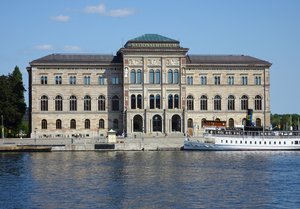
Nationalmuseum, EstocolmoNationalmuseum Estocolmo 29 The Lady with the Veil (also known as The Artist's Wife), Gustav III of Sweden, Fredrik Adolf (1750-1803), hertig av Östergötland
Museu Hermitage, São PetersburgoMuseu Hermitage São Petersburgo 9 Portrait of Catherine II, Portrait of Count Zakhar Chernyshev, Portrait of Grand Duchess Natalia Alexeievna (Wilhelmina Louisa of Hesse-Darmstadt)
Opera House, VersaillesOpera House Versailles 4 Hyacinthe Collin de Vermont, painter (1693-1761), Madame Joseph-Marie Vien, née Reboul, François Boucher (1703-1770)
National Portrait Gallery of Sweden, SträngnäsNational Portrait Gallery of Sweden Strängnäs 4 Jean Eric Rehn (1717-1793), architect, Surveyor of the Court, Duke Fredrik Adolf, Gustav III:s Brother, Portrait of Carl Fredrik Scheffer, 1715-1786
Finnish National Gallery, HelsinkiFinnish National Gallery Helsinki 3 Jean Baptiste Eugene Du Mangin, Baron Thure Leonard Klinckowström, Portrait of a Lady
Rijksmuseum Twenthe, EnschedeRijksmuseum Twenthe Enschede 3 Portrait of François Fagel (1740-1773), Portrait of Marie Jeanne Puissant, Portrait of Marie Romain Hamelin
Statens Museum For Kunst, CopenhagueStatens Museum For Kunst Copenhague 2 Portrait of Charles Auguste Bourlet de Vauxelles, Portrait of Mme Antoinette-Louise Issard-Lacour, married to Ch. A. Bourlet de Vauxelles
National Gallery of Victoria, MelbourneNational Gallery of Victoria Melbourne 2 Count Andrey Kyrillovich Razumovsky, Anastasia Ivanovna, Countess of Hesse-Homburg, Princess Trubetskaya

Alexander Roslin decade by decade: one standout piece each

Works per decade

Pick a decade to see its standout piece.

Your questions about Alexander Roslin's paintings

Which Alexander Roslin painting is the most famous?See the answer

Top of the list is The Lady with the Veil (also known as The Artist's Wife) (1768), Nationalmuseum, Estocolmo. Right behind it: Gustav III of Sweden (1777) and Jean-François Marmontel (1767).

How old was Alexander Roslin when The Lady with the Veil (also known as The Artist's Wife) was made?See the answer

50 years old. Alexander Roslin was born in 1718, and The Lady with the Veil (also known as The Artist's Wife) dates from 1768.

What are the 10 best-known Alexander Roslin paintings?See the answer

The Lady with the Veil (also known as The Artist's Wife), Gustav III of Sweden, Jean-François Marmontel, Fredrik Adolf (1750-1803), hertig av Östergötland, Portrait of Catherine II, Hedvig Elisabet Charlotta (1759-1818), Princess of Sweden, Duchess of Södermanland, later Queen of Sweden and Norway, Lovisa Ulrika (1720-1782), Dowager Queen of Sweden, César Gabriel, Comte de Choiseul, Duc de Praslin, Portrait of Charles Auguste Bourlet de Vauxelles and Portrait of Count Zakhar Chernyshev. You'll find the year and the museum of each in the list above.

How many paintings did Alexander Roslin create?See the answer

We have 86 works by Alexander Roslin in our catalogue, dated 1750 to 1793.

Where can you see Alexander Roslin's famous paintings?See the answer

You'll find most of them in Nationalmuseum (Estocolmo), Museu Hermitage (São Petersburgo) and Opera House (Versailles). The museum list above has the full breakdown.

When did Alexander Roslin paint the best-known pieces?See the answer

In 1770s, more than any other time: 28 of the 86 pieces on this page date from then, Gustav III of Sweden among them.

Which famous Alexander Roslin paintings came first and last?See the answer

The earliest piece here is Portrait of Marie Amélie Joséphine, Archduchess of Austria, Infanta, Duchess of Parma (1750); the most recent is Jacques Firmin Beauvarlet (1793).

What subjects show up most in Alexander Roslin's paintings?See the answer

Man (16), Lace (10) and Gold embroidery (8), out of the 86 pieces on this page.

What materials did Alexander Roslin paint with most?See the answer

Oil On Canvas, used in 26 of the 86 pieces on this page.

What art movement was Alexander Roslin part of?See the answer

Rococo, as you can see in the pieces on this page.

Which Alexander Roslin pieces can you see at the Nationalmuseum?See the answer

You can see 29 of the pieces on this page at the Nationalmuseum, Estocolmo, including The Lady with the Veil (also known as The Artist's Wife), Gustav III of Sweden and Fredrik Adolf (1750-1803), hertig av Östergötland.

Can I get a reproduction of a Alexander Roslin painting?See the answer

Yes. Every painting on this page is available as a hand-painted oil reproduction or a print, in the size that suits you. Just open the painting's page to order.

Getting to know Alexander Roslin

Uma Vida Dedicada ao Retrato: O Mundo de Alexander Roslin

Nascido em Malmö, Suécia, em 1718, Alexander Roslin emergiu como um dos mais celebrados retratistas do período Rococó. Inicialmente destinado a uma vida prática como desenhista naval – seu pai era médico da marinha – o talento artístico inato do jovem Alexander rapidamente o direcionou para outro caminho. Seu treinamento inicial com o Capitão da Marinha Lars Ehrenbill forneceu habilidades fundamentais, mas foi seu subsequente aprendizado com Georg Engelhard Schröder em Estocolmo que realmente acendeu sua paixão e moldou suas sensibilidades estéticas. Schröder expôs Roslin aos grandes mestres do retrato, notavelmente Hyacinthe Rigaud e Nicolas de Largillière, cuja influência se entrelaçaria sutilmente no tecido de seu próprio estilo distinto. Esses anos formativos instilaram não apenas proficiência técnica, mas também uma profunda apreciação pela captura do caráter e da posição social dentro das convenções da representação aristocrática.

Das Origens Suecas ao Triunfo em Paris

A jornada artística de Roslin não se limitou às fronteiras nacionais. Após estabelecer-se na Escânia com retratos da nobreza local – obras que, embora habilidosas, refletiam inicialmente uma certa rigidez convencional herdada de Schröder – ele embarcou em um período de viagem e exploração. Um convite para trabalhar para Frederick, Margrave de Brandenburg-Kulmbach, em Bayreuth o levou à Itália, onde mergulhou no estudo dos mestres do Renascimento e do Barroco. Essa incursão italiana ampliou seus horizontes artísticos e aprimorou sua capacidade de retratar famílias proeminentes, incluindo aquelas conectadas ao Duque de Parma. No entanto, foi Paris que finalmente se tornou o lar adotivo de Roslin e o epicentro de seu sucesso. Estabelecendo-se ali em 1752, ele ascendeu rapidamente no mundo da arte parisiense, ganhando reconhecimento por um estilo que combinava magistralmente a elegância clássica com as cores vibrantes e a leveza característica do Rococó. Sua eleição para a Academia Real de Pintura consolidou sua posição como um retratista líder, procurado pela aristocracia e pelos círculos da elite social. Uma *Grand Tour* europeia se seguiu entre 1774-1778, levando-o de volta a Estocolmo, Viena e São Petersburgo, expandindo sua rede de mecenas por todo o continente. Mesmo ao retornar a Paris em 1778, uma sensação de declínio começou a se insinuar em sua saúde, coincidindo com a mudança do cenário político que logo diminuiria a demanda por retratos aristocráticos luxuosos durante a Revolução Francesa.

Um Mestre da Textura e do *Insight* Psicológico

A destreza artística de Roslin não residia apenas em sua capacidade de reproduzir fielmente as semelhanças, mas também em sua habilidade excepcional de renderizar texturas e materiais com uma beleza impressionante. Ele era renomado por suas representações de tecidos suntuosos – sedas, veludos, cetins – joias brilhantes e rendas delicadas, cada detalhe meticulosamente retratado para transmitir uma sensação de luxo e requinte. No entanto, além da mera virtuosidade técnica, Roslin possuía um notável dom para capturar o caráter interior de seus modelos. Seus retratos não eram simplesmente representações da aparência externa; eram tentativas de revelar a personalidade, a posição social e até mesmo as emoções fugazes. Essa profundidade psicológica, combinada com sua maestria técnica, o diferenciava de muitos de seus contemporâneos. Ele não estava apenas pintando roupas e rostos; ele estava criando narrativas sobre os indivíduos que os habitavam. Seu estilo é frequentemente descrito como um delicado equilíbrio entre a formalidade do Classicismo e a leveza do Rococó, criando retratos que são ao mesmo tempo dignos e envolventes. A influência de Rigaud e Largillière é visível em suas composições e poses, mas Roslin infundiu essas tradições com sua própria sensibilidade única, desenvolvendo uma abordagem distinta à cor e à pincelada. Trabalhos posteriores mostram uma mudança para o tratamento da cor holandês, demonstrando uma visão artística em evolução mesmo quando sua saúde declinava.

Legado e Apelo Duradouro

O legado de Alexander Roslin se estende muito além dos limites do retrato aristocrático do século XVIII. Suas obras agora estão presentes em grandes museus em todo o mundo, incluindo o Louvre e a National Gallery, testemunho de seu mérito artístico duradouro e importância histórica. A venda de seu *Retrato de Jeanne Sophie de Vignerot du Plessis, Condessa de Egmont Pignatelli* por US$ 3 milhões em 2006 sublinha a demanda contínua por suas pinturas entre colecionadores e entusiastas da arte. Seu *Retrato de Louis, Duque de La Rochefoucauld*, que ganhou um prêmio sobre Jean-Baptiste Greuze, consolidou ainda mais sua proeminência na cena artística parisiense. Talvez uma de suas obras mais pungentes seja o *Retrato Duplo de Alexander Roslin e Marie-Suzanne Roslin* (1767), uma representação terna do artista com sua esposa, Marie-Suzanne Giroust – ela mesma uma talentosa pastelista. Esta pintura não apenas mostra sua colaboração artística, mas também oferece um vislumbre de sua conexão pessoal. Considerado um dos artistas mais celebrados da Suécia na Europa durante o século XVIII, Roslin conseguiu conciliar divisões estilísticas e alcançar reconhecimento internacional. Sua atenção meticulosa aos detalhes, sua capacidade de capturar a personalidade e sua maestria técnica continuam a inspirar admiração e influenciar retratistas hoje. Ele permanece uma figura fundamental na história da arte, incorporando a elegância, o requinte e a curiosidade intelectual da era do Rococó. Seu trabalho serve como uma janela para um mundo desaparecido, oferecendo-nos um vislumbre das vidas e sensibilidades daqueles que moldaram a Europa no século XVIII.

All 86 works by Alexander Roslin →