Portrait of Albert Bierstadt

Your Guide to the 100 Most Famous Albert Bierstadt Paintings

Updated Outubro 2026 · ranked by our popularity score (searches, visits and orders for each work) · 698 works by Albert Bierstadt in our catalogue

In short

Albert Bierstadt's best-known piece is Montanhas Rochosas (1863). Next on the list are Rustic Mill (1855) and Entre as Montanhas Sierras Nevada, Califórnia (1868). We have 698 works by Albert Bierstadt in our catalogue; this guide picks out the 100 best known, with the year, the museum and the story of each piece.

1830 – 1902, Solingen Hudson river school Most works: Buffalo Bill Center of the West

The 10 Albert Bierstadt paintings to know first

1
Montanhas Rochosas (1863) by Albert Bierstadt

Montanhas Rochosas

1863 · Óleo sobre tela

Pintada em 1863, esta paisagem de tirar o fôlego exemplifica a maestria de Albert Bierstadt no estilo Romântico e seu papel fundamental dentro da Hudson River School. Mais do que apenas uma representação de um cenário, trata-se de uma experiência imersiva que captura a grandeza sublime e a beleza indomável das Montanhas Rochosas – uma visão que moldou profundamente a percepção da América sobre sua fronteira ocidental.

2
Rustic Mill (1855) by Albert Bierstadt

Rustic Mill

1855 · Óleo sobre tela

Uma Obra-Prima Pastoral Mergulhe na beleza tranquila desta cativante pintura de paisagem de Albert Bierstadt. Criada em 1855, esta obra convida os espectadores a uma cena rural serena, onde o esplendor da natureza assume o papel principal. A composição apresenta uma casa rústica aninhada entre uma vegetação exuberante e árvores imponentes, evocando um sentido de paz e harmonia com o mundo natural. Estilo e Técnica A técnica magistral de Bierstadt…

3
Entre as Montanhas Sierras Nevada, Califórnia (1868) by Albert Bierstadt

Entre as Montanhas Sierras Nevada, Califórnia

1868 · Óleo sobre tela · Smithsonian American Art Museum, Washington, D.C.

Uma Obra-Prima do Oeste Americano A obra "Entre as Montanhas Sierra Nevada, Califórnia", de Albert Bierstadt, é uma pintura de paisagem de tirar o fôlego que captura a grandiosidade e a beleza intocada do Oeste Americano. Criada em 1868, esta obra-prima é um testemunho da habilidade de Bierstadt como pintor e de sua profunda apreciação pela natureza. Paisagens Luminosas e Realismo Romântico Bierstadt foi uma figura central na Escola Hudson…

4
Estaubach Falls, Near Lauterbrunnen, Switzerland (1856) by Albert Bierstadt

Estaubach Falls, Near Lauterbrunnen, Switzerland

1856 · Óleo sobre tela

Em 1856, Albert Bierstadt, um mestre da Escola do Rio Hudson, capturou a essência sublime de uma paisagem que transcende a mera representação visual. “Staubbach Falls, Near Lauterbrunnen, Switzerland”, não é apenas uma pintura; é uma experiência sensorial, um convite para mergulhar na grandiosidade da natureza suíça. A cascata, imponente e poderosa, desce em fúria controlada sobre as paredes rochosas do vale de Lauterbrunnen, criando uma névoa cintilante que dança…

5
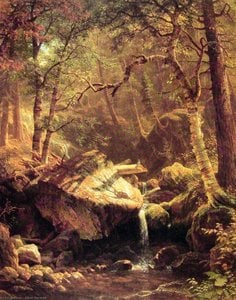
Nascente Florestal by Albert Bierstadt

Nascente Florestal

Digital

Uma Paisagem Florestal Serena Mergulhe na beleza tranquila desta cena florestal cativante, onde uma luz suave e etérea banha a paisagem em um brilho onírico. A composição estrutura-se em torno de uma clareira central, atraindo o olhar do espectador para o coração da floresta. Árvores imponentes emolduram a cena em ambos os lados, com seus galhos se entrelaçando para formar um arco natural que convida à exploração. O solo é…

6
Cervo em um Cerrado by Albert Bierstadt

Cervo em um Cerrado

Óleo sobre tela

Permita-se imergir na beleza serena deste cenário florestal cativante, onde a glória da natureza é capturada com detalhes exquisitos. A pintura retrata uma clareira isolada no coração de uma floresta densa, banhada pela luz dourada do entardecer ou nascente do sol, evocando um sentimento profundo de calma e tranquilidade. Altíssimas árvores circundam a cena por todos os lados, criando um corredor natural que intensifica a profundidade e a perspectiva, conduzindo…

7
In the Mountains by Albert Bierstadt

In the Mountains

Oil On Canvas · Wadsworth Atheneum, Hartford

Albert Bierstadt's "In the Mountains" stands as a monumental testament to the Romantic ideals that swept through 19th-century America, specifically within the influential Hudson River School. This breathtaking landscape isn't merely a depiction of a mountain scene; it’s an immersive experience, a carefully constructed panorama designed to evoke awe and reverence for the untamed beauty of the American West. Bierstadt, deeply influenced by his European training – particularly in Düsseldorf…

8
Rock Mountains Lander's Peak'''' (1863) by Albert Bierstadt

Rock Mountains Lander's Peak''''

1863 · Oil On Canvas · Fogg Museum, Cambridge

Albert Bierstadt’s "Rock Mountains Lander's Peak," painted in 1863, stands as a quintessential example of the Hudson River School’s dramatic and romantic approach to landscape painting. This monumental work transcends mere topographical representation; it is an immersive experience, a carefully constructed evocation of awe and reverence for the untamed grandeur of the American West. The scene unfolds with a deliberate sense of scale, dominated by the imposing presence of Lander's…

9
Scene in the Sierra Nevada (1861) by Albert Bierstadt

Scene in the Sierra Nevada

1861 · Oil On Canvas

In the heart of the mid-19th century, as the American frontier beckoned with promises of untold grandeur, Albert Bierstadt captured a moment of profound stillness and monumental scale in “Scene in the Sierra Nevada.” Completed in 1861, this masterpiece serves as a cornerstone of the Hudson River School, an artistic movement that sought to translate the raw, untamed spirit of the wilderness into a language of spiritual reverence. The painting…

10
Yosemite Valley by Albert Bierstadt

Yosemite Valley

Oil On Canvas

In this view of Yosemite Valley, we find ourselves standing before a landscape that feels deeply settled. A river winds its way through the center of the composition, cutting a soft path between banks lined with dense, dark greenery. The water reflects the light in a way that suggests a slow, steady movement through the heart of the wilderness. Scattered throughout the scene are pine trees, some standing close to…

Numbers 11 to 100: more Albert Bierstadt paintings

11Campfire Site, Yosemite (1873) by Albert BierstadtCampfire Site, Yosemite1873 12Merced River, Yosemite Valley (1866) by Albert BierstadtMerced River, Yosemite Valley1866 · Metropolitan Museum of Art 13A Western Landscape (1870) by Albert BierstadtA Western Landscape1870 14Sacramento River Valley (1872) by Albert BierstadtSacramento River Valley1872 · Museu Thyssen-Bornemisza 15The Coming Storm (1869) by Albert BierstadtThe Coming Storm1869 · Addison Gallery of American Art 16Indian Encampment, Shoshone Village (1860) by Albert BierstadtIndian Encampment, Shoshone Village1860 17Valley of the Yosemite (1864) by Albert BierstadtValley of the Yosemite1864 · Museu de Belas Artes de Boston 18Moonlight on the Merced (1864) by Albert BierstadtMoonlight on the Merced1864 · Centennial One Object Exhibit 19Yosemite Valley (Looking Down the Yosemite Valley) (1868) by Albert BierstadtYosemite Valley (Looking Down the Yosemite Valley)1868 · Oakland Museum of California 20Sunset in the Yosemite Valley (1869) by Albert BierstadtSunset in the Yosemite Valley1869 · Haggin Museum 21New England Landscape (1889) by Albert BierstadtNew England Landscape1889 22Evening on the Prairie (1870) by Albert BierstadtEvening on the Prairie1870 · Museu Thyssen-Bornemisza 23The Oregon Trail (1869) by Albert BierstadtThe Oregon Trail1869 · Joslyn Art Museum 24Buffalo Trail the Impending Storm (1869) by Albert BierstadtBuffalo Trail the Impending Storm1869 · National Gallery of Art 25Western Kansas (1875) by Albert BierstadtWestern Kansas1875 26A Rocky Mountain Sheep, Ovis, Montana (1879) by Albert BierstadtA Rocky Mountain Sheep, Ovis, Montana1879 27Sunrise, Yosemite Valley (1870) by Albert BierstadtSunrise, Yosemite Valley1870 · Amon Carter Museum of American Art 28Niagara Falls (1869) by Albert BierstadtNiagara Falls1869 · Fine Arts Museums of San Francisco 29Glen Ellis Falls (1869) by Albert BierstadtGlen Ellis Falls1869 · Zimmerli Art Museum at Rutgers University 30The Wolf River, Kansas (1859) by Albert BierstadtThe Wolf River, Kansas1859 · Detroit Institute of Arts 31Study for Yosemite Valley Glacier Point Trail (1873) by Albert BierstadtStudy for Yosemite Valley Glacier Point Trail1873 32Thunderstorm in the Rocky Mountains (1859) by Albert BierstadtThunderstorm in the Rocky Mountains1859 · Museu de Belas Artes de Boston 33Gates of the Yosemite (1882) by Albert BierstadtGates of the Yosemite1882 · Smithsonian American Art Museum 34Sundown at Yosemite (1863) by Albert BierstadtSundown at Yosemite1863 · Museu Thyssen-Bornemisza 35Passing Storm over the Sierra Nevadas (1870) by Albert BierstadtPassing Storm over the Sierra Nevadas1870 · San Antonio Museum of Art 36White Mountains, New Hampshire (1863) by Albert BierstadtWhite Mountains, New Hampshire1863 37Sunset on the Coast (1866) by Albert BierstadtSunset on the Coast1866 38Echo Lake, Franconia Mountains, New Hampshire (1861) by Albert BierstadtEcho Lake, Franconia Mountains, New Hampshire1861 39Moose Hunters Camp (1880) by Albert BierstadtMoose Hunters Camp1880 · Museu de Belas Artes de Boston 40Sunlight and Shadow (1862) by Albert BierstadtSunlight and Shadow1862 · Fine Arts Museums of San Francisco 41Mount Ascutney from Claremont, New Hampshire (1862) by Albert BierstadtMount Ascutney from Claremont, New Hampshire1862 42The Morteratsch Glacier, Upper Engadine Valley, Pontresina (1895) by Albert BierstadtThe Morteratsch Glacier, Upper Engadine Valley, Pontresina1895 · Brooklyn Museum 43Cathedral Rocks, Yosemite (1870) by Albert BierstadtCathedral Rocks, Yosemite1870 · Marsh-Billings-Rockefeller National Historical Park 44Sierra Nevada (1873) by Albert BierstadtSierra Nevada1873 · Reynolda House Museum of American Art 45Yosemite Valley, California (1863) by Albert BierstadtYosemite Valley, California1863 · Lowe Gallery 46El Capitan, Yosemite Valley (1875) by Albert BierstadtEl Capitan, Yosemite Valley1875 · Toledo Museum of Art 47Landers Peak by Albert BierstadtLanders Peak 48The Matterhorn by Albert BierstadtThe MatterhornMarsh-Billings-Rockefeller National Historical Park 49Cascading Falls at Sunset (1879) by Albert BierstadtCascading Falls at Sunset1879 50Pioneers of the Woods (1858) by Albert BierstadtPioneers of the Woods1858 · High Museum of Art 51Mount Washington (1862) by Albert BierstadtMount Washington1862 52Cliff House and Bay of San Francisco (1872) by Albert BierstadtCliff House and Bay of San Francisco1872 · Centennial One Object Exhibit 53Falls of Saint Anthony (1887) by Albert BierstadtFalls of Saint Anthony1887 54Yellowstone Falls (1881) by Albert BierstadtYellowstone Falls1881 · Buffalo Bill Center of the West 55Mount Vesuvius at Midnight (1868) by Albert BierstadtMount Vesuvius at Midnight1868 · Cleveland Museum of Art 56yosemite valley twin peaks by Albert Bierstadtyosemite valley twin peaks 57The Emerald Pool by Albert BierstadtThe Emerald PoolChrysler Museum of Art 58Martha Simon, Last of the Narragansetts (1850) by Albert BierstadtMartha Simon, Last of the Narragansetts1850 59Studies of Indian Chiefs Made at Fort Laramie (1850) by Albert BierstadtStudies of Indian Chiefs Made at Fort Laramie1850 · Metropolitan Museum of Art 60Indians near Fort Laramie (1859) by Albert BierstadtIndians near Fort Laramie1859 · Museu de Belas Artes de Boston 61View of Glacier Park (1850) by Albert BierstadtView of Glacier Park1850 · Buffalo Bill Center of the West 62California Indian Camp (1866) by Albert BierstadtCalifornia Indian Camp1866 · Oakland Museum of California 63Departure of an Indian War Party (1865) by Albert BierstadtDeparture of an Indian War Party1865 · Tacoma Art Museum 64Indian Beauty (1868) by Albert BierstadtIndian Beauty1868 · New York Historical Society 65St. Lawrence River, from the Citadel, Quebec (1880) by Albert BierstadtSt. Lawrence River, from the Citadel, Quebec1880 · Museu de Belas Artes de Boston 66Street in Nassau (1878) by Albert BierstadtStreet in Nassau1878 · Museu Thyssen-Bornemisza 67Interior of a Library (1886) by Albert BierstadtInterior of a Library1886 · Museu de Belas Artes de Boston 68Sketch for "The Last of the Buffalo" (1888) by Albert BierstadtSketch for "The Last of the Buffalo"1888 · Buffalo Bill Center of the West 69Study for "The Last of the Buffalo" (1888) by Albert BierstadtStudy for "The Last of the Buffalo"1888 · Fine Arts Museums of San Francisco 70Long's Peak, Estes Park, Colorado by Albert BierstadtLong's Peak, Estes Park, Colorado 71Fishing from a Canoe by Albert BierstadtFishing from a Canoe 72Wooded Landscape (1850) by Albert BierstadtWooded Landscape1850 · Buffalo Bill Center of the West 73On the Saco by Albert BierstadtOn the Saco 74The Old Mill (1855) by Albert BierstadtThe Old Mill1855 75Sunset over the River by Albert BierstadtSunset over the River 76Two Horses (1850) by Albert BierstadtTwo Horses1850 · Buffalo Bill Center of the West 77Giant Redwood Trees of California (1874) by Albert BierstadtGiant Redwood Trees of California1874 78View in Yosemite Valley (1871) by Albert BierstadtView in Yosemite Valley1871 79Canadian Rockies (Lake Louise) (1850) by Albert BierstadtCanadian Rockies (Lake Louise)1850 · Metropolitan Museum of Art 80Study of a Tree (1864) by Albert BierstadtStudy of a Tree1864 · Metropolitan Museum of Art 81Shady Pool, White Mountains, New Hampshire (1869) by Albert BierstadtShady Pool, White Mountains, New Hampshire1869 · Hirshhorn Museum and Sculpture Garden 82Sunrise in the Sierras (1872) by Albert BierstadtSunrise in the Sierras1872 · Smithsonian American Art Museum 83A Stream in the Rocky Mountains (1882) by Albert BierstadtA Stream in the Rocky Mountains1882 · USC Fisher Museum of Art 84Indian Hunters in Canoe (1850) by Albert BierstadtIndian Hunters in Canoe1850 · Buffalo Bill Center of the West 85Gathering Storm (1857) by Albert BierstadtGathering Storm1857 · Hirshhorn Museum and Sculpture Garden 86A View from Sacramento by Albert BierstadtA View from Sacramento 87Sunrise at Glacier Station by Albert BierstadtSunrise at Glacier Station 88Vernal Falls by Albert BierstadtVernal Falls 89The Grizzly Giant Sequoia, Mariposa Grove, California (1876) by Albert BierstadtThe Grizzly Giant Sequoia, Mariposa Grove, California1876 · Museu de Arte do Condado de Los Angeles 90Landscape (1881) by Albert BierstadtLandscape1881 · Detroit Institute of Arts 91The Mountain Brook (1863) by Albert BierstadtThe Mountain Brook1863 92Sailboats on the Hudson at Irvington (1889) by Albert BierstadtSailboats on the Hudson at Irvington1889 93Farallon Island (1887) by Albert BierstadtFarallon Island1887 · Carnegie Museum of Art 94Ferns and Rocks on an Embankment (1869) by Albert BierstadtFerns and Rocks on an Embankment1869 · Herbert F. Johnson Museum of Art 95Untitled (D2X2CE) (1873) by Albert BierstadtUntitled (D2X2CE)1873 · Metropolitan Museum of Art 96Indian Sunset: Deer by a Lake (1880) by Albert BierstadtIndian Sunset: Deer by a Lake1880 · Yale University Art Gallery 97The Trout Brook (1859) by Albert BierstadtThe Trout Brook1859 · Fogg Museum 98The Blue Grotto, Capri (1857) by Albert BierstadtThe Blue Grotto, Capri1857 · Walters Art Museum 99Grand Tetons by Albert BierstadtGrand Tetons 100Nevada Falls by Albert BierstadtNevada Falls

Albert Bierstadt's paintings, period by period

What Albert Bierstadt painted most

The four subjects that come up most often in these pieces, each with its best-known example.

Where you can see Albert Bierstadt's paintings

The 8 museums that hold the most of the paintings on this page.

Museum City Works by Albert Bierstadt Paintings from this list
Buffalo Bill Center of the West, LaramieBuffalo Bill Center of the West Laramie 25 Yellowstone Falls, View of Glacier Park, Sketch for "The Last of the Buffalo"
Museu de Belas Artes de Boston, BostonMuseu de Belas Artes de Boston Boston 19 Valley of the Yosemite, Thunderstorm in the Rocky Mountains, Moose Hunters Camp
Metropolitan Museum of Art, Nova YorkMetropolitan Museum of Art Nova York 10 Merced River, Yosemite Valley, Studies of Indian Chiefs Made at Fort Laramie, Canadian Rockies (Lake Louise)
Museu Thyssen-Bornemisza, MadridMuseu Thyssen-Bornemisza Madrid 5 Sacramento River Valley, Evening on the Prairie, Sundown at Yosemite
Fine Arts Museums of San Francisco, São FranciscoFine Arts Museums of San Francisco São Francisco 10 Niagara Falls, Sunlight and Shadow, Study for "The Last of the Buffalo"
Smithsonian American Art Museum, Washington, D.C.Smithsonian American Art Museum Washington, D.C. 7 Entre as Montanhas Sierras Nevada, Califórnia, Gates of the Yosemite, Sunrise in the Sierras
Hirshhorn Museum and Sculpture Garden, Washington, D.C.Hirshhorn Museum and Sculpture Garden Washington, D.C. 7 Shady Pool, White Mountains, New Hampshire, Gathering Storm
Fogg Museum, CambridgeFogg Museum Cambridge 3 Rock Mountains Lander's Peak'''', The Trout Brook

Decade by decade: the best-known Albert Bierstadt piece of each

Works per decade

Pick a decade to see its standout piece.

Albert Bierstadt: quick answers about the paintings

What is Albert Bierstadt's best-known painting?See the answer

Top of the list is Montanhas Rochosas (1863). Right behind it: Rustic Mill (1855) and Entre as Montanhas Sierras Nevada, Califórnia (1868).

What age was Albert Bierstadt when creating Montanhas Rochosas?See the answer

33 years old. Albert Bierstadt was born in 1830, and Montanhas Rochosas dates from 1863.

What are Albert Bierstadt's top 10 paintings?See the answer

Montanhas Rochosas, Rustic Mill, Entre as Montanhas Sierras Nevada, Califórnia, Estaubach Falls, Near Lauterbrunnen, Switzerland, Nascente Florestal, Cervo em um Cerrado, In the Mountains, Rock Mountains Lander's Peak'''', Scene in the Sierra Nevada and Yosemite Valley. You'll find the year and the museum of each in the list above.

How many works by Albert Bierstadt are in your catalogue?See the answer

We have 698 works by Albert Bierstadt in our catalogue, dated 1850 to 1895.

In which museums can you see Albert Bierstadt's famous works?See the answer

You'll find most of them in Buffalo Bill Center of the West (Laramie), Museu de Belas Artes de Boston (Boston) and Metropolitan Museum of Art (Nova York). The museum list above has the full breakdown.

When did Albert Bierstadt make the most famous pieces?See the answer

In 1860s, more than any other time: 31 of the 100 pieces on this page date from then, Montanhas Rochosas among them.

What are Albert Bierstadt's first and last famous pieces?See the answer

The earliest piece here is Martha Simon, Last of the Narragansetts (1850); the most recent is The Morteratsch Glacier, Upper Engadine Valley, Pontresina (1895).

Which subjects did Albert Bierstadt paint most often?See the answer

American west (41), Landscape (22) and Mountains (22), out of the 100 pieces on this page.

Which medium shows up most in Albert Bierstadt's paintings?See the answer

Oil On Canvas, used in 47 of the 100 pieces on this page.

What style or movement is Albert Bierstadt known for?See the answer

Hudson river school, as you can see in the pieces on this page.

Which famous Albert Bierstadt paintings are at the Buffalo Bill Center of the West?See the answer

You can see 6 of the pieces on this page at the Buffalo Bill Center of the West, Laramie, including Yellowstone Falls, View of Glacier Park and Sketch for "The Last of the Buffalo".

Where can I order a Albert Bierstadt reproduction?See the answer

Yes. Every painting on this page is available as a hand-painted oil reproduction or a print, in the size that suits you. Just open the painting's page to order.

Albert Bierstadt's story

Vida Inicial, Família e Formação

Albert Bierstadt nasceu em 7 de janeiro de 1830, em Solingen, na Província do Reno, Prússia, Alemanha. Filho de Henry Bierstadt, um tanoeiro, e de Christina M. (Tillmans) Bierstadt, ele cresceu em um ambiente moldado pela migração; seus irmãos, Edward e Charles, acompanharam-no em uma jornada através do Atlântico quando Albert tinha apenas um ano de idade. Em 1831, a família já estava estabelecida em New Bedford, Massachusetts, onde, durante os primeiros anos de sua infância, ele dedicava seu tempo livre a criar esboços com giz de cera.

Ao chegar em 1851, o jovem artista já havia transitado para o uso de óleos, demonstrando uma inclinação crescente para as artes. Em busca de um refinamento técnico e de uma formação mais rigorosa para o seu ofício, ele retornou à Alemanha em 1853, onde passou vários anos estudando pintura em Düsseldorf. Esse período de formação foi fundamental, concentrando-se nas técnicas magistrais ensinadas pelos membros da Escola de Düsseldorf. Durante sua estadia, ele trabalhou sob a orientação de Worthington Whittredge, um período crucial que refinou sua percepção sobre a luz e sua habilidade em capturar os detalhes minuciosos do mundo natural.

A Grande Viagem e as Expedições para o Oeste

As paisagens que preenchiam suas telas nasceram, muitas vezes, de longas caminhadas pelos territórios do Oeste Americano. Em 1859, Albert Bierstadt viajou pelos territórios do Colorado e de Wyoming ao lado de Frederick W. Lander, um agrimensor do governo dos EUA. Essas jornadas permitiram que ele testemunhasse o terreno de forma direta enquanto o país se expandia, unindo-se a diversos movimentos de colonização para capturar as cenas grandiosas que encontrava pelo caminho. Mais tarde, em 1863, ele partiu novamente em direção ao oeste com o autor Fitz Hugh Ludlow. Durante essa expedição específica, passou sete semanas no Yosemite Valley, observando os penhascos vertiginosos e as cachoeiras que, mais tarde, ganhariam vida em suas pinturas a óleo.

Suas viagens, contudo, não se limitavam à fronteira americana. Ele atravessou climas e relevos diversos, desde as montanhas da Suíça, Itália e Alemanha até a brisa costeira das Bahamas. Passou períodos em Roma, Nápoles e Capri, e seus deslocamentos o levaram tão longe quanto o Canadá e o Alasca, além de ter explorado a Califórnia. Essa variedade de cenários proporcionou uma gama infinita de luz e atmosfera para seus esboços e obras finalizadas, conferindo uma profundidade quase sensorial ao seu legado artístico.

Técnica e Estilo Artístico

A abordagem de Albert Bierstadt em relação à tela foi profundamente moldada por seu período em Düsseldorf, onde ele evoluiu dos simples esboços a giz de sua juventude para um estilo mais disciplinado e naturalista. Frequentemente, ele trabalhava en plein air para capturar a presença imediata da paisagem, utilizando essas observações para fundamentar suas grandes pinturas a óleo. Sua obra é frequentemente associada à Escola do Rio Hudson e à Escola das Montanhas Rochosas, fundindo a precisão detalhada de sua formação alemã com a escala expansiva necessária para retratar o Oeste Americano. Ele utilizava o linearismo para definir as arestas afiadas dos picos montanhosos e as texturas intrincadas da folhagem das florestas.

A luz é a ferramenta primordial em suas composições. Ele frequentemente empregava o Luminismo, uma técnica que utiliza um brilho suave e difuso para criar uma sensação de atmosfera e profundidade. Este método permitia que ele banhasse vastos vales em uma luz específica e resplandecente, que enfatizava a magnitude do terreno. Suas obras posteriores nas Bahamas revelaram uma transição para um uso mais expressivo da cor, afastando-se do estilo Luminista controlado em direção a tons mais ousados e brilhantes. Essa transição refletiu uma mudança em sua abordagem temática, focando menos no sublime e mais na vida cotidiana dos habitantes locais.

Grandes Encomendas e Obras Notáveis

As suas obras iniciais frequentemente voltavam o olhar para a sua formação europeia. Em 1855, ele pintou Rustic Mill, uma cena de indústria tranquila à beira de um vale fluvial. Já em 1856, o seu pincel havia capturado Staubbach Falls, Near Lauterbrunnen, Switzerland, refletindo as paisagens de seus estudos em Düsseldorf. Estas peças revelam um foco meticuloso em como a luz repousa sobre a pedra e a água, antes que o seu interesse se voltasse inteiramente para o Oeste Americano.

A escala das suas composições cresceu à medida que cresciam as ambições dos seus patronos. Uma das suas encomendas mais significativas foi The Rocky Mountains, Lander's Peak, adquirida por Legrand Lockwood pelo valor de 25.000 dólares. Esta imensa tela foi baseada em esboços e fotografias da expedição de levantamento de 1859. Ele continuou a documentar o Oeste ao longo da década de 1860, concluindo Valley of the Yosemite em 1864. Mais tarde, em 1876, voltou a sua atenção para a escala monumental de The Great Trees, Mariposa Grove, California.

  • The Emerald Pool (sem data)

Legado e Influência Duradoura

Albert Bierstadt foi um intérprete fundamental da paisagem ocidental, oferecendo ao público uma janela para compreender a escala monumental do Oeste Americano. Ele é reconhecido como o primeiro pintor a capturar verdadeiramente a vastidão e a rusticidade dessas terras. Suas telas ajudaram a moldar a percepção pública sobre esses territórios distantes, transformando montanhas e vales desconhecidos em visões familiares para uma nação em constante expansão. Ao focar na magnitude avassaladora do terreno, ele transcendeu a simples documentação para oferecer uma visão específica e quase mística da fronteira.

Sua influência é perceptível na maestria com que manipulou a luz e o espaço para transmitir a realidade física da natureza selvagem. Embora seu foco tenha se voltado para as Bahamas em sua fase tardia, sua obra inicial permanece intrinsecamente ligada à expansão da identidade americana. Ele utilizou os detalhes minuciosos da terra para dialogar com o espírito de sua era. Suas pinturas fizeram muito mais do que apenas exibir cenários; elas ajudaram a definir o senso de lugar para um país que ainda descobria suas próprias fronteiras.

  • The Rocky Mountains, Lander's Peak (1863)
  • Valley of the Yosemite (1864)
  • The Great Trees, Mariposa Grove, California (1876)

Onde Contemplar Suas Obras Hoje

As telas de Albert Bierstadt podem ser encontradas em diversas coleções espalhadas por diferentes continentes, testemunhando o alcance de seu legado visual. Em Madri, o Museu Thyssen-Bornemisza abriga quatro de suas pinturas, incluindo Evening on the Prairie e The Falls of St. Anthony. Estas obras permitem um olhar atento sobre a maestria com que o artista manipulava a luz e a sombra em composições de grande escala. O Museum of Fine Arts, em Boston, também mantém uma presença significativa com três obras, como Valley of the Yosemite e Moose Hunters Camp.

Nos Estados Unidos, a presença de seu talento é sentida em várias instituições de prestígio. O Brooklyn Museum, na cidade de Nova York, contém duas de suas pinturas, entre elas A Storm in the Rocky Mountains e The Morteratsch Glacier, Upper Engadine Valley, Pontresina. Já o Smithsonian American Art Museum, em Washington, D.C., guarda uma obra fundamental, Among the Sierra Nevada Mountains, California. Em Woodstock, o Marsh-Billings-Rockefeller National Historical Park preserva duas obras, incluindo Cathedral Rocks, Yosemite.

Entre suas criações mais emblemáticas, destacam-se:

All 698 works by Albert Bierstadt →