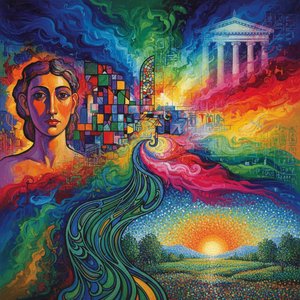
Um Pioneiro da Cor Abstrata: A Vida e a Arte de Robert Delaunay
Robert Delaunay, nascido em Paris em 1885, emergiu como uma figura fundamental nas mudanças artísticas radicais do início do século XX. Embora inicialmente atraído por formas mais tradicionais de pintura, sua jornada o conduziu a uma exploração da cor e da luz que acabaria por definir seu legado e contribuir significativamente para o nascimento da arte abstrata. Delaunay não estava interessado apenas em representar o mundo; ele buscava capturar sua própria essência através de uma linguagem vibrante de formas geométricas e tons luminosos, cofundando o movimento Orfismo com sua esposa, Sonia Delaunay, e outros que compartilhavam de sua visão. Sua vida precoce foi marcada por certa instabilidade – seus pais se divorciaram quando ele era jovem e ele foi criado por parentes – mas isso talvez tenha fomentado um espírito independente que lhe seria útil ao desafiar as convenções artísticas. Inicialmente, dedicou-se às artes decorativas, mas rapidamente gravitou para a pintura, exibindo-se no Salon des Indansi como cedo quanto 1904, demonstrando um talento e uma ambição florescentes.Do Divisionismo ao Amanhecer do Orfismo
O desenvolvimento artístico de Delaunay foi caracterizado por uma experimentação constante. Inicialmente, ele se envolveu com o Neoimpressionismo, ou Divisionismo, absorvendo seus princípios de aplicação de pequenos e distintos pontos de cor para criar um efeito cintilante. No entanto, logo ele foi além da simples replicação de fenômenos ópticos; começou a investigar o potencial expressivo da própria cor. Uma amizade crucial com Jean Metzinger provou ser formativa durante este período, enquanto exploravam as possibilidades de formas fragmentadas e composições semelhantes a mosaicos. Essas colaborações iniciais lançaram as bases para seu envolvimento posterior no Cubismo, embora Delaunay acabasse por divergir de sua abordagem mais analítica. Ele não estava interessado em dissecar objetos em componentes geométricos; em vez disso, buscava sintetizá-los em arranjos dinâmicos de cor e luz. Essa mudança culminou no desenvolvimento do Orfismo – termo cunhado pelo poeta Guillaume Apollinaire – que visava criar uma arte puramente abstrata, capaz de evocar respostas emocionais através de sua intensidade cromática. Contrastes Simultâneos: Sol e Lua exemplifica essa abordagem, exibindo a manipulação magistral da cor por Delaunay para transmitir uma sensação de energia e movimento.O Poder da ‘Simultanéité’ e a Influência Artística
Central à filosofia artística de Delaunay era o conceito de “simultanéité” – a ideia de que as cores interagem entre si, criando novas sensações e percepções. Ele acreditava que a cor não era meramente um elemento descritivo, mas uma força ativa capaz de moldar nossa experiência da realidade. Essa crença informou sua série de pinturas retratando a Torre Eiffel, onde ele desconstruiu a estrutura icônica em uma rede de planos intersectados e matizes vibrantes. Estas não eram representações da torre, mas sim explorações de como a luz e a cor transformavam sua aparência. As teorias de Delaunay ressoaram profundamente com outros artistas de sua época, influenciando figuras como Paul Klee, Franz Marc, August Macke e até movimentos da vanguarda russa. Sua ênfase na abstração e no poder expressivo da cor ajudou a pavimentar o caminho para uma nova geração de artistas que rejeitaram as convenções representacionais em favor de formas puramente visuais. Ele não estava simplesmente criando pinturas; ele estava desenvolvendo um arcabouço teórico para compreender a relação entre cor, luz e percepção.Anos Tardios e um Legado Duradouro
O início da Primeira Guerra Mundial forçou Delaunay e sua esposa a buscarem refúgio na Espanha e em Portugal, onde continuaram a trabalhar e a expor. Após retornar a Paris na década de 1920, ele explorou uma gama de temas, incluindo retratos e cenas figurativas, mas sempre permaneceu comprometido com seus princípios fundamentais de cor e abstração. Em seus anos tardios, Delaunay revisitou temas anteriores, criando composições cada vez mais complexas e dinâmicas. Ele também empreendeu projetos ambiciosos, como o design de relevos coloridos em grande escala para a Exposição Internacional de Paris de 1937, demonstrando sua habilidade de traduzir sua visão artística para contextos arquitetônicos. A morte prematura de Robert Delaunay em 1941 marcou uma perda para o mundo da arte, mas sua influência continua a ser sentida hoje. Seu trabalho pioneiro lançou as bases para muitos desenvolvimentos subsequentes na arte abstrata, e sua exploração da cor permanece como uma fonte de inspiração para artistas de diversas disciplinas. Seu legado não é apenas de inovação estética, mas também de investigação intelectual – um testemunho do poder da arte em transformar nossa compreensão do mundo ao nosso redor.Obras Notáveis
- A Torre Eiffel (1909-1911)
- Contrastes Simultâneos: Sol e Lua (1913)
- Janelas Abertas Simultaneamente, 1ª Parte, 3º Motivo (1912)
- Estrada em Laon (1910)
- Ritmos (1934)
Perguntas e Respostas
De onde é Robert Delaunay?
Robert Delaunay nasceu em França.
Posso explorar as obras de Robert Delaunay por palavra-chave?
Para encontrar obras de Robert Delaunay sobre um tema específico, utilize a página de Por palavras-chave do artista, que agrupa as obras por palavra-chave.
Onde posso ver todas as obras de Robert Delaunay?
Todas as obras de Robert Delaunay no este site podem ser exploradas na página de Todas as obras do artista.