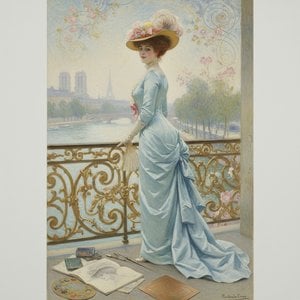
Paul César Helleu: Um Retrato da Belle Époque
- Nascimento: Vannes, França (1859)
- Falecimento: 1927
Juventude e Formação Artística
Paul César Helleu nasceu em Vannes, na Bretanha, França, em 1859. Seu pai, um inspetor de alfândega, faleceu quando Helleu ainda era adolescente. Apesar das reservas iniciais de sua mãe, ele partiu para Paris ainda jovem para perseguir suas ambições artísticas. Estudou no Lycée Chaptal e, com a idade notável de apenas dezesseis anos, conquistou sua admissão na prestigiada École des Beaux-Arts, onde recebeu formação acadêmica sob a tutela de Jean-Léon Gérôme.
O contato precoce de Helleu com o movimento impressionista, durante a Segunda Exposição Impressionista em 1876, revelou-se um divisor de águas. Ele foi profundamente impactado por artistas como John Singer Sargent, James McNeill Whistler e Claude Monet, ficando cativado por suas técnicas inovadoras e pelo foco em cenas ao ar livre — um contraste marcante com as práticas tradicionais de estúdio da época.
O Desenvolvimento do Artista: Influências e Técnicas
Para sustentar-se no início de sua carreira, Helleu trabalhou na oficina de cerâmica de Théodore Deck, pintando à mão pratos decorativos, uma experiência que refinou suas habilidades técnicas. Um ponto de virada crucial ocorreu em seu encontro e mentoria com Giovanni Boldini, um pintor de retratos conhecido por seu estilo vibrante e audacioso. A influência de Boldini moldou significativamente a direção artística de Helleu.
Uma amizade íntima desenvolveu-se entre Helleu e John Singer Sargent, perdurando por toda a vida; o incentivo e o apoio de Sargent foram fundamentais para a ascensão de Helleu. A maestria de Helleu na técnica de ponta-seca tornou-se uma característica definidora de sua obra. Introduzido à técnica por James Jacques Tissot, ele rapidamente se tornou um virtuoso, empregando-a com o mesmo dinamismo e sofisticação presentes em seus pastéis.
Grandes Obras e Reconhecimento
Helleu é amplamente reconhecido por seus retratos de mulheres elegantes da sociedade parisiense durante a Belle Époque. Entre seus temas mais notáveis estavam a Duquesa de Marlborough, a Marquesa Casati, Belle da Costa Greene, Louise Chéruit e Helena Rubenstein. Sua capacidade de capturar a beleza e a graça dessas figuras com uma elegância refinada lhe rendeu aclamação mundial.
- Retratos: As obras de Helleu são celebradas por suas linhas delicadas, paletas de cores sutis e pela forma como transmitem tanto a semelhança física quanto a personalidade das modelos.
- Gravuras em Ponta-Seca: Suas gravuras em ponta-seca foram particularmente populares, permitindo que múltiplas cópias fossem distribuídas entre amigos e familiares; ele produziu mais de 2.000 dessas obras ao longo de sua carreira.
- Mural do Grand Central Terminal: Um feito significativo foi a encomenda para criar um mural retratando constelações no teto do Grand Central Terminal, em Nova York, projeto ambicioso que demonstrou sua visão artística em grande escala.
Legado e Significado Histórico
A obra de Paul César Helleu personifica o espírito da Belle Époque — um período caracterizado pelo otimismo, pela elegância e pela inovação artística. Seus retratos oferecem um vislumbre precioso das vidas e das modas da alta sociedade parisiense daquela era.
- Influência na Arte: O uso inovador da ponta-seca por Helleu influenciou gerações subsequentes de gravadores.
- Representação da Belle Époque: Ele é considerado um dos principais artistas a capturar a essência e os ideais estéticos deste período histórico.
- Legado Familiar: Notavelmente, ele foi pai de Jean Helleu e avô de Jacques Helleu, ambos diretores artísticos influentes para a Parfums Chanel, demonstrando uma conexão familiar duradoura com o mundo da arte e do design.
O trabalho de Helleu está representado em grandes museus ao redor do mundo, incluindo o Musée d'Orsay e o Louvre, em Paris, além da Tate, em Londres, e o Metropolitan Museum of Art, em Nova York.
Perguntas e Respostas
Quantas obras de Paul César Helleu estão disponíveis para explorar?
Você pode explorar 128 obras de arte obras de Paul César Helleu na página Todas as obras.
Em que cidade e país Paul César Helleu nasceu?
Paul César Helleu nasceu em Vannes, em França.
Onde as obras de Paul César Helleu estão organizadas por cor?
O Índice de Cores de Paul César Helleu organiza as obras do artista por cores.