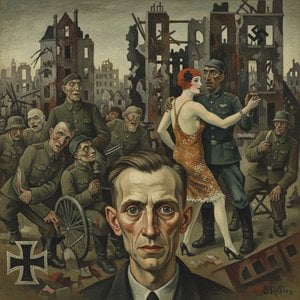
Otto Didrik Ottesen: A Pioneer of Expressionist Landscape
Otto Didrik Ottesen (1816-1892) stands as a quietly influential figure within the burgeoning Brücke movement, a German artistic collective that sought to express profound emotion and psychological insight through uncompromising realism. Born in Broager, Denmark, Ottesen’s formative years instilled in him an appreciation for meticulous observation—a skill he would translate into canvases brimming with atmospheric detail and imbued with a palpable sense of solitude. While overshadowed by his more flamboyant contemporaries like Karl Schmidt Rottluff, Ottesen's contribution to the movement’s aesthetic core is undeniable.- Early Life & Artistic Training: Little biographical information exists about Ottesen’s early life beyond his birthplace and profession as a painter. He honed his craft primarily through self-study and experimentation, absorbing influences from Romantic landscape painting and the burgeoning Impressionist movement.
- Association with the Brücke: Ottesen joined the Brücke in 1892, aligning himself with artists committed to confronting existential anxieties and exploring the darker recesses of human experience. Unlike Rottluff’s bold theatricality, Ottesen favored a restrained palette and subtle tonal gradations—techniques that prioritized conveying emotion through nuanced visual cues.
- Style & Technique: Ottesen's distinctive style is characterized by an unwavering dedication to capturing the essence of natural landscapes with astonishing accuracy. He employed meticulous brushwork, layering thin glazes to achieve luminous effects and rendering textures with remarkable sensitivity. His canvases often depict bleak Scandinavian vistas—snow-covered hillsides and windswept coastlines—reflecting a preoccupation with themes of isolation and melancholy.
Notable Works & Artistic Achievements
Ottesen’s oeuvre comprises approximately 150 paintings, predominantly landscapes executed in oil on canvas. Among his most celebrated pieces are “Spring in Charlottenlund,” a breathtaking depiction of the Swedish coastline bathed in springtime light—a testament to his mastery of atmospheric perspective and color harmony. Similarly, "Still life with roses and strawberries on a silver salver (also known as Natures Rewards)" exemplifies his ability to infuse everyday subjects with symbolic resonance, capturing the delicate beauty of floral arrangements against the opulent backdrop of silver tableware. “Otto Didrik Ottesen A Bouquet In A Wedgwood Rosso Antico Vase, Set In A Niche” further showcases his meticulous attention to detail and compositional balance.- "Spring in Charlottenlund" exemplifies Ottesen’s ability to convey emotion through precise observation and masterful rendering of light and color.
- "Still life with roses and strawberries on a silver salver" demonstrates his skill in elevating commonplace objects into symbols of beauty and contemplation.
Legacy & Historical Significance
Though often overlooked compared to his peers, Otto Didrik Ottesen’s work holds considerable importance within the history of Expressionist art. His uncompromising realism—coupled with a profound sensitivity to psychological states—served as an anchor for the Brücke's artistic vision. He championed a contemplative approach to landscape painting, prioritizing emotional resonance over mere visual representation. Today, Ottesen’s paintings reside in museums across Germany and Hungary, offering viewers a glimpse into the inner world of a remarkable artist who bravely confronted the anxieties of his time—a legacy that continues to inspire artists seeking to express profound emotion through uncompromising artistic integrity.Perguntas e Respostas
Onde posso ver as obras de Otto Didrik Ottesen em ordem cronológica?
As obras de Otto Didrik Ottesen podem ser visualizadas em ordem cronológica na página de Linha do tempo das obras do artista.
Onde posso ver as obras de Otto Didrik Ottesen organizadas por atmosfera?
A Sala de Humor de Otto Didrik Ottesen é uma página que organiza as obras do artista por humor.
Qual é a cidade e o país de nascimento de Otto Didrik Ottesen?
Otto Didrik Ottesen nasceu em Broager, em Denmark.