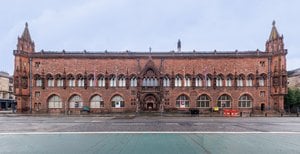
Retrato de Norman Macbeth

Conheça as 33 pinturas mais famosas de Norman Macbeth

Atualizado em Novembro 2026 · classificado pela nossa pontuação de popularidade (pesquisas, visitas e pedidos de cada obra) · 33 obras de Norman Macbeth em nosso catálogo

Em resumo

Se você conhece uma pintura de Norman Macbeth, provavelmente é John Walker (d.1866), Sugar Refiner (1866). William Ferguson of Kinmundy (1823–1904) (1885) e A Somerset Farm (1887) completam as três obras que as pessoas reconhecem de imediato. Nosso catálogo possui 33 obras de Norman Macbeth. Abaixo estão as 33 mais conhecidas, cada uma com seu ano, onde encontrá-la e o que a torna especial.

1821 – 1888, Greenock Contemporary realism Mais obras: Royal Scottish Academy of Art - Architecture

Comece aqui: as 10 principais pinturas de Norman Macbeth

1
John Walker (d.1866), Sugar Refiner (1866) de Norman Macbeth

John Walker (d.1866), Sugar Refiner

1866 · Oil On Canvas

The portrait titled John Walker (d.1866), Sugar Refiner is a work by the Scottish portraitist Norman Macbeth. Created in 1866, the painting captures a specific moment in the life of a man defined by his era. The subject is an elderly gentleman seated in a chair, his presence anchored within the frame. This likeness was rendered during a period when Macbeth was establishing his reputation as a meticulous observer of…

Reprodução em óleo pintada à mão de $183 28 × 36 cm Mesmo tamanho da original $475 89 × 113 cm Encomendar no tamanho original →
Torne-a sua Conheça agora
2
William Ferguson of Kinmundy (1823–1904) (1885) de Norman Macbeth

William Ferguson of Kinmundy (1823–1904)

1885 · Oil On Canvas · Mintlaw Discovery Centre, Peterhead

The oil painting depicts an elderly man seated in a chair, his body angled slightly toward the viewer. He holds a book in his hands, and his chin rests upon his hand in a contemplative pose. The subject is dressed in dark clothing, with the fabric of his garments showing heavy folds and deep shadows. A subtle light source illuminates his face and hands, creating a contrast against the darker…

Reprodução em óleo pintada à mão de $183 28 × 36 cm Mesmo tamanho da original $568 102 × 127 cm Encomendar no tamanho original →
Peça uma pintura feita à mão Leia sua história
3
A Somerset Farm (1887) de Norman Macbeth

A Somerset Farm

1887 · Oil On Canvas

In A Somerset Farm, Norman Macbeth captures a quiet moment of rural existence. Painted about 1887, the work centers on a rustic barn that anchors the landscape. This structure acts as a silent witness to the rhythms of the countryside. Around it, the scene unfolds through the steady pulse of manual labor. Figures move through the pastoral setting, their presence defined by the tasks at hand.

Reprodução em óleo pintada à mão de $208 39 × 25 cm Mesmo tamanho da original $394 102 × 66 cm Encomendar no tamanho original →
Encomende esta obra Saiba mais sobre esta obra
4
William Forrest (1805–1889), ARA de Norman Macbeth

William Forrest (1805–1889), ARA

Oil

This portrait features a man depicted with a stern expression. He is shown with a beard and a mustache, appearing in formal attire that includes a suit and a bow tie. The composition is large in scale, with the subject's figure covering most of the image from top to bottom.

Reprodução em óleo pintada à mão de $183 29 × 35 cm Mesmo tamanho da original $311 64 × 77 cm Encomendar no tamanho original →
Torne-a sua Conheça agora
5
William Forrest (1805–1889), HRSA de Norman Macbeth

William Forrest (1805–1889), HRSA

In this portrait of William Forrest, we encounter a man whose presence is felt through a steady, unyielding gaze. He is depicted with curly hair and a well-groomed beard, his expression carrying a certain gravity that suggests a life of significant responsibility. The sitter wears a formal suit and tie, attire that places him firmly within the social structures of the nineteenth century. There is a quiet intensity in the…

Reprodução em óleo pintada à mão de $183 29 × 35 cm Mesmo tamanho da original $255 52 × 62 cm Encomendar no tamanho original →
Peça uma pintura feita à mão Leia sua história
6
A Portion of Old Greenock (James Weir's Property, 20–22 West Blackhall Street, 1845) (1845) de Norman Macbeth

A Portion of Old Greenock (James Weir's Property, 20–22 West Blackhall Street, 1845)

1845 · Oil · Municipal Buildings, Greenock

A Portion of Old Greenock (James Weir's Property, 20–22 West Blackhall Street, 1845) is a work by Norman Macbeth. Created about 1845, the painting captures a specific architectural segment of the artist's birthplace. Macbeth was born in Greenock, United Kingdom, in 1821 and remained connected to the region throughout his career. He died in London in 1888.

Reprodução em óleo pintada à mão de $183 40 × 25 cm
Peça uma pintura feita à mão Leia sua história
7
Patrick Fairbairn (1805–1874), DD (1871) de Norman Macbeth

Patrick Fairbairn (1805–1874), DD

1871 · Oil On Canvas

An elderly man sits before us, his presence heavy and solemn within the frame. He is draped in the dark, heavy folds of clerical robes, a silhouette of religious authority and scholarly weight. His expression is stern, etched with the gravity of a life spent in contemplation or perhaps the weariness of deep conviction. In his hands, he holds a book, a silent companion that anchors his identity as a…

Reprodução em óleo pintada à mão de $183 25 × 40 cm Mesmo tamanho da original $1280 148 × 239 cm Encomendar no tamanho original →
Peça uma pintura feita à mão Leia sua história
8
Mrs Adam Primrose (1871) de Norman Macbeth

Mrs Adam Primrose

1871 · Oil On Canvas

In this 1871 portrait, we are met with the steady, unyielding gaze of Mrs Adam Primrose. She is presented in a moment of quiet, stern composure, her eyes fixed directly upon the viewer. There is a certain weight to her presence, a sense of a woman who possesses a clear understanding of her place and her purpose. She wears a blue bonnet, accented by a pink bow, which frames a…

Reprodução em óleo pintada à mão de $183 29 × 35 cm Mesmo tamanho da original $311 64 × 77 cm Encomendar no tamanho original →
Peça uma pintura feita à mão Leia sua história
9
Sir David Brewster (1781–1868), FRSE (1869) de Norman Macbeth

Sir David Brewster (1781–1868), FRSE

1869 · Oil On Canvas · The Royal Society of Edinburgh, Edimburgo

The sitter is captured in a moment of quiet intellectual repose, seated within a study that functions as an extension of his own mind. He wears a black robe accented by a red sash, a garment signifying his honorary degree from the University of Edinburgh. His gaze is direct, meeting the viewer with the steady composure of a man accustomed to rigorous observation. Behind him, the environment is cluttered with…

Reprodução em óleo pintada à mão de $183 28 × 36 cm Mesmo tamanho da original $654 111 × 141 cm Encomendar no tamanho original →
Encomende esta obra Saiba mais sobre esta obra
10
Patrick Don Swan, Provost of Kirkcaldy (1874) de Norman Macbeth

Patrick Don Swan, Provost of Kirkcaldy

1874 · Oil On Canvas

This oil-on-canvas portrait, titled Patrick Don Swan, Provost of Kirkcaldy, was executed by the Scottish artist Norman Macbeth. The work was painted about 1874. It depicts the sitter in a formal capacity, capturing him during his tenure as a prominent civic leader. The subject of the painting is Patrick Don Swan, a man who held the position of Provost of Kirkcaldy. Beyond his municipal duties, Swan was a Scottish shipowner…

Reprodução em óleo pintada à mão de $183 25 × 40 cm Mesmo tamanho da original $1189 136 × 239 cm Encomendar no tamanho original →
Torne-a sua Conheça agora

Mais favoritos de Norman Macbeth, de 11 a 33

11Reverend Robert Buchanan (1802–1875) (1872) de Norman MacbethReverend Robert Buchanan (1802–1875)1872 Encomende esta obra a partir de $183 →
12Reverend Andrew Thomson (1842–1901), DD (1878) de Norman MacbethReverend Andrew Thomson (1842–1901), DD1878 · National Records of Scotland Torne-a sua a partir de $183 →
13Reverend William Lindsay Alexander (1808–1884), Theologian (1875) de Norman MacbethReverend William Lindsay Alexander (1808–1884), Theologian1875 · Galeria Nacional de Retratos de Escócia Peça uma pintura feita à mão a partir de $183 →
14Robert Steele (1791–1879) (1877) de Norman MacbethRobert Steele (1791–1879)1877 Peça uma pintura feita à mão a partir de $183 →
15Josiah Livingston (1878) de Norman MacbethJosiah Livingston1878 · The Merchant's Hall Peça uma pintura feita à mão a partir de $183 →
16Sir John Steell (1804–1891), RSA (1877) de Norman MacbethSir John Steell (1804–1891), RSA1877 · Royal Scottish Academy of Art - Architecture Peça uma pintura feita à mão a partir de $183 →
17Alex Keiller of Dundee (1821–1877) (1879) de Norman MacbethAlex Keiller of Dundee (1821–1877)1879 Torne-a sua a partir de $183 →
18Alexander Whitelaw (1823–1879), MP (1880) de Norman MacbethAlexander Whitelaw (1823–1879), MP1880 Encomende esta obra a partir de $183 →
19Andrew Galbraith (b.1799), Lord Provost of Glasgow (1857–1860) (1880) de Norman MacbethAndrew Galbraith (b.1799), Lord Provost of Glasgow (1857–1860)1880 Torne-a sua a partir de $183 →
20John Mossman (1817–1890), Sculptor (1884) de Norman MacbethJohn Mossman (1817–1890), Sculptor1884 Torne-a sua a partir de $183 →
21Sir James Colquhoun (1844–1907), 27th Bt of Colquhoun, 29th of Luss (1873–1907) (1882) de Norman MacbethSir James Colquhoun (1844–1907), 27th Bt of Colquhoun, 29th of Luss (1873–1907)1882 · Helensburgh Council Chamber Peça uma pintura feita à mão a partir de $183 →
22John Macfarlan (1815–1891), Minister of the Free Middle Church of Greenock (1880) de Norman MacbethJohn Macfarlan (1815–1891), Minister of the Free Middle Church of Greenock1880 Torne-a sua a partir de $183 →
23William Denny (1847–1887) (1888) de Norman MacbethWilliam Denny (1847–1887)1888 · National Maritime Museum Encomende esta obra a partir de $183 →
24John McMillan de Norman MacbethJohn McMillan Torne-a sua a partir de $183 →
25James Blackadder de Norman MacbethJames BlackadderThe Merchant's Hall Peça uma pintura feita à mão a partir de $183 →
26Richard Parnell, Doctor of Medicine and Natural Historian de Norman MacbethRichard Parnell, Doctor of Medicine and Natural Historian Torne-a sua a partir de $183 →
27Hugh Miller (1812–1879) de Norman MacbethHugh Miller (1812–1879) Encomende esta obra a partir de $183 →
28Archibald Gardener de Norman MacbethArchibald Gardener Torne-a sua a partir de $183 →
29George Thompson of Partick de Norman MacbethGeorge Thompson of Partick Encomende esta obra a partir de $183 →
30Doctor Arthur Mitchell de Norman MacbethDoctor Arthur Mitchell Peça uma pintura feita à mão a partir de $183 →
31Sir James Young Simpson (1811–1870) de Norman MacbethSir James Young Simpson (1811–1870)Nhs Lothian Encomende esta obra a partir de $183 →
32James Turner of Thrushgrove (1768–1858), a Former Magistrate of the City de Norman MacbethJames Turner of Thrushgrove (1768–1858), a Former Magistrate of the City Peça uma pintura feita à mão a partir de $183 →
33Sir James Young Simpson (1811–1870) de Norman MacbethSir James Young Simpson (1811–1870)Royal College of Physicians of Edinburgh Torne-a sua a partir de $183 →

O que Norman Macbeth mais pintou

Os quatro temas que surgem com mais frequência nestas obras, cada um com o seu exemplo mais conhecido.

Onde você pode ver as pinturas de Norman Macbeth

Os 8 museus que detêm a maioria das pinturas desta página.

Museus Cidade Obras de Norman Macbeth Pinturas desta lista
Royal Scottish Academy of Art - Architecture, EdimburgoRoyal Scottish Academy of Art - Architecture Edimburgo 2 William Forrest (1805–1889), HRSA, Sir John Steell (1804–1891), RSA
The Merchant's Hall, EdimburgoThe Merchant's Hall Edimburgo 2 Josiah Livingston, James Blackadder
Mintlaw Discovery Centre, PeterheadMintlaw Discovery Centre Peterhead 1 William Ferguson of Kinmundy (1823–1904)
Municipal Buildings, GreenockMunicipal Buildings Greenock 1 A Portion of Old Greenock (James Weir's Property, 20–22 West Blackhall Street, 1845)
The Royal Society of Edinburgh, EdimburgoThe Royal Society of Edinburgh Edimburgo 1 Sir David Brewster (1781–1868), FRSE
National Records of Scotland, EdimburgoNational Records of Scotland Edimburgo 1 Reverend Andrew Thomson (1842–1901), DD
Galeria Nacional de Retratos de Escócia, EdimburgoGaleria Nacional de Retratos de Escócia Edimburgo 1 Reverend William Lindsay Alexander (1808–1884), Theologian
Helensburgh Council Chamber, HelensburghHelensburgh Council Chamber Helensburgh 1 Sir James Colquhoun (1844–1907), 27th Bt of Colquhoun, 29th of Luss (1873–1907)

Norman Macbeth década a década: uma obra de destaque para cada uma

Obras por década

Escolha uma década para ver a sua obra de destaque.

Suas perguntas sobre as pinturas de Norman Macbeth

Qual pintura de Norman Macbeth é a mais famosa?Ver a resposta

No topo da lista está John Walker (d.1866), Sugar Refiner (1866). Logo atrás: William Ferguson of Kinmundy (1823–1904) (1885) e A Somerset Farm (1887).

Qual era a idade de Norman Macbeth quando John Walker (d.1866), Sugar Refiner foi feita?Ver a resposta

45 anos. Norman Macbeth nasceu em 1821, e John Walker (d.1866), Sugar Refiner é de 1866.

Quais são as 10 pinturas mais conhecidas de Norman Macbeth?Ver a resposta

John Walker (d.1866), Sugar Refiner, William Ferguson of Kinmundy (1823–1904), A Somerset Farm, William Forrest (1805–1889), ARA, William Forrest (1805–1889), HRSA, A Portion of Old Greenock (James Weir's Property, 20–22 West Blackhall Street, 1845), Patrick Fairbairn (1805–1874), DD, Mrs Adam Primrose, Sir David Brewster (1781–1868), FRSE e Patrick Don Swan, Provost of Kirkcaldy. Encontrará o ano e o museu de cada uma na lista acima.

Quantas pinturas Norman Macbeth criou?Ver a resposta

Temos 33 obras de Norman Macbeth em nosso catálogo, datadas de 1845 a 1888.

Onde pode ver as pinturas famosas de Norman Macbeth?Ver a resposta

Encontrará a maioria deles em Royal Scottish Academy of Art - Architecture (Edimburgo), The Merchant's Hall (Edimburgo) e Mintlaw Discovery Centre (Peterhead). A lista de museus acima apresenta o detalhamento completo.

Quando é que Norman Macbeth pintou as suas obras mais conhecidas?Ver a resposta

Em 1870s, mais do que em qualquer outro momento: 10 das 33 obras nesta página datam dessa época, sendo Patrick Fairbairn (1805–1874), DD delas.

Quais pinturas famosas de Norman Macbeth foram as primeiras e as últimas?Ver a resposta

A obra mais antiga aqui é A Portion of Old Greenock (James Weir's Property, 20–22 West Blackhall Street, 1845) (1845); a mais recente é William Denny (1847–1887) (1888).

Quais temas aparecem com mais frequência nas pinturas de Norman Macbeth?Ver a resposta

Man (24), Suit (16) e Beard (15), de um total de 33 obras nesta página.

Com quais materiais Norman Macbeth mais pintou?Ver a resposta

Oil On Canvas, utilizado em 25 das 33 obras nesta página.

A que movimento artístico Norman Macbeth pertencia?Ver a resposta

Contemporary realism, como pode ver nas obras desta página.

Quais obras de Norman Macbeth você pode ver no Royal Scottish Academy of Art - Architecture?Ver a resposta

Pode ver 2 das obras nesta página no Royal Scottish Academy of Art - Architecture, Edimburgo, incluindo William Forrest (1805–1889), HRSA e Sir John Steell (1804–1891), RSA.

Posso obter uma reprodução de uma pintura de Norman Macbeth?Ver a resposta

Sim. Todas as pinturas nesta página estão disponíveis como uma reprodução a óleo pintada à mão ou uma impressão, no tamanho que melhor lhe convier. Basta abrir a página da pintura para fazer o seu pedido.

Conhecendo Norman Macbeth

The Legacy of Norman Macbeth: A Master of Victorian Realism

In the vibrant tapestry of nineteenth-century British art, few threads are as finely woven as those belonging to Norman Macbeth. Born in 1821 in the coastal town of Greenock, Macbeth was a man whose very identity was steeped in an artistic lineage. As the grandson of the celebrated portrait painter Norman Macbeth and the son of James Macbeth, his life was not merely a pursuit of art, but a continuation of a profound familial devotion to the canvas. This heritage provided him with a foundational reverence for the craft, yet it was his own rigorous journey—stretching from the technical precision of an engraver’s apprenticeship in Glasgow to the hallowed halls of the Royal Academy Schools in London—that allowed him to forge a singular voice within the Glasgow School.

Macbeth’s artistic evolution was marked by a sophisticated balance between the established traditions of his era and the burgeoning modernism that began to ripple through Europe. While his training anchored him firmly in the principles of academic realism, he possessed an intellectual curiosity that prevented his work from becoming stagnant. He moved through the great art capitals of the age, studying the masterworks within the National Gallery in London and finding inspiration amidst the transformative atmosphere of Paris, where he worked within the Louvre. This exposure to Continental influences allowed him to infuse his portraits with a subtle touch of Impressionism and the delicate aesthetic sensibilities of Japonisme, creating works that felt both timelessly classical and strikingly contemporary for the Victorian period.

Technique, Texture, and the Art of the Portrait

To observe a Macbeth portrait is to witness a masterclass in controlled observation. His technique was defined by an unwavering commitment to meticulous realism, where every fold of heavy silk, every glint of light on a brass button, and every nuanced expression of his subjects was rendered with painstaking care. He possessed a rare ability to capture the psychological depth of his sitters, moving beyond mere physical likeness to evoke the very essence of their character. Whether depicting the esteemed Sir John Steell RSA or the quiet dignity of an elderly gentleman like James Blackadder, Macbeth utilized subtle tonal gradations and a rich, earthy palette to create a sense of palpable atmosphere and three-dimensional depth.

His mastery extended beyond the human face into the realm of landscape and still life, where his brushwork could shift from the precise to the more textured and expressive. In works such as A Somerset Farm, one can see how he embraced a more painterly approach, using light and shadow to breathe life into rural scenes. This versatility—the ability to pivot from the formal rigidity of a high-society portrait to the atmospheric softness of a pastoral landscape—is what truly distinguishes his oeuvre. His canvases serve as windows into a bygone era, preserved through a technique that honors the weight of history while celebrating the fleeting beauty of light.

A Lasting Impression on Art History

The historical significance of Norman Macbeth lies in his role as a bridge between generations. He stood at the crossroads of the old world and the new, maintaining the dignity of the Royal Scottish Academy’s traditions while welcoming the experimental spirit of the late nineteenth century. His influence was not limited to his own brush; he left behind a family of artists, including his sons Robert Walker Macbeth and Henry Macbeth-Raeburn, who would continue to shape the landscape of Scottish painting well into the twentieth century.

Though he passed away in London in 1888, the impact of his work remains etched in the annals of British art history. His portraits remain vital documents of Victorian society, capturing the luminaries and the everyday figures of his time with an intimacy that transcends the decades. Through his dedication to the truth of the subject and his ability to harmonize classical precision with modern nuance, Norman Macbeth ensured that his name would forever be synonymous with the enduring elegance of Victorian Portraiture.