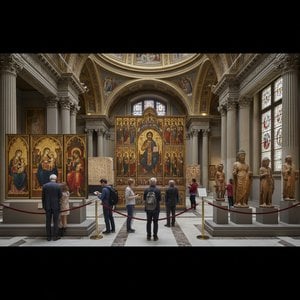
The Enigmatic Master of the Trebon Altarpiece
The Master of the Trebon Altarpiece remains one of Bohemia’s most captivating artistic figures—a painter whose legacy transcends mere stylistic innovation. Born around 1380 in Prague, his identity has stubbornly resisted definitive attribution, fueling scholarly debate and solidifying his place as a symbol of Bohemian artistic spirit during the tumultuous fourteenth century.
Early Life & Training: Precise biographical details are scarce, yet evidence suggests he honed his craft within the vibrant artistic milieu of Prague’s St. Vitus Cathedral, absorbing influences from both Gothic tradition and emerging French Gothic styles—a pivotal moment in European art history. The cathedral’s soaring vaults and intricate stained glass windows served as constant reminders of God's majesty, shaping his formative years and instilling a profound appreciation for visual storytelling.
The Trebon Altarpiece – A Monumental Achievement: His fame rests primarily upon the Třeboň Altarpiece, commissioned by Archbishop Jan Lucemburg for St. Agnes Convent in Prague. This monumental work exemplifies his mastery of color and composition, depicting saints Catherine, Mary Magdalene and Margaret with breathtaking realism and imbued with profound spiritual symbolism—a testament to Bohemian piety and artistic ambition. The altarpiece’s luminous glazing techniques – a technique pioneered by French Gothic architects – created an ethereal glow that seemed to emanate from the saints themselves, transporting viewers into a realm of divine contemplation.
Stylistic Evolution: Initially adhering to Gothic conventions, the Master progressively embraced elements of French Gothic art, incorporating flattened perspectives and luminous glazing techniques—demonstrating an astute awareness of contemporary artistic trends and elevating his oeuvre beyond provincial limitations. This stylistic shift wasn’t merely a matter of adopting fashionable aesthetics; it represented a fundamental rethinking of how space and light could convey spiritual truth.
Influences & Artistic Context
The Master’s artistic vision was shaped by the broader intellectual currents of his time—the burgeoning humanist movement challenging medieval dogma alongside a renewed fascination with classical ideals. However, it is arguably the pervasive influence of French Gothic art that defines his distinctive style, mirroring the architectural grandeur and spiritual fervor characterizing Prague’s ecclesiastical landscape.
Gothic Tradition: Like many Bohemian artists of his era, he drew inspiration from the monumental sculptures and stained glass windows adorning St. Vitus Cathedral—reflecting a shared commitment to conveying religious narratives with solemn dignity and visual splendor. The cathedral's sculptural program – depicting biblical figures in stylized poses – served as a powerful reminder of Christian faith’s enduring moral authority.
French Gothic Influence: The stylistic innovations championed by Reims Cathedral and Amiens Cathedral—particularly the use of flattened perspectives and radiant light—found their way into the Master’s compositions, signaling a decisive break from medieval artistic conventions. This daring experimentation reflected a desire to express spiritual concepts in ways that resonated with the intellectual sensibilities of the Renaissance.
Notable Works Beyond the Altarpiece
While the Trebon Altarpiece stands as his undisputed masterpiece, scholarly research has unearthed evidence of additional paintings—primarily devotional panels executed in Prague and surrounding regions—further illuminating his artistic versatility and demonstrating a sustained engagement with religious iconography.
- The Resurrection: This iconic depiction captures the essence of Christian faith—a radiant portrayal of Christ’s triumphant resurrection embodying hope and redemption.
- Other Panels: Further investigations into Prague’s artistic archives continue to yield insights into his oeuvre, revealing a painter who skillfully navigated the complexities of Bohemian cultural identity during a period of profound transformation.
Historical Significance & Legacy
The Master of the Trebon Altarpiece occupies an honored place in Czech art history—a symbol of Bohemian artistic brilliance and spiritual devotion. His work serves as a cornerstone for understanding fourteenth-century Bohemian painting, informing subsequent generations of artists and cementing his enduring reputation as one of Bohemia’s most celebrated masters.
His legacy extends beyond the stylistic innovations he championed; it resides in his unwavering commitment to conveying religious truth with profound beauty—a testament to the transformative power of art and its ability to inspire awe and reverence.