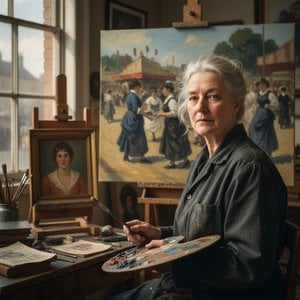
Primeira Infância e Educação
- Dame Laura Knight (1877-1970) nasceu como Laura Johnson em 4 de agosto de 1877, em Long Eaton, Derbyshire, Inglaterra, sendo a caçula de três filhas.
- Seu pai, Charles Johnson, abandonou a família logo após o seu nascimento, deixando sua mãe, Charlotte Johnson, com a responsabilidade de criá-las em meio a grandes dificuldades financeiras.
- O avô de Knight era proprietário de uma fábrica de rendas que faliu devido aos avanços tecnológicos, o que abalou profundamente a estabilidade da família.
- Em 1889, ela foi enviada ao norte da França para viver com parentes envolvidos no comércio de rendas, mas precisou retornar após a falência do negócio familiar.
- Graças aos esforços incansáveis de sua mãe, ela iniciou sua educação artística como "aluna artesã" na Nottingham School of Art com apenas 13 anos.
- Aos quinze anos, Knight assumiu as responsabilidades docentes de sua mãe quando Charlotte adoeceu gravemente com câncer.
- Sua trajetória de talento foi coroada com uma bolsa de estudos e a medalha de ouro em uma competição nacional de estudantes realizada pelo South Kensington Museum.
Início da Carreira e a Escola de Newlyn
- Em 1894, uma visita a Staithes, uma vila de pescadores na costa de Yorkshire, deixou marcas profundas em sua obra inicial; nela, Knight retratou as vidas e as durezas dos habitantes locais através de tons suaves e melancólicos.
- Em 1903, ela se casou com Harold Knight, também artista, estabelecendo uma sólida e inspiradora parceria artística que perduraria por toda a vida.
- O casal mudou-se para Cornualha em 1907, estabelecendo-se em Lamorna e tornando-se figuras centrais na Escola de Newlyn, ao lado de nomes como Lamorna Birch e Alfred Munnings.
- Em Newlyn, Knight refinou sua maestria na pintura de figuras humanas, utilizando frequentemente as crianças da região como modelos para suas telas.
- Suas obras desse período refletem uma tradição realista, movida pelo interesse genuíno em documentar a vida das classes trabalhadoras.
Impressionismo e Reconhecimento
- As viagens dos Knights à Holanda, entre 1904 e 1906, permitiram que entrassem em contato com a Escola de Haia, o que direcionou o estilo de Knight para uma abordagem mais impressionista.
- Sua pintura "Beach", exibida na Royal Academy em 190
Perguntas e Respostas
Onde estão as obras de Laura Knight agrupadas por paleta?
A página Por Paletas agrupa as obras de Laura Knight por suas paletas de cores.
Que sentimentos as obras de Laura Knight expressam?
A Sala de Humor de Laura Knight é uma página que organiza as obras do artista por humor.
Onde posso encontrar estatísticas sobre as obras de Laura Knight?
Existe uma página de Estatísticas para Laura Knight, apresentando estatísticas sobre as obras do artista no este site.