Menu
Consultoria de arte gratuita

Jules Cyrille Cave

Resumo Biográfico

  • Works on APS: 6
  • Top 3 works:
    • Plasirs des champs
    • The Flute Lesson
    • Young Girl with Curly Hair
  • Copyright status: Under copyright
  • Top-ranked work: Plasirs des champs
  • Ver mais…
  • Nationality: França
  • Also known as:
    • Jules Chéret
    • Julia Margaret Cameron
  • Born: França

Teste de Arte

Cada pergunta possui apenas uma resposta correta.

Pergunta 1:
Qual artista influenciou Jules Cyrille Cavé significativamente?
Pergunta 2:
Em que movimento artístico Jules Cyrille Cavé se destacou principalmente?
Pergunta 3:
Qual foi uma obra famosa de Jules Cyrille Cavé?
Pergunta 4:
Em qual instituição artística Jules Cyrille Cavé iniciou seus estudos?
Pergunta 5:
Qual estilo artístico caracterizou as pinturas de Jules Cyrille Cavé?

Jules Cyrille Cavé: A Painter of Delicate Symbolism

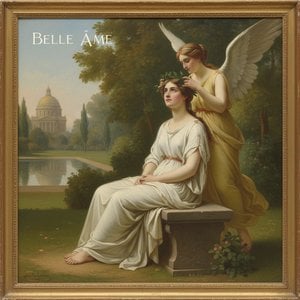
Jules Cyrille Cave (4 January 1859 – 12 May 1949) was a French Academic painter whose oeuvre is characterized by an exquisite sensitivity to light and color, coupled with a profound engagement with mythological themes and pastoral landscapes. Despite limited biographical information available about his personal life, Cavé’s artistic legacy resides in his masterful depictions of nymphs, flowers, and serene figures—works that exemplify the tenets of Symbolism and Gothic art prevalent during his time. His paintings continue to resonate today due to their ethereal beauty and subtle psychological depth.

Early Life & Training

Details concerning Jules Cyrille Cave's upbringing remain elusive, shrouded in obscurity. However, he commenced his artistic education at the Académie Julian in 1877, dedicating himself wholeheartedly to the tutelage of esteemed artists such as William Bouguereau and Tony Robert-Fleury. Completing his studies in 1879 solidified his commitment to the Academic tradition—a stylistic choice profoundly shaped by Bouguereau’s meticulous realism and idealized representations of human form. This formative influence would permeate Cavé's entire artistic career, guiding him toward a style rooted in classical ideals.

Influence & Artistic Style

Cavé’s artistic development was inextricably linked to Bouguereau’s enduring impact—a connection that extended beyond mere mentorship into a shared aesthetic vision. Like Bouguereau, Cavé favored depictions of pastoral scenes populated by graceful women engaged in simple activities, such as gathering daisies. This stylistic preference aligns seamlessly with the broader Symbolist movement, which sought to convey emotional and spiritual truths through evocative imagery rather than literal representation. Bouguereau’s meticulous attention to detail—particularly his masterful rendering of drapery and skin tones—served as a cornerstone for Cavé's technique, resulting in canvases imbued with an unparalleled luminosity and serenity.

Notable Works

Among Cavé’s most celebrated paintings is “Martyr in the Catacombs,” completed in 1886. This haunting piece captures a palpable sense of solemn beauty—a testament to Cavé’s ability to infuse his canvases with psychological depth and symbolic resonance. The painting exemplifies the Gothic aesthetic, prioritizing atmosphere and emotional intensity over precise anatomical detail; it transports viewers into a realm of shadowy grandeur and contemplative contemplation. Furthermore, “Gathering Daisies,” created in 2002, showcased Cavé's continued fascination with idealized femininity and his unwavering adherence to Bouguereau’s stylistic precepts—a work that achieved considerable acclaim at Christie’s London auction house.

Recognition & Legacy

Jules Cyrille Cave garnered significant recognition during his lifetime for his artistic prowess and contribution to French Symbolism. His paintings were exhibited regularly at the Paris Salon, attracting critical acclaim and establishing him as a prominent figure within the artistic landscape of his era. He was awarded a 3rd class medal for “Martyr in the Catacombs,” cementing his reputation as a master craftsman and visionary artist—a legacy that continues to inspire admiration among art historians and collectors worldwide. His enduring influence can be seen in subsequent generations of painters who sought to emulate Bouguereau’s stylistic elegance and Cavé's profound sensitivity to light and color.