A Quiet Revolutionary: The Life and Art of Joseph Edward Southall
Joseph Edward Southall, born in Nottingham in 1861, was a figure quietly at odds with the prevailing artistic currents of his time. He wasn’t a brash innovator seeking to shatter conventions, but rather a dedicated revivalist, a painter who looked back to the early Renaissance for inspiration while simultaneously embodying a deeply felt social and spiritual conviction. His life story is one of unwavering commitment – to tempera painting, to the ideals of the Arts and Crafts movement, to his Quaker faith, and to socialist principles. The son of a grocer, Southall’s early life was marked by loss; his father died when he was just over a year old, prompting a move with his mother to Edgbaston, Birmingham, to be near her family. This relocation proved pivotal, placing him within the orbit of a burgeoning artistic and intellectual community steeped in the Ruskinian ethos that would shape his entire career. After schooling at Quaker institutions – Ackworth School and Bootham School in York – he briefly pursued architecture, articled to the prominent firm Martin & Chamberlain. However, this practical training soon felt constricting; Southall yearned for a more holistic engagement with craft, believing an artist needed to understand painting and carving as deeply as design and construction.The Allure of Tempera and Italian Inspiration
Southall’s artistic trajectory took a decisive turn during several formative journeys through Europe. A visit to Bayeux, Rouen, and Amiens in 1882 ignited his passion for historical detail and craftsmanship, but it was Italy that truly captivated him. A thirteen-week sojourn in 1883, encompassing cities like Pisa, Florence, Siena, and Venice, proved transformative. He wasn’t merely sightseeing; he was undertaking a pilgrimage to the sources of artistic purity as defined by John Ruskin. The frescoes of Benozzo Gozzoli resonated deeply, awakening an admiration for the Italian Renaissance masters who predated the widespread adoption of oil painting. These artists had largely worked in egg tempera – a medium Southall would champion for the rest of his life. He vividly recalled the “thrill of joy” experienced within the Campo Santo in Pisa, confronted by frescoes that were both “quiet and yet so gay,” possessing a “reticent manner and…lively essence.” A crucial moment occurred while viewing Vittore Carpaccio’s *Two Venetian Ladies* in Venice; Ruskin's accompanying commentary – suggesting tempera as the ideal medium for certain subjects – solidified Southall’s conviction. He began experimenting with tempera upon his return to Birmingham, though initial attempts proved challenging. His uncle, George Baker, a friend of Ruskin and master of the Guild of St. George, showed some of Southall's sketches to Ruskin himself, who praised their architectural draughtsmanship and even commissioned a museum design (which ultimately wasn’t realized).Birmingham Group and Artistic Philosophy
Despite this early encouragement, Southall faced periods of artistic uncertainty. He continued to refine his tempera technique, but it was the formation of the Birmingham Group of Artist-Craftsmen that truly solidified his direction. This collective – a late flowering of Romanticism and a vital link between the Pre-Raphaelites and the Slade Symbolists – represented a conscious rejection of industrialization and a yearning for a more integrated artistic life. Southall became its de facto leader, advocating for a return to craftsmanship, spiritual depth, and social responsibility in art. He wasn’t interested in depicting grand historical narratives or mythological scenes; instead, he focused on everyday life, landscapes, and portraits, imbuing them with a quiet dignity and symbolic resonance. He found beauty in the simple things: a domestic interior, a rural scene, the faces of working people.Key Characteristics of Southall’s Work
- Tempera Technique: Southall's distinctive style was characterized by masterful use of egg tempera, resulting in paintings imbued with remarkable luminosity and detail. He meticulously planned his compositions and executed them with painstaking precision, reflecting Ruskin’s belief that art should serve as a moral exemplar.
- Subject Matter: His artistic vision centered on portraying scenes of domestic life and rural landscapes—subjects chosen not for their grandeur but for their ability to convey inner harmony and spiritual contemplation.
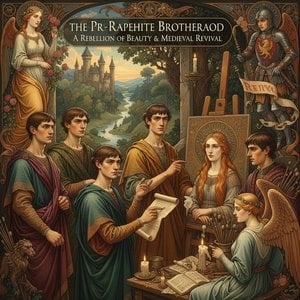
- Pre-Raphaelite Influence: Like many artists of his era, Southall drew inspiration from the Pre-Raphaelites’ commitment to realism and emotional intensity, particularly evident in his depictions of figures and interiors.
- Arts & Crafts Ideals: He wholeheartedly embraced Arts & Crafts principles—a belief that art should be inseparable from craftmanship and accessible to all—resulting in works that prioritized functionality alongside aesthetic beauty.
- Social Commentary: Beneath the surface elegance of his paintings lay a subtle yet persistent concern for social justice, mirroring his Quaker faith and advocating for a more equitable distribution of resources within society.
Perguntas e Respostas
Onde as obras de Joseph Southall estão agrupadas por movimento artístico?
As obras de Joseph Southall podem ser exploradas por movimento na página de Todos os Movimentos do artista.
Onde posso ver todas as obras de Joseph Southall?
Todas as obras de Joseph Southall no este site podem ser visualizadas na página de Todas as Obras de Arte do artista.
Qual é a cidade e o país de nascimento de Joseph Southall?
Joseph Southall nasceu em Nottingham, em Reino Unido.
Onde posso encontrar estatísticas sobre as obras de Joseph Southall?
Existe uma página de Estatísticas para Joseph Southall, apresentando estatísticas sobre as obras do artista no este site.
Qual é o local e o ano de nascimento de Joseph Southall?
Joseph Southall nasceu em Nottingham, em 1861.
Onde posso ver as obras de Joseph Southall em uma galeria 3D?
As obras de Joseph Southall podem ser visualizadas em uma galeria 3D na página Museu 3D do artista.
De onde é Joseph Southall?
Joseph Southall nasceu em Reino Unido.