Uma Vida Forjada Entre Mundos: Os Primeiros Anos de Jean Arp
Nascido como Hans Peter Wilhelm Arp em 1886, na disputada cidade de Estrasburgo — um lugar que oscilava entre as identidades francesa e alemã —, o artista que viria a ser conhecido como Jean Arpland encarnou uma dualidade fascinante desde os seus primeiros instantes. Essa liminaridade geográfica e cultural moldou profundamente sua visão artística, instilando nele um senso de deslocamento e um questionamento das fronteiras fixas que permeariam toda a sua obra. Seus pais — uma mãe francesa e um pai alemão — sem saber, lançaram as bases para um artista que desafiaria consistentemente qualquer categorização. Os estudos iniciais na École des Arts et Métiers, em Estrasburgo, e posteriormente na Weimarer Kunstschule, na Alemanha, proporcionaram a Arp uma educação artística fundamental, mas foi o incentivo de seu tio, Carl Arp, um pintor de paisagens, que verdadeiramente acendeu sua paixão. A mudança para Paris em 1908, para frequentar a Académie Julian, ampliou ainda mais seus horizontes, expondo-o às correntes vibrantes da vanguarda. No entanto, Estrasburgo permaneceu como uma memória potente — uma cidade imersa em história e peso simbólico, influenciando eternamente sua sensibilidade artística. Este período inicial não tratava apenas de adquirir técnica; era sobre absorver as complexidades da identidade e do pertencimento, temas que ressoariam por toda a sua vida e obra.Abraçando o Caos: O Dadaísmo e o Nascimento das Formas Biomórficas
O estopim da Primeira Guerra Mundial revelou-se um momento crucial para Arp. Desiludido com a violência sem sentido e com os fracassos percebidos da razão, ele gravitou em direção ao emergente movimento Dada por volta de 1915. Esta não foi simplesmente uma escolha estética; foi uma rejeição radical das normas estabelecidas, um abraço desafiador ao caos como resposta a um mundo caótico. Arp encontrou-se entre um grupo de artistas e intelectuais na neutra Suíça — Hugo Ball, Tristan Tzara, Marcel Janco — que buscavam desmantelar as convenções artísticas tradicionais. Ele participou ativamente de exposições com o Moderne Bund, uma aliança precoce da arte moderna, e cofundou o grupo Dada de Colônia em 1920, ao lado de Max Ernst e Alfred Grünwald. Foi durante este período que Arp começou a experimentar com operações de acaso, uma técnica que refletia a rejeição dadaísta ao controle artístico. Suas “colagens ao acaso”, criadas ao deixar fragmentos de papel caírem sobre uma superfície e colá-los onde pousavam, foram revolucionárias — uma abdicação do design consciente em favor de resultados imprevisíveis. Simultaneamente, ele começou a explorar formas biomórficas — formas abstratas que lembram a vida orgânica — que se tornariam uma característica definidora de seu trabalho. Estas não eram meramente composições abstratas; elas sugeriam energias ocultas, os blocos fundamentais da existência e uma conexão subconsciente com a natureza. Essa exploração foi significativamente influenciada por sua profunda parceria artística com Sophie Taeuber-Arp, com quem se casou em 1922. Seus projetos colaborativos foram inovadores e mutuamente inspiradores, expandindo os limites das práticas de ambos.Visões Surrealistas e Explorações Esculturais
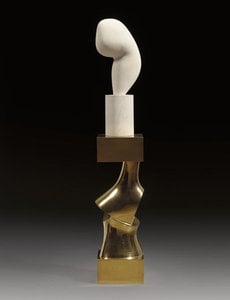
À medida que o Dadaísmo começava a se dissipar, a trajetória artística de Arp conduziu-o ao Surrealismo. Sua obra foi apresentada na primeira exposição surrealista na Galerie Pierre, em Paris, em 1925, consolidando sua conexão com este movimento que mergulhava no reino dos sonhos e do subconsciente. No entanto, Arp não adotou o Surrealismo de forma integral; ele o infundiu com sua própria sensibilidade única. Ele iniciou uma transição significativa dos relevos escultóricos para obras tridimensionais, explorando a abstração orgânica em formas autoportantes. A série “Concreção Humana” surgiu durante este período — esculturas suaves e arredondadas que evocavam referências ambíguas tanto à forma humana quanto a objetos naturais. A exploração de materiais por Arp foi igualmente importante. Ele experimentou com mármore, bronze, vidro e madeira, cada meio oferecendo texturas e efeitos distintos, permitindo-lhe refinar ainda mais sua visão da abstração orgânica. Suas formas biomórficas influenciaram profundamente o desenvolvimento do Surrealismo, particularmente sua fascinação pelo automatismo e pelas imagens subconscientes. Arp não estava interessado em retratar objetos reconhecíveis; ele buscava capturar a essência da própria vida — seu crescimento, sua fluidez, seu mistério inerente.Legado e Influência Duradoura
O impacto de Jean Arp na arte do século XX é inegável. Seu papel pioneiro na abstração orgânica, seu abraço ao acaso e sua exploração das formas biomórficas consolidaram seu lugar como uma figura fundamental da vanguarda. Obras notáveis como Trousse d'un dada, a série Dada Heads, Human Concretion without Oval Bowl, Le Soleil recerclé e The Three Graces continuam a cativar o público com sua elegância simples e profundo simbolismo. Ele recebeu reconhecimento crescente na era pós-Segunda Guerra Mundial, culminando no Grande Prêmio de Escultura na Bienal de Veneza em 1954, além de grandes exposições retrospectivas no Museum of Modern Art em Nova York (1958) e no Musée National d’Art Moderne em Paris (1962). Sua criação de um relevo escultórico para o Harvard Graduate Center permanece como um testemunho de seu legado duradouro. A ênfase de Arp nas formas orgânicas ressoou com gerações subsequentes de artistas, influenciando movimentos como o Expressionismo Abstrato e além. Seu uso das operações de acaso continua a inspirar aqueles que exploram a aleatoriedade e métodos criativos não convencionais. O trabalho colaborativo que ele compartilhou com Sophie Taeuber-Arp é hoje reconhecido como uma das contribuições mais significativas para o movimento Dada, destacando o poder da parceria artística. A abordagem inovadora de Jean Arp, sua disposição em desafiar convenções e seu compromisso inabalável em explorar as forças fundamentais da vida garantem que sua arte continuará a inspirar e provocar por gerações vindouras.Perguntas e Respostas
Existe uma linha do tempo das obras de Hans Arp?
Existe uma linha do tempo das obras de Hans Arp: a página Linha do tempo das obras do artista organiza as obras por data de criação.
Posso estudar o uso de cores de Hans Arp em todas as suas obras?
O perfil de cores da obra de Hans Arp pode ser visualizado na página DNA da Paleta do artista.
Como posso ver todas as obras de Hans Arp?
Todas as obras de Hans Arp no este site podem ser exploradas na página de Todas as obras do artista.