


1

Atualizado em Novembro 2026 · classificado pela nossa pontuação de popularidade (pesquisas, visitas e pedidos de cada obra) · 8 obras de Herbert W Wright em nosso catálogo
Em resumo
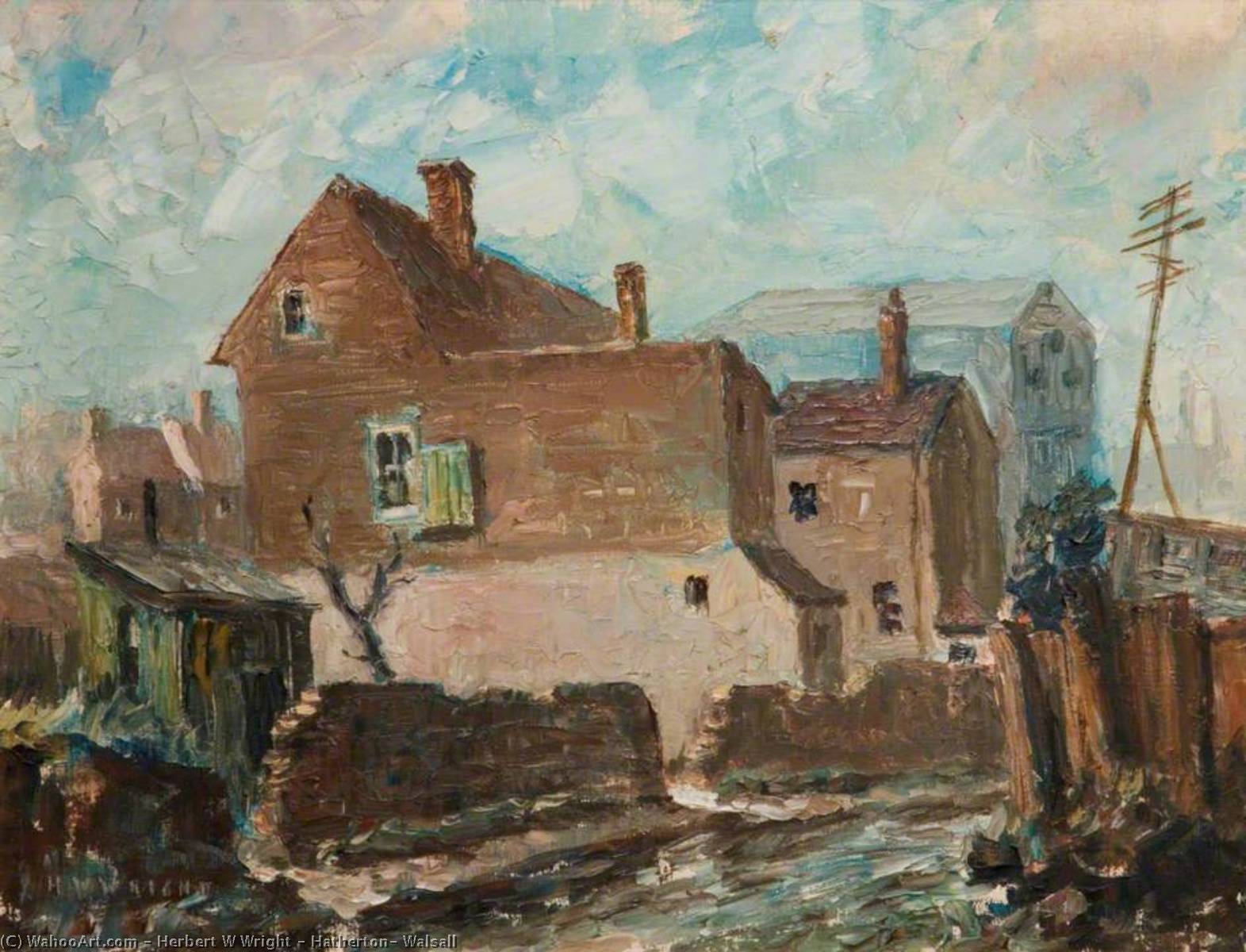
A pintura de Herbert W Wright que a maioria das pessoas conhece é Hatherton, Walsall (1945), e você pode vê-la no The New Art Gallery Walsall, em Walsall. Logo em seguida vêm Tapping e Morning on the Mall. Dos 8 trabalhos de Herbert W Wright em nosso catálogo, estas 8 são as obras mais conhecidas. Cada uma vem acompanhada do seu ano, do seu museu e de uma breve nota sobre o que a torna especial.


Os 2 museus que detêm a maioria das pinturas desta página.
| Museus | Cidade | Obras de Herbert W Wright | Pinturas desta lista |
|---|---|---|---|
 The New Art Gallery Walsall |
Walsall | 5 | Hatherton, Walsall, Tapping, Wisemore, Walsall |
 Imperial College Healthcare Charity Art Collection |
London | 1 | Pear Tree Farm, Yoxall |
1945 é o ano em que todas as obras datadas de Herbert W Wright nesta página foram criadas. Aqui estão elas, começando pelas mais famosas.
Escolha um ano para ver as suas obras.
No topo da lista está Hatherton, Walsall (1945), The New Art Gallery Walsall, Walsall. Logo atrás: Tapping e Morning on the Mall.
33 anos. Herbert W Wright nasceu em 1912, e Hatherton, Walsall é de 1945.
Temos 8 obras de Herbert W Wright em nosso catálogo.
Encontrará a maioria deles em The New Art Gallery Walsall (Walsall) e Imperial College Healthcare Charity Art Collection (London). A lista de museus acima apresenta o detalhamento completo.
Pode ver 5 das obras nesta página no The New Art Gallery Walsall, Walsall, incluindo Hatherton, Walsall, Tapping e Wisemore, Walsall.
The art world often seeks to capture a fleeting moment, a singular vista. Herbert William Wright (1912-1995), however, possessed a rarer gift – the ability to distill the very essence of place into his canvases. Born in Jackson Township, Indiana, a region steeped in the rolling hills and fertile farmlands of the Midwest, Wright’s artistic journey was inextricably linked to the landscapes he so meticulously observed and rendered. His work, primarily focused on British and Kentish scenes, is characterized by a remarkable sensitivity to light, color, and texture, creating images that resonate with both nostalgia and an undeniable sense of tranquility.
Wright's early life provided a grounding in the natural world. Growing up amidst the agricultural heartland instilled within him a deep appreciation for the rhythms of rural life and the ever-changing qualities of the landscape. This formative experience would profoundly influence his artistic vision, shaping his approach to composition, color palette, and subject matter. He initially pursued a career in engineering but found himself increasingly drawn to the visual arts, recognizing a deeper need to translate his observations into tangible forms.
Wright’s technique is immediately striking – a masterful manipulation of light and color that elevates his landscapes beyond mere representation. He wasn't simply painting what he saw; he was capturing the *feeling* of a place, its atmosphere, and its inherent beauty. His palette leaned heavily on muted greens, blues, and browns, reflecting the subtle shifts in tone found within the natural world. However, these earthy tones were frequently punctuated by bursts of vibrant color – the fiery hues of a sunset, the delicate pinks of dawn, or the rich golds of autumn foliage. This careful orchestration of color created a sense of depth and luminosity that brought his canvases to life.
He employed a loose, impressionistic style, prioritizing capturing the *impression* of light rather than precise detail. His brushstrokes were often visible, adding a textural quality to the paintings and further enhancing their sense of immediacy. Wright’s ability to render atmospheric effects – mist, fog, rain – was particularly noteworthy, creating an ethereal quality that transported the viewer to the heart of his depicted landscapes.
Wright's artistic practice was deeply rooted in his residence at Owletts House in Greenwich, Kent. This idyllic setting provided him with constant access to a diverse range of landscapes – rolling hills, verdant pastures, and the shimmering waters of the English Channel. Owletts House became not just a home but also a studio, a sanctuary where he could immerse himself in the beauty of his surroundings and translate them onto canvas. The house itself, with its sprawling gardens and picturesque views, undoubtedly served as an ongoing source of inspiration.
His Greenwich paintings are perhaps his most celebrated works, showcasing his mastery of light, color, and composition. These landscapes capture the essence of Kentish life – the quiet charm of village lanes, the vastness of the countryside, and the ever-changing beauty of the seasons. The influence of 17th and 18th century landscape painters is evident in Wright’s work, particularly in his use of atmospheric perspective and his focus on capturing the sublime qualities of nature.
Herbert William Wright's contribution to British landscape painting is significant. While he may not be as widely recognized as some of his contemporaries, his paintings are highly valued by collectors and art enthusiasts alike. His work stands apart for its quiet beauty, its profound connection to the natural world, and its masterful handling of light and color. The New Art Gallery in Walsall holds a substantial collection of Wright’s works, ensuring that his legacy will continue to be appreciated for generations to come.
Beyond his artistic achievements, Wright was also a dedicated teacher and mentor, nurturing the talents of numerous young artists. His influence extended far beyond the canvas, shaping the landscape of British art in the mid-20th century. His paintings remain a testament to the power of observation, the beauty of simplicity, and the enduring appeal of the English countryside.