Índice
Resumo Biográfico
- Born: 1415, Leuven, Bélgica
- Top 3 works:
- St John the Baptist
- Saint Christopher
- Adoration of the Magi
- Top-ranked work: St John the Baptist
- Copyright status: Public domain
- Movements: northern renaissance
- Lifespan: 60 years
- Mais…
- Also known as: Dirk Bouts
- Art period: Renascimento
- Died: 1475
- Works on APS: 20
- Nationality: Bélgica
- Museums on APS:
- Alte Pinakothek
- Alte Pinakothek
- Alte Pinakothek
- Alte Pinakothek
- Alte Pinakothek
Teste de Arte
Cada pergunta possui apenas uma resposta correta.
Pergunta 1:
Qual artista influenciou Dieric Bouts o Jovem?
Pergunta 2:
O que é mais famoso por Dieric Bouts o Jovem inovar em sua pintura “A Última Ceia”?
Pergunta 3:
Em que cidade Dieric Bouts o Jovem trabalhou e acabou se tornando pintor da cidade?
Pergunta 4:
O que caracteriza o estilo artístico de Bouts?
Pergunta 5:
Além das cenas religiosas, Bouts também criou obras em qual outro gênero?
A Life Rooted in Flemish Tradition
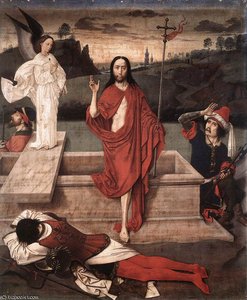
Dieric Bouts the Younger, a name resonating within the annals of Early Netherlandish painting, emerged from a lineage steeped in artistic practice. Born around 1415 in Leuven, Belgium, he inherited not merely a profession but a legacy—that of his father, Dieric Bouts the Elder, a master whose influence would subtly yet profoundly shape the younger artist’s trajectory. While details surrounding Dieric the Younger's formative years remain elusive, it is understood that he blossomed within a family environment where artistry was not simply a skill, but a way of life. Leuven itself, a vibrant center of commerce and intellectual exchange, provided a fertile ground for his development. The city’s burgeoning humanist spirit and its position as a crucial crossroads in the Burgundian Netherlands undoubtedly exposed him to diverse artistic currents. It is believed that he further honed his skills through study under Rogier van der Weyden, one of the most celebrated painters of the era, absorbing the master's refined techniques and emotionally charged style. This apprenticeship proved pivotal, laying the foundation for Bouts’s own distinctive approach to religious narrative and portraiture.Innovation in Perspective and Religious Narrative
Dieric Bouts the Younger distinguished himself not through radical departures from established conventions, but through a subtle yet significant evolution of existing techniques. He wasn’t driven by flamboyant displays of innovation; rather, he possessed an astute understanding of spatial representation and a unique sensitivity to religious symbolism. This is perhaps most evident in his masterpiece, *The Last Supper*, the central panel of the *Altarpiece of the Holy Sacrament* (1464). While earlier depictions often focused on the dramatic tension surrounding Judas’s betrayal, Bouts shifted the emphasis towards the sacred act of consecration. Christ is portrayed not as a figure embroiled in conflict, but as a priest performing a solemn ritual—a deliberate choice that underscores the theological significance of the Eucharist. More groundbreaking still was his innovative use of perspective. He employed a single vanishing point, a technique borrowed from Italian Renaissance artists, to create a sense of depth and realism previously unseen in Northern painting. This wasn’t merely a technical feat; it served to draw the viewer into the scene, fostering a more intimate connection with the sacred event unfolding before them. Beyond *The Last Supper*, Bouts's artistic output encompassed a diverse range of subjects—from devotional panels depicting the Virgin and Child to imposing justice panels commissioned for Leuven’s town hall. These works reveal his mastery of composition, color, and detail, as well as his ability to imbue even the most traditional themes with a sense of quiet dignity and spiritual resonance.A Legacy Forged in Detail and Devotion
Bouts's artistic style is often characterized by a certain “primitive stiffness” – a deliberate quality that lends his figures a solemnity and gravity appropriate to their sacred roles. While not possessing the effortless grace of Van der Weyden or the meticulous realism of Jan van Eyck, Bouts compensated with an exceptional eye for detail and a masterful command of color. His landscapes, often serving as backdrops to religious scenes, are particularly noteworthy—richly textured and imbued with a sense of atmospheric depth. He created numerous devotional panels, such as *The Davis Madonna*, which showcase his ability to convey tenderness and maternal love through subtle gestures and expressions. His portraiture, while less prolific than his other work, demonstrates an evolving understanding of human psychology and a willingness to experiment with composition. The *Portrait of a Man* (National Gallery, London) is a prime example—the sitter’s three-quarter pose and the inclusion of a discernible background represent a departure from earlier Netherlandish portrait traditions. In 1468, Bouts attained the prestigious rank of city painter of Leuven, solidifying his position as a leading artistic figure in the region. He continued to work prolifically until his death in 1475, leaving behind a body of work that reflects both his deep religious faith and his unwavering commitment to artistic excellence. ## Influences and Artistic Style Dieric Bouts’ artistic trajectory was undeniably shaped by the legacy of his father, Dieric Bouts the Elder, who established himself as a respected artist in Leuven during the early fifteenth century. Like many artists of his time, Bouts benefited from the intellectual ferment fostered by the humanist movement, which encouraged observation and experimentation—a spirit that found expression in his meticulous attention to detail and his innovative use of perspective. His artistic style was influenced by prominent masters such as Rogier van der Weyden and Jan van Eyck, who championed realism and emotional intensity. However, Bouts distinguished himself from these contemporaries through a deliberate restraint that conveyed solemnity and dignity—a characteristic often described as “primitive stiffness.” This stylistic choice reflected the prevailing artistic sensibilities of his era, yet it also imbued his paintings with a unique spiritual resonance. ## Major Achievements and Notable Works Dieric Bouts’ most celebrated achievement was undoubtedly *The Last Supper*, the centerpiece of the *Altarpiece of the Holy Sacrament* commissioned by Leuven’s Confraternity of the Holy Sacrament in 1464. This monumental panel exemplifies Bouts’ mastery of perspective, composition, and color—demonstrating his ability to capture both the physical reality of the scene and its profound theological significance. Beyond *The Last Supper*, Bouts produced a diverse range of artworks that cemented his reputation as one of the foremost painters of his time—including *The Deposition Altarpiece* in Granada, *The Portrait of a Man* (National Gallery), and numerous devotional panels—all testament to his unwavering dedication to artistic excellence. His enduring legacy resides not merely in the beauty of his paintings but also in their contribution to the development of Renaissance art in Leuven and beyond.Artigos Relacionados
Robert Campin: Pioneering Realism & Spiritual Depth in Early Netherlandish Painting
Explore the revolutionary work of Robert Campin, a pioneer of Early Netherlandish painting. Discover his naturalistic style, religious symbolism in masterpieces like the Mérode Altarpiece, and lasting influence on art history.


Illuminating Realism: Early Netherlandish Painting (15th-16th Centuries)
Explore the captivating world of Early Netherlandish painting (15th-16th centuries). Discover Jan van Eyck, Hans Memling & more. Uncover revolutionary techniques and hidden symbolism in this definitive guide.
Illuminating Realism: Early Netherlandish Painting (15th-16th Centuries)
Explore the captivating world of Early Netherlandish painting! Discover Jan van Eyck, Hans Memling & more. Uncover symbolism, techniques & the legacy of these Flemish masters. A comprehensive guide for art enthusiasts.