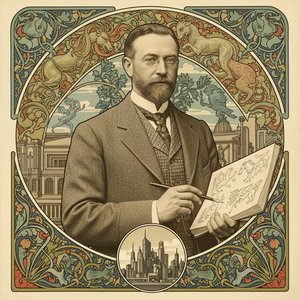
Charles Fraser: A Scottish Painter's Embrace of the American Landscape
Charles Fraser (1782-1860) stands as a quietly influential figure in the annals of early American art, particularly within Charleston’s artistic milieu. Though overshadowed by more flamboyant contemporaries like Gilbert Stuart and Thomas Cole—whose fame eclipsed many others—Fraser's dedication to capturing the subtle beauty of his surroundings and his mastery of miniature portraiture cemented his place as a pivotal artist of his time. Born in Edinburgh, Scotland, Fraser’s formative years instilled within him an appreciation for meticulous observation and artistic refinement that would define his entire career.- Early Life and Artistic Training:
- Notable Works: Landscape with Figures & Charleston Portraits
- Museum Collections Featuring His Artworks
- Influence of British Picturesque Tradition
- Legacy and Enduring Significance
Early Life and Artistic Training
Charles Fraser’s artistic journey commenced in Edinburgh, where he received instruction from local Scottish artists—a tradition that prioritized technical skill alongside a deep understanding of composition and tonal harmony. This grounding in classical painting techniques would prove invaluable as he embarked upon his formative years. While biographical details remain sparse, evidence suggests an innate inclination toward visual representation, nurtured by the cultural landscape of his upbringing. His exposure to influential painters like Salvator Rosa and Claude Lorraine—artists who championed atmospheric perspective and emotive landscapes—clearly shaped his artistic sensibilities. These influences would later permeate his own oeuvre, establishing a distinctive stylistic hallmark.Notable Works: Landscape with Figures & Charleston Portraits
Fraser’s artistic output centered primarily around two distinct genres: landscape paintings and miniature portraits. His meticulous renderings of rural Scottish vistas—exemplified by the “Young Polo Player”—demonstrate his ability to convey mood and atmosphere with remarkable precision. These landscapes weren't merely scenic representations; they were infused with a palpable sense of place, reflecting the artist’s profound connection to the natural world. Simultaneously, Fraser excelled in portraiture, producing exquisitely detailed miniature portraits of prominent Charlestonians—including members of the Scottish gentry—that captured their likenesses with astonishing accuracy. The “Charleston Portraits” series stands as testament to his technical prowess and artistic sensitivity.Museum Collections Featuring His Artworks
Several notable museums house Fraser’s paintings, offering visitors a chance to appreciate his artistry firsthand. Blake Museum in London showcases “The Young Polo Player,” highlighting the artist's command of tonal gradation and spatial illusion—techniques characteristic of the British picturesque tradition. Furthermore, Frasburgh Library proudly displays “Landscape with Figures” and “Kinnaird Head Lighthouse and Wine Tower,” demonstrating Fraser’s ability to integrate human figures into expansive landscapes while maintaining compositional balance. These artworks underscore Fraser’s contribution to the broader artistic landscape of his era.Influence of British Picturesque Tradition
Charles Fraser's artistic vision was profoundly shaped by the burgeoning picturesque movement in Britain—a trend that championed subjective experience and emotional resonance alongside objective observation. Writers like William Gilpin advocated for artists to capture not merely what they saw but how it *felt*, prioritizing atmospheric effects and evocative detail over idealized representations. Fraser embraced these principles wholeheartedly, adapting them to the unique topography of Charleston and establishing himself as one of the first American painters to engage with this influential aesthetic current. His work embodies a spirit of contemplative beauty—a legacy that continues to inspire artists today.Legacy and Enduring Significance
Despite his relative obscurity compared to other luminaries of his time, Charles Fraser’s artistic achievements hold considerable historical significance. He represents a crucial link between Scottish artistic traditions and the emergence of American landscape painting—a testament to the interconnectedness of European and North American art history. His dedication to meticulous observation and masterful technique—coupled with his embrace of the picturesque aesthetic—established him as a pioneer whose influence can still be discerned in subsequent generations of artists. Visiting Blake Museum or Frasburgh Library offers invaluable insight into Fraser’s artistic legacy, ensuring that his contribution to British and American art continues to resonate for years to come.Perguntas e Respostas
Como a carreira de Charles Fraser é dividida em períodos?
A trajetória de Charles Fraser desenrola-se período a período na página Linha do tempo do artista: uma linha do tempo horizontal das obras, agrupadas em capítulos por fases da carreira.
A qual período histórico pertence a obra de Charles Fraser?
Charles Fraser atuou no período Século XIX. Este período situa a atividade do artista na história.
Em quais movimentos Charles Fraser atuou?
As obras de Charles Fraser podem ser exploradas por movimento na página de Todos os Movimentos do artista.