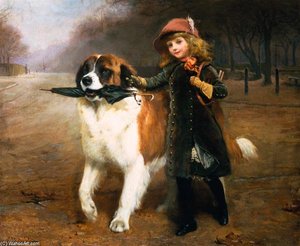
Uma Vida Pintada com Sentimento: O Mundo de Charles Burton Barber
Charles Burton Barber, um nome sinônimo do sentimentalismo vitoriano e de representações comoventes da vida doméstica, floresceu durante um período cativado pelos laços entre humanos e animais. Nascido em Great Yarmouth em 1845, a jornada artística de Barber desenrolou-se sob o pano de fundo de uma Grã-Bretanha em rápida mudança, mas sua obra oferecia consistentemente um vislumbre reconfortante de um mundo idealizado de inocência e afeto. Embora os detalhes em torno de seu treinamento formal permaneçcam algo elusivos, é claro que Barber possuía um talento inato, nutrido por meio de prática dedicada e observação aguçada. Ele exibiu pela primeira vez na prestigiada Royal Academy em 1866, marcando um momento crucial no estabelecimento de sua carreira na cena artística de Londres, e continuou a apresentar seu trabalho lá consistentemente até 1893. Essa presença sustentada consolidou sua reputação e permitiu que ele cultivasse um público fiel entre colecionadores que apreciavam sua habilidade de evocar emoções genuínas através da pintura.Capturando Corações: Estilo e Temas
A versatilidade artística de Barber era notável; ele transitava com facilidade entre um realismo altamente detalhado, quase fotográfico, e composições mais espontâneas, semelhantes a esboços. No entanto, é por seus retratos sentimentais de crianças interagindo com seus companheiros animais – particularmente cães – que ele permanece mais conhecido hoje. Suas pinturas não são meramente representações de cenas, mas sim narrativas cuidadosamente construídas, repletas de calor, ternura e um sentido palpável de conexão emocional. Ele possuía uma habilidade excepcional em capturar as sutis nuances de expressão, tanto humanas quanto caninas, imbuindo seus temas com personalidade e charme. Suspense, Off to School e A Special Pleader são exemplos primordiais dessa capacidade, com cada pintura contando uma história silenciosa que ressoa profundamente nos espectadores. A técnica do artista frequentemente envolvia a aplicação de camadas de vernizes para alcançar cores e texturas ricas, realçando o senso geral de realismo e convidando o espectador para o mundo íntimo que ele criara. Ele não estava simplesmente pintando animais de estimação; ele estava retratando membros queridos da família, capturando a relação única entre as crianças e seus amados animais.Reconhecimento Real e um Fim Trágico
O auge da carreira de Barber chegou em 1883, com sua eleição como membro do Royal Institute of Oil Painters, um testemunho de sua crescente estatura no mundo da arte britânica. No entanto, foi um encargo recebido em 1894 que acabaria por definir seu legado – e tragicamente coincidiria com sua morte prematura. A própria Rainha Vitória, uma devota amante dos animais, solicitou que Barber a pintasse ao lado de seus netos em sua carruagem de pônei. Este empreendimento prestigioso representou o culminar de anos dedicados ao aperfeiçoamento de seu ofício e à captura da essência da domesticidade vitoriana. Infelizmente, Barber faleceu pouco depois de concluir esta obra significativa em Londres, aos 49 anos. A própria Rainha expressou sua admiração pelo talento de Barber, enviando uma coroa para o seu funeral com uma inscrição reconhecendo “uma marca de admiração e apreço”. Este patrocínio real sublinhou o profundo impacto que Barber causara no cenário artístico de sua época.Influências e Significado Duradouro
A obra de Barber está profundamente enraizada na fascinação da era vitoriana pela domesticidade, pelo sentimentalismo e pelo retrato idealizado da vida familiar. Embora identificar influências artísticas específicas seja um desafio, suas pinturas alinham-se claramente com as tendências mais amplas prevalentes naquele período – particularmente a pintura de gênero vitoriana e a arte *animalier*. Ele compartilhava um foco semelhante na captura de narrativas emocionais com artistas como Arthur Elsley, que mais tarde o sucederia como o principal pintor de crianças e animais de estimação. Contudo, o estilo de Barber possuía uma qualidade única — um equilíbrio delicado entre realismo e sentimentalismo que o diferenciava. Apesar de alguns críticos contemporâneos descartarem sua obra como excessivamente açucarada, as pinturas de Barber perduraram em popularidade devido à sua habilidade técnica e capacidade de evocar emoções poderosas. A reprodução generalizada de suas obras através de impressões em fotogravura consolidou ainda mais sua acessibilidade, levando suas cenas encantadoras para inúmeros lares na Grã-Bretanha e além. Hoje, uma parte significativa da obra de Barber está guardada na Lady Lever Art Gallery, em Port Sunlight, garantindo que seu legado continue a inspirar e encantar as gerações futuras. Suas pinturas permanecem como um lembrete pungente dos valores vitorianos e do poder duradouro do vínculo entre humanos e animais.Obras Notáveis
- Suspense (1894): Uma cena cativante repleta de antecipação, demonstrando o domínio de Barber em capturar emoções fugazes.
- Off to School (1883): Um retrato idílico da inocência infantil e da companhia oferecida por um fiel amigo canino.
- Queen Victoria with John Brown (1894): Uma obra de grande importância histórica encomendada pela própria Rainha, capturando uma relação única.
- A Special Pleader (1893): Demonstra a habilidade de Barber em retratar a personalidade animal e criar narrativas envolventes.
- Gellert: Uma bela representação de um cão, exibindo o talento do artista para o retrato animal.
- The New Keeper: Outra cena encantadora que destaca o vínculo entre as crianças e seus animais de estimação.
Perguntas e Respostas
Posso ordenar as obras de Charles Burton Barber por cor?
A página Índice Espectral organiza as obras de Charles Burton Barber por cor.
Onde posso encontrar estatísticas sobre as obras de Charles Burton Barber?
A página de Estatísticas de Charles Burton Barber apresenta estatísticas calculadas a partir das obras do artista listadas em este site.
Onde posso ver as obras de Charles Burton Barber em uma galeria 3D?
A Museu 3D de Charles Burton Barber é uma página que apresenta as obras do artista em uma galeria virtual tridimensional.
Qual é a cidade e o país de nascimento de Charles Burton Barber?
Charles Burton Barber nasceu em Great Yarmouth, em Reino Unido.
Qual é o local e o ano de nascimento de Charles Burton Barber?
Charles Burton Barber nasceu em Great Yarmouth, em 1845.
De onde é Charles Burton Barber?
Charles Burton Barber nasceu em Reino Unido.
Existe uma visão geral de todos os temas que Charles Burton Barber pintou?
As obras de Charles Burton Barber podem ser exploradas por tema na página Atlas de Temas do artista.