Primeiros Anos e Formação
A história de Bartholomeus Breenbergh, uma figura central da Idade de Ouro holandesa, começa envolta em certo mistério. Nascido antes de 13 de novembro de 1598, provavelmente em Deventer, na Holanda, seus primeiros anos são escassamente documentados. Uma mudança significativa ocorreu na vida do jovem Breenbergh com o falecimento de seu pai em 1607, o que levou a família a se mudar para Hoorn. Foi aqui, em meio à movimentada cidade portuária, que ele encontrou o mundo da arte pela primeira vez, tornando-se contemporâente de Jacques Waben e recebendo treinamento inicial – embora vindo de um dos muitos pintores de paisagem menos conhecidos que atuavam em Amsterdã durante aqueles anos. A instrução formal seguiu-se sob a tutela de Pieter Lastman e Jacob Symonsz Pynas, lançando as bases para suas futuras explorações artísticas. Essas influências precoces teceriam sutilmente seu caminho até o estilo maduro, particularmente o talento narrativo dramático de Lastman.Estadia Romana e o Estilo Italianizante
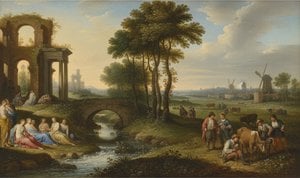
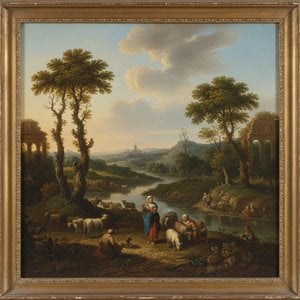
Em 1619, Breenbergh embarcou em uma jornada transformadora para Roma, uma cidade que moldaria indelévelmente sua visão artística. Por aproximadamente onze anos, ele mergulhou na vibrante cena artística romana, colaborando com o pintor flamengo Frans van de Kasteele e deixando-se encantar pelas paisagens luminosas de Paul Bril. Foi durante este período que Breenbergh começou a desenvolver seu estilo italianizante característico – representações idealizadas da Campagna Romana, banhadas por uma luz dourada e quente. Ele observou atentamente as ruínas clássicas espalhadas pelo campo, incorporando-as em composições que evocavam um senso de beleza atemporal e grandeza melancólica. Sua obra ressoava cada vez mais com a de Cornelis van Poelenburgh, tanto que distinguir entre suas pinturas poderia ser desafiador por vezes. O abraço de Breenbergh a este estilo não era meramente estético; refletia uma fascinação europeia mais ampla pela antiguidade clássica e pelo encanto da paisagem italiana. Ele tornou-se um dos membros fundadores dos Bentvueghels, uma sociedade de pintores holandeses e flamengos em Roma conhecida por sua camaradagem exuberante e apelidos frequentemente satíricos – Breenbergh conquistou o monônimo “het fret” (o furão).O Retorno a Amsterdã e a Maturidade Artística
Por volta de 1630, Breenbergh retornou a Amsterdã, trazendo consigo as sensibilidades artísticas apuradas durante seus anos romanos. Ele rapidamente se estabeleceu como um pintor requisitado, casando-se em 1633 e até garantindo uma estipêndio anual do Rei Carlos I da Grã-Bretanha – um testemunho de sua crescente reputação. No entanto, seu trabalho começou a evoluir para além da pura pintura de paisagem. Influenciado novamente por artistas como Pieter Lastman, ele começou a integrar figuras mitológicas e bíblicas em seus cenários italianizantes, criando cenas que eram visualmente cativantes e ricas em profundidade narrativa. Essa fusão da narrativa do norte da Europa com as paisagens do sul da Europa resultou em um estilo monumental, caracterizado por tipos de figuras expressivas e efeitos de iluminação dramáticos. Embora Breenbergh tenha aceitado apenas um aluno registrado, Jan de Bisschop, que estudou com ele durante a década de 1640, sua influência estendeu-se a um círculo mais amplo de artistas, incluindo Jan Linsen, Scipione Compagno, Laurens Barata, Charles Cornelisz. de Hooch, entre outros.Legado e Significância Histórica
A contribuição de Bartholomeus Breenbergh para a pintura da Idade de Ouro holandesa reside em seu papel pioneiro no estabelecimento do estilo de paisagem italianizante dentro da tradição artística do Norte da Europa. Ele sintetizou magistralmente as influências de Pieter Lastman, Nicolaes Moeyaert, Paul Bril e Cornelis van Poelenburgh, forjando uma voz artística única e reconhecível. Sua habilidade em misturar perfeitamente ruínas clássicas, paisagens idealizadas e narrativas envolventes cativou o público e inspirou gerações subsequentes de pintores de paisagem. Ele construiu a ponte entre os mestres holandeses anteriores e praticantes posteriores mais refinados, como Claude Lorrain, abrindo caminho para uma nova apreciação da cenografia italiana na arte do Norte da Europa. O trabalho de Breenbergh ajudou a popularizar as representações da antiguidade clássica e das paisagens idealizadas, moldando as preferências estéticas de sua época e deixando uma marca duradoura na história da pintura de paisagem. Suas pinturas continuam a ressoar hoje, oferecendo aos espectadores um vislumbre de um mundo onde o mito, a religião e a natureza convergem em uma beleza harmoniosa.Perguntas e Respostas
De onde é Bartholomeus Breenbergh?
Bartholomeus Breenbergh nasceu em Países Baixos.
Existe um tour virtual 3D das obras de Bartholomeus Breenbergh?
As obras de Bartholomeus Breenbergh podem ser visualizadas em uma galeria 3D na página Galeria 3D do artista.
Existe uma cronologia da carreira de Bartholomeus Breenbergh?
A Linha do tempo de Bartholomeus Breenbergh é uma linha do tempo interativa que apresenta as obras do artista em ordem cronológica, organizadas em capítulos por períodos de sua carreira.