A Sombra da Ilha
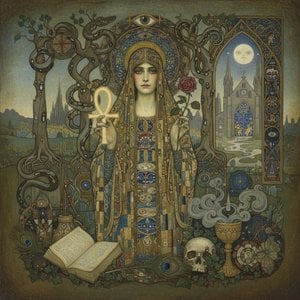
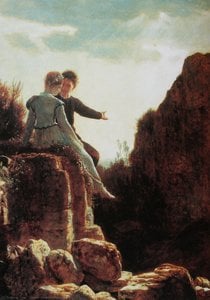
Basileia, na Suíça, oferece o ponto de partida para uma vida definida pela tensão entre o tangível e o espectral. Nascido em 16 de outubro de 1827, filho de Christian Frederick Böcklin e Ursula Lippe, o jovem acabaria por transcender o comércio de seda de seu pai para ingressar nos rigorosos salões da Academia de Düsseldorf. Sob a orientação de Schirmer, ele começou a absorver a linguagem da paisagem, uma habilidade que seria usada posteriormente para mapear a geografia da alma humana. Ele não apenas pintava cenários; ele construía reinos onde o clássico e o macabro colidem.
A transição da disciplina acadêmica de Düsseldorf para a luz de Paris e o peso ancestral de Roma marca uma mudança fundamental em sua visão. No Louvre, ele absorveu a história dos mestres, mas foi a atmosfera da Itália que verdadeiramente moldou sua mão. Ele retornou a Roma entre 1862 e 1866, um período em que sua paleta começou a favorecer cores mais violentas e expressivas. Esta não era a Itália ensolarada e brilhante do Renascimento, mas um lugar de sombras profundas e peso mitológico. Sua obra começou a inclinar-se para o alegórico, utilizando figuras da antiguidade para explorar a presença pesada e inescapável da mortalidade.
A Arquitetura dos Sonhos
No final do século XIX, sua reputação estava ancorada por uma preocupação específica e inquietante. Entre 1880 e 1886, ele produziu cinco versões de A Ilha dos Mortos. Esta obra, inspirada pelo cemitério inglês em Florença, onde sua filha foi enterrada, tornou-se um ponto focal para o movimento simbolista. É uma cena de profunda quietude: um ilhéu rochoso, ciprestes escuros e um barco aproximando-se de uma margem silenciosa. A pintura não apenas retrata um lugar; ela retrata um estado de ser. Essa capacidade de renderizar o intangível — os sussurros dos sonhos e o peso do além-vida — colocou-o no centro de uma nova sensibilidade europeia.
Sua abordagem técnica frequentemente utilizava um impasto espesso e expressivo, particularmente em obras como La Guerre (1896). Nesta peça, a tela treme com o caos do conflito. Ele evita as linhas limpas do tradicionalismo, optando, em vez disso, por uma composição densa e estratificada onde figuras colidem em meio a uma arquitetura em ruínas. É uma manifestação visceral da destruição, onde o véu entre o mito e a realidade se dissolve em uma tempestade de sombras. Seu estilo sobrepôs-se ao dos Pré-Rafaelitas, mas ele permaneceu distinto, focado em um misticismo que parecia ao mesmo tempo antigo e inquietantemente moderno.
Um Legado de Influência
O impacto de sua imaginação estendeu-se muito além da tela, alcançando o reino auditivo da música do final do Romantismo. Suas pinturas forneceram um estímulo visual para compositores, influenciando notavelmente a atmosfera da obra de Gustav Mahler. Sua habilidade de cruzar a lacuna entre o visual e o psicológico significou que sua influência foi sentida por aqueles que buscavam representar o subconsciente. Seu alcance tocou várias gerações de artistas:
- Hans Thoma, um artista mais jovem influenciado por sua profundidade simbólica.
- Giorgio de Chirico, que encontrou uma conexão profunda no isolamento das composições de Arnold Böcklin.
- Salvador Dalí e Max Ernst, que beberam de sua capacidade de misturar o cômico com o pesadelo.
- Marcel Duchamp, que observou a influência significativa do artista em seu próprio desenvolvimento.
Ele morreu em Fiesole, na Itália, deixando para trás um corpo de obras que se recusava a ser facilmente categorizado. Ele foi um pintor da paisagem suíça, da taverna romana e do bosque mitológico, mas seu verdadeiro tema permaneceu a presença silenciosa e duradoura do desconhecido. Suas obras permanecem em coleções importantes, incluindo o Kunstmuseum de Basileia e o Kunsthaus Zürich, servindo como âncoras para aqueles que exploram a intersecção entre o mito e a mortalidade.
Perguntas e Respostas
Por quais outros nomes ou pseudônimos Arnold Böcklin é conhecido?
Arnold Böcklin também é conhecido como Arnold Böcklin-Pascucci.
Onde posso encontrar estatísticas sobre as obras de Arnold Böcklin?
Existe uma página de Estatísticas para Arnold Böcklin, apresentando estatísticas sobre as obras do artista no este site.
De onde é Arnold Böcklin?
Arnold Böcklin nasceu em Suíça.