

George Goodwin Kilburne: Capturing Victorian Sentimentality Through Genre Painting
Índice
Early Life and Artistic Training: From Wood Engraving to Watercolour
George Goodwin Kilburne’s artistic journey began not with the sweeping strokes of a paintbrush, but with the meticulous precision of wood engraving. Born in 1839 in the quiet Norfolk village of Hackford, young George initially followed in his father's footsteps, receiving an education at Hawkhurst School in Kent before embarking on a five-year apprenticeship with the renowned Dalziel brothers in London. This formative period proved crucial; the Dalziels were masters of their craft, producing intricate engravings for periodicals and illustrations that demanded unwavering accuracy and attention to detail. They famously described Kilburne as “industrious and constant,” and “one of the most satisfactory pupils we ever had.” This early discipline instilled a remarkable skill for capturing form and texture – qualities that would later define his paintings. While wood engraving provided a solid foundation, it was ultimately an insufficient outlet for Kilburne’s burgeoning artistic vision. He yearned to explore color, atmosphere, and the nuances of light in ways that engraving simply couldn't accommodate.
Leaving the Dalziels after six years, Kilburne dedicated himself to watercolour painting, quickly gaining recognition for his ability to depict scenes with a delicate realism. He wasn’t merely transferring images; he was interpreting them through a lens of growing sensitivity and observation. This transition marked not just a change in medium, but a shift in artistic purpose – from reproduction to creation.
The Rise of Genre Painting and Kilburne's Specialization
Genre painting (or petit genre) is the painting of genre art, which depicts aspects of everyday life by portraying ordinary people engaged in common activities. One common definition of a genre scene is that it shows figures to whom no identity can b...
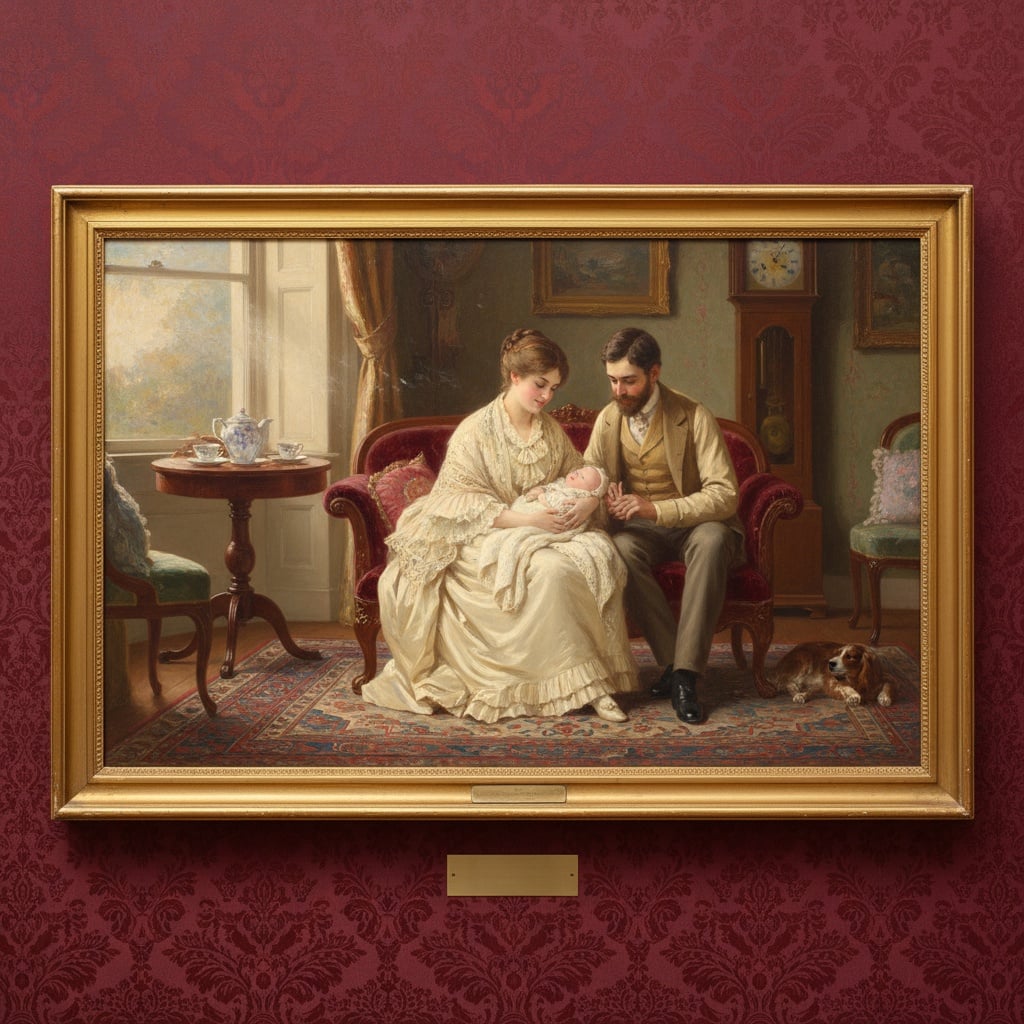
Kilburne emerged during a fascinating period in art history: the flourishing of genre painting. Rejecting the grand historical narratives favored by earlier generations, artists began turning their attention to everyday life, portraying ordinary people engaged in common activities. This wasn’t simply about documenting reality; it was about finding beauty and meaning in the mundane. Genre painting allowed for a more intimate connection with the viewer, inviting them into scenes they could readily understand and relate to. Kilburne quickly found his niche within this movement, specializing in accurately drawn interiors populated by figures of the upper classes.
His choice wasn’t accidental. Victorian society was captivated by depictions of domesticity, refinement, and social grace. Kilburne tapped into this cultural fascination, creating images that idealized a particular lifestyle – one characterized by comfort, elegance, and leisurely pursuits. He became known for his ability to capture the subtle nuances of Victorian etiquette and the quiet moments of connection within affluent households.
A Master of Domestic Interiors: Detail, Light, and Victorian Life
 Kilburn goodwin george the black bird
George Goodwin Kilburne’s "Kilburn goodwin george the black bird" captures Victorian family life by a riverbank. Oil painting showcasing realism & soft light. Explore this serene scene!
What truly sets Kilburne’s work apart is his masterful rendering of domestic interiors. He wasn't simply painting rooms; he was creating immersive environments filled with texture, light, and a palpable sense of atmosphere. His meticulous attention to detail – from the intricate patterns on wallpaper to the gleam of polished furniture – speaks to a deep appreciation for the beauty of material objects. But it’s his handling of light that truly elevates his paintings.
Kilburne understood how light shapes our perception, creating mood and highlighting specific elements within a scene. He often employed soft, diffused lighting, casting gentle shadows and lending a warm glow to his interiors. This technique not only enhances the realism of his work but also imbues it with a sense of tranquility and intimacy. Paintings like “Kilburn goodwin george the black bird” exemplify this skill, capturing a serene family moment by a riverbank bathed in soft afternoon light. Similarly, “Fetching Water” showcases his ability to depict rural life with a delicate realism, emphasizing the beauty of simple pleasures.
Kilburne’s Patrons and the Upper-Class Aesthetic
Kilburne's success wasn’t solely due to his artistic talent; it was also a product of his social connections. He cultivated relationships within upper-class circles, gaining access to the homes and lifestyles he so frequently depicted. This allowed him to observe firsthand the nuances of Victorian etiquette and the details of affluent domestic life. His patrons were drawn to his ability to capture their world with such accuracy and elegance.
These commissions weren’t merely about acquiring a beautiful painting; they were about possessing an idealized representation of themselves and their social standing. Kilburne understood this dynamic, creating images that flattered his subjects and reinforced their sense of identity. He became a chronicler of Victorian upper-class life, documenting its customs, values, and aspirations.
Technique and Style: Defining Characteristics of Kilburne’s Work
George Goodwin Kilburne, R.I., R.O.I, R.M.S, (24 July 1839 – 1924 London) was an English genre painter specialising in accurately drawn interiors with figures. He favoured the watercolour medium, although he also worked in oils, pencil and initially ...
Kilburne primarily worked in watercolour, though he also employed oils and pencil. His technique was characterized by a remarkable precision and attention to detail, honed during his years as a wood engraver. He meticulously recorded the dimensions and features of interiors, ensuring that every element within his paintings was accurately rendered. However, his work wasn’t simply about photographic realism; it was infused with a sense of romanticism and sentimentality.
His figures are often posed in graceful, elegant positions, embodying the ideals of Victorian beauty. He favored muted colors and soft brushstrokes, creating a harmonious palette that evokes a sense of tranquility and refinement. While his style remained largely traditional throughout his career, he wasn’t afraid to experiment with different compositions and lighting effects. His paintings are characterized by a delicate balance between realism and idealism, capturing the essence of Victorian life without sacrificing artistic expression.
Legacy and Rediscovery: The Enduring Appeal of a Victorian Painter
By the time of his death in 1924, George Goodwin Kilburne was a well-respected artist who had enjoyed considerable success during his lifetime. However, his work gradually faded from public view as artistic tastes shifted. In recent years, there has been a renewed appreciation for Kilburne’s paintings, driven by a growing interest in Victorian art and culture.
His ability to capture the beauty of domestic life with such accuracy and sensitivity continues to resonate with audiences today. Paintings like “On The Lawn” offer a glimpse into a bygone era, evoking a sense of nostalgia and tranquility. Kilburne’s work reminds us of the importance of finding beauty in everyday moments and celebrating the simple pleasures of life. At ArtsDot, we are proud to offer high-quality reproductions of his most iconic works, allowing you to bring the elegance and charm of Victorian England into your own home. Explore our collection today and discover the enduring appeal of George Goodwin Kilburne.
Artigos Relacionados

Benjamin Haughton: Victorian Genre Painting & Social Commentary
Explore the captivating world of Benjamin Haughton, Victorian genre painter. Discover his realistic depictions of daily life, social commentary, and enduring artistic legacy. Shop high-quality reproductions at ArtsDot.


