

Evoking Mood & Space: A History of Atmospheric Painting Techniques

Índice
The Dawn of Atmosphere: Pompeian Frescoes & Early Renaissance Innovations
Aerial perspective, or atmospheric perspective, is the effect the atmosphere has on the appearance of an object as viewed from a distance. As the distance between an object and a viewer increases, the contrast between the object and its background de...
Before the meticulous realism of the High Renaissance, a subtle understanding of atmospheric effects began to emerge, not in grand altarpieces but within the intimate spaces of Roman villas. The frescoes discovered at Pompeii, particularly those dating back to the 1st century BCE, reveal an early grasp of how distance alters perception. The “Garden Room Fresco” from the Villa of Livia isn’t merely a decorative depiction of nature; it's a carefully constructed illusion of depth achieved through diminishing scale and, crucially, a softening of detail as elements recede into the background. While not employing the scientific rigor that would come later, these artists intuitively understood that objects appear less distinct, paler, and cooler with distance – a foundational principle of what we now know as aerial perspective. This wasn’t simply about replicating visual reality; it was about creating believable spaces within their homes, extending the architecture beyond its physical limits.
This nascent understanding continued to develop through the early Renaissance, though often overshadowed by the pursuit of linear perspective – a system focused on geometric accuracy. Artists like Masaccio, while pioneering in their use of vanishing points and foreshortening, still occasionally exhibited a somewhat flattened sense of atmosphere. However, the seeds were sown. The desire to represent not just *what* was seen but *how* it was seen—the very quality of light and air—was beginning to take root, setting the stage for a revolution in painting technique.
Leonardo da Vinci and the Scientific Rendering of Aerial Perspective
The true breakthrough came with Leonardo da Vinci. A polymath driven by insatiable curiosity, Leonardo didn’t merely observe atmospheric effects; he *studied* them. His notebooks are filled with detailed analyses of light scattering, color shifts, and the way moisture affects visibility. He understood that the atmosphere wasn't a blank veil but an active medium, altering colors and reducing contrast as distance increased. This scientific approach culminated in masterpieces like The Annunciation, where the landscape behind the figures is rendered with remarkable subtlety. The distant mountains are paler blues, less defined than the foreground elements, creating a convincing illusion of depth that had rarely been achieved before.
Sfumato, Leonardo’s signature technique of blurring outlines and softening transitions, wasn't just about creating a hazy effect; it was intrinsically linked to his understanding of aerial perspective. By layering thin glazes of paint, he mimicked the way light diffuses through the atmosphere, obscuring details and unifying forms. His Mona Lisa, perhaps the most famous painting in the world, is a testament to this mastery – the background landscape dissolves into a soft haze, enhancing the enigmatic quality of the subject. Leonardo’s followers, known as the Leonardeschi, adopted and refined his techniques, spreading the principles of aerial perspective throughout Italy.
Tonalism: An American Embrace of Mood, Mist, and Subdued Hues
Tonalism was an artistic style that emerged in the 1880s when American artists began to paint landscape forms with an overall tone of colored atmosphere or mist. Between 1880 and 1915, dark, neutral hues such as gray, brown or blue, often dominated c...
Centuries later, a distinct artistic movement emerged in America that wholeheartedly embraced atmosphere – Tonalism. Born in the 1880s as a reaction against the increasingly industrializing world, Tonalism sought to capture mood and feeling through subtle tonal ranges of color. Artists like George Inness and James McNeill Whistler rejected bright, vibrant palettes in favor of muted grays, browns, and blues. Their landscapes weren’t about precise representation; they were about evoking a sense of quiet contemplation and spiritual solace.
Whistler's “Nocturnes,” for example, are not depictions of specific places but rather impressions of light and atmosphere at twilight. He famously reduced his compositions to essential forms and colors, prioritizing the overall tonal effect over detailed rendering. The term “tonal” itself arose from critics’ attempts to describe these works – a testament to their focus on color harmony and atmospheric unity. Tonalism drew inspiration from the French Barbizon school's emphasis on shadow and mood but developed its own unique character, often imbued with a sense of melancholy and nostalgia.
Caspar David Friedrich and the Romantic Sublime in Landscape Painting
While Tonalism flourished in America, across the Atlantic, Caspar David Friedrich was exploring similar themes within the context of German Romanticism. Friedrich’s landscapes are not simply beautiful depictions of nature; they are deeply symbolic meditations on humanity's relationship with the infinite. His paintings often feature solitary figures dwarfed by vast, imposing natural scenes – mountains, forests, and seascapes that evoke a sense of awe and wonder.
The Chasseur in the Forest, for instance, depicts a lone hunter gazing out at a seemingly endless expanse of trees. The atmospheric perspective is crucial here; the forest recedes into a misty distance, creating a feeling of depth and mystery. Friedrich’s use of light and shadow further enhances this effect, with the foreground bathed in a warm glow while the background dissolves into cool blues and grays. His paintings are imbued with a sense of the Sublime – that overwhelming experience of beauty and terror that transcends human comprehension. The “Monastery Ruin Eldena” exemplifies his fascination with ruins as symbols of mortality and the passage of time, further enhanced by atmospheric haze.
Beyond Realism: How Atmospheric Perspective Shapes Emotional Impact
Atmospheric perspective is more than just a technical skill; it’s a powerful tool for shaping emotional impact. By manipulating depth and clarity, artists can guide the viewer's eye, create a sense of distance or intimacy, and evoke specific moods. A hazy background can suggest mystery, nostalgia, or even isolation, while a crisp, clear foreground can convey a sense of immediacy and presence. Winslow Homer’s “Old Settlers,” for example, uses atmospheric perspective to subtly emphasize the tranquility and remoteness of the mountain landscape, reinforcing the theme of peaceful coexistence with nature.
Ultimately, mastering atmosphere allows artists to move beyond mere representation and tap into the deeper psychological effects of visual experience. It's about creating not just a picture *of* a place but a feeling *about* it – a sense of being present within the scene, enveloped by its light, air, and mood.
At ArtsDot.com, we celebrate the enduring power of these techniques through high-quality reproductions of masterpieces from across art history. Explore our collection today and discover how artists have used atmosphere to evoke emotion, create depth, and capture the beauty of the world around us.
Artigos Relacionados

The Evocative Brushstroke: Exploring Emotion, Individuality & the Sublime in Romanticism's Artistic Landscape
Explore the passionate world of Romanticism! Discover masterpieces by Friedrich & Goya, delve into the sublime, and understand the movement's lasting impact on art history. Expert analysis & insights at ArtsDot.


Evoking Atmosphere: Mood, Light & Spatial Representation in Art
Explore the history of atmospheric painting techniques & how artists evoke mood, depth & emotion through light and space. Discover masterpieces & expert insights at ArtsDot.

The Sublime American Landscape: Frederic Edwin Church & the Dawn of Luminism
Explore the captivating world of Frederic Edwin Church and the Luminist movement. Discover the history, techniques & enduring legacy of America’s first great landscape painters with ArtsDot.
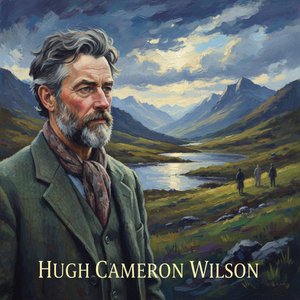
Hugh Cameron Wilson: Capturing the Soul of Scotland Through Colour & Atmosphere
Explore the evocative landscapes of Hugh Cameron Wilson, a key figure within the Scottish Colourist movement. Discover his mastery of light, atmosphere & rural scenes – and find high-quality reproductions at ArtsDot.

