


 Visualizar em escala
 Enviar
 Compartilhar
 Ver detalhes
 Guia
Guia

 Baixar imagem
 Semelhantes
 Raio X
 Apresentação de slides
 Estatísticas
James Duff de Corsindae


 Ver mais
Reprodução em Óleo Feita à Mão
Óleo sobre tela pintado à mão no tamanho e moldura de sua escolha, feito sob encomenda pelos nossos artistas. ( Alternar para Impressão Ver Imagem Digital)




P118B $10

P118H $10

P118W $10

P438Z $10

P508JH $12

P508YH $12

P805H $10

P805Z $10

P919BZ $10

P919G $10

P919XJ $10

P959ZH $10

P968JZ $12

W106C $8

W218G $10

W218JH $8

W218Y $10

W307PJ $10

W316G $10

W316PJ $8

W316Y $10

W398PJ $8

W4111J $10

W500HY $15

W500JH $15

W692G $12

W849H $8

W940BG $15

W953PJ $8




Escolha entre os nossos tamanhos pré-definidos que respeitam as proporções originais da obra de arte.

Pode inserir as suas próprias dimensões para se adequar a uma moldura ou espaço específico. Se o tamanho selecionado não corresponder às proporções da imagem original, iremos cortar a obra de arte ou estender a pintura com elementos adicionais pintados à mão. Um esboço digital será enviado para sua aprovação antes do início da produção.
Tenha em atenção que a pré-visualização no ecrã não reflete o corte ou extensão real. Apenas o esboço mostrará com precisão a composição final.
Embora tamanhos personalizados estejam disponíveis, recomendamos selecionar uma dimensão da lista predefinida para preservar as proporções originais.
Após o pedido, a equipa ArtsDot.com enviará um e-mail ao cliente para solicitar instruções e fornecer uma prévia do esboço.
Entrega mundial () em 3 a 4 semanas, em vez das 5 semanas padrão. (24 Setembro). Sem comprometer a qualidade.

Envio expresso gratuito para todo o mundo

Tela de Linho Premium

Seguro de transporte total

Garantia de Reembolso de Impostos Alfandegários

Garantia de Fidelidade de Cor

Política de Devolução em 100 Dias (Apenas para Defeitos)

Garantia de reembolso de 100%

Desconto para múltiplas unidades
 A opção de vidro está disponível apenas para tamanhos inferiores a 110 cm

James Duff de Corsindae
Técnica de Reprodução
Dimensões da Reprodução
-


Preço Total
$ 263
James Duff of Corsindae: Uma Retrato Elegante da Nobreza Escocesa do Século XVIII
A pintura "James Duff of Corsindae", atribuída ao pintor Cosmo Alexander, oferece um vislumbre fascinante da vida aristocrática escocesa no século XVIII. Criada em 1760, esta obra permanece como um testemunho da habilidade artística de Alexander e da atenção meticulosa aos detalhes que caracterizam o estilo neoclássico da época. O retrato captura uma figura masculina imponente, vestida em um elegante casaco azul adornado com botões brancos, simbolizando poder e status social. Os olhos atentos do sujeito direcionados ao espectador evocam uma sensação de intimidade e convidam à contemplação sobre a personalidade e o espírito da época.- Artista: Cosmo Alexander (1724 – 1772)
- Estilo: Neoclássico
- Técnica: Óleo sobre tela
- Localização atual: Scottish National Gallery, Edimburgo
Obras Relacionadas


Biografia do Artista
George Stubbs: The Anatomist of the Horse
George Stubbs, born in Liverpool on August 25th, 1724, stands as a singular figure in British art – a self-taught master whose legacy rests primarily upon his extraordinary depictions of horses. More than simply painters of steeds, Stubbs was an anatomist, a naturalist, and a Romantic visionary who captured the power, grace, and even the drama of these magnificent animals with unprecedented realism and emotional intensity. His journey to artistic prominence wasn’t paved with formal training; instead, it unfolded through a relentless pursuit of knowledge, meticulous observation, and a profound fascination with the equine form.
Stubbs' early life was far removed from the world of art. He began working in his father’s leather workshop, a trade he diligently pursued until the age of sixteen. However, a nascent artistic spirit refused to be suppressed. Recognizing his innate talent and desire for a different path, Stubbs persuaded his family to allow him to pursue painting. His initial apprenticeship with Hamlet Winstanley, a local painter, proved short-lived due to a clash of artistic philosophies – Stubbs’s insistence on detailed anatomical study versus Winstanley's more conventional approach. This early experience, however, provided crucial foundational skills and exposed him to the techniques of oil painting.
Crucially, Stubbs’s development was profoundly shaped by his access to the extensive collection at Knowsley Hall, the estate of Sir John Raynesbury, a wealthy patron who had amassed an impressive array of artworks and anatomical specimens. Here, he spent countless hours dissecting horses – a practice considered unconventional for an artist at the time – meticulously studying their musculature, skeletal structure, and movement. This dedication to anatomical accuracy became the hallmark of his work, elevating his paintings beyond mere representations of horses to profound studies in form and function. His detailed drawings, often incorporating sketches from dissections, served as the basis for his finished canvases, demonstrating a level of scientific rigor rarely seen in 18th-century art.
The Lion and the Horse: A Romantic Breakthrough
Stubbs’s most celebrated works are undoubtedly his series of paintings depicting a lion attacking a horse – a subject that resonated deeply with the burgeoning Romantic movement. The most famous example, *A Lion Attacking a Horse* (Whistlejacket), completed around 1762, is not simply a dramatic scene; it's a complex meditation on power, vulnerability, and the sublime. The genesis of this particular image is often attributed to an eyewitness account of a lion attack in Morocco during Stubbs’s travels – though some scholars suggest he was influenced by antique sculptures depicting similar themes. Regardless of its precise origin, *Whistlejacket* marked a pivotal moment in Stubbs' career and signaled his embrace of Romantic ideals.
These paintings were revolutionary not only for their dramatic composition but also for their portrayal of the horse itself. Stubbs eschewed the idealized, graceful depictions favored by earlier artists, instead presenting a powerful, muscular animal caught in the throes of battle – its expression conveying both fear and defiance. The lighting, the dynamic pose, and the sheer physicality of the scene all contribute to a sense of overwhelming intensity, capturing the essence of Romanticism’s fascination with raw emotion and untamed nature. The series established Stubbs as a leading figure in this movement, influencing generations of artists who sought to capture the grandeur and drama of the natural world.
Royal Patronage and Expanding Horizons
Despite his initial struggles for recognition, Stubbs’s talent eventually attracted the attention of influential patrons. He secured commissions from prominent figures, including members of the Royal Family, which provided him with financial stability and access to new subjects. His paintings of horses for the aristocracy became immensely popular, reflecting the growing fascination with equestrian pursuits among the wealthy elite. He also expanded his repertoire beyond equine subjects, tackling history paintings, portraits, and even depictions of animals such as moose, rhinoceroses, and zebras – each rendered with equal skill and attention to detail.
Stubbs’s versatility is further evidenced by his experiments with new materials and techniques. He collaborated with Josiah Wedgwood, the renowned potter, to create paintings on earthenware panels, a groundbreaking innovation that allowed him to explore different textures and surfaces. This venture, however, proved financially challenging, consuming much of his time and resources without generating significant profits.
Legacy and Enduring Influence
George Stubbs died in London on July 10th, 1806, leaving behind a remarkable body of work that continues to captivate audiences today. His paintings are celebrated for their anatomical accuracy, dramatic compositions, and emotional intensity – qualities that firmly established him as the greatest horse painter of his time. Stubbs’s influence extends far beyond the realm of equestrian art; his meticulous observation and scientific approach paved the way for a more realistic and nuanced depiction of animals in art. His work remains a testament to the power of self-education, unwavering dedication, and a profound love for the natural world.
Stubbs’s legacy is secured through numerous works housed in prestigious collections worldwide, including the National Gallery in London, the Yale Center for British Art, and the Tate collection. His paintings continue to be studied by art historians and appreciated by viewers who recognize the enduring power of his vision – a vision that seamlessly blends scientific rigor with artistic brilliance.

cosmo alexander
1724 - 1772
Informações Rápidas
- Artistic Movement Or Style: Romanticism, Animal Painting
- Artists Or Movements Influenced By This Artist: ['Romanticism']
- Artists Who Influenced This Artist:
- Joshua Reynolds
- Thomas Gainsborough
- Date Of Birth: 25 August 1724
- Date Of Death: 10 July 1806
- Full Name: George Stubbs
- Nationality: English
- Notable Artworks:
- A Lion Attacking a Horse
- Whistlejacket
- Hambletonian, Rubbing Down
- Place Of Birth: Liverpool, England
Artigos Relacionados

Romantic Realism's Finest: 10 Masterpieces for Your Home | ArtsDot
Explore 10 defining masterpieces of Romantic Realism! Discover Courbet, Millet & Daumier's powerful paintings—capturing emotion and social realities. Find museum-quality reproductions for your home at ArtsDot.com.

The Equine Muse: A Historical & Artistic Exploration of Horses in Painting
Explore the captivating history of horses in painting! Discover Renaissance masterpieces, Baroque grandeur & expert insights for collecting equestrian art. Learn about symbolism, techniques & lasting value with ArtsDot.

The Noble Steed on Canvas: A Historical & Artistic Exploration of Horse Painting Across Cultures
Explore the rich history of horse painting! Discover masterpieces from Stubbs to Munnings & learn about symbolism, techniques & artists. Find museum-quality reproductions at ArtsDot.

George Stubbs: Anatomical Precision & Romantic Vision in 18th-Century British Art
Explore the captivating world of George Stubbs, the 18th-century master renowned for his anatomical precision & Romantic animal paintings. Discover his legacy and investment potential.
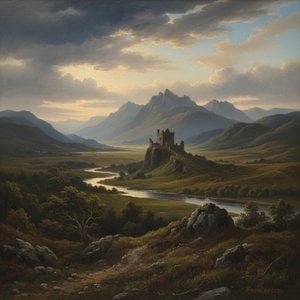
Alexander Nasmyth: Picturing Scotland's Romantic Landscape – Innovation & Identity
Explore the life & art of Alexander Nasmyth, a pivotal figure in Scottish Romantic landscape painting. Discover his iconic works, including portraits of Robert Burns, and learn about his lasting influence on national identity. Fine art reproductions available.
