

 Visualizar em escala
 Enviar
 Compartilhar
 Ver detalhes

 Baixar
 Semelhantes
 Raio X
 Apresentação de slides
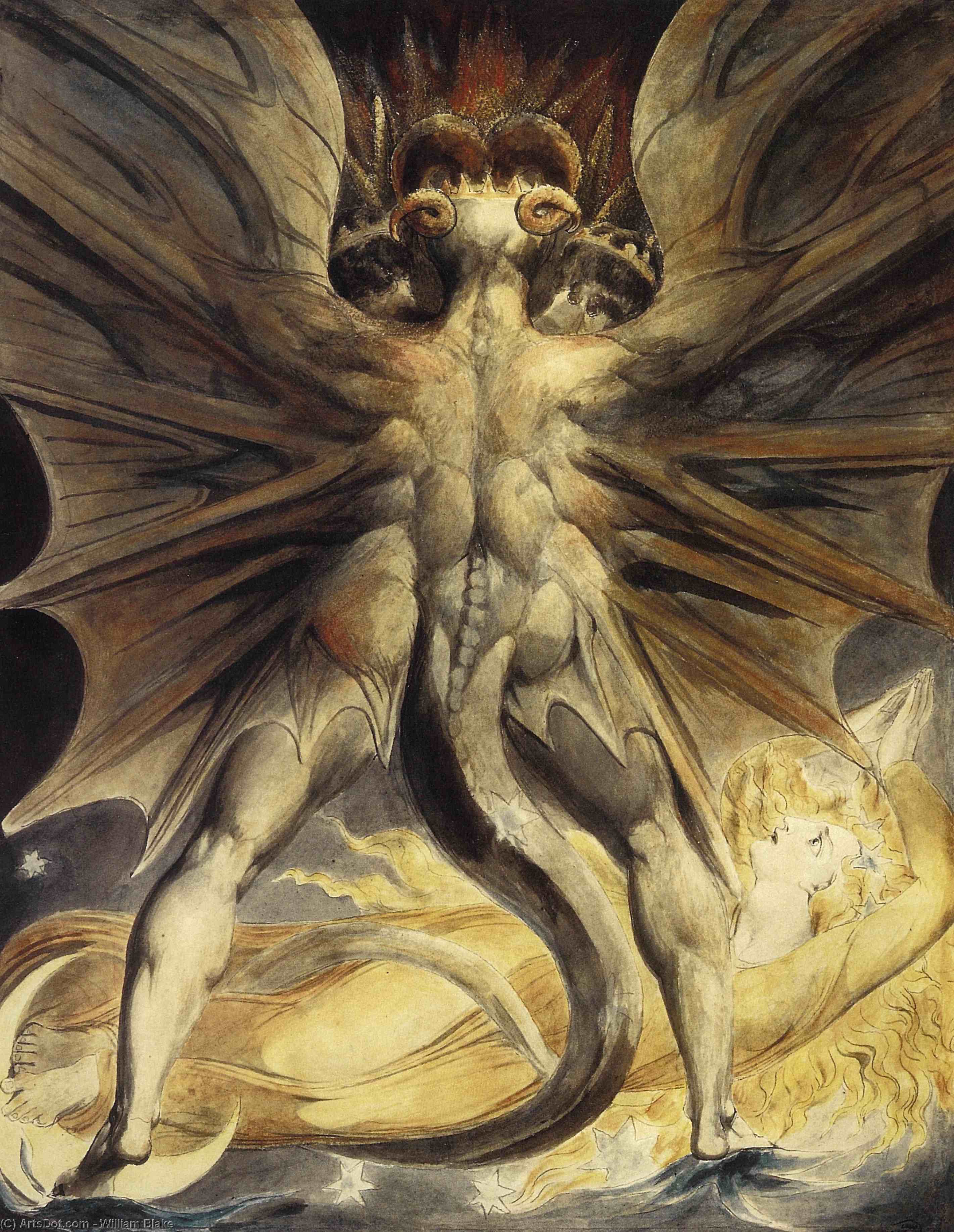
O Dragão Vermelho e a Mulher Vestida de Sol
 Aquarela
- Arte de Parede
- Romanticism
 1805
1805- Século XIX
 43.0 x 34.0 cm
 Ver mais
Reprodução em Óleo Feita à Mão
Óleo sobre tela pintado à mão no seu tamanho e moldura, feito sob encomenda pelos nossos artistas. ( Encomendar impressão Comprar imagem em alta resolução)




P118B S$10

P118H S$10

P118W S$10

P438Z S$10

P508JH S$12

P508YH S$12

P805H S$10

P805Z S$10

P919BZ S$10

P919G S$10

P919XJ S$10

P959ZH S$10

P968JZ S$12

W106C S$8

W218G S$10

W218JH S$8

W218Y S$10

W307PJ S$10

W316G S$10

W316PJ S$8

W316Y S$10

W398PJ S$8

W4111J S$10

W500HY S$15

W500JH S$15

W692G S$12

W849H S$8

W940BG S$15

W953PJ S$8




Escolha entre os nossos tamanhos pré-definidos que respeitam as proporções originais da obra de arte.

Pode inserir as suas próprias dimensões para se adequar a uma moldura ou espaço específico. Se o tamanho selecionado não corresponder às proporções da imagem original, iremos cortar a obra de arte ou estender a pintura com elementos adicionais pintados à mão. Um esboço digital será enviado para sua aprovação antes do início da produção.
Tenha em atenção que a pré-visualização no ecrã não reflete o corte ou extensão real. Apenas o esboço mostrará com precisão a composição final.
Embora tamanhos personalizados estejam disponíveis, recomendamos selecionar uma dimensão da lista predefinida para preservar as proporções originais.
Após o pedido, a equipa ArtsDot.com enviará um e-mail ao cliente para solicitar instruções e fornecer uma prévia do esboço.
Entrega mundial () em 3 a 4 semanas, em vez das 5 semanas padrão. (15 Agosto). Sem comprometer a qualidade.

Envio Expresso Gratuito para todo o Mundo

Tela de Linho Premium

Seguro de transporte total

Garantia de Reembolso de Impostos Alfandegários

Garantia de Fidelidade de Cor

Política de Devolução de 60 Dias (Apenas para Defeitos)

Garantia de reembolso de 100%

Desconto para múltiplas unidades
 A opção de vidro está disponível apenas para tamanhos inferiores a 110 cm

O Dragão Vermelho e a Mulher Vestida de Sol
Técnica de Reprodução
Dimensões da Reprodução
-


Preço Total
S$ 372
Descrição da Obra
A Vision of Cosmic Conflict: William Blake’s “The Great Red Dragon and the Woman Clothed with the Sun”
William Blake's 1805 watercolour, *The Great Red Dragon and the Woman Clothed with the Sun*, is a powerful testament to the artist’s unique vision and his place within the Romantic movement. This work isn’t merely an illustration; it’s a vibrant embodiment of spiritual struggle and apocalyptic prophecy drawn directly from the Book of Revelation. The painting pulsates with energy, inviting viewers into a realm where myth, religion, and imagination collide.Decoding the Symbolic Imagery
The composition is dominated by the colossal figure of the Red Dragon – a terrifying representation of Satan, as described in Revelation 12. Its serpentine body writhes across the lower portion of the painting, wings outstretched in a menacing display of power. Two smaller figures are subtly placed within the scene: one near the dragon’s left side and another to the right. These figures, though less prominent, contribute to the narrative tension, perhaps representing fallen angels or humanity caught in the crossfire of this cosmic battle. Above, barely visible, is a woman clothed with the sun – symbolizing the Virgin Mary and embodying divine grace threatened by the forces of evil. The dragon’s intent is clear: to devour the child she carries, representing Christ. The symbolism isn't static; it’s dynamic, suggesting an ongoing struggle between good and evil.Artistic Style & Technique
Blake’s style is immediately recognizable for its emotional intensity and rejection of academic convention. He wasn’t interested in realistic representation but rather in conveying inner vision. The watercolour medium lends a delicate, almost ethereal quality to the painting, creating an intriguing contrast with the raw power of the dragon. His technique involves fluid washes of colour layered with precise linework, resulting in a luminous and textured surface. The vibrant reds, fiery oranges, and deep blues contribute to the dramatic atmosphere. This is not simply a depiction *of* Revelation; it’s an attempt to visually translate its emotional and spiritual weight.Historical & Religious Context
Created during a period of intense religious and political upheaval, Blake's work reflects his own radical beliefs. He rejected the rigid doctrines of the Church of England and embraced a personal form of spirituality rooted in imagination and visionary experience. He was commissioned to create paintings illustrating scenes from the Bible, but he approached these subjects with unparalleled freedom, imbuing them with his unique symbolic language. The painting’s connection to Revelation 12 places it within a long tradition of apocalyptic art, yet Blake's interpretation is distinctly original and deeply personal.Blake & Catherine Boucher: A Collaborative Vision
It’s crucial to acknowledge the integral role of Blake’s wife, Catherine Boucher. She was not merely an assistant but a skilled printmaker and colourist who collaborated closely with him on many projects. Her expertise enabled Blake to realize his ambitious visions, particularly in illuminated printing – a technique that combined poetry and visual art into a single unified work. Their partnership was essential to the creation of numerous pieces, including this powerful watercolour.Collecting & Interior Design
A high-quality reproduction of this painting would serve as a striking focal point in any interior space. Its rich colours and dramatic composition lend themselves well to both traditional and contemporary settings. Consider pairing it with muted tones to allow the artwork’s vibrancy to shine, or incorporating elements that echo its symbolic themes – such as celestial motifs or bold geometric patterns.- Ideal for libraries, studies, or living rooms seeking a touch of intellectual depth.
- Complements both classic and modern furniture styles.
- A conversation starter that invites contemplation and discussion.
A Visionary’s Journey: The Life and Art of William Blake
William Blake, born on November 28, 1757 at 28 Broad Street (now Broadwick Street) in Soho, London. He was the third of seven children, two of whom died in infancy. Blake's father, James, was a hosier, who had lived in London. William attended school only long enough to learn reading and writing, leaving at the age of 10, and was otherwise educated at home by his mother Catherine Blake (née Wright). He was baptised on 11 December at St James's Church, Piccadilly, London. The Bible was an early and profound influence on Blake, and remained a source of inspiration throughout his life. Blake’s childhood, according to him, included mystical religious experiences such as “beholding God's face pressed against his window, seeing angels among the haystacks, and being visited by the Old Testament prophet Ezekiel.\"\nBlake started engraving copies of drawings of Greek antiquities purchased for him by his father, a practice that was preferred to actual drawing. In these drawings Blake found his first exposure to classical forms through the work of Raphael, Michelangelo, Maarten van Heemskerck and Albrecht Dürer. The number of prints and bound books that James and Catherine were able to purchase for young William suggests that the Blakes enjoyed, at least for a time, a comfortable wealth. When William was ten years old, his parents knew enough of his headstrong temperament that he was not sent to school but instead enrolled in drawing classes at Henry Pars's drawing school in the Strand. He read avidly on subjects of his own choosing. During this period, Blake made explorations into poetry; his early work displays knowledge of Ben Jonson, Edmund Spenser, and the Psalms.\nBlake’s apprenticeship with engraver James Basire of Great Queen Street, at the sum of £52.10, for a term of seven years. At the end of the term, aged 21, he became a professional engraver. No record survives of any serious disagreement or conflict between the two during the period of Blake’s apprenticeship, but Peter Ackroyd's biography notes that Blake later added Basire's name to a list of artistic adversaries; and then crossed it out. This aside, Basire's style of line-engraving was of a kind held at the time to be old-fashioned compared to the flashier stipple or mezzotint styles. It has been speculated that Blake’s instruction in this outmoded technique may have influenced his later artistic endeavors. He continued to work as an engraver for several years, producing prints and illustrations for various clients. His engravings were admired for their precision and detail, reflecting his mastery of the craft.\nBlake's engagement with printmaking was transformative—it allowed him to synthesize visual art and poetry into a single unified form. This method of printing combined etching and text on the same plate, resulting in an innovative aesthetic that distinguished Blake from many of his contemporaries. He experimented with different printing techniques, exploring color lithography and mezzotint alongside engraving.\nBlake’s artistic vision extended beyond printmaking; he also created paintings, drawings, and illuminated manuscripts—works that embody his distinctive style and philosophical beliefs. His paintings are characterized by bold colors, imaginative compositions, and symbolic imagery rooted in mythology and biblical narratives. Blake's use of color was particularly striking, employing vibrant hues to convey emotion and spiritual significance.\nBlake’s artistic output spanned a remarkable range of genres and mediums—from watercolors and drawings to engravings and illuminated manuscripts. He produced numerous prints illustrating scenes from the Bible, as well as poems exploring themes of innocence, experience, and moral responsibility. Blake's poetic style is marked by visionary language, musical rhythms, and unconventional syntax.\nBlake’s artistic legacy continues to inspire artists and scholars alike—his pioneering approach to printmaking and painting established him as a pivotal figure in the Romantic movement. His work remains relevant today because it speaks to fundamental questions about human consciousness, creativity, and spirituality."Obras Relacionadas


Biografia do Artista
A Visionary’s Journey: The Life and Art of William Blake
William Blake, born in London on November 28, 1757, was a figure perpetually out of step with his time, yet destined to become one of the most celebrated artists and poets of the Romantic Age. His life unfolded against the backdrop of a rapidly changing England—a world grappling with industrialization, political upheaval, and shifting spiritual beliefs. From humble beginnings as the son of a hosier, Blake’s early years were marked by an intensely vivid imagination and a propensity for visionary experiences that would profoundly shape his artistic trajectory. Though largely self-taught in formal academics, he received drawing instruction at a young age, quickly revealing a talent that hinted at the extraordinary path ahead. His apprenticeship with engraver James Basire proved pivotal, providing him not only with technical mastery but also an understanding of printmaking techniques he would later revolutionize. These early influences—the Gothic grandeur of Westminster Abbey, the classical forms of Raphael and Michelangelo—served as foundational elements in his developing aesthetic, though Blake was never one to remain bound by convention.The Illuminated World: Technique and Innovation
Blake’s artistic innovation wasn't merely about subject matter; it resided fundamentally in *how* he created. Dissatisfied with conventional engraving methods, he developed a unique process known as “illuminated printing.” This involved etching both text and illustrations onto copper plates, then hand-coloring the resulting prints—a laborious but deeply personal approach that allowed for complete artistic control. This wasn’t simply illustration accompanying poetry; it was an integrated art form where image and verse were inextricably linked, each enhancing the meaning of the other. His relief etching technique, born from a claimed visionary experience following his brother's death, further distinguished his work, granting it a distinctive textural quality and allowing for greater artistic freedom than traditional methods. Beyond printmaking, Blake also worked with watercolors and tempera paints, often depicting biblical scenes or fantastical subjects imbued with symbolic weight. A key characteristic of his style was a deliberate rejection of linear perspective in favor of a more emotive, symbolic representation—a flattening of space that drew the viewer into the heart of his visionary world. He sought to capture not just what he saw but what he *felt*, channeling spiritual insight into every brushstroke and line of text.Themes of Innocence, Experience, and Rebellion
The core of Blake’s artistic output lies in its exploration of profound themes: the duality of innocence and experience, the constraints of reason versus the liberating power of imagination, and a fierce critique of societal norms.- Songs of Innocence and of Experience (1794), perhaps his most accessible work, presents a contrasting vision of childhood—one idyllic and untainted, the other marked by hardship and corruption.
- The Marriage of Heaven & Hell (1793) is a provocative prose poem that challenges conventional morality, celebrating energy, desire, and rebellion against restrictive doctrines.
- His illustrations for Dante’s *Divine Comedy* showcase his dramatic vision and ability to translate complex narratives into powerful visual imagery.
A Legacy Rediscovered: Blake's Enduring Influence
During his lifetime, William Blake remained largely marginalized, misunderstood by many of his contemporaries. His work was often dismissed as eccentric or even mad. He struggled financially throughout much of his life, relying on commissions and the support of a small circle of patrons like Thomas Butts. However, in the decades following his death on August 12, 1827, Blake’s reputation began to grow steadily. The Pre-Raphaelites, captivated by his visionary style and symbolic imagery, embraced him as a kindred spirit. Later movements—Symbolism and Modernism—found resonance in his emphasis on imagination, subjective experience, and spiritual themes. Today, William Blake is recognized as a pivotal figure in the Romantic movement, an artist whose work continues to inspire poets, painters, and thinkers across disciplines. His exploration of complex philosophical and religious ideas through art remains profoundly relevant, challenging us to question conventional wisdom and embrace the power of individual vision. Blake’s legacy isn't simply about his artistic achievements; it is about his unwavering commitment to creative freedom—a testament to the enduring power of imagination in a world often dominated by reason and constraint.
William Blake
1757 - 1827 , Reino Unido
Informações Rápidas
- Artistic Movement Or Style: Romantismo
- Artists Who Influenced This Artist:
- Rafael
- Michelangelo
- Date Of Birth: 1757
- Date Of Death: 1827
- Full Name: William Blake
- Nationality: Britânico
- Notable Artworks:
- Canções da Innocência e da Experiência
- O Casamento do Céu e do Inferno
- O Tigre
- Jerusalém
- Place Of Birth: Londres, Reino Unido
Artigos Relacionados

William Blake: Romantic Visionary & Mystical Genius of the Imagination
Explore the mystical art & poetic genius of William Blake (1757-1827). Discover his revolutionary illuminated printing, rich symbolism, and lasting influence on Romanticism. Find handmade reproductions at ArtsDot.

Crimson Threads of Narrative: Exploring Symbolism & Representation in Artworks Featuring the Red Dress
Explore the rich symbolism of the red dress in art history! From ancient power displays to iconic portraits like Cézanne’s 'Madame Cezanne', discover the cultural and artistic significance behind this captivating color. Expert analysis & insights.

Sir William Blake Richmond: A Visionary of Aestheticism & Symbolism
Explore the life & art of Sir William Blake Richmond, a pivotal figure bridging Pre-Raphaelitism and Aestheticism. Discover his stunning portraits, mosaics at St Paul's Cathedral, and lasting influence on Victorian art.

William Henry Pyne: A Topographical Vision of Early 19th-Century England – Art, Society & Watercolour's Rise
Explore the captivating world of William Henry Pyne (1769-1843), a key figure in early 19th-century English art. Discover his stunning watercolours, architectural studies & contribution to the rise of watercolour painting. Learn about this fascinating artist's life and legacy.

William Henry Hunt: Luminosity & Detail in Early 19th-Century Watercolour Painting
Explore the captivating watercolour paintings of William Henry Hunt (1790-1864). Discover his mastery of naturalistic detail, luminous technique & influence on 19th-century art. Learn about collecting Hunt's work and its enduring value.



