


 Visualizar em escala
 Enviar
 Compartilhar
 Ver detalhes

 Baixar imagem
 Semelhantes
 Raio X
 Apresentação de slides
 Estatísticas
Poliptico


 Ver mais
Reprodução em Óleo Feita à Mão
Óleo sobre tela pintado à mão no tamanho e moldura de sua escolha, feito sob encomenda pelos nossos artistas. ( Alternar para Impressão Ver Imagem Digital)




P118B $10

P118H $10

P118W $10

P438Z $10

P508JH $12

P508YH $12

P805H $10

P805Z $10

P919BZ $10

P919G $10

P919XJ $10

P959ZH $10

P968JZ $12

W106C $8

W218G $10

W218JH $8

W218Y $10

W307PJ $10

W316G $10

W316PJ $8

W316Y $10

W398PJ $8

W4111J $10

W500HY $15

W500JH $15

W692G $12

W849H $8

W940BG $15

W953PJ $8




Escolha entre os nossos tamanhos pré-definidos que respeitam as proporções originais da obra de arte.

Pode inserir as suas próprias dimensões para se adequar a uma moldura ou espaço específico. Se o tamanho selecionado não corresponder às proporções da imagem original, iremos cortar a obra de arte ou estender a pintura com elementos adicionais pintados à mão. Um esboço digital será enviado para sua aprovação antes do início da produção.
Tenha em atenção que a pré-visualização no ecrã não reflete o corte ou extensão real. Apenas o esboço mostrará com precisão a composição final.
Embora tamanhos personalizados estejam disponíveis, recomendamos selecionar uma dimensão da lista predefinida para preservar as proporções originais.
Após o pedido, a equipa ArtsDot.com enviará um e-mail ao cliente para solicitar instruções e fornecer uma prévia do esboço.
Entrega mundial () em 3 a 4 semanas, em vez das 5 semanas padrão. (19 Setembro). Sem comprometer a qualidade.

Envio expresso gratuito para todo o mundo

Tela de Linho Premium

Seguro de transporte total

Garantia de Reembolso de Impostos Alfandegários

Garantia de Fidelidade de Cor

Política de Devolução em 100 Dias (Apenas para Defeitos)

Garantia de reembolso de 100%

Desconto para múltiplas unidades
 A opção de vidro está disponível apenas para tamanhos inferiores a 110 cm

Poliptico
Técnica de Reprodução
Dimensões da Reprodução
-


Preço Total
$ 263
Pietro Alemanno: Um Maestro Entre o Gótico Tardio e a Renascença Veneziana
Pietro Alemanno (c. 1430 – ca. 1498), nacido en Göttweich, Austria, representa una figura clave que puente el vacío entre las tradiciones artísticas góticas tardías y el movimiento renacentista en Italia. Aunque eclipsado por contemporáneos como Piero della Francesca y Fra Angelico, Alemanno logró reconocimiento en su tiempo gracias a su estilo distintivo – caracterizado por la meticulosa atención al detalle y una profunda sensibilidad hacia la iconografía religiosa – que sigue fascinando a los historiadores del arte hoy en día. Su legado reside principalmente en el monumental Polipticho encargado para San Pietro Martire en Venecia, junto con numerosas altarpieces y pinturas devocionales que ejemplifican la convergencia estilística de dos épocas artísticas distintas. El artista austriaco Alemanno fue alumno de Carlo Crivelli, un pintor influyente cuya obra reflejaba las tendencias estéticas dominantes de la época. Esta formación temprana le proporcionó una sólida base para desarrollar su propio estilo único, que combinaba elementos del gótico tardío con influencias venecianas, creando obras maestras que capturan la esencia de ambos movimientos culturales. Alemanno fue un verdadero innovador en su tiempo, explorando nuevas técnicas y materiales para expresar conceptos religiosos complejos con una belleza excepcional. El Polipticho de Alemanno, considerado uno de los más importantes ejemplos del arte religioso italiano del siglo XV, es una obra impresionante que sigue cautivando a visitantes y estudiosos por igual. Este complejo conjunto pictórico, ubicado en la iglesia de San Pietro Martire en Venecia, demuestra el dominio técnico del artista y su capacidad para transmitir emociones profundas a través del lenguaje visual. La composición central presenta una representación magistral de María Magdalena sosteniendo el niño Jesús, rodeada por santos y figuras bíblicas cuyas atributos simbolizan roles específicos en las narrativas religiosas tradicionales. Los colores ricos y brillantes utilizados por Alemanno evocan la atmósfera espiritual de la época, mientras que los detalles minuciosos reflejan la obsesión por la precisión anatómica característica del arte renacentista. Más allá de su belleza estética, el Polipticho posee un significado simbólico profundo. Cada elemento de la obra está cuidadosamente elegido para transmitir mensajes religiosos importantes y reforzar la fe católica de la época. Los símbolos utilizados por Alemanno – como la cruz, el ángel y el niño Jesús – representan conceptos fundamentales en la doctrina cristiana y sirven como guía espiritual para los fieles. Además, la ejecución impecable del Polipticho demuestra el alto nivel artístico alcanzado por Alemanno y su escuela durante el Renacimiento italiano temprano. Esta obra maestra sigue siendo un testimonio de la creatividad humana y una fuente de inspiración para artistas y amantes del arte contemporáneos. La investigación sobre la vida temprana de Pietro Alemanno es limitada debido a las dificultades asociadas con la documentación histórica de ese período. Sin embargo, estudios recientes sugieren que Alemanno desarrolló sus habilidades artísticas en Göttweich, donde fue influenciado por el estilo gótico tardío predominante en esa región. Esta formación inicial le permitió adquirir una comprensión profunda de los principios técnicos y estéticos del arte medieval, lo cual se reflejó posteriormente en su obra maestra: el Polipticho de Venecia. Alemanno fue un artista excepcional que logró trascender las limitaciones de su tiempo y dejar una huella imborrable en la historia del arte occidental.Obras Relacionadas


Biografia do Artista
A Bridge Between Eras: The Life and Legacy of Pietro Alemanno
In the vibrant, shifting landscape of the fifteenth century, few artists embodied the transition from the medieval to the modern as gracefully as Pietro Alemanno. Born around 1430 in the serene surroundings of Göttweich, Austria, Alemanno’s life was a journey across borders and artistic philosophies. He emerged as a pivotal figure who bridged the gap between the lingering, ornate traditions of the Late Gothic style and the burgeoning, humanistic dynamism of the Italian Renaissance. While history often casts him in the shadow of giants like Piero della Francesca or Fra Angelico, a closer look at his oeuvre reveals an artist of profound independence and technical mastery, capable of weaving together the spiritual gravity of Northern Europe with the luminous innovations of the Italian peninsula.
The early chapters of Alemanno’s life remain shrouded in the mists of time, yet his artistic lineage is clearly traced through his connection to the masters of the Marches. Scholarly tradition long suggested he was a mere pupil or follower of the renowned Carlo Crivelli, a Venetian master celebrated for his blend of Gothic elegance and Renaissance realism. However, recent historical rediscoveries have painted a much more compelling portrait of an accomplished professional. Evidence suggests that Alemanno’s presence in the Marches region predates even that of Crivelli, positioning him not as a student seeking guidance, but as an established master capable of securing significant and complex commissions almost immediately upon his arrival in Italy.
The Synthesis of Style and Sacred Iconography
Alemanno’s work is a breathtaking synthesis of textures, light, and devotion. His stylistic evolution is most strikingly visible in his ability to integrate the meticulous, almost tactile detail characteristic of Gothic art with the new, sophisticated command of perspective emerging from the Renaissance. In his monumental Polyptych, commissioned for San Pietro Martire in Venice, one can witness this beautiful tension. The architectural framework—composed of elegant arches and columns—does not merely serve as a decorative border; it functions as a window into a sacred space, using deliberate spatial arrangement to guide the viewer’s eye toward the central figures of the Virgin and Child.
His mastery extended beyond mere structure to the very soul of his subjects. Alemanno possessed an unwavering devotion to Christian iconography, imbuing his saints and divine figures with a profound sensitivity that resonated deeply with the faithful of his era. His technique involved a meticulous approach to pigment preparation and compositional planning, allowing him to create surfaces that felt both ethereal and tangibly real. Whether through the soft glow of a Madonna’s countenance or the intricate, jewel-like details of an altarpiece, his work sought to achieve a visual harmony that reflected the divine order.
Major Achievements and Historical Significance
The breadth of Alemanno's contributions can be seen in the diverse range of his commissions, from grand frescoes to intimate devotional panels. His ability to adapt to different mediums and regional tastes solidified his reputation as a leading personality in the Northern-inspired figure painting that flourished in the Marches during the late 15th century. Some of his most notable milestones include:
- The Annunciation Fresco (1484): Executed for the Palazzo Communale in Ascoli, this work demonstrates his sophisticated use of elaborate architectural settings to create a sense of depth and drama.
- Altarpiece of the Virgin and Child (1489): Created for the church of Santa Maria della Carita, this piece showcases his skill in arranging complex groups of saints—including SS. Michael, Biaise, Jerome, and Nicholas—within a cohesive, sacred narrative.
- The Venetian Polyptych: A testament to his ability to absorb the luminosity and grandeur of the Venetian school, blending it with his inherent Gothic sensibilities.
Ultimately, Pietro Alemanno’s significance lies in his role as a cultural conduit. He was an artist who moved between the Germanic roots of his birth and the Italian heart of the Renaissance, carrying with him a unique aesthetic language that honored the past while embracing the future. Though he passed away in Ascoli Piceno around 1497 or 1498, his legacy survives in the quiet majesty of his altarpieces, which continue to captivate art historians and devotees alike with their enduring spiritual power and technical brilliance.

pietro alemanno
1430 - 1497 , Austria
Informações Rápidas
- Artistic Movement Or Style: Late Gothic Style / Renaissance Painting
- Artists Or Movements Influenced By This Artist: Perugino
- Artists Who Influenced This Artist: Carlo Crivelli
- Date Of Birth: ca. 1430
- Full Name: Pietro Alemanno
- Nationality: Austrian
- Notable Artworks: ['Polyptych']
- Place Of Birth: Goetweig, Austria
Artigos Relacionados

Beyond Borders: The Spiritual & Stylistic Innovations of International Gothic Art
Explore the exquisite beauty & spiritual depth of International Gothic art. Discover key artists like Simone Martini & Pol de Limbourg, its origins, symbolism, and lasting influence on European painting. Expert insights at ArtsDot.

Jacopo Tintoretto: As 25 Obras-Primas do Mestre da Luz e Drama | ArtsDot
Descubra as 25 obras-primas de Jacopo Tintoretto, o mestre veneziano do Renascimento! Explore a história, técnica e emoção por trás de pinturas icônicas como 'O Milagre de São Marcos'. Encontre reproduções de arte exclusivas para decorar sua casa com ArtsDot.com.

The Radiant Dusk of Medieval Vision: Exploring Late Gothic Art's Synthesis of Faith, Form & Emotionality (c. 1300-1500)
Explore the exquisite beauty & spiritual depth of Late Gothic art (c. 1300-1500). Discover key artists, symbolism, and its lasting influence on the Renaissance. Expert insights at ArtsDot.
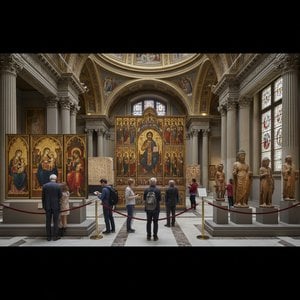
Sacred Narratives Embodied: A Comprehensive Exploration of Religious Iconography in Art History
Explore the rich history of religious iconography in art! Discover symbolism, movements & masterpieces from Byzantine to Renaissance periods. Expert insights for collectors and enthusiasts at ArtsDot.

Late Medieval Masterpieces: 10 Artworks That Defined an Era | ArtsDot
Journey through 10 defining Late Medieval masterpieces – from Giotto's frescoes to Jan van Eyck’s realism. Explore the stories, techniques & vibrant colors of Gothic art. Find museum-quality reproductions and elevate your home decor with ArtsDot.com! Discover all masterpieces on ArtsDot.com
