
- Início

- Reprodução de Pintura a Óleo
- charles beaubrun (charles bobrun)
- Портрет мадам де Монпенсьер
 Visualizar na parede
 Compartilhar
 Compartilhar
 Detalhes

 Baixar imagem
 Semelhantes
 Raio X
 Apresentação de slides
Портрет мадам де Монпенсьер
 Acrílico sobre tela
- Arte de Parede
- Baroque Elegance
 1655
1655 109.0 x 88.0 cm
 Museu do Prado
 Ler mais
Reprodução em Óleo Feita à Mão
Óleo sobre tela pintado à mão no seu tamanho e moldura, feito sob encomenda pelos nossos artistas. ( Alternar para Impressão Alternar para Imagem)




P118B S$10

P118H S$10

P118W S$10

P438Z S$10

P508JH S$12

P508YH S$12

P805H S$10

P805Z S$10

P919BZ S$10

P919G S$10

P919XJ S$10

P959ZH S$10

P968JZ S$12

W106C S$8

W218G S$10

W218JH S$8

W218Y S$10

W307PJ S$10

W316G S$10

W316PJ S$8

W316Y S$10

W398PJ S$8

W4111J S$10

W500HY S$15

W500JH S$15

W692G S$12

W849H S$8

W940BG S$15

W953PJ S$8




Escolha entre os nossos tamanhos pré-definidos que respeitam as proporções originais da obra de arte.

Pode inserir as suas próprias dimensões para se adequar a uma moldura ou espaço específico. Se o tamanho selecionado não corresponder às proporções da imagem original, iremos cortar a obra de arte ou estender a pintura com elementos adicionais pintados à mão. Um esboço digital será enviado para sua aprovação antes do início da produção.
Tenha em atenção que a pré-visualização no ecrã não reflete o corte ou extensão real. Apenas o esboço mostrará com precisão a composição final.
Embora tamanhos personalizados estejam disponíveis, recomendamos selecionar uma dimensão da lista predefinida para preservar as proporções originais.
Após o pedido, a equipa ArtsDot.com enviará um e-mail ao cliente para solicitar instruções e fornecer uma prévia do esboço.
Entrega mundial () em 3 a 4 semanas, em vez das 5 semanas padrão. (4 Agosto). Sem comprometer a qualidade.

Envio Expresso Gratuito para todo o Mundo

Tela de Linho de Alta Qualidade

Seguro de transporte completo

Garantia de Reembolso de Impostos Alfandegários

Garantia de Fidelidade Cromática

Política de Devolução de 60 Dias (Apenas para Defeitos)

Garantia de reembolso de 100%

Oferta de desconto por quantidade
 A opção de vidro está disponível apenas para tamanhos inferiores a 110 cm

Портрет мадам де Монпенсьер
Técnica de Reprodução
Tamanho da Reprodução
-


Preço Total
S$ 340
Descrição da Obra
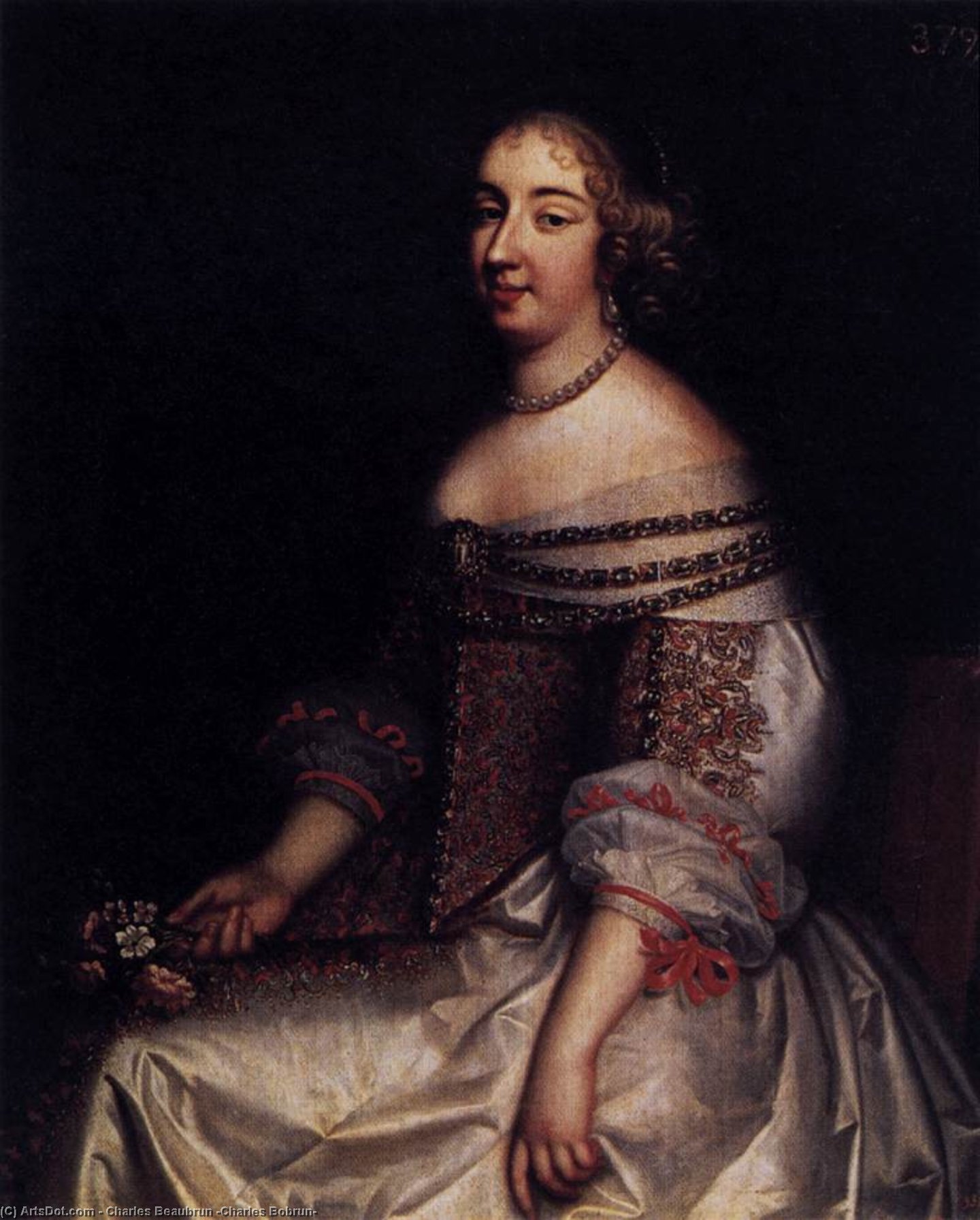
Portrait of Mademoiselle de Montpensier – A Window Into Louis XIV’s Court
Charles Beaubrun's "Portrait of Mademoiselle de Montpensier" transcends mere representation; it embodies the elegance and sophistication that defined Louis XIV’s reign. Painted in 1655, this artwork isn’t simply a depiction of a young woman—it’s a meticulously crafted tableau capturing a pivotal moment within French aristocratic society. The painting showcases Marie de Bourbon, Duchess of Montpensier, a figure whose influence extended far beyond her familial connections, representing the last vestiges of the Bourbon-Montpensier dynasty.- Subject Matter: The portrait focuses on Marie de Bourbon herself, seated gracefully against a neutral backdrop—a deliberate choice that directs the viewer’s gaze entirely onto her countenance and attire.
- Style & Technique: Beaubrun's mastery lies in his ability to achieve remarkable realism combined with refined artistic embellishment. Employing oil paint on canvas, he utilized chiaroscuro – dramatic contrasts of light and shadow – to sculpt the woman’s form and imbue her face with palpable emotion. The artist skillfully rendered textures, from the silk of her gown to the delicate sheen of her pearl necklace, demonstrating an unparalleled attention to detail.
Historical Context: Versailles and the Pursuit of Ideal Beauty
The painting’s creation coincided with Louis XIV's ascension to the throne and the establishment of Versailles as the epicenter of royal power and artistic patronage. Beaubrun, like many artists of his time, sought to elevate portraiture beyond mere likeness, aiming instead for an idealized representation that reflected the virtues deemed desirable by the monarchy – grace, dignity, and composure. Marie de Bourbon’s pose and expression were carefully considered to convey these qualities, aligning perfectly with the prevailing aesthetic sensibilities of the era.
Symbolism & Decorative Elements
- The Bench: The inclusion of a simple wooden bench serves as more than just an architectural element; it symbolizes stability and contemplation. It anchors Marie de Bourbon within her environment, suggesting inner serenity amidst the pressures of court life.
- Vases: Two vases positioned strategically on either side of the portrait introduce decorative motifs—flowers—which traditionally symbolized purity and nobility. Their presence reinforces the idealized image presented by Beaubrun, elevating the artwork beyond a simple likeness to become a statement about social status and artistic aspiration.
Emotional Impact & Legacy
“Portrait of Mademoiselle de Montpensier” continues to resonate with viewers today due to its masterful execution and profound psychological insight. Beaubrun’s ability to capture the subtle nuances of Marie de Bourbon's expression—a gaze directed off-camera—invites contemplation about her inner life and conveys a sense of quiet dignity. This artwork stands as a testament to the enduring power of portraiture to communicate emotion and preserve memory, securing its place among the finest achievements of Baroque art.
Obras Relacionadas


Biografia do Artista
Charles Beaubrun (Bobrun): A Master of Elegant Realism
Charles Beaubrun, born in Amboise, France around 1604, emerged from a distinguished family of painters – his father, Jean Beaubrun, was also a respected artist. While biographical details remain somewhat sparse compared to contemporaries like Rembrandt or Rubens, Beaubrun’s legacy rests firmly on his remarkable portraits and allegorical paintings that capture the spirit of Louis XIV's court and beyond. He died in Paris in 1692, leaving behind a body of work celebrated for its refined aesthetic and psychological insight.Early Life and Artistic Training
Information regarding Beaubrun’s formative years is limited. However, it’s believed he received his initial artistic training under the tutelage of Jean Baptiste Dubois, a prominent painter active in Amboise during the reign of Henri IV. This exposure to Dubois's style—characterized by meticulous detail and a humanist sensibility—likely instilled in Beaubrun a foundational understanding of classical principles and compositional techniques. The influence of Nicolas Sustris, another influential artist of the period, is also noted, further broadening Beaubrun’s artistic horizons.Notable Works and Artistic Style
Beaubrun's oeuvre comprises approximately 80 paintings, predominantly portraits executed with exceptional skill and sensitivity. He gained considerable renown for his depictions of royal figures, notably King Louis XIV as a child alongside Philippe I, Duke of Orleans – a piece that exemplifies Beaubrun’s ability to convey both youthful vulnerability and regal dignity. Similarly impressive is his portrait of Anne Marie Louise, Duchess d'Orleans, capturing her serene beauty with remarkable precision. Beyond these portraits, Beaubrun produced several allegorical compositions, including “Minette,” which showcases his mastery of symbolism and narrative storytelling. His technique involved layering thin glazes over a carefully prepared ground, achieving luminous surfaces and subtle tonal gradations that are hallmarks of French Baroque painting. He skillfully employed chiaroscuro—the dramatic interplay of light and shadow—to sculpt form and imbue his subjects with emotional depth.Influence and Legacy
Beaubrun’s artistic style aligns closely with the prevailing trends of the French Baroque, reflecting the humanist ideals championed by Louis XIV's court. He adhered to the principles of disegno – careful observation and anatomical accuracy—a cornerstone of Renaissance art revived during this era. Beaubrun’s work stands apart from many of his peers due to its understated elegance and psychological realism. Unlike some artists who prioritized grandeur or theatricality, Beaubrun focused on capturing the inner life of his subjects, conveying their character and emotions with remarkable subtlety. His influence extended beyond his immediate contemporaries; he served as a teacher and mentor to younger painters, shaping the artistic landscape of Paris during the latter half of the 17th century.Recognition and Continued Appreciation
Charles Beaubrun’s paintings continue to be admired for their beauty and artistry. They reside primarily in private collections and museums across Europe, including the Charles Allis Art Museum in Milwaukee, Wisconsin. Ongoing research into his life and work contributes to a deeper understanding of French Baroque art history and underscores Beaubrun's enduring contribution to European artistic tradition. His meticulous attention to detail and profound psychological insight cemented his place as one of France’s most accomplished portraitists of the era.
charles beaubrun (charles bobrun)
1604 - 1692 , France
Dados Rápidos
- Artistic Movement Or Style: Portraiture
- Date Of Birth: 1604
- Full Name: Charles Beaubrun
- Nationality: French
- Notable Artworks:
- Minette
- King Louis Xiv - As A Child With Philippe I
- Place Of Birth: Amboise, France
Artigos Relacionados

Retratos Marcantes: 10 Obras de Arte que Definem a Alma Humana | ArtsDot
Descubra 10 retratos icônicos da história da arte! Explore as obras de Van Gogh, Mona Lisa e Frida Kahlo. Encontre reproduções de alta qualidade e inspire-se para decorar com arte em ArtsDot.com.

Sir Joshua Reynolds: 25 Obras-Primas que Definem um Ícone da Arte Britânica | ArtsDot
Descubra as 25 obras-primas de Sir Joshua Reynolds, o mestre dos retratos ingleses do século XVIII. Explore a elegância neoclássica e a história por trás de cada pintura. Reproduções de arte exclusivas em ArtsDot.com!

Os 10 Quadros Mais Famosos em Tons de Cinza: Arte, História e Decoração
Descubra os 10 quadros mais famosos em tons de cinza, da sutileza de Monet ao expressionismo. Explore a história, técnica e emoção por trás de obras-primas atemporais. Encontre reproduções de alta qualidade na ArtsDot.com!

Barroco em Cores: 10 Obras-Primas que Moldaram a Pintura e Inspiram Decoração
Descubra as 10 obras-primas da pintura barroca que revolucionaram a arte! Explore Caravaggio, Rembrandt e Rubens. Encontre reproduções de alta qualidade e inspire sua decoração em ArtsDot.com.
Alte Pinakothek: 25 Obras-Primas da Pintura Europeia para Inspirar a Sua Casa
Descubra as 25 obras-primas da Alte Pinakothek, Munique! Explore a história de Leonardo da Vinci, Rembrandt e Rafael. Encontre reproduções de alta qualidade para transformar sua casa com arte clássica. Inspire-se em cores vibrantes e emoção atemporal. Explore a coleção completa na ArtsDot.com!


