


A imagem segue as suas escolhas: , .
Descrição do Item
Explore Max Klinger’s 'Bather,' a poignant bronze sculpture embodying Symbolist realism & emotional depth. Discover its expressive form & studio-lit beauty.
 Ler mais
Biografia do Artista
Max Klinger (1857-1920): artista alemão símbolo, conhecido por gravuras impactantes e esculturas que exploram o psicológico e o místico. Uma figura chave da arte moderna.
Encomende a sua em quatro passos simples
Não tenha pressa. Você pode alterar qualquer resposta; o preço no seu carrinho de compras será atualizado conforme cada escolha.
1 Passo um de quatro
On which medium should it be printed?
Canvas is printed with giclée inks and can be stretched or framed like a painting; paper comes flat, or framed behind glass.
2 Passo dois de quatro
Qual tamanho você gostaria?
Estes tamanhos mantêm as proporções da pintura original. A ilustração mostra a sua escolha numa parede, acima de um sofá de dois metros.
Ou informe suas próprias medidas
Escolha entre os nossos tamanhos pré-definidos que respeitam as proporções originais da obra de arte.

Insira a largura e a altura desejadas para se ajustarem à sua moldura ou parede. Uma impressão pode ser apenas cortada, nunca ampliada além da imagem original; portanto, um tamanho com proporções diferentes resultará na perda de parte da imagem. Enviamos uma maquete digital para sua aprovação antes de realizarmos a impressão. A imagem exibida nesta página não mostra o corte real — apenas a maquete o faz.
3 Passo três de quatro
Como deve ser preparado: enrolado, esticado ou emoldurado?
Os preços abaixo referem-se ao tamanho escolhido na primeira etapa.
Escolha as bordas da tela esticada
Escolha sua moldura

Branco €1

Bordas esfumaçadas €1

Bordas estendidas €1

P118B €10

P118H €10

P118W €10

P438Z €10

P508JH €12

P508YH €12

P805H €10

P805Z €10

P919BZ €10

P919G €10

P919XJ €10

P959ZH €10

P968JZ €12

W106C €8

W218G €10

W218JH €8

W218Y €10

W307PJ €10

W316G €10

W316PJ €8

W316Y €10

W398PJ €8

W4111J €10

W500HY €15

W500JH €15

W692G €12

W849H €8

W940BG €15

W953PJ €8

H24-GOLD €30

H24-SILVER €30

H36-GOLD €45

H36-SILVER €45
Com moldura
Moldura: . Dimensões totais com a moldura: .
4 Passo quatro de quatro
Algumas opções de acabamento
Todos eles são opcionais. As respostas já selecionadas não têm custo adicional.
Entrega mundial () em 2 semanas, em vez das 4/5 semanas padrão. (22 Novembro)
Uma placa de identificação, como em um museu?
Detalhes da Placa de Bronze Gravada
This elegant plaque features the artist's name and the title of the artwork, finely engraved for a timeless presentation.
It is made from bronze with a refined, elegant finish. The text is precisely laser-engraved for a sharp and permanent result. Measuring 9x2 cm, the plaque is compact yet easy to read. It's built to be durable and scratch-resistant, offering a professional, museum-quality look. Mounting is simple thanks to the included adhesive backing.
Detalhes da Placa de Acrílico Transparente
The plaque includes essential engraved details such as the artist's name, the title of the artwork, the date it was created, the type of media used-like oil on canvas or watercolor-a brief description of the piece, and a QR code that links to the complete artwork information.
It is crafted from clear acrylic, offering a sleek, modern appearance. The text is UV-engraved in black to ensure strong visual contrast. With a size of 10x15 cm, it ensures optimal readability. It comes equipped with two metal hooks for secure wall mounting. The plaque is designed to be weather-resistant, making it suitable for various environments, and it includes interactive features that work seamlessly with smartphone scanning.
Detalhes da Placa de Acrílico Preto
This elegant plaque includes engraved information such as the artist's name, the title of the artwork, the date it was created, the type of media used (like oil on canvas or watercolor), a short description of the artwork, and a QR code for quick access to more information.
The plaque itself is made from refined black acrylic with a premium finish. The text is laser-engraved in white for high contrast and readability. Its size is 10x15 cm, designed to be easy to read. It comes with two metal hooks for professional mounting. The design is sleek and fits any interior style. It is also weather-resistant and durable, with built-in digital integration for mobile compatibility.
Um verniz protetor?
Para quando você precisa?
✓ Verifique e peça
Your print, as you ordered it

Bather
Técnica de Reprodução
Tamanho da Reprodução
-

Moldura para Reprodução
-
-
Para obras de arte ou reproduções com mais de 105 cm (aproximadamente 41 polegadas) em qualquer um dos lados, a moldura será enviada como um kit desmontado. Este método garante uma entrega segura e evita danos durante o transporte.
Montagem profissional necessária — este não é um produto DIY (faça você mesmo).
O kit deve ser montado e a tela esticada por um profissional de molduraria experiente, utilizando cola de madeira (não inclusa), um alicate de esticar tela e grampos para manter as travessas alinhadas enquanto a cola seca. A montagem incorreta ou a tensão desigual da tela podem danificar permanentemente a obra de arte e não estão cobertas pela nossa garantia.
 Para obras de arte ou reproduções com mais de 105 cm (aproximadamente 41 polegadas) em qualquer um dos lados, a moldura será enviada como um kit desmontado. Este método garante uma entrega segura e evita danos durante o transporte.
Todas as barras de madeira maciça estão incluídas, precisamente cortadas ao tamanho certo.
Montado com os parafusos fornecidos, além de cola para madeira para as junções dos cantos, que não está inclusa e deve ser providenciada pelo seu moldurista.
São necessárias ferramentas profissionais não incluídas: um alicate de estiramento de tela (esticador) e grampos para manter as ripas alinhadas enquanto a cola seca.
Importante:
As junções dos cantos requerem cola para madeira, as ripas devem ser mantidas com grampos até que a cola esteja completamente seca, e o estiramento da tela na moldura montada requer um alicate de esticar tela. Nenhum destes itens está incluído no kit. Por favor, certifique-se de contar com um profissional de molduraria experiente antes de encomendar este tamanho.

Etiqueta de identificação
-
-

Verniz de Proteção
Verniz brilhante (realça as cores e protege contra a luz e a umidade)
-

Urgente
Entrega mundial () em 2 semanas, em vez do prazo padrão de 4/5 semanas. (22 Novembro)
-
Envio Expresso
Entrega mundial () em 4 a 5 semanas. (29 Novembro).
Com envio incluído
Preço Total
€ 56
A opção de vidro está disponível apenas para tamanhos inferiores a 110 cm
Incluído em todos os pedidos
- Envio expresso gratuito para todo o mundo
- Tela de Linho de Alta Qualidade
- Seguro de transporte completo
- Garantia de Reembolso de Impostos Alfandegários
- Garantia de Fidelidade Cromática
- Política de Devolução em 100 Dias (Apenas para Defeitos)
- Garantia de reembolso de 100%
- Oferta de desconto por quantidade


A Silent Reflection: The Soul of Max Klinger’s Bather
In the quiet intersection where the tangible world of Realism meets the ethereal realm of Symbolism, Max Klinger’s “Bather” resides as a profound masterpiece of psychological depth. Created in 1908, this bronze sculpture does not merely present a figure submerged in water; it captures a fleeting, heavy moment of introspection. To gaze upon the Bather is to witness more than a physical form; it is to encounter a state of being—a serene yet sorrowful stillness that speaks to the universal human experience of vulnerability and contemplation. The figure’s posture, draped in subtle, flowing lines, invites the viewer into a private sanctuary of thought, making it an ideal centerpiece for those who appreciate art that stirs the subconscious.
The technical mastery displayed in this work is nothing short of extraordinary. Executed in bronze, the sculpture utilizes a sophisticated patination process that grants the metal an almost otherworldly glow. The dark, rich tones of the bronze create a striking contrast against its surroundings, allowing the light to dance across the contours of the female form and the intricate folds of her drapery. Klinger’s dedication to realism is evident in the way he captures the weight and texture of the material, yet he transcends mere imitation through his use of organic, curvilinear shapes. This harmony between the physical accuracy of the bronze and the fluid, rhythmic lines of the composition creates a visual melody that is both soothing and deeply moving.
Symbolism and the Dawn of Modern Anxiety
As a pioneer of German Symbolism, Klinger was deeply invested in exploring the hidden currents of the human psyche. During the dawn of the 20th century, a period marked by rapid industrialization and shifting social structures, "Bather" serves as an anchor for the era's collective anxieties and dreams. The sculpture moves beyond the literal depiction of a woman bathing to become a vessel for unspoken burdens and quiet resilience. Every curve of the body and every shadow cast by the studio lighting suggests a narrative complexity—a story of loss, longing, or perhaps a momentary escape from the pressures of the modern world.
For the discerning collector or interior designer, this piece offers an unparalleled opportunity to introduce emotional intelligence into a space. Whether placed in a minimalist contemporary gallery or a richly textured classical study, the Bather commands attention through its quiet intensity. It is not a work that shouts for recognition; rather, it waits to be discovered by those who seek depth and meaning in their surroundings. Owning a high-quality reproduction of this work allows one to bring the haunting beauty of Klinger’s vision into the home, providing a constant source of inspiration and a window into the profound mysteries of the human spirit.
Perguntas e Respostas
Onde posso comprar uma imagem digital de "Bather", de Max Klinger?
Uma imagem digital de "Bather", de Max Klinger pode ser adquirida em sua página de Imagem Digital de Alta Resolução: download de imagem digital em alta resolução.
Onde posso encontrar estatísticas sobre "Bather", de Max Klinger?
A página Estatísticas de "Bather", de Max Klinger apresenta estatísticas de visitas públicas: o número de visitas mensais desta obra, uma comparação com as obras mais visualizadas do artista e a origem dos seus visitantes.
Qual origem nacional fundamenta o Symbolism de "Bather"?
A obra do Symbolism "Bather" foi criada por um artista nascido em Alemanha.
Saiba mais sobre esta pintura
 Comprar pintura feita à mão
 Compartilhar
 Compartilhar
 Detalhes
 Guia
Guia

 Baixar imagem
 Semelhantes
 Ver diaporama
 Perguntas e Respostas
 Estatísticas
Obras Relacionadas


Max Klinger
1857 - 1920, Alemanha
Biografia do Artista
The Shadowed World of Max Klinger: A Pioneer of Symbolism
Max Klinger, born in Leipzig in 1857, emerged as a pivotal figure bridging the gap between Realism and the burgeoning world of Symbolism. His artistic journey wasn’t one of immediate recognition but rather a gradual unfolding of a unique vision—a descent into the psychological depths that would profoundly influence modern art. Klinger's early training at the Academy of Fine Arts in Karlsruhe, under Karl Gussow, provided him with a solid foundation in traditional techniques, yet it was his fascination with the etchings of artists like Menzel and Goya that truly ignited his imagination. These masters demonstrated the power of printmaking to convey not merely visual representation but also narrative complexity and emotional intensity—qualities Klinger would masterfully employ throughout his career. He wasn’t content simply to depict the world as it appeared; he sought to unveil its hidden currents, its anxieties, and its dreams.From Realism's Embrace to Symbolic Depths
Klinger’s artistic evolution was marked by a deliberate shift away from straightforward realism towards a more subjective and symbolic language. Initially, his work reflected the prevailing aesthetic of the time—detailed depictions of everyday life. However, this phase proved merely a stepping stone. The turning point came with his series of etchings, Paraphrase on the Finding of a Glove (1881). This ambitious project, comprising ten plates, wasn’t a literal illustration of an event but rather a fragmented, dreamlike exploration of desire, loss, and the complexities of human relationships. The glove itself became a potent symbol—a relic imbued with memory and longing. This series established Klinger as a leading voice in the Symbolist movement, demonstrating his ability to transform ordinary objects into vehicles for profound psychological insight. He wasn’t interested in simply showing what things looked like; he wanted to convey what they *felt* like, what they represented on a deeper, more subconscious level.Sculpture, Printmaking and the Exploration of Myth
Klinger's artistic output was remarkably diverse, encompassing painting, sculpture, and printmaking—though it’s arguably in the realm of graphic arts that he achieved his most enduring legacy. His prints are characterized by their meticulous technique, dramatic use of light and shadow, and haunting imagery. He wasn’t afraid to tackle challenging themes—mortality, sexuality, and the darker aspects of the human psyche. Beyond Paraphrase on the Finding of a Glove, works like his depictions of Faustian bargains and mythological scenes reveal a fascination with archetypal narratives and universal human struggles. His sculptural work, though less prolific than his prints, was equally ambitious. A prime example is his monumental installation in homage to Beethoven at the Vienna Secession in 1902—a powerful testament to the composer’s genius and a bold statement of artistic innovation. Klinger's sculptures were often deliberately unsettling, challenging conventional notions of beauty and form.Influences and Artistic Development
Klinger’s artistic development was shaped by a confluence of influences. His early training at Karlsruhe instilled in him a respect for traditional techniques, but it was his exposure to the works of Menzel and Goya that awakened his interest in printmaking as a means of conveying complex emotions and narratives. He deeply admired Arnold Böcklin's Symbolist paintings, particularly their exploration of dreamlike imagery and psychological states. Furthermore, Klinger’s travels to Paris introduced him to the vibrant artistic scene and exposed him to Japanese woodblock prints, which profoundly influenced his approach to composition and design. The writings of philosophers like Arthur Schopenhauer and Friedrich Nietzsche also exerted a significant impact on his work, prompting him to explore themes of pessimism, alienation, and the search for meaning in a seemingly meaningless world.Legacy and Influence: A Bridge to Modernity
Max Klinger’s influence extended far beyond his own lifetime. He paved the way for Expressionism, Surrealism, and other avant-garde movements that sought to explore the inner world of human experience. His emphasis on symbolism, psychological depth, and subjective interpretation resonated with artists grappling with the anxieties and uncertainties of the modern age. The artist’s exploration of dreamlike states and subconscious desires anticipated the work of later Surrealists like Salvador Dalí and René Magritte. Even in more recent times, Klinger's ideas continue to inspire contemporary artists. In 1991, the Moscow art collective Inspection Medical Hermeneutics created “Klinger’s Boxes,” an installation directly inspired by his work—a testament to the enduring power of his vision. He remains a crucial figure in understanding the transition from 19th-century academic traditions to the radical experimentation of the 20th century. His art invites us to confront our own shadows, to delve into the mysteries of the human psyche, and to recognize the profound beauty that can be found even in the darkest corners of existence.Artigos Relacionados

Século XIX na Arte: 10 Obras que Definem uma Era | ArtsDot
Mergulhe no século XIX com 10 obras de arte icônicas! Explore Monet, Renoir e Van Gogh. Descubra a história, técnica e emoção por trás dos mestres do Impressionismo e Realismo. Encontre reproduções de alta qualidade em ArtsDot.com.

Max Klinger: Symbolism, Science & the Subconscious – A German Master's Legacy
Explore the captivating world of Max Klinger, a pivotal German Symbolist artist. Discover his groundbreaking prints, psychological themes, & influence on modern art movements like Expressionism. Expert analysis and insights.
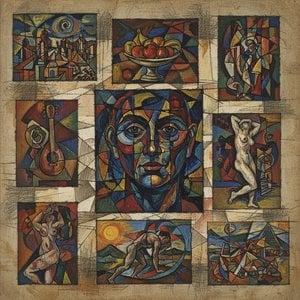
Cubismo Expressionista: 10 Obras-Primas que Moldaram a Arte Moderna | ArtsDot
Descubra as 10 obras-primas do Cubismo Expressionista que revolucionaram a arte moderna! Explore Picasso, Braque e outros mestres. Reproduções de alta qualidade para decorar sua casa com estilo. Explore a coleção completa em ArtsDot.com