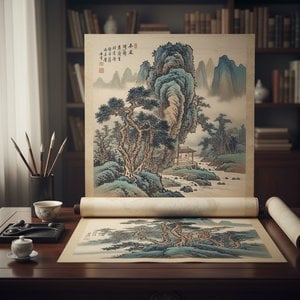
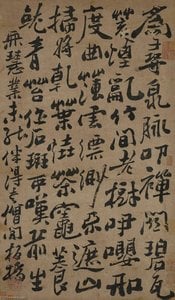
Zheng Xie (1693–1766): The Poet Painter of Yangzhou
Zheng Xie (1693-1765), commonly known as Zheng Banqiao, stands as a singular figure in Qing dynasty Chinese art—a painter who simultaneously embraced calligraphy and literature, forging an artistic vision deeply rooted in observation of the natural world and imbued with humanist sensibilities. Born in Xinghua County, Jiangsu Province, his early life was marked by hardship; however, he ascended through the imperial examination system to achieve considerable renown as a magistrate in Shandong, demonstrating both intellectual prowess and administrative capability. This pivotal moment propelled him toward artistic expression as a means of grappling with personal reflection and societal critique. He became one of the Eight Eccentrics of Yangzhou, a group of artists and intellectuals who challenged conventional artistic norms and championed an independent spirit—a stance that distinguished him from many of his contemporaries who sought patronage from the imperial court. His distinctive style—characterized by bold brushstrokes and expressive rendering—became synonymous with Yangzhou painting, particularly landscapes featuring bamboo and orchids. These subjects weren’t merely decorative; they represented profound symbolic meanings – bamboo embodying resilience and virtue, while orchids symbolizing refinement and nobility. Zheng Xie's meticulous attention to detail combined with a lyrical elegance—a stylistic hallmark that distinguishes his work from other contemporary calligraphers—reflecting a humanist perspective that contrasted sharply with the idealized portrayals favored by official circles. He believed in art as a vehicle for moral enlightenment, striving to capture not just visual beauty but also emotional depth and intellectual contemplation. A significant contribution to Zheng Xie's artistic legacy lies in his innovative calligraphy style, which emerged from his fascination with orchid drawings. He developed a technique that combined meticulous detail with lyrical elegance—a stylistic hallmark that distinguishes his work from other contemporary calligraphers. His poems explored themes of everyday life with remarkable sensitivity and honesty, reflecting a humanist perspective that contrasted sharply with the idealized portrayals favored by official circles. Zheng Xie’s artistic output wasn't simply about capturing visual beauty; it was about conveying emotional depth and intellectual contemplation—a testament to his belief in art as a vehicle for moral enlightenment. Zheng Xie’s fame stemmed from his exceptional skill at painting bamboo and orchids, subjects he treated with profound reverence and symbolic significance. He meticulously rendered the textures of bamboo stalks and orchid blossoms, capturing their subtle variations in color and form with breathtaking accuracy—a testament to his mastery of brushwork and tonal modulation. His landscapes were imbued with a sense of tranquility and harmony, reflecting his belief that art should inspire contemplation and elevate the spirit. Furthermore, Zheng Xie’s calligraphy style mirrored his artistic vision—characterized by flowing lines and expressive strokes that conveyed emotion and intellect with equal grace. He briefly resumed an official career as “official calligrapher and painter” for the Qianlong Emperor in 1748, allowing him to revisit his formal training and hone his skills within the framework of the court’s artistic standards. However, he swiftly retreated from officialdom once more, reaffirming his commitment to pursuing artistic endeavors independently—a legacy that continues to inspire artists today. Zheng Xie's enduring influence extends beyond his individual paintings; he established a precedent for artists prioritizing personal integrity and aesthetic exploration over adherence to prescribed conventions—a cornerstone of Yangzhou’s artistic heritage. He is remembered not merely as a painter but as a poet who elevated the visual arts through intellectual contemplation and moral conviction—a true embodiment of the Eight Eccentrics' spirit of rebellion against artistic dogma.Pytania i odpowiedzi
What aliases or alternate names does Зheng Xie have?
Зheng Xie appears under the alternate names Зheng Banqiao.
Gdzie można znaleźć dzieła Зheng Xie pogrupowane według tematów?
Dzieła artysty Зheng Xie można przeglądać według tematów na stronie Atlas tematów poświęconej temu artyście.
Gdzie można znaleźć dzieła Зheng Xie pogrupowane według słów kluczowych?
Strona Według słów kluczowych artysty Зheng Xie grupuje dzieła artysty według słów kluczowych.
Gdzie można znaleźć dzieła Зheng Xie pogrupowane według techniki?
Strona Wszystkie techniki grupuje dzieła Зheng Xie według techniki wykonania.
Czy mogę odwiedzić wirtualne muzeum dzieł Зheng Xie?
Możliwa jest wirtualna wizyta: strona Muzeum 3D artysty Зheng Xie prezentuje dzieła twórcy w galerii trójwymiarowej.
Gdzie mogę zobaczyć dzieła Зheng Xie pogrupowane według nastroju?
Strona Klimat wnętrza artysty Зheng Xie to miejsce, w którym dzieła są uporządkowane według nastroju.
W jaki sposób mogę śledzić twórczość Зheng Xie rok po roku?
Dzieła Зheng Xie można obejrzeć w porządku chronologicznym na stronie Oś czasu dzieł artysty.
Jak mogę znaleźć dzieła artysty Зheng Xie w konkretnej palecie barw?
Strona Według palet kolorystycznych grupuje dzieła Зheng Xie według ich palet kolorystycznych.