


1


Aktualizacja: Październik 2026 · ranking według naszego wskaźnika popularności (liczba wyszukiwań, wizyt i zamówień dla każdego dzieła) · 211 dzieł Michaił Wrubel w naszym katalogu
W skrócie
Najbardziej znanym obrazem, który stworzył Michaił Wrubel, jest Seated Demon (1890) – można go zobaczyć w Galeria Tratykowa w Moskwa. Tuż po nim następują Царевна-Лебедь oraz The Seated Demon. Z 211 dzieł Michaił Wrubel w naszym katalogu, tych 100 jest najbardziej znanych. Każde z nich zawiera rok powstania, informację o muzeum oraz krótką notkę o tym, co czyni je wyjątkowymi.

Царевна-Лебедь to fundamentalne dzieło rosyjskiego artysty, którym jest Michaił Wrubel. Powstały w 1900 roku obraz olejny na płótnie uchwycił moment głębokiej metamorfozy. Tematyka tego płótna wyrasta z folkloru Aleksandra Puszkina, czerpiąc bezpośrednio z baśni „Opowieść o care Tzarze Salanie”. Jest to dzieło, które w mistrzowski sposób buduje most między mitem literackim a teatralną sceną.

In the hauntingly beautiful masterpiece The Seated Demon, created in 1890, Mikhail Vrubel invites us into a realm where the boundaries between reality and the supernatural dissolve. This quintessential work of the Symbolist movement captures a moment of profound introspection, presenting a demonic figure not as a creature of pure malice, but as an embodiment of spiritual longing and cosmic sorrow. The subject sits in a contemplative, almost heavy pose,…

To gaze upon Mikhail Vrubel's Swan-Princess is to step across a threshold into a realm woven from myth, moonlight, and profound introspection. This captivating oil on canvas, dating from 1904, is not merely a depiction of a woman by a river; it is an embodiment of the Symbolist spirit itself. The air around the figure seems thick with unspoken narratives—a delicate balance between ethereal beauty and deep, submerged mystery. Vrubel,…

A man sits draped in red, his presence heavy with the weight of a silent history. He wears a turban, a crown of folded fabric, and a gold belt cinches his waist like a line of sunlight. One arm rests over his shoulder, a gesture of casual authority or perhaps a weary stillness. In his hand, he holds a large book or a heavy scroll, a vessel for words and…

In the quiet, evocative depths of Mikhail Vrubel’s 1883 watercolor, Hamlet and Ophelia, we are invited into a world that transcends the boundaries of mere illustration. This masterpiece does not simply depict a scene from William Shakespeare’s most famous tragedy; rather, it captures the very essence of the Symbolist movement through a lens of profound intimacy. The painting presents two women seated in an old-fashioned, perhaps timeless, interior, facing one…

In Mermaid, Mikhail Vrubel presents a mythological creature adrift in a natural setting. The figure reclines within the water, a pale shape amidst a cluster of lily pads and reeds. This scene, painted about 1891, captures a moment of quietude. The mermaid rests where the surface meets the depths, surrounded by the organic geometry of the aquatic plants.

The air feels heavy with the scent of ancient dust and magic as the scene unfolds. High above a sleeping town, the boundary between the physical and the supernatural thins to a translucent veil. A man rides a horse through the sky, his form caught in a moment of frantic, soaring motion. Beside him, the presence of Mephistopheles looms, a shadow cast against the heavens. They are not merely traveling;…

The air feels heavy with the weight of ancient melody as Sadko stands at the center of a swirling human ring. He is a merchant of Novgorod, yet here he seems more a conduit for something supernatural than a man of commerce. Around him, friends and musicians lean in, their instruments poised to catch the notes that seem to ripple through the very atmosphere. The scene is alive with a…

In the quiet intimacy of his studio, Mikhail Vrubel approached the delicate medium of watercolor to compose Red Azaleas. Created about 1886, this work captures a specific moment in the artist's development. At this stage, Vrubel was refining a way of seeing that moved away from the rigid constraints of academic realism. He sought instead to find a more personal, idiosyncratic language through form and line.
 Head of Demon with mountains1890 · Tereshchenko Museum
12
 Demon and Angel with Tamara's Soul1891
13
 Eastern dance1887
14
 Catania. Sicily.1894
15
 Head of Demon
16
 Anna Karenina meets her son1878
17
 Self Portrait1880
18
 Lady in furs1880
19
 Salieri pours poison into a Mozart's glass1884
20
 Hamlet and Ophelia1884
21
 Karibeevich1891
22
 The Flying Demon1890
23
 Demon looking to the valley1891
24
 Demon by the walls of monastery1891
25
 Demon looking1891
26
 Tamara Dancing1891
27
 Resurrection1887
28
 Walking on Water1891
29
 Christ in Gethsemane1888
30
 Bogatyr1898 · Państwowy Rosyjski Muzeum w Sankt Petersburgu
31
 Portrait of a T. Lyubatovich in role of Carmen1895
32
 Captured Pechenegs (Costume design for the opera "Rogneda")1896
33
 The Demon Flying1899 · Państwowy Rosyjski Muzeum w Sankt Petersburgu
34
 After the Concert, at the Fireplace1905 · Galeria Tratykowa
35
 Night1900
36
 Portrait of a young man1903
37
 A bed1904
38
 Self Portrait1904
39
 Portrait of Doctor Fiodor Usoltsev1904
40
 Princess Volhova1900
41
 Pearl oister1904
42
 Portrait of Savva Vrubel , the Artist's Son1901
43
 Prince's huntsman (Costume design for the opera "The Enchantress")1900
44
 Fallen Demon1901
45
 Portrait of Nadezhda Zabela-Vrubel1903
46
 The Six Winged Seraph1904
47
 Nadezhda Zabela-Vrubel as Princess Volkhova1898
48
 The Virgin and Child
49
 The Rose
50
 Pearl Oyster
51
 Lilac
52
 Spring1900 · Art Museum RIGA BOURSE
53
 The left artist's hand1882
54
 Two gondolas on the quay1885
55
 Odessa harbour1885 · Amsterdam Museum
56
 Field flowers1884
57
 Archangel Gabriel1885
58
 Briar1884
59
 Moses1884
60
 Male nude1882
61
 A model with eastern dress1884
62
 Italian fisherman1885
63
 Virgin and Child1884
64
 Portrait of student1882
65
 Pieta1884
66
 Still Life. Plaster mask, horn of chandelier.1885
67
 Descent of Holy Spirit on the Apostles1885
68
 Self Portrait1882
69
 Sitter in the Renaissance Setting1883
70
 Woman's Head (Emily L. Prahova)1884
71
 Angel with Labara1884
72
 Feasting Romans1883
73
 Betrothal of Mary and Joseph1881
74
 Horseman1890
75
 Prince Guido (Costume design for the opera "The Tale of Tsar Saltan")1890
76
 Italy. Scenes of ancient life. (Sketch for the curtain in Russian Private Opera)1891
77
 Piet1887
78
 Tamara Lying in State1891
79
 Orchid1887
80
 Hamlet and Ophelia1888
81
 Flowers in a Blue Vase1886
82
 Muse1890
83
 Resurrection1887
84
 Rider (''Is carried horse faster of fallow-deer...'')1891
85
 Portrait of an Officer (Pechorin on a Sofa)1889
86
 Farewell of Zara with Ismail1890
87
 Portrait of M. V. Yakunchikova1887
88
 Red Flowers and Leaves of Begonia in a Basket1887
89
 A Man in a Russian Old Style Costume1886
90
 Eastern Tale1886
91
 Parting of the Sea King and Princess Volkhova1898
92
 Playing naiads and tritons1897
93
 Morning1897
94
 Faust1896
95
 Hansel and Gretel1896
96
 Venice1893
97
 Water Lilies1895
98
 Knight1896
99
 The Fortune Teller1895
100
 Primavera1894
Cztery tematy najczęściej pojawiające się w tych dziełach, z których każdy wraz z jego najbardziej znanym przykładem.
5 muzeów, w których znajduje się najwięcej obrazów z tej strony.
| Muzeum | Miasto | Dzieła artysty Michaił Wrubel | Obrazy z tej listy |
|---|---|---|---|
 Galeria Tratykowa |
Moskwa | 16 | Seated Demon, Царевна-Лебедь, Swan-Princess |
 Państwowy Rosyjski Muzeum w Sankt Petersburgu |
Sankt Petersburg | 3 | Bogatyr, The Demon Flying |
 Tereshchenko Museum |
Kijów | 1 | Head of Demon with mountains |
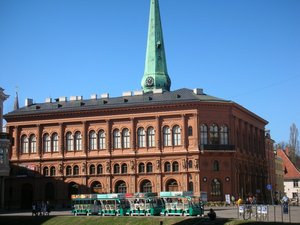 Art Museum RIGA BOURSE |
Ryga | 1 | Spring |
 Amsterdam Museum |
Amsterdam | 1 | Odessa harbour |
Wybierz dekadę, aby zobaczyć jej najważniejsze dzieło.

A man sits draped in red, his presence heavy with the weight of a silent history. He wears a turban, a crown of folded fabric, and a gold belt cinches his waist like a line of sunlight. One arm rests over his shoulder, a gesture of casual authority or perhaps a weary stillness. In his hand, he holds a large book or a heavy scroll, a vessel for words and…
To gaze upon Mikhail Vrubel's Swan-Princess is to step across a threshold into a realm woven from myth, moonlight, and profound introspection. This captivating oil on canvas, dating from 1904, is not merely a depiction of a woman by a river; it is an embodiment of the Symbolist spirit itself. The air around the figure seems thick with unspoken narratives—a delicate balance between ethereal beauty and deep, submerged mystery. Vrubel,…
Na szczycie listy znajduje się Seated Demon (1890), Galeria Tratykowa, Moskwa. Tuż za nim: Царевна-Лебедь i The Seated Demon.
34 lat. Michaił Wrubel urodził się w 1856, a Seated Demon pochodzi z 1890.
Seated Demon, Царевна-Лебедь, The Seated Demon, Swan-Princess, Persian Prince, Hamlet and Ophelia, Mermaid, Flight of Faust and Mephisto, Sadko i Red Azaleas. Rok powstania oraz muzeum, w którym znajdują się poszczególne dzieła, znajdziesz w powyższej liście.
W naszym katalogu znajduje się 211 dzieł artysty Michaił Wrubel, datowanych od 1878 do 1905.
Większość z nich znajdziesz w Galeria Tratykowa (Moskwa), Państwowy Rosyjski Muzeum w Sankt Petersburgu (Sankt Petersburg) i Tereshchenko Museum (Kijów). Powyższa lista muzeów zawiera pełne zestawienie.
W 1880s, bardziej niż w jakimkolwiek innym czasie: 42 z 100 dzieł na tej stronie pochodzi właśnie z tego okresu, w tym Persian Prince.
Najwcześniejsze dzieło pochodzi z Anna Karenina meets her son (1878), a najnowsze z After the Concert, at the Fireplace (1905).
Characters (12), Men (10) i Symbols (8) z 100 dzieł na tej stronie.
Oil On Canvas, użyte w 5 z 100 dzieł na tej stronie.
Symbolism, co widać na dziełach prezentowanych na tej stronie.
Na tej stronie możesz zobaczyć 4 dzieł znajdujących się w Galeria Tratykowa, Moskwa, w tym Seated Demon, Царевна-Лебедь i Swan-Princess.
Tak. Każdy obraz na tej stronie jest dostępny jako ręcznie malowana reprodukcja olejowa lub wydruk, w rozmiarze dopasowanym do Twoich potrzeb. Aby złożyć zamówienie, wystarczy przejść na stronę wybranego obrazu.
Michaił Wrubel urodził się w Omsku w Rosji. Jego wychowanie ukształtowała rodzina o szlacheckich korzeniach oraz ojciec służący w wojsku. Choć w 1880 roku ukończył Wydział Prawa Uniwersytetu Petersburskiego, jego myśli nieustannie krążyły wokół płótna. Podjął studia w Cesarskiej Akademii Sztuk Pięknych pod okiem Pawła Czistiakowa, gdzie zaczął wypracowywać styl odmienny od tradycyjnego realizmu jego rówieśników. Jego wczesne szkolenie charakteryzowało się specyficznym sposobem patrzenia na świat, faworyzującym niekonwencjonalne podejście do formy i linii.
W 1884 roku nastąpił przełomowy zwrot, gdy otrzymał zlecenie odtworzenia XII-wiecznych fresków i mozaik w cerkwi św. Mikołaja w Kijowie. Praca ta wymagała od niego wnikliwej analizy średniowiecznej sztuki chrześcijańskiej. Czas spędzony na studiowaniu tych starożytnych dzieł, w tym podróże do Wenecji, nieodwracalnie zmieniły jego paletę barw. Zaczął stosować intensywne, nasycone tony, które przywodziły obserwatorom na myśl drogocenne kamienie, odchodząc tym samym od stonowanych kolorów tradycji akademickiej.
Twórczość, którą tworzył Michaił Wrubel, często zajmowała przestrzeń między światem materialnym a krainą mitu. Fascynowały go tekstury perskich dywanów i wzory sztuki orientalnej, które przekładał na język malarstwa za pomocą techniki imitującej wygląd mozaikowych kostek. Metoda ta polegała na używaniu szpachli malarskiej do nakładania odważnych, płaskich pociągnięć, co tworzyło ostre, fasetowane krawędzie. Takie podejście nadawało jego płótnom krystaliczną jakość, jak gdyby farba olejna była utkany ze witrażu lub szlachetnych kamieni.
Jego fascynacja folklorem i sferą nadprzyrodzoną jest najbardziej widoczna w przedstawieniach postaci mitycznych. Obrazy te często zgłębiały tematy samotności i tęsknoty. Do jego najbardziej dyskutowanych dzieł należą:
W tych kompozycjach artysta nie dążył do ścisłego realizmu. Zamiast tego wykorzystywał dekoracyjną przestrzeń i niezwykłe formy, aby uchwycić poczucie duchowej lub psychologicznej głębi. Współpraca z operową śpiewaczką Nadieżdą Zabelą-Wrubel również wpłynęła na jego dorobek, skłaniając go do projektowania scenografii i kostiumów, co rozszerzyło jego artystyczne oddziaływanie na świat teatru.
Późniejsze lata życia artysty naznaczone były osobistą walką. Ciężki załamanie nerwowe w 1906 roku, powikłane chorobą, zmusiło go do zaprzestania malowania. Ostatnie lata spędził w klinice psychiatrycznej, zanim odszedł w 1910 roku. Mimo trudności ostatniej dekady jego życia, wpływ Michaiła Wrubla na rosyjski symbolizm i art nouveau pozostaje kluczowym elementem historii sztuki nowoczesnej. Pomógł on utorować drogę ruchom awangardowym, przesuwając punkt ciężkości rosyjskiego malarstwa w stronę bardziej ekspresyjnego i modernistycznego idiomu.


