Portret Antoon van Dyck

Antoon van Dyck's Most Famous Paintings: All 100, Ranked

Aktualizacja: Październik 2026 · ranking według naszego wskaźnika popularności (liczba wyszukiwań, wizyt i zamówień dla każdego dzieła) · 1 620 dzieł Antoon van Dyck w naszym katalogu

In short

The Antoon van Dyck painting most people know is Charles I w trzech pozach (1636), and you can see it at the Royal Collection, Londyn. Right after it come Family Portrait (1621) and Portrait of Isabella Clara Eugenia as Widow (1628). Out of 1,620 works by Antoon van Dyck in our catalogue, these 100 are the best known. Each one comes with its year, its museum and a short note on what makes it stand out.

1599 – 1641, Antwerpia Baroque style Najwięcej dzieł: Bawarskie Państwowe Zbiory Malarstwa

Antoon van Dyck's top 10: the pieces everyone knows

1
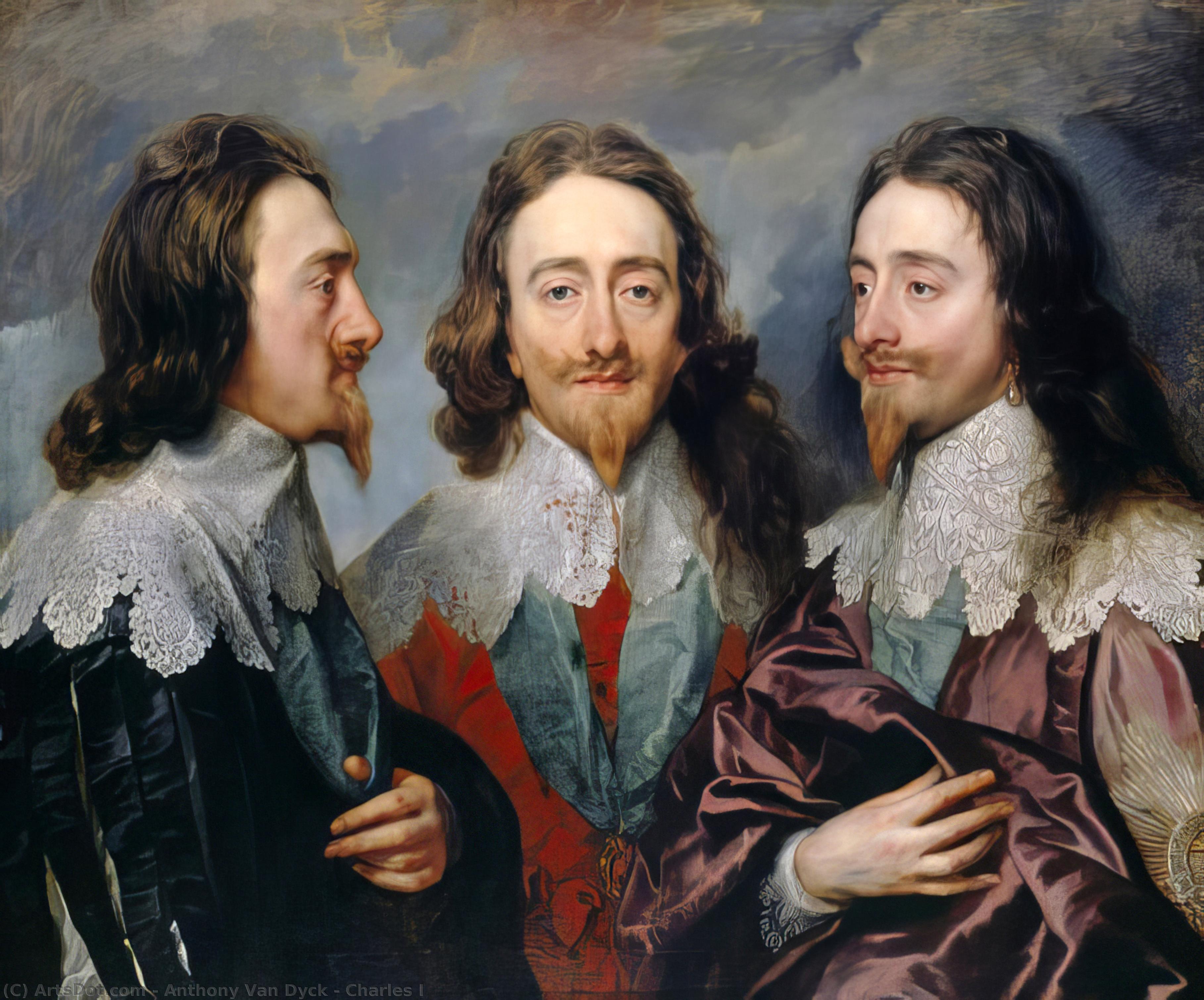
Charles I w trzech pozach (1636) autorstwa Antoon van Dyck

Charles I w trzech pozach

1636 · Obraz olejny na płótnie · Royal Collection, Londyn

"Karol I w trzech pozach" stanowi niezwykły przykład mistrzostwa sir Anthony'ego van Dycka w dziedzinie portretu barokowego. To olejowe arcydzieło na płótnie, namalowane w latach 1635–163ł6, prezentuje wyjątkowy kunszt flamandzkiego artysty oraz jego głęboki wpływ na sztukę europejską. Obraz ten jest częścią prestiżowej Kolekcji Królewskiej i obecnie zdobi King's Drawing Room w zamku Windsor.

2
Family Portrait (1621) autorstwa Antoon van Dyck

Family Portrait

1621 · Oil On Canvas · Ermitaż, Sankt Petersburg

To gaze upon this magnificent family portrait is to step directly into the opulent drawing rooms of the early seventeenth century. It captures not merely three figures—a distinguished man, an elegant woman, and a cherished child—but an entire tableau of familial pride and societal standing. The composition itself speaks volumes; every fold of fabric, every carefully placed hand, contributes to a narrative of enduring connection. The rich, dramatic red background…

3
Portrait of Isabella Clara Eugenia as Widow (1628) autorstwa Antoon van Dyck

Portrait of Isabella Clara Eugenia as Widow

1628 · Oil On Canvas · Museo de Arte de Ponce, Ponce

Sir Anthony van Dyck’s “Portrait of Isabella Clara Eugenia as Widow” is more than just a depiction of a noblewoman; it's a carefully constructed tableau of power, grief, and the enduring legacy of a formidable ruler. Painted in 1628, this oil-on-canvas work transports us to the heart of the Spanish Netherlands during a period of significant political and personal upheaval. Isabella Clara Eugenia, daughter of Philip II of Spain, served…

4
Jacqueline van Caestre (1622) autorstwa Antoon van Dyck

Jacqueline van Caestre

1622 · Oil On Panel · Muzeum Łazienki Królewskie, Warszawa

The portrait of Jacqueline van Caestre, painted in 1622 by the masterful Sir Anthony van Dyck, is more than a mere likeness; it’s a carefully constructed tableau of wealth, status, and burgeoning domesticity. Within its richly layered composition lies a captivating story of a noblewoman navigating the complexities of marriage and courtly life in 17th-century Antwerp. Van Dyck, already establishing his signature style—characterized by an almost sensual realism and a…

5
Susanna and the Elders (1622) autorstwa Antoon van Dyck

Susanna and the Elders

1622 · Obraz olejny na płótnie · Alte Pinakothek, Monachium

In the grand tapestry of the Flemish Baroque, few works capture the visceral intersection of vulnerability and voyeurism as profoundly as Sir Anthony van Dyck’s Susanna and the Elders. Painted around 1622, this monumental canvas is far more than a mere biblical illustration; it is a psychological drama frozen in time. The scene centers on Susanna, a figure of profound grace and purity, caught in a moment of harrowing intrusion.…

6
Genoese Noblewoman (1622) autorstwa Antoon van Dyck

Genoese Noblewoman

1622 · Oil On Canvas · The Frick Collection, Nowy Jork

Anthony van Dyck's "Genoese Noblewoman," painted circa 1625-1627, isn’t merely a portrait; it’s a meticulously crafted window into the opulent world of early 17th-century Genoa. This captivating work, now residing within The Frick Collection in New York City, offers a rare glimpse into the refined tastes and social dynamics of a wealthy Italian city-state – a vibrant hub of commerce, art, and cultural exchange during a period of immense artistic…

7
Henrietta Maria (1635) autorstwa Antoon van Dyck

Henrietta Maria

1635 · Oil On Canvas

The gaze of Henrietta Maria meets the viewer through this commanding portrait by Anthony van Dyck. Executed in 1636, the work captures Henrietta Maria of France in a moment of poised royal dignity. She exists here as the Queen of England, a position she holds through her marriage to King Charles I. The painting functions as a visual declaration of her status and her presence within the English court.

8
Portrait of Queen Henrietta-Maria (1638) autorstwa Antoon van Dyck

Portrait of Queen Henrietta-Maria

1638 · Oil On Canvas · Ermitaż, Sankt Petersburg

To stand before this portrait is to encounter the quiet gravity of the seventeenth-century English court. The Queen stands slightly off-center, her figure anchored by the heavy weight of crimson drapery and a draped table. There is a certain stillness here, a moment caught between the political tensions of 1638 and the personal dignity of the sitter. Van Dyck uses light to sculpt her form, pulling her face and chest…

9
The healing of the paralytic (1620) autorstwa Antoon van Dyck

The healing of the paralytic

1620 · Oil On Canvas · Bawarskie Państwowe Zbiory Malarstwa, Monachium

In this oil painting, titled The healing of the paralytic, Anthony van Dyck explores a moment of profound spiritual intervention. The work, which dates to about 1618-20, captures the immediate aftermath of a miracle. We find ourselves witnessing the precise instant of transition between infirmity and restoration. The subject matter is drawn from the New Testament, specifically the narratives found in Matthew 9:1-8 or John 5:1-15.

10
Portrait of Alexandre della Faille (1589-1653) (1632) autorstwa Antoon van Dyck

Portrait of Alexandre della Faille (1589-1653)

1632 · Oil On Canvas · Królewskie Muzea Sztuk Pięknych w Belgii, Bruksela

A dignified three-quarter length portrait, this work captures a middle-aged man positioned centrally against a dark, atmospheric background. The subject, Alexandre della Faille, is rendered with a sense of quiet authority and formal composure. A voluminous white ruff collar acts as the primary focal point, its crisp texture contrasting sharply against the heavy, dark fabric of his cloak. Light enters from the upper left, casting soft shadows across the right…

Keep exploring Antoon van Dyck: 11 to 100

11Equestrian Portrait of Charles I of England (1620) autorstwa Antoon van DyckEquestrian Portrait of Charles I of England1620 · Bawarskie Państwowe Zbiory Malarstwa 12The Pietà (1629) autorstwa Antoon van DyckThe Pietà1629 · Museo del Prado 13Portrait of Charles Louis, Elector Palatine (1617-1680), in exile (1637) autorstwa Antoon van DyckPortrait of Charles Louis, Elector Palatine (1617-1680), in exile1637 14Portrait of Charles, Marquis de Vieuville (1635) autorstwa Antoon van DyckPortrait of Charles, Marquis de Vieuville1635 · Chrysler Museum of Art 15Portrait of Charles I, King of the Great Britain (1600-1649) (1638) autorstwa Antoon van DyckPortrait of Charles I, King of the Great Britain (1600-1649)1638 · Ermitaż 16The Lomellini Family (1627) autorstwa Antoon van DyckThe Lomellini Family1627 17Queen Henrietta Maria (1640) autorstwa Antoon van DyckQueen Henrietta Maria1640 · Wallace Collection 18Portrait of Henrietta Maria of France, Queen of England, Scotland and Ireland (1637) autorstwa Antoon van DyckPortrait of Henrietta Maria of France, Queen of England, Scotland and Ireland1637 19Moses and the Brazen Serpent (1530) autorstwa Antoon van DyckMoses and the Brazen Serpent1530 20Christ on the Cross (1625) autorstwa Antoon van DyckChrist on the Cross1625 · Courtauld Gallery 21Portrait of Queen Henriëtta Maria (1632) autorstwa Antoon van DyckPortrait of Queen Henriëtta Maria1632 22Portrait of a Family (1620) autorstwa Antoon van DyckPortrait of a Family1620 23Thomas Hamilton, 2nd Earl of Haddington, 1600 - 1640 (1637) autorstwa Antoon van DyckThomas Hamilton, 2nd Earl of Haddington, 1600 - 16401637 · Scottish National Portrait Gallery 24Samson and Delilah (1630) autorstwa Antoon van DyckSamson and Delilah1630 · Kunsthistorisches Museum 25Portrait of a Lady with her Daughter (1632) autorstwa Antoon van DyckPortrait of a Lady with her Daughter1632 26Charles I (1600-49) on Horseback (1635) autorstwa Antoon van DyckCharles I (1600-49) on Horseback1635 · Pałac Hampton Court 27Cupid and Psyche (1640) autorstwa Antoon van DyckCupid and Psyche1640 · Royal Collection 28Queen Henrietta Maria of England (1620) autorstwa Antoon van DyckQueen Henrietta Maria of England1620 · Bawarskie Państwowe Zbiory Malarstwa 29A Family Group (1634) autorstwa Antoon van DyckA Family Group1634 · Detroit Institute of Arts 30Queen Henrietta Maria of England (1639) autorstwa Antoon van DyckQueen Henrietta Maria of England1639 · Statens Museum for Kunst 31Saint Sebastian and the Angel (1631) autorstwa Antoon van DyckSaint Sebastian and the Angel1631 · Galleria Sabauda 32Portrait of a painter (1640) autorstwa Antoon van DyckPortrait of a painter1640 · Kunstmuseum Basel 33Queen Henrietta Maria (1635) autorstwa Antoon van DyckQueen Henrietta Maria1635 · Staatliche Kunstsammlungen Dresden 34Christ on the Cross with Saint Catherine of Siena, Saint Dominic and an Angel (1620) autorstwa Antoon van DyckChrist on the Cross with Saint Catherine of Siena, Saint Dominic and an Angel1620 · Królewskie Muzeum Sztuk Pięknych Antwerpia 35St Jerome (1620) autorstwa Antoon van DyckSt Jerome1620 · Nationalmuseum 36Venetia, Lady Digby (1634) autorstwa Antoon van DyckVenetia, Lady Digby1634 37Christ and the Penitent Magdalene (1620) autorstwa Antoon van DyckChrist and the Penitent Magdalene1620 · Bawarskie Państwowe Zbiory Malarstwa 38Crucifixion (1622) autorstwa Antoon van DyckCrucifixion1622 · San Zaccaria 39Portrait Of Frederik Hendrik (1632) autorstwa Antoon van DyckPortrait Of Frederik Hendrik1632 · Baltimore Museum of Art 40Ottaviano Canevari (1627) autorstwa Antoon van DyckOttaviano Canevari1627 · The Frick Collection 41Lamentation of Christ (1620) autorstwa Antoon van DyckLamentation of Christ1620 · Bawarskie Państwowe Zbiory Malarstwa 42Portrait of an English Gentleman (1635) autorstwa Antoon van DyckPortrait of an English Gentleman1635 · Palazzo Pitti 43Portrait of James Hay, 2nd Earl of Carlisle (c1612-1660) (1636) autorstwa Antoon van DyckPortrait of James Hay, 2nd Earl of Carlisle (c1612-1660)1636 44Saint Sebastian (1620) autorstwa Antoon van DyckSaint Sebastian1620 · Bawarskie Państwowe Zbiory Malarstwa 45The Martyrdom of Saint Sebastian (1616) autorstwa Antoon van DyckThe Martyrdom of Saint Sebastian1616 · Bawarskie Państwowe Zbiory Malarstwa 46Sir Algernon Percy (1602–1668), 10th Earl of Northumberland, KG, His First Wife Lady Anne Cecil (d.1637), and Their Eldest Daughter, Lady Catherine Percy (1630–1638) (1635) autorstwa Antoon van DyckSir Algernon Percy (1602–1668), 10th Earl of Northumberland, KG, His First Wife Lady Anne Cecil (d.1637), and Their Eldest Daughter, Lady Catherine Percy (1630–1638)1635 47Sir Kenelm Digby (1640) autorstwa Antoon van DyckSir Kenelm Digby1640 · National Portrait Gallery 48Lord John Stuart and his Brother, Lord Bernard Stuart (1638) autorstwa Antoon van DyckLord John Stuart and his Brother, Lord Bernard Stuart1638 49Portrait of an Old Man (1618) autorstwa Antoon van DyckPortrait of an Old Man1618 · Liechtenstein Museum 50Portrait of a Man (1922) autorstwa Antoon van DyckPortrait of a Man1922 · Bawarskie Państwowe Zbiory Malarstwa 51Charles I in Three Positions (1636) autorstwa Antoon van DyckCharles I in Three Positions1636 · Royal Collection 52Portrait of Nicolaes van der Borght (1620) autorstwa Antoon van DyckPortrait of Nicolaes van der Borght1620 53Portrait of a Genovese Gentleman (1621) autorstwa Antoon van DyckPortrait of a Genovese Gentleman1621 · Gemäldegalerie 54James Stuart (1612–1655), 1st Duke of Richmond and 4th Duke of Lennox (1636) autorstwa Antoon van DyckJames Stuart (1612–1655), 1st Duke of Richmond and 4th Duke of Lennox1636 · English Heritage 55Mountjoy Blount (1597–1665), 1st Earl of Newport George (1608–1657), Lord Goring, and a Page (1639) autorstwa Antoon van DyckMountjoy Blount (1597–1665), 1st Earl of Newport George (1608–1657), Lord Goring, and a Page1639 · Petworth House 56The Martyrdom of Saint Sebastian (1620) autorstwa Antoon van DyckThe Martyrdom of Saint Sebastian1620 · Bawarskie Państwowe Zbiory Malarstwa 57Rest on the Flight into Egypt (Madonna with Partridges) (1632) autorstwa Antoon van DyckRest on the Flight into Egypt (Madonna with Partridges)1632 · Ermitaż 58Portrait of a Man (1618) autorstwa Antoon van DyckPortrait of a Man1618 · Liechtenstein Museum 59Marie de Raet (1631) autorstwa Antoon van DyckMarie de Raet1631 · Wallace Collection 60Mozes and the brass snake (1620) autorstwa Antoon van DyckMozes and the brass snake1620 61Portrait of Prince Charles Louis, Elector Palatine (1641) autorstwa Antoon van DyckPortrait of Prince Charles Louis, Elector Palatine1641 62Charles Seton (1615–1672), 2nd Earl of Dunfermline, Lord Privy Seal (1640) autorstwa Antoon van DyckCharles Seton (1615–1672), 2nd Earl of Dunfermline, Lord Privy Seal1640 63The Virgin and Child (1631) autorstwa Antoon van DyckThe Virgin and Child1631 · Pałac Buckingham 64Lord George Stuart (1638) autorstwa Antoon van DyckLord George Stuart1638 · National Portrait Gallery 65Portrait of Wolfgang William of Palatine-Neuburg (1630) autorstwa Antoon van DyckPortrait of Wolfgang William of Palatine-Neuburg1630 · Kunsthalle Bremen 66Queen Henrietta Maria (1760) autorstwa Antoon van DyckQueen Henrietta Maria1760 · Birmingham Museum and Art Gallery 67Portrait of Emmanuel Philibert (1624) autorstwa Antoon van DyckPortrait of Emmanuel Philibert1624 68Portret Karola Wielkiego na koniu (1620) autorstwa Antoon van DyckPortret Karola Wielkiego na koniu1620 · Galleria degli Uffizi 69The Polish Rider (1620) autorstwa Antoon van DyckThe Polish Rider1620 · Bawarskie Państwowe Zbiory Malarstwa 70Charles I and the Knights of the Garter in Procession (1638) autorstwa Antoon van DyckCharles I and the Knights of the Garter in Procession1638 · Ashmolean Museum of Art and Archaeology 71Christus als Salvator Mundi (1620) autorstwa Antoon van DyckChristus als Salvator Mundi1620 · Galeria Obrazów Sanssouci 72Charles I (1600–1649) (1639) autorstwa Antoon van DyckCharles I (1600–1649)1639 · National Trust 73Królowa Henrietta Maria (1636) autorstwa Antoon van DyckKrólowa Henrietta Maria1636 · Metropolitan Museum of Art 74Lady Dacre (1633) autorstwa Antoon van DyckLady Dacre1633 · Denver Art Museum 75Francis Junius (1591–1677) (1640) autorstwa Antoon van DyckFrancis Junius (1591–1677)1640 · Biblioteka Bodleja 76Charles i - (16) autorstwa Antoon van DyckCharles i - (16) 77Deux têtes d (1650) autorstwa Antoon van DyckDeux têtes d1650 · Muzeum Sztuk Pięknych w Lyonie 78Princess Henrietta of Lorraine (1611–1660), Attended by a Page (1634) autorstwa Antoon van DyckPrincess Henrietta of Lorraine (1611–1660), Attended by a Page1634 · English Heritage 79Portrait of Father Jean-Charles della Faille, S.J. (1629) autorstwa Antoon van DyckPortrait of Father Jean-Charles della Faille, S.J.1629 80Equestrian Portrait of Charles I, King of England (1640) autorstwa Antoon van DyckEquestrian Portrait of Charles I, King of England1640 81François Langlois (1589–1647) (1637) autorstwa Antoon van DyckFrançois Langlois (1589–1647)1637 · The Barber Institute of Fine Arts 82Portrait of Charles I, King of England (1640) autorstwa Antoon van DyckPortrait of Charles I, King of England1640 · USC Fisher Museum of Art 83Christ carrying the Cross autorstwa Antoon van DyckChrist carrying the CrossMusei di Strada Nuova 84Portrait of the Painter Cornelis de Wae (1627) autorstwa Antoon van DyckPortrait of the Painter Cornelis de Wae1627 · Koninklijk Museum voor Schone Kunsten Antwerpen 85Ecce Homo (1626) autorstwa Antoon van DyckEcce Homo1626 · The Barber Institute of Fine Arts 86Margareta Snyders (1620) autorstwa Antoon van DyckMargareta Snyders1620 87Margareta de Vos (1620) autorstwa Antoon van DyckMargareta de Vos1620 · The Frick Collection 88Portrait of Anna Dalkeith, Countess of Morton, and Lady Anna Kirk (1631) autorstwa Antoon van DyckPortrait of Anna Dalkeith, Countess of Morton, and Lady Anna Kirk1631 · Ermitaż 89Portrait Of Philip, Lord Wharton (1630) autorstwa Antoon van DyckPortrait Of Philip, Lord Wharton1630 90Portrait of a Man (1618) autorstwa Antoon van DyckPortrait of a Man1618 · Liechtenstein Museum 91Portrait of Henrietta Maria (1609–1699), Queen of England autorstwa Antoon van DyckPortrait of Henrietta Maria (1609–1699), Queen of EnglandMuzeum Narodowe w Warszawie 92Portrait of James Hamilton (1630) autorstwa Antoon van DyckPortrait of James Hamilton1630 · Liechtenstein Museum 93Karol I na koniu (1635) autorstwa Antoon van DyckKarol I na koniu1635 · National Gallery 94Thomas Killigrew and (.) William, Lord Croft (1638) autorstwa Antoon van DyckThomas Killigrew and (.) William, Lord Croft1638 · Royal Collection 95Alexander Henderson (c.1583–1646), Presbyterian Divine and Diplomatist (1641) autorstwa Antoon van DyckAlexander Henderson (c.1583–1646), Presbyterian Divine and Diplomatist1641 · Scottish National Portrait Gallery 96The Lomellini Family (1626) autorstwa Antoon van DyckThe Lomellini Family1626 · National Gallery of Scotland 97Samson i Dalila (1620) autorstwa Antoon van DyckSamson i Dalila1620 98Abraham and Isaac (1617) autorstwa Antoon van DyckAbraham and Isaac1617 · Národní galerie Praha 99Portrait of Anna van Craesbecke (1635) autorstwa Antoon van DyckPortrait of Anna van Craesbecke1635 · Staatliche Museen Kassel 100A wooded ridge (1630) autorstwa Antoon van DyckA wooded ridge1630 · Art Gallery of South Australia

Antoon van Dyck's paintings, period by period

What Antoon van Dyck painted most

The four subjects that come up most often in these pieces, each with its best-known example.

Where you can see Antoon van Dyck's paintings

8 muzeów, w których znajduje się najwięcej obrazów z tej strony.

Muzeum Miasto Dzieła artysty Antoon van Dyck Obrazy z tej listy
Bawarskie Państwowe Zbiory Malarstwa, MonachiumBawarskie Państwowe Zbiory Malarstwa Monachium 57 The healing of the paralytic, Equestrian Portrait of Charles I of England, Queen Henrietta Maria of England
Ermitaż, Sankt PetersburgErmitaż Sankt Petersburg 25 Family Portrait, Portrait of Queen Henrietta-Maria, Portrait of Charles I, King of the Great Britain (1600-1649)
Royal Collection, LondynRoyal Collection Londyn 29 Charles I w trzech pozach, Cupid and Psyche, Charles I in Three Positions
Liechtenstein Museum, WiedeńLiechtenstein Museum Wiedeń 23 Portrait of an Old Man, Portrait of a Man, Portrait of a Man
The Frick Collection, Nowy JorkThe Frick Collection Nowy Jork 8 Genoese Noblewoman, Ottaviano Canevari, Margareta de Vos
Wallace Collection, LondynWallace Collection Londyn 9 Queen Henrietta Maria, Marie de Raet
National Portrait Gallery, LondynNational Portrait Gallery Londyn 6 Sir Kenelm Digby, Lord George Stuart
Scottish National Portrait Gallery, EdynburgScottish National Portrait Gallery Edynburg 5 Thomas Hamilton, 2nd Earl of Haddington, 1600 - 1640, Alexander Henderson (c.1583–1646), Presbyterian Divine and Diplomatist

One famous Antoon van Dyck piece for every decade

Dzieła według dekad

Pick a decade to see its standout piece.

Antoon van Dyck paintings: what people want to know

What painting is Antoon van Dyck best known for?See the answer

Top of the list is Charles I w trzech pozach (1636), Royal Collection, Londyn. Right behind it: Family Portrait (1621) and Portrait of Isabella Clara Eugenia as Widow (1628).

How old was Antoon van Dyck at the time of Charles I w trzech pozach?See the answer

37 years old. Antoon van Dyck was born in 1599, and Charles I w trzech pozach dates from 1636.

Which 10 Antoon van Dyck paintings are the most famous?See the answer

Charles I w trzech pozach, Family Portrait, Portrait of Isabella Clara Eugenia as Widow, Jacqueline van Caestre, Susanna and the Elders, Genoese Noblewoman, Henrietta Maria, Portrait of Queen Henrietta-Maria, The healing of the paralytic i Portrait of Alexandre della Faille (1589-1653). You'll find the year and the museum of each in the list above.

How many Antoon van Dyck works are there?See the answer

We have 1,620 works by Antoon van Dyck in our catalogue, dated 1616 to 1641.

Which museums have Antoon van Dyck's best-known paintings?See the answer

You'll find most of them in Bawarskie Państwowe Zbiory Malarstwa (Monachium), Ermitaż (Sankt Petersburg) i Royal Collection (Londyn). The museum list above has the full breakdown.

When were Antoon van Dyck's most famous pieces painted?See the answer

In 1630s, more than any other time: 44 of the 100 pieces on this page date from then, Charles I w trzech pozach among them.

What are the oldest and newest famous paintings by Antoon van Dyck?See the answer

The earliest piece here is The Martyrdom of Saint Sebastian (1616); the most recent is Portrait of Prince Charles Louis, Elector Palatine (1641).

What did Antoon van Dyck paint most?See the answer

Man (22), Portraiture (19) i Portrait (18), out of the 100 pieces on this page.

What did Antoon van Dyck usually paint with?See the answer

Oil On Canvas, used in 75 of the 100 pieces on this page.

Which art movement is Antoon van Dyck linked to?See the answer

Baroque style, as you can see in the pieces on this page.

What can you see by Antoon van Dyck at the Bawarskie Państwowe Zbiory Malarstwa?See the answer

You can see 10 of the pieces on this page at the Bawarskie Państwowe Zbiory Malarstwa, Monachium, including The healing of the paralytic, Equestrian Portrait of Charles I of England i Queen Henrietta Maria of England.

Can I order a Antoon van Dyck reproduction for my home?See the answer

Yes. Every painting on this page is available as a hand-painted oil reproduction or a print, in the size that suits you. Just open the painting's page to order.

Meet Antoon van Dyck

Wczesne lata, rodzina i szkolenie

Urodzony w Antwerpii 22 marca 1599 roku, Antoni Van Dyck wkroczył w świat pełen handlu i rzemiosła. Był siódmym z dwunastu dzieci Marii Cupers oraz Francoïsa „Fransa” van Dijcka, kupca jedwabiu. Wychowanie w zamożnym domu zapewniło stabilny fundament dziecku, które od najmłodszych lat wykazywało niezwykły, wręcz przedwczesny talent do sztuk wizualnych. Już w wieku dziesięciu lat jego formalna edukacja w zakresie malarstwa rozpoczęła się pod okiem Hendricka van Balena Starszego.

Jego rozwój charakteryzował gwałtowny awans w tradycyjnych strukturach flamandzkiego świata sztuki. Nie zatrzymał się na długo w roli zwykłego ucznia; biegłość techniczna pozwoliła mu z niezwykłą prędkością dążyć ku niezależności. Do 18 października 1617 roku osiągnął przełomowy moment, zostając przyjętym do Antwerpskiego Cechu Świętego Łukasza jako wolny mistrz. To wczesne uznanie zawodowe zwiastowało nadejście talentu, który wkrótce miał wyjść daleko poza granice jego rodzimego miasta.

  • Autoportret (datowany na 1613–14)

Wpływ Petera Paula Rubensa

Trajektoria kariery, którą podążał Antoni Van Dyck, została fundamentalnie ukształtowana przez czas spędzony w pracowni Petera Paula Rubensa. Nie było to jednak zwykłe stażowanie; młody artysta wzrósł do rangi głównego asystenta mistrza, co wymagało nie tylko technicznej precyzji, ale także niezwykłej zdolności do przyswajania złożonego języka wizualnego. Sam Rubens dostrzegł wyjątkowy talent swojego protegowanego, opisując młodzieńca jako najlepszego ze swoich uczniów. To mentorstwo zapewniło Antoniemu Van Dyckowi bezpośredni kontakt z wiodącymi nurtami artystycznymi siedemnastego wieku, pozwalając mu na własne oczy obserwować proces tworzenia monumentalnych kompozycji oraz sprawne zarządzanie niezwykle płodną pracownią.

Wpływ Rubensa na młodego artystę przejawiał się poprzez wspólną fascynację ekspresją, gestem oraz formą. Choć z czasem Antoni Van Dyck wypracował własny, bardziej wyrafinowany i opanowany styl, jego wczesne lata upłynęły na naśladowaniu energii i uważnej obserwacji swojego mentora. Nauczył się on przekładać witalność życia na olej i pigment – umiejętność ta pozwoliła mu później wyjść poza pełną dynamizmu estetykę stylu Rubensa w stronę czegoś znacznie subtelniejszego. Techniczne fundamenty położone w tej pracowni dostarczyły mu niezbędnych narzędzi do ostatecznego triumfu na królewskich dworach Europy.

Artystyczne podróże we Włoszech i Genui

Pod koniec okresu wczesnej młodości Antoni Van Dyck odniósł już sukces jako niezależny malarz, co zapewniło mu impet niezbędny do opuszczenia Niderlandów. Między rokiem 1621 a końcem 1627 roku przemierzał on Włochy – był to czas, który udoskonalił jego umiejętność poruszania się w skomplikowanych hierarchiach społecznych europejskiej arystokracji. Ta podróż nie była jedynie wędrówką, lecz strategicznym zanurzeniem w wizualny język śródziemnomorskich elit.

Pobyt w Genui okazał się szczególnie przełomowy. Odnalazł tam stałą grupę klientów wśród genueńskich patrycjuszy, których arystokratyczna wrażliwość idealnie współgrała z rozwijającym się stylem artysty. Jego wizerunki tych lokalnych rodów spotykały się w mieście z ogromnym uznaniem, ugruntowując pozycję malarza zdolnego do uchwycenia specyficznej godności wymaganej przez wyższe sfery. W tych portretach Antoni Van Dyck wyszedł daleko poza ramy zwykłego podobieństwa, dotykając istoty statusu społecznego i wewnętrznego charakteru swoich modeli.

Służba na dworze angielskim

Relacja Antoni Van Dyck z angielską koroną rozpoczęła się na długo przed jego stałym osiedleniem się w Londynie. Już w 1620 roku trafił na dwór króla Jakuba I – był to krótki epizod, który poprzedził jego niezwykle intensywne podróże przez Włochy oraz Niderlandy Hiszpańskie. Te lata nieustannego ruchu i różnorodnych zleceń przygotowały go do znacznie ważniejszego, głębszego wejścia w świat wielkiej polityki. Do Anglii powrócił w 1632 roku, osiadając na dworze, na którym jego sława jako wybitnego portrecisty miała ostatecznie się ugruntować. W tym samym roku otrzymał zaszczytny tytuł „głównego malarza królewskiego”, co postawiło go w samym centrum życia dworskiego.

Jego obecność w Londynie dokonała prawdziwej rewolucji w wizualnym języku monarchii. Antoni Van Dyck odszedł od sztywnej, formalnej portretowej konwencji przeszłości, wybierając zamiast tego sposób przedstawiania króla i arystokracji, który emanował swobodną gracją oraz naturalnym autorytetem. Umiejętność uchwycenia prawdziwego charakteru swoich modeli sprawiła, że stał się najważniejszym malarzem dworskim w Anglii. Nie ograniczał się jedynie do odtwarzania rysów twarzy; on kreował wizerunek władzy, który przez pokolenia kształtował estetykę angielskiego dworu. Jego dzieła z tego okresu niosły ze sobą poczucie godności i opanowania, które stało się znakiem rozpoznawczym całej epoki.

Technika i styl artystyczny

Antoni Van Dyck dysponował niezwykłą wszechstronnością techniczną, która pozwalała mu na płynne przechodzenie między gęstą, impastową fakturą farb olejnych a precyzyjną, ostrą linią miedziorytu. Jako wybitny rysownik, doskonale rozumiał strukturalną konieczność budowania solidnych fundamentów przed nałożeniem koloru. Jego kompozycje opierały się na mistrzowskim układzie formy, wykorzystującym dramatyczną grę światła i cienia do definiowania konturów postaci. To zastosowanie chiaroscuro nadawało dziełom poczucie głębi i trójwymiarowości, co było szczególnie widoczne w scenach religijnych i mitologicznych, gdzie światło zdawało się wyłaniać z mroku, by podkreślić konkretny gest lub wyraz twarzy.

Paleta barwna artysty charakteryzowała się głębokimi, nasyconymi kolorami oraz niezwykłą dbałością o najdrobniejsze detale tekstury. Niezależnie od tego, czy oddawał połysk jedwabiu, czy subtelne pory skóry, zachowywał wyrafinowanie, które pozwalało mu unikać ciężkości typowej dla niektórych jego współczesnych. Ta precyzja nie ograniczała się jedynie do oficjalnych zamówień; zdolność do chwytania ruchu i charakteru pozwoliła mu błyszczeć w wielu gatunkach – od monumentalnych narracji mitologicznych po intymną, psychologiczną głębię portretu. Posiadał szczególny talent do wykorzystywania światła w celu zasugerowania statusu społecznego lub wewnętrznego temperamentu modela, często stosując pełne ekspresji gesty i starannie dobrane tła, które stanowiły idealną ramę dla przedstawionej jednostki.

Dziedzictwo i nieprzemijający wpływ

Śmierć Sir Anthony'ego van Dycka w Londynie, 9 grudnia 1641 roku, położyła kres karierze, która zdążyła już na zawsze odmienić język wizualny europejskich dworów. Idąc śladami mistrza, jakim był Peter Paul Rubens, Antoni Van Dyck wyłonił się jako najważniejszy flamandzki malarz XVII wieku. Jego obecność na dworze angielskim ustanowiła standard portretu, który przez kolejne 150 lat wyznaczał kierunki rozwoju sztuki. Posiadał on niezwykłą zdolność definiowania statusu społecznego oraz wewnętrznej natury swoich modeli poprzez wyrafinowaną technikę, która stała się niedoścignionym wzorcem dla kolejnych pokoleń malarzy.

Wpływ jego twórczości wykraczał daleko poza granice Anglii. Przez cały ten okres jego dzieła wywierały głęboki wpływ na sztukę powstającą w całej Europie. O zasięgu tym świadczyła jego wszechstronność – umiejętność płynnego poruszania się między wymaganiami narracji religijnych a wyrafinowanymi potrzebami arystokracji. Antoni Van Dyck nie ograniczał się jedynie do utrwalania rysów twarzy; on konstruował wizerunek autorytetu i wdzięku, który stał się preferowaną estetyką dla tych, którzy pragnęli manifestować swoją potęgę oraz wysoki status.

  • Charles I w trzech pozach (1636)
  • Dzieci Balbi
  • Autoportret (1622)

Wszystkie 1620 dzieła artysty Antoon van Dyck →