Wczesne lata, rodzina i kształcenie
Aby zrozumieć fundamenty nowoczesnego malarstwa ormiańskiego, należy cofnąć się do szczególnych okoliczności narodzin Martiros Saryan. Urodził się 16 lutego [28 lutego według nowego stylu] 1880 roku w Nachiczewiczu nad Donem w Rosji. Jako siódme dziecko Sargisa Saryana i Ustian Chiligarian, dorastał w atmosferze wielodzietnej, pełnej życia rodziny, która ukształtowała jego wczesne otoczenie. Jego pierwsza edukacja nie pochodziła z formalnej instytucji, lecz od najstarszego brata, Hovhannes Saryan, który stał się jego pierwszym i najważniejszym nauczycielem.
Techniczna rygorystyczność, która zdefiniowała jego późniejszą twórczość, została wykuta podczas lat spędzonych w Moskiewskiej Szkole Malarstwa, Rzeźby i Architektury. Między 1897 a 1903 rokiem Saryan wyszedł poza ramy domowego nauczania brata, wkraczając w profesjonalną sferę rosyjskiej sceny artystycznej. Ten okres nie polegał jedynie na nauce warsztatu; było to przede wszystkim chłonięcie specyficznych metodologii najbardziej znaczących pedagogów epoki. Tworzył w pracowniach Konstantina Korovina oraz Valentina Serova – dwóch gigantów, którzy zapewnili mu solidne podstawy techniczne, niezbędne dla jego późniejszych, nowatorskich poszukiwań stylistycznych.
To szkolenie dało mu znacznie więcej niż tylko umiejętności manualne. Stało się bezpośrednim łącznikiem ze zmieniającymi się standardami ówczesnego świata sztuki. Dzięki studiom pod okiem Korovina i Serova, Martiros Saryan nabył profesjonalną dyscyplinę, która ostatecznie pozwoliła mu wyjść poza ramy czystej reprezentacji rzeczywistości. Jego transformacja ze studenta w Moskwie w centralną postać ormiańskiej sztuki była możliwa dzięki temu unikalnemu połączeniu rodzinnego przewodnictwa i rygorystycznych studiów akademickich.
Podróże i artystyczna inspiracja
Twórczość Martiros Saryan znajduje swoją logikę w świadomym poszukiwaniu unikalnego języka wizualnego, głęboko zakorzenionego w jego ojczyźnie. Jego wyprawa do Armenii w 1901 roku nie była jedynie przypadkową wycieczką, lecz celowym projektem badawczym o charakterze artystycznym. Przemierzając takie regiony jak Lori, Shirak, Echmiadzin, Haghpat, Sanahin, Erywań i Sevan, artysta wyszedł poza ramy zwykłej obserwacji, by dokumentować krajobraz przez pryzmat własnej, niezwykle osobistej wrażliwości. To właśnie ten okres położył geograficzne i emocjonalne fundamenty, które zdefiniowały całe jego późniejsze dorobek.
Perspektywa malarza rozszerzała się wraz ze strategicznymi podróżami przez Bliski Wschód i Afrykę Północną. W 1910 roku przebywał w Konstantynopolu, w 1912 roku był w Egipcie, w 1913 roku odwiedził południowo-zachodnią Armenię, a w 1914 roku udał się do Persji. Te wędrówki pozwoliły mu chłonąć światło oraz motywy tak różnorodnych miejsc, integrując je w spójny, rozpoznawalny styl. Nawet krótki pobyt w Paryżu między 1926 a 1928 rokiem służył mu jako sposób na dialog z estetyką międzynarodową, zanim ostatecznie powrócił na stałe do malowniczych krajobrazów Armenii.
Technika i styl artystyczny
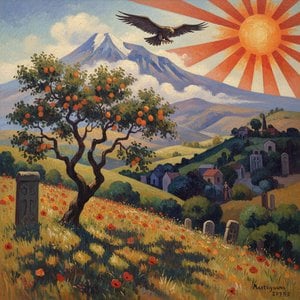
Język wizualny, którym posługiwał się Martiros Saryan, opiera się na bezpośredniości, która unika zbędnej złożoności. Jego ekspresjonistyczne podejście pozwala chwytać sceny w prostej, niemal dziecięcej formie, odartej z akademickiego nieładu. Ta klarowność jest napędzana przez intensywne wykorzystanie koloru. Artysta nie tylko obserwował światło; on używał go, aby zdefiniować ciężar i obecność swoich tematów. Jego paleta odzwierciedla silny wpływ impresjonizmu, jednak wykraczał on poza same efekty świetlne, sięgając po odważne, nasycone tony znane z dzieł Paula Gauguina oraz Henri Matisse'a.
Geografia jego podróży dyktuje kompozycję płócien. Czas spędzony w Armenii i na Bliskim Wschodzie dostarczył niezbędnych danych wizualnych dla jego kariery. Saryan nie malował jedynie krajobrazów; on syntetyzował specyficzne światło i atmosferę tych regionów w odrębny, narodowy styl. Ta synteza obejmowała integrację motywów perskich, które wplatał w swoje kompozycje, aby osadzić swój modernizm w regionalnej rzeczywistości. Rezultatem jest styl, który wydaje się jednocześnie nowoczesny i głęboko zakorzeniony w specyfice Wschodu.
Kluczowe dzieła i wybitne obrazy
Twórczość Martiros Saryan jest świadectwem nieustannego zachwytu nad unikalnością armeńskiego krajobrazu oraz rytmem zmieniających się pór roku na Bliskim Wschodzie. Jego dzieło z 1909 roku, Steppe flowers, ukazuje wczesne mistrzostwo w operowaniu kolorem, które odważnie odchodzi od stonowanych tonów stosowanych przez jego poprzedników. Już w 1916 roku artysta skierował swoją uwagę ku bezpośredniej rzeczywistości ojczyzny, co zaowocowało powstaniem obrazu Flowers of Armenia. Ten etap jego kariery obrazuje fascynującą ewolucję – od czystej obserwacji natury ku bardziej ustrukturyzowanej, niemal graficznej interpretacji świata roślinnego. Z kolei kompozycja z 1924 roku, Mottled landscape, stanowi kolejny dowód na niezwykłą zdolność artysty do manipulowania światłem i teksturą w celu definiowania przestrzeni, bez konieczności polegania na tradycyjnej perspektywie.
W późniejszych latach życia artysty wciąż dominowała fascynacja motywami botanicznymi oraz atmosferycznymi właściwościami armeńskiego terenu. Powracał on do motywu sezonowego odrodzenia w dziełach Apricot trees in blossom (1929) oraz ponownie w Apricot tree in blossom (1942). Obrazy te nie są jedynie studiami natury; to pełne pasji manifesty konkretnej, regionalnej tożsamości. Zupełnie inny, surowy kontrast dla jego florystycznych studiów stanowi malowidło z 1933 roku, Mountainous march of Armenian units, które osadza jego estetykę w społecznych i politycznych realiach tamtej epoki. Nawet w 1944 roku, w obrazie April landscape, niezmiennym filarem jego prakty twórczej pozostawało dążenie do uchwycenia tego specyficznego, nieuchwytnego światła, które towarzyszy armeńskiej wiośnie.
- Steppe flowers (1909)
- Flowers of Armenia (1916)
- Mottled landscape (1924)
- Apricot trees in blossom (1929)
- Mountainous march of Armenian units (1933)
- Apricot tree in blossom (1942)
Późne lata i śmierć
Obecność Martiros Saryan w Armenii stała się trwała po jego przeprowadzce do Erywania w 1921 roku. Podczas gdy jego wczesne lata upłynęły na nawigowaniu wśród zmieniających się granic Imperium Rosyjskiego i krótkich wypraw do Paryża, późniejsze życie zostało zdefiniowane przez rezydencję w radzieckiej Armenii. Od 1928 roku aż do śmierci pozostał on niezmienną postacią w regionie, tworząc ogromny dorobek dzieł, które dokumentowały krajobraz i życie jego przybranej ojczyzny. Jego twórczość w tych dekadach była niezwykle płodna, utrzymując wysoki poziom produktywności nawet w obliczu zmieniającego się krajobrazu politycznego, który go otaczał.
Przez dziesięciolecia pozostawał aktywny na ormiańskiej scenie artystycznej, aż w końcu odszedł w Erywaniu, w postsowieckiej Armenii. Zmarł 5 maja 1972 roku w wieku 92 lat. Jego długie życie objęło proces transformacji od późnej ery imperialnej, przez zawiłości okresu radzieckiego, pozostawiając po sobie potężne archiwum prac, które do dziś stanowią fundament historii ormiańskiego malarstwa.
Dziedzictwo i wpływ
Wpływ, jaki wywarł Martiros Saryan, mierzy się jego statusem jako założyciela nowoczesnej, narodowej szkoły malarstwa ormiańskiego. Nie był on jedynie malarzem krajobrazów; on stworzył unikalny język wizualny dla całego narodu. Jego znaczenie instytucjonalne było niezwykle istotne w epoce radzieckiej – w latach 1945–1951 pełnił funkcję prezesa Związku Artystów Radzieckiej Armenii, co pozwoliło mu realnie kształtować profesjonalny krajobraz artystyczny dla współczesnych mu twórców. Jego pozycja została dodatkowo ugruntowana w 1947 roku, kiedy to został wybrany na członka Akademii Sztuk Pięknych ZSRR, a w 1960 roku otrzymał prestiżowy tytuł Ludowego Artysty ZSRR.
Twórczość Saryana pozostaje fundamentalnym punktem odniesienia dla ormiańskiej tożsamości w sztuce. Odchodząc od czysto akademickich tradycji, artysta zdołał wykreować coś głęboko specyficznego dla swojej ojczyzny, co pomogło zdefiniować kierunek rozwoju ormiańskiego modernizmu. Umiejętność syntezy międzynarodowych wpływów z lokalną tematyką sprawiła, że jego dzieła zachowały aktualność długo po jego śmierci w 1972 roku. Do dziś pozostaje on centralną postacią w historii ormiańskiej kultury wizualnej.
Gdzie dziś można podziwiać jego dzieła
Aby stanąć twarzą w twarz z materialnym dziedzictwem twórczości, jaką pozostawił Martiros Saryan, należy udać się do Erywania w Armenii. To właśnie to miasto stanowi główne repozytorium jego wizualnego testamentu. Narodowa Galeria Armenii przechowuje znaczącą kolekcję jego malarstwa, oferując spójny wgląd w proces artystycznego rozwoju twórcy na tle ojczystego krajobrazu. Instytucja ta dźwiga na swoich barkach ciężar jego formalnego wkładu w kształtowanie się narodowej szkoły malarstwa.
Dla tych, którzy pragną nawiązać bardziej intymną więź z człowiekiem stojącym za pędzlem, Dom-Muzeum Martiros Saryan oferuje bezpośrednie połączenie z jego prywatnym życiem. Muzeum mieści się w jego dawnej, trzykondygnacyjnej rezydencji. Spacerując po tych wyjątkowych przestrzeniach, można skonfrontować się z jego osobistym otoczeniem, położonym zaledwie kilka kroków od Placu Wolności. To miejsce pozostaje kluczowe dla zrozumienia skali i domowego kontekstu jego twórczej egzystencji.
Muzeum Saryana w Erywanie pełni również funkcję istotnego ośrodka poświęconego jego twórczości. Razem te lokalizacje sprawiają, że jego wpływ pozostaje nierozerwalnie związany z geografią, którą artysta poświęcił całe życie dokumentowaniu. Odwiedzający poszukujący jego unikalnych przedstawień życia w Armenii lub studiów nad Bliskim Wschodem odnajdą niezbędną koncentrację jego dzieł w tych erywańskich instytucjach.
Pytania i odpowiedzi
Gdzie można znaleźć dzieła Martiros Sarian uporządkowane według kolorów?
Strona Indeks kolorystyczny pozwala przeglądać dzieła Martiros Sarian z podziałem na kolory.
Czy mogę odwiedzić wirtualne muzeum dzieł Martiros Sarian?
Dzieła Martiros Sarian można podziwiać w galerii 3D na stronie Wirtualna Galeria 3D artysty.
Ile dzieł Martiros Sarian można przejrzeć w katalogu?
Możesz przeglądać 542 dzieł sztuki dzieł autorstwa Martiros Sarian na stronie Wszystkie dzieła.