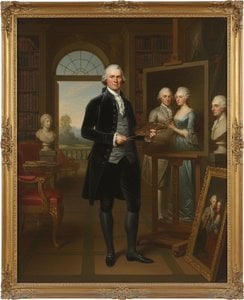
Wczesne lata, rodzina i szkolenie
Urodzony 26 grudnia 1734 roku w Beckside, w Dalton-in-Furness w hrabstwie Lancashire, George Romney wkroczył w świat rzemiosła i praktycznej pracy rąk. Był trzecim z jedenastu dzieci Jana Romney’ego, stolarza, oraz Anne Simpson. Jego wczesne lata kształtowane były przez domowy rytm dużej rodziny na północnym zachodzie Anglii. Choć uczęszczał do szkoły w pobliskim Dendron, jego formalna edukacja była krótka. W wieku jedenastu lat został wycofany z nauki, aby rozpocząć praktykę u ojca w warsztacie stolarskim.
Precyzja wymagana w rzemiośle ojca prawdopodobnie wpłynęła na jego późniejszą dbałość o szczegóły, jednak jego naturalne skłonności skłaniały się ku czemuś bardziej ilustracyjnemu. Lokalny zegarmistrz rozbudził w nim wczesne zainteresowanie rysunkiem, oferując subtelny kierunek ucieczki od narzędzi stolarskich panujących w jego domu. Ten rodzący się talent ostatecznie wyprowadził go z warsztatu meblarskiego w stronę studiów nad portretem. Aby doskonalić swoje umiejętności, zwrócił się do Christophera Steele'a, wędrownego portrecisty z Kendal. Pod okiem Steele'a Romney zaczął przeobrażać się z czeladnika rzemieślnika w świadomego studenta ludzkiej formy.
Budowanie reputacji w Londynie
Do 1762 roku George Romney opuścił północne krajobrazy Lancashire, by zmierzyć się z niezwykle konkurencyjną atmosferą Londynu. Przybył do stolicy w poszukiwaniu zarówno fortuny, jak i uznania, wiedziony ambicją, która wykraczała daleko poza ramy jego wczesnego wykształcenia. Miasto stanowiło trudne środowisko dla nowicjusza, jednak on z naturalną łatwością odnalazł się w jego społecznych zawiłościach. Szybko ugruntował swoją pozycję jako utalentowany portrecista, znajdując swoje miejsce w kręgach wysokiej socjety, które dyktowały estetyczne gusta ówczesnej epoki.
Jego awans artystyczny charakteryzował się bezpośrednią rywalizacją z najbardziej wybitnymi postaciami epoki, w tym z Thomasem Gainsborough oraz Joshua Reynolds. Choć współcześni mu mistrzowie wywierali ogromny wpływ na sztukę, George Romney zdołał wypracować dla siebie własną, unikalną przestrzeń. Stał się jednym z najpopularniejszych brytyjskich malarzy portretowych końca osiemnastego wieku, zaspokajając potrzeby zarówno rodzącej się klasy kupieckiej, jak i ugruntowanej arystokracji. Umiejętność poruszania się w zmieniających się hierarchiach społecznych ery georgiańskiej zapewniła mu stałą obecność w najbardziej modnych salonach tamtych czasów.
- 1763: Jacob Morland z Capplethwaite
- 1765: Portret damy
- 1767: Portret dziewczyny
Technika i styl artystyczny
Podejście George'a Romney do płótna definiował subtelny balans między skrupulatnym detalem a ekspresyjnym pociągnięciem pędzla. Artysta ten preferował wyrafinowaną technikę, która unikała toporności charakterystycznej dla niektórych jego współczesnych, wybierając zamiast tego miękkie uderzenia pędzla, które tworzyły wrażenie łagodnego realizmu. Ta metoda pozwalała mu oddawać subtelne tekstury tkanin i skóry z cichym wyrafinowaniem. Jego paleta barw często opierała się na stonowanych kolorach, co wnosiło do kompozycji atmosferę spokoju i opanowania. Zamiast polegać na dramatycznym sztucznym efekciarstwie, dążył do uchwycenia esencji swoich modeli poprzez głębokie zrozumienie ludzkiej psychologii – cechę tę odnajdujemy w niuansach mimiki, jakie potrafił wyczarować na twarzach swoich portretowanych.
Jego techniczny repertuar był niezwykle szeroki, wykraczając daleko poza gotowe obrazy olejne na płótnie. Był niezwykle płodnym rysownikiem, który wykorzystywał szkice, kartony, a nawet małe studia studiesjne, aby dopracować swoje wizje. Ta zdyscyplinowana praktyka pozwalała mu na swobodne eksperymentowanie z formą i światłem, zanim zdecydował się na pracę w większej skali. Umiejętność przekładania tych wstępnych studiów na wykończone, lśniące portrety, pomogła mu odnaleźć się w konkurencyjnym świecie londyńskich salonów, gdzie często proszono go o przedstawienie czołowych postaci epoki z niezwykłą precyzją i gracją.
- Portrait of Sir Chaloner Ogle, 1st Baronet (1782)
- Portrait of Thomas Greene
Wpływ Emmy Hamilton
Trajektoria twórczości George Romney uległa głębokiej przemianie w momencie spotkania z Emmą Hart, kobietą, która wkrótce miała stać się znaną jako Lady Hamilton. Stała się ona dla niego kimś znacznie więcej niż tylko częstym tematem malarskim; była jego najsłynniejszą modelką i muzą, która wywarła potężny wpływ na jego wyobraźnię. Ich relacja była intensywna i pochłaniająca, stanowiąc więź, która w sposób fundamentalny wpłynęła zarówno na życie osobiste artysty, jak i na jego profesjonalne zainteresowania. Dzięki niej George Romney odnalazł drogę, by wyjść poza ramy konwencjonalnego portretu i wkroczyć na tereny bardziej fantazyjne i poetyckie.
Ulegając czarowi Emmy, George Romney stworzył cykl dzieł nawiązujących do tematów szekspirowskich oraz innych motywów fantastycznych. Prace te pozwoliły mu na zgłębianie tematów fantazji i narracji literackiej, wykorzystując jej niezwykłą ekspresję do tchnięcia życia w dramatyczne postaci. Namalował ponad 80 jej portretów, a każda próba oddawała inny, niepowtarzalny aspekt jej osobowości. Ten okres intensywnej współpracy przyniósł artystom eksperymenty z kompozycją i symbolizmem, prowadząc go ku bardziej wizyjnym i poetyckim płótnom, które zdefiniowały jego późniejsze lata twórczości.
Późne lata i śmierć
Ostatnia dekada życia, które prowadził George Romney, została naznaczona stopniowym wycofaniem się z kręgów towarzyskich, które niegdyś napędzały jego karierę. W 1794 roku choroba zaczęła poważnie ograniczać jego praktykę portretową, spowalniając niezwykle płodną twórczość, która definiowała jego lata świetności. Ten spadek produktywności nie był jedynie kwestią słabnącego zainteresowania, lecz bolesną walką z ciałem, która kładła się cieniem na jego późniejszych latach. Człowiek, który niegdyś rywalizował z najbardziej wybitnymi postaciami epoki georgiańskiej, zmuszony został do zmierzenia się z własnym zdrowiem, które coraz bardziej spychało go na margines życia artystycznego.
Do 1799 roku konieczność poszukiwania wytchnienia stała się nieunikniona. George Romney, w pogarszającym się stanie zdrowia, powrócił do Kendal, aby spędzić czas u boku żony, Molly. Ten okres rekonwalescencji na północnym zachodzie Anglii stał się cichym, spokojnym finałem życia spędzonego w tętniących życiem centrach artystycznych Londynu i Paryża. Nawet gdy jego zdolność do podejmowania wielkich, monumentalnych zamówień słabła, pozostał potężnym i niezwykle sprawnym rysownikiem. Zmarł w Kendal, w hrabstwie Westmorland, w Anglii, 15 listopada 1802 roku. Jego szczątki spoczęły w Dalton, powracając tym samym na krajobrazy, które dały mu życie.
Gdzie dziś można podziwiać jego dzieła
Rozmieszczenie zachowanych płócien George Romney odzwierciedla geograficzną trajektorię jego życia – od północnych korzeni, aż po ostateczną sławę w stolicy. W Londynie jego obecność jest najbardziej odczuwalna w zbiorach Tate Gallery, które przechowuje siedem jego dzieł, oraz w National Portrait Gallery, gdzie znajduje się dziesięć płócien. Instytucje te oferują wgląd w twórczość artysty w szczytowym momencie jego społecznego wpływu, ukazując twarze epoki georgiańskiej z tą charakterystyczną głębią psychologiczną, która zdefiniowała jego karierę.
Poza stolicą, jego więź z północno-zachodnią Anglią pozostaje widoczna dzięki zbiorom Abbot Hall Art Gallery w Kendal, która posiada dziewięć jego obrazów. Kolekcja ta stanowi swoisty łącznik z regionem, w którym jego życie się rozpoczęło i gdzie znalazło swój spokojny finał. Twórczość George Romney wykracza jednak poza granice Wielkiej Brytanii, sięgając również za Ocean Atlantycki – kilka jego prac znajduje się w Metropolitan Museum of Art w Nowym Jorku. Wśród nich można odnaleźć pochodzący z 1782 roku Portrait of Sir Chaloner Ogle, 1st Baronet.
- Portrait of Sir Chaloner Ogle, 1st Baronet (1782)
- The Leigh Family
- Portrait of Mrs. Verelst
Pytania i odpowiedzi
Gdzie mogę zobaczyć dzieła George Romney w wirtualnej galerii 3D?
Dzieła George Romney można podziwiać w galerii 3D na stronie Wirtualna Galeria 3D artysty.
Czy mogę sortować dzieła George Romney według koloru?
Prace George Romney można przeglądać według kolorów na stronie Indeks kolorystyczny artysty.
Jak mogę znaleźć dzieła artysty George Romney w konkretnej palecie barw?
Prace artysty George Romney można przeglądać według palety kolorystycznej na stronie Według palet kolorystycznych artysty.