Życie i sztuka Gabriela Metsu
Gabriel Metsu był malarzem, który z niezwykłą swobodą poruszał się między wieloma różnorodnymi tematami. Nie pozwolił sobie na długotrwałe przywiązanie do jednej techniki czy jednego rodzaju sceny. Jego dłonie z taką samą biegłością prowadziły pędzel przy tworzeniu malarstwa historycznego i portretów, jak i przy martwych naturach czy scenach rodzajowych. To niechętne trzymaniu się jednej, wytyczonej ścieżki sprawiło, że jego twórczość stała się niezwykle różnorodna, a próbę przypisania jej do jednej, konkretnej metody artystycznej – niezwykle trudnym wyzwaniem.
Urodził się w 1629 roku w Lejdzie. Jego ojciec, Jacques Metsu, pracował jako malarz i projektant tekstyliów, natomiast matka, Jacquemijn Garniers, była położną. Te wczesne lata spędzone w Lejdzie położyły fundament pod życie poświęcone uważnej obserwacji detali otaczającego świata. Choć później przeniósł się do Amsterdamu, jego korzenie na zawsze pozostały głęboko zakorzenione w holenderskim krajobrazie siedemnastego wieku.
Jego dzieła często koncentrowały się na cichych, ulotnych momentach codzienności. Posiadał rzadką umiejętność chwytania postaci w intymnych, domowych sytuacjach, skupiając uwagę na tym, jak światło kładzie się na powierzchni przedmiotu lub w jaki sposób człowiek trzyma dany rekwizyt. Podczas gdy wielu artystów jego epoki dążyło do wypracowania jednego, rozpoznawalnego stylu i charakterystycznego pociągnięcia pędzla, Gabriel Metsu nieustannie zmieniał swoje podejście. Był malarzem eklektycznym, który płynnie przechodził od wielkich, podniosłych narracji historycznych do kameralnych, pełnych intymności scen z życia domowego.
Wczesne lata, rodzina i kształcenie
Gabriel Metsu przyszedł na świat w 1629 roku w Lejdzie. Jego ojciec, Jacques Metsu, był malarzem i rzemieślnikiem zajmującym się tkaninami, wywodzącym się z Hainault. To silne związki z rzemiosłem prawdopodobnie ukształtowały wczesne otoczenie domowe artysty, choć Jacques zmarł w marcu 1629 roku, krótko po narodzinach Gabriela. Młody artysta dorastał w specyficznym środowisku Lejdy – miejsca, w którym sztuki wizualne stanowiły integralną część codziennego życia. Już w 1648 roku stał się założycielem cechu malarzy w Lejdzie, co stanowiło oficjalne potwierdzenie jego statusu jako niezależnego mistrza w lokalnej społeczności.
Szczegóły jego wczesnej edukacji wciąż budzą pewne dyskusje wśród badaczy. Istnieją przypuszczenia, że mógł studiować w Utrechcie pod okiem katolickich malarzy, takich jak Nicolaus Knüpfer oraz Jan Weenix. Jego rozwój artystyczny był dodatkowo stymulowany przez czas spędzony jako nauczyciel i uczeń; to właśnie w tym okresie kształcił Michiela van Musschera oraz Joosta van Geela. Te wczesne lata położyły techniczne fundamenty pod karierę, która ostatecznie skierowała się ku scenom rodzajowym i portretom, z których Gabriel Metsu zapisał się w historii sztuki.
Aktywność artystyczna w Lejdzie i Amsterdamie
W 1648 roku Gabriel Metsu dołączył do cechu malarzy w Lejdzie jako jeden z jego pierwszych członków. Ten okres spędzony w Lejdzie pozwolił mu na współpracę z lokalną społecznością artystów, choć jego obecność w tym mieście była stosunkowo krótka. Do 1650 roku przestał być subskrybentem cechu, a jego zainteresowania zaczęły ewoluować wraz z przeprowadzką do Amsterdamu około 1655 roku. Ta życiowa zmiana wyznaczyła nowy etap w jego twórczości, przynosząc nie tylko zmianę otoczenia, ale przede wszystkim nowe tematy, które postanowił poddać swojej artystycznej obserwacji.
Po osiedleniu się w Amsterdamie, Gabriel Metsu zamieszkał przy Prinsengracht. Jego dom znajdował się w pobliżu krewnych, dzieci rafinerów cukru, w tym Philipsa Metsu. Bliskość rodziny oraz tętniące życiem dzielnice kanałów stanowiły stałe, inspirujące tło dla jego prac. To właśnie w tym mieście spędził resztę swojego życia, rozwijając unikalne sceny domowego zacisza oraz interakcji społecznych, które stały się znakiem rozpoznawczym jego niezwykłego dorobku.
Technika i styl artystyczny
Ręka Gabriela Metsu poruszała się między różnymi sposobami postrzegania świata. Czerpał z chiaroscuro Rembrandta, wykorzystując światło i cień do nadania pomieszczeniom niemal namacalnej głębi i ciężaru. W innych momentach jego pędzel poszukiwał świetlistego realizmu, który odnajdujemy w dziełach Vermeera. Ta niezwykła wszechstronność pozwalała mu płynnie przechodzić od ciężkiego, dramatycznego oświetlenia do czystego, bardziej równomiernego blasku. Często zwracał się ku leydzkiemu nurtowi fijnschilders, skupiając się na poziomie drobiazgowego detalu, który wymagał niezwykle pewnej i cierpliwej ręki. Jego twórczość nie była więźniem jednej metody, lecz zawsze podążała za specyficznymi potrzebami tematu, który akurat miał uwiecznić.
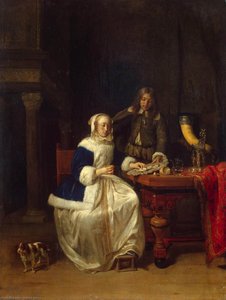
Posiadał rzadką umiejętność chwytania cichych ruchów panujących w pokoju. Jego obrazy często koncentrowały się wokół młodych kobiet, scen targowych czy naznaczonych czasem twarzy starców. Z niezwykłą uważnością obserwował sposób, w jaki światło kładzie się na jedwabnym rękawie lub ceramicznym dzbanku. Ta dbałość o szczegół wykraczała poza przedmioty, przenikając do samej natury ludzkiej postawy. Poprzez subtelne efekty świetlne potrafił zasugerować stan psychiczny swoich bohaterów, chwytając ulotne spojrzenie lub moment prywatnej refleksji. W jego domowych wnętrzach nawet ustawienie krzesła czy delikatne przechylenie głowy mówiły o cichych, intymnych realiach codziennego życia.
- The Sick Child (ok. 1660)
- A Musical Party (ok. 1659)
- The Poultry Woman (ok. 1662)
Mecenasi, warsztat i zamówienia
Byt materialny Gabriela Metsu był nierozerwalnie związany ze stałym zapotrzebowaniem rodzącej się klasy kupieckiej oraz zamożnych domów holenderskiego Złotego Wieku. W Delft artysta odnalazł stałe miejsce w kręgu rodziny Van der Veer. Pełniąc funkcję ich malarza dworskiego, zyskał prawdopodobnie dostęp do nieustannego strumienia tematów w postaci scen rodzajowych i portretów. Ta bliska więź z tak prominentną rodziną świadczy o wysokim poziomie zaufania oraz ugruntowanej pozycji artysty w ich elitarnym kręgu towarzyskim.
W Amsterdamie jego środowisko poszerzyło się o postacie takie jak Jan J. Hinlopen, wpływowy kupiec sukienny. Tacy mecenasi dostarczali malarzowi środków niezbędnych do zgłębiania różnorodnych tematów – od intymnych, cichych wnętrz, po bardziej złożone i dynamiczne sceny rodzajowe. Jego dzieła często stawały się lustrem gustów tych ludzi, z niezwykłą precyzją oddając tekstury materiałów oraz subtelne niuanse społeczne ich codziennego życia. Gabriel Metsu czerpał również inspirację z koncepcji kompozycyjnych innych mistrzów, na przykład podążając śladem Gerarda ter Borcha, który tworzył tematyczne pary obrazów; metodę tę Metsu zaadaptował, by budować narracyjne powiązania między odrębnymi płótnami.
- The Woman taken in Adultery (1653)
- Portrait of the family Hinlopen
Kluczowe dzieła i wybitne płótna
Twórczość, którą pozostawił Gabriel Metsu, jest świadectwem niezwykłej wrażliwości artysty, którego dłoń z taką samą swobodą prowadziła pędzel w scenach pełnych spokoju, jak i w tych oddających zgiełk ulicy. Już w 1653 roku zaprezentował on The Woman taken in Adultery – monumentalne dzieło, które ukazuje jego wczesne zainteresowanie tematami o silnym ładunku dramatycznym. Z czasem jednak jego wzrok zaczął zwracać się ku innym aspektom ludzkiej egzystencji; około 1659 roku w obrazie A Musical Party artysta skupił się na towarzyskich spotkaniach, ukazując fascynację tym, w jaki sposób ludzie wypełniają wspólną przestrzeń – czy to poprzez nagły moment napięcia, czy też poprzez wspólny, harmonijny rytm panujący w pokoju.
Lata późniejsze przyniosły zwrot ku ciszy i intymności życia domowego. Namalowana w 1661 roku The Apothecary (The Chemist) w mistrzowski sposób chwyta ulotną, spokojną chwilę handlu i międzyludzkich interakcji. Ta fascynacja teksturami codzienności odnalazła swoje kontynuowanie w dziele The Poultry Woman z 1662 roku, gdzie uwaga widza skupiona jest na prostych, surowych realiach targowiska. Nawet w kompozycjach o bardziej melancholijnym wydźwięku, takich jak powstałe około 1660 roku The Sick Child, dostrzec można niezwykłą dbałość o sposób, w jaki światło przenika scenę, co przywodzi na myśl świetliste wnętrza znane z dzieł jego współczesnych.
- The Woman taken in Adultery (1653)
- A Musical Party (1659)
- The Sick Child (ok. 1660)
- The Apothecary (The Chemist) (1661)
- The Poultry Woman (1662)
Późne lata i śmierć
Do 1658 roku Gabriel Metsu ugruntował swoje życie w Amsterdamie, gdzie poślubił Isabellę de Wolff. Ich związek wprowadził do jego otoczenia swoistą atmosferę domowego ogniska, która stała się motywem przewodnim często powracającym na jego płótnach. Zamieszkał przy Prinsengracht, w malowniczej lokalizacji nad kanałem, w pobliżu browaru i codziennego targowiska warzywnego. To bliskie sąsiedztwo miejskiego zgiełku prawdopodobnie ukształtowało sceny życia publicznego i prywatnego, które tak mistrzowsko utrwalał na swoich obrazach w późniejszych latach twórczości.
Jego życie zostało przerwane zbyt wcześnie, w wieku zaledwie 38 lat. W 1667 roku odszedł na zawsze i został pochowany w Nieuwe Kerk. Po jego śmierci Isabella de Wolff opuściła Amsterdam, przenosząc się do Enkhuizen. Spokój jego ostatnich lat spędzonych w mieście stanowi przejmujący kontrast dla tętniących życiem scen targowych i gwarnych spotkań w tawernach, które niegdyś z taką pasją malował.
Dziedzictwo i wpływ
Obecność Gabriel Metsu w Złotym Wieku Holandii pozostawiła trwały ślad na sposobie, w jaki malarze podchodzili do odkrywania cichych zakamarków domowych wnętrz. Jego niezwykła zdolność do uchwycenia subtelnych przemian światła w domowym zaciszu oraz psychologicznego ciężaru prostego gestu pomogła ukształtować kierunek rozwoju malarstwa gatunkowego. Jego twórczość uznaje się za inspirację dla wielu kluczowych postaci epoki, w tym dla takich mistrzów jak Johannes Vermeer, Jan Steen, Frans van Mieris oraz Pieter de Hooch. Sposób, w jaki operował światłem oraz aranżował figury w przestrzeni pokoju, sugeruje głębokie powiązanie z procesami artystycznymi zachodzącymi w połowie siedemnastego wieku.
Istnieje w jego spojrzeniu na świat specyficzny rodzaj uważności, który zdaje się rezonować w dziełach jego współczesnych. Wpływ ten jest szczególnie widoczny w malarstwie Pietera de Hoocha, gdzie skupienie na przestrzeniach wnętrz oraz cisza ulotnej chwili odzwierciedlają podobne zainteresowanie teksturami codziennego życia. Przesuwając granice między malarstwem historycznym a intymnymi scenami rodzajowymi, Gabriel Metsu pomógł rozszerzyć horyzonty tego, co malarz może podjąć się przedstawić, prowadząc widza od wielkich, epickich narracji ku małym, niespiesznych detalom domowego bytowania.
Gdzie dziś można podziwiać jego dzieła
Podążając śladem jego malarskich dokonań, musimy udać się w podróż przez najważniejsze światowe kolekcje. W Amsterdamie Rijksmuseum skrywa takie arcydzieła jak Chore dziecko, namalowane około 1660 roku. Jego niezwykła zdolność do chwytania cichych, intymnych chwil w domowym zaciszu jest widoczna w salach paryjskiego Luwru, gdzie znajdują się jego płótna, w tym Aptekarz oraz Targ warzywny w Amsterdamie. Dzieła te stanowią fascynujący wgląd w teksturę siedemnastowiecznej codzienności.
Po drugiej stronie Atlantyku, w nowojorskim Metropolitan Museum of Art, zachowano dorobek artystyczny, w tym Muzyczną ucztę oraz Kobietę siedzącą przy oknie. Obrazy te w mistrzowski sposób ukazują sposób, w jaki Gabriel Metsu operował światłem w przestrzeniach wnętrz. Z kolei w Londynie Wallace Collection posiada jego prace, takie jak Śpiącego sportowca, który jest odzwierciedleniem specyficznych scen społecznych, tak częstych w jego twórczości. Jego malarstwo znajduje się również w innych prestiżowych miejscach, w tym w Ermitażu w Sankt Petersburgu oraz w Galerii Uffizi we Florencji.
- Chore dziecko (ok. 1660)
- Aptekarz (1661)
- Muzyczna uczta (1659)
- Śpiący sportowiec (1657)
Pytania i odpowiedzi
Czy mogę przeglądać dzieła Gabriëla Metsu według nastroju?
Prace Gabriëla Metsu można przeglądać według nastroju na stronie Sztuka według nastroju, która grupuje dzieła artysty według ich przypisanego nastroju.
Jakie inne pseudonimy lub nazwy stosuje Gabriëla Metsu?
Gabriëla Metsu występuje również pod innymi nazwiskami: Gabriel Metsu.
W jakim mieście i kraju urodził(a) się Gabriëla Metsu?
Gabriëla Metsu urodził się w Lejda w Holandia.