świetliste dziedzictwo Franza Bischoffa
Franz Albert Bischoff jawi się jako postać cicho, lecz niezwykle wpływowa w historii sztuki amerykańskiej – malarz, którego pędzel potrafił uchwycić ulotną esencję światła oraz spokojną duszę kalifornijskiego krajobrazu. Urodzony w 1864 roku w Steinschönau am Inn w Austrii, od najmłodszych lat nasiąkał bogatymi tradycjami dekoracyjnymi Imperium Austro-Węgierskiego. To fundamentalne wykształcenie w zakresie projektowania użytkowego, akwareli i dekoracji ceramicznej zaszczepiło w nim niezwykłą dbałość o detal oraz głęboki szacunek do harmonii barw. Gdy w wieku piętnastu lat wyemigrował do Stanów Zjednoczonych, zabrał ze sobą wrażliwość Starego Świata, która ostatecznie połączyła się z rodzącym się optymizmem amerykańskiego Zachodu, tworząc styl technicznie precyzyjny, a jednocześnie pełen emocjonalnego rezonansu.
W miarę jak jego kariera rozwijała się wśród przemysłowych krajobrazów Nowego Jorku, Ohio i Michigan, Bischoff najpierw zdobył uznanie dzięki delikatnej sztuce malowania na porcelanie. Ta dyscyplina wymagała nadzwyczajnego mistrzostwa w mieszaniu kolorów i operowaniu drobnym detalem – umiejętności, które później stały się znakiem rozpoznawczym jego kompozycji pejzażowych. Zdolność manipulowania subtelnymi laserunkami i lawowaniem pozwalała mu tchnąć życie w porcelanę, co stanowiło zapowiedź eterycznych jakości odnajdywanych w jego późniejszych dziełach olejnych. To właśnie to unikalne przecięcie dekoracyjnej precyzji z wrażliwością atmosferyczną zdefiniowało jego tożsamość artystyczną podczas przejścia ze skrupulatnego świata ceramiki ku rozległym widokom amerykańskiego pogranicza.
Impresjonizm i kalifornijskie światło
Prawdziwa metamorfoza twórczości Bischoffa dokonała się po przybyciu do Kalifornii, gdzie dramatyczna topografia i unikalne warunki atmosferyczne stały się jego nową muzą. Przyjmując założenia ruchu impresjonistycznego, dążył on do uchwycenia efemerycznych momentów światła, które definiują ten region. Jego technika stała się wyrafinowanym dialogiem między delikatnymi akwarelowymi lawowaniami a subtelnymi olejnymi laserunkami, co zaowocowało płótnami zdającymi się promieniować od wewnątrz. Posiadał rzadką zdolność destylowania złożonych informacji wizualnych do harmonijnych kompozycji, niezależnie od tego, czy przedstawiał surową majestatyczność pasm górskich, czy miękkie, nadmorskie mgły Pacyfiku.
Jego dorobek stanowi żywy zapis świata natury w przełomowej erze historii Ameryki. Przez pryzmat jego oczu doświadczamy następujących dzieł:
- Cloud Shadows: arcydzieło z 1912 roku, w którym dramatyczne góry i żywe barwy drzew ożywają przez impresjonistyczny pryzmat, oferując spokojny wgląd w potęgę natury.
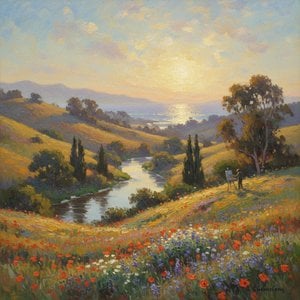
- Pasadena Foothills: zachwycający obraz olejny z 1917 roku, który chwyta kwintesencję piękna amerykańskiego krajobrazu, ukazując jego zdolność do oddania gry światła na falujących terenach.
- Mist-Veiled Days, Monterey: poruszająca eksploracja nadmorskiej atmosfery, gdzie gra mgły i morza demonstruje jego mistrzostwo w operowaniu tonalną subtelnością.
Trwałe wrażenie w historii sztuki
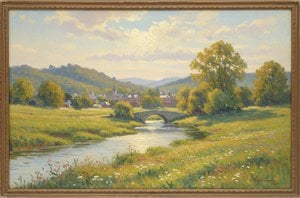
Poza samym przedstawianiem scenerii, twórczość Bischoffa ucieleśnia poczucie nostalgii i czci dla nienaruszonego piękna krajobrazu. Jego obrazy, takie jak mistrzowskie Landscape at Saint Valery-sur-Somme, dowodzą zdolności do łączenia europejskich korzeni z amerykańskimi doświadczeniami, mieszając strukturalną elegancję wykształcenia z dziką, spontaniczną energią kalifornijskiego wybrzeża. On nie tylko malował to, co widział; on malował to, jak czuło się światło, nadając swoim tematom poczucie spokoju i trwałości.
Historyczne znaczenie Franza Bischoffa tkwi w jego roli jako łącznika między sztuką dekoracyjną a malarstwem pejzażowym wysokiej próby. Przenosząc skrupulatność malowania na porcelanie na wielką skalę impresjonistycznego oleju, stworzył niszę, która była wyłącznie jego własną. Dziś jego prace pozostają cenione za zdolność przenoszenia widza do minionej ery odkryć i naturalnego przepychu, przypominając nam o nieprzemijającej sile delikatnego dotyku i świetlistej wizji.
Pytania i odpowiedzi
Gdzie mogę znaleźć statystyki dotyczące dzieł Franz Bischoff?
Strona Statystyki odwiedzin artysty Franz Bischoff przedstawia statystyki obliczone na podstawie dzieł tego artysty wymienionych w niniejsza strona.
Czy istnieje chronologiczny opis twórczości Franz Bischoff?
Osiągnięcia artystyczne artysty Franz Bischoff to interaktywna oś czasu, która prezentuje dzieła w porządku chronologicznym, pogrupowane w rozdziały odpowiadające poszczególnym etapom jego kariery.
Jak znaleźć dzieła Franz Bischoff o konkretnej tematyce?
Aby znaleźć dzieła artysty Franz Bischoff o konkretnej tematyce, skorzystaj ze strony Według słów kluczowych, która grupuje prace według słów kluczowych.