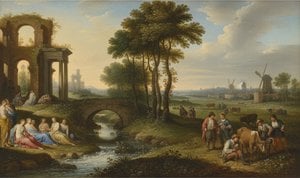
Spokojna dusza holenderskiej wsi
Anthonie Jacobus van Wijngaerdt, imię, które szepcze o ciszy i pastoralnej gracji, pozostaje głębokim, choć niepozowanym głosem w wielkiej tkaninie holenderskiej sztuki XIX wieku. Urodzony w 1808 roku w tętniącym życiem porcie Rotterdam, stworzył dzieło życia będące trwałym hołdem dla rytmicznej prostoty wiejskiego istnienia. Choć epoka ta była często naznaczona dramatycznymi zmianami romantyzmu i rodzącą się erą przemysłową, Van Wijngaerdt wybrał inną ścieżkę – drogę skrupulatnej obserwacji i głębokiej, duchowej więzi z holenderskim krajobrazem. Jego płótna nie krzyczą teatralnym przepychem; zamiast tego zapraszają widza do sanktuarium pokoju, gdzie miękkie światło Niderlandów rozświetla skromne piękno bydła, chłopskich rodzin i zielonych rozległości prowincji.
Fundamenty jego mistrzostwa zostały położone w Rotterdamie, pod czujnym okiem wpływowych mentorów. Studiował u Johann Erasta Meyera, malarza, którego oddanie romantycznemu naciskowi na naturę dostarczyło niezbędnej iskry dla własnej ewolucji artystycznej Van Wijngaerdta. Później jego umiejętności zostały dalsze dopracowane pod okiem Jacoba de Meijera, nauczyciela sztuki, którego zamiłowanie do scen leśnych pozostawiło trwały ślad w kompozycydjach artysty. Te wczesne wpływy zaszczepiły w nim czcią dla świata organicznego, ucząc go, że pojedyncze, skąpane w rosie źdźbło trawy czy zwietrzała tekstura starej stodoły mogą nieść tyle samo treści narracyjnej, co jakakolwiek epicka scena historyczna. Aby poszerzyć swoje horyzonty i szukać nowych inspiracji, Van Wijngaerdt wyruszył w znaczące podróże studyjne do niemieckiego dorzecza Renu i Belgii, doświadczenia te wzbogaciły jego paletę barw i pogłębiły zrozumienie perspektywy powietrznej.
Mistrzostwo światła i pastoralny realizm
Twórczość Anthoniego Jacobusa van Wijngaerdta jest świadectwem potęgi realizmu połączonego z poetycką wrażliwością. Jego kolekcja około 150 obrazów służy jako okno do wymarłego już sposobu życia, charakteryzującego się niezłomnym przywiązaniem do detalu. Posiadał rzadką zdolność oddawania tekstur, które wydają się niemal namacalne w dotyku – ciężka, szorstka sierść pasącej się krowy, delikatna przezroczystość światła przesączającego się przez letnie liście czy surowość narzędzi rolniczych. Jego technika nigdy nie polegała jedynie na naśladownictwie; chodziło o uchwycenie samej esencji atmosfery. Stosując subtelne zmiany koloru i mistrzowskie wykorzystanie perspektywy powietrznej, potrafił stworzyć ogromne poczucie głębi, sprawiając, że odległe horyzonty jego krajobrazów wydają się rozległe i żywe.
Jego paleta artystyczna była celowo powściągliwa, faworyzująca przygaszone, ziemiste barwy, które odzwierciedlały naturalne tony holenderskiego krajobrazu. Ten wybór kolorów nadawał jego pracom wyczuwalne poczucie zadowolenia i spokoju. W arcydziełach takich jak Pasterze w letnim krajobrazie czy Zbieranie drewna, można wyczuć głęboki szacunek artysty do przedstawianych tematów. W jego przedstawieniu życia chłopskiego nie ma sztuczności; zamiast tego odnajdujemy godny realizm, który celebruje cichą godność pracy oraz harmonijne współistnienie człowieka i natury. Jego prace często zawierają powracające motywy, które osadzają jego kompozycje w rzeczywistości epoki:
- Inwentarz jako kotwica: Bydło i owce są często rozmieszczone w jego krajobrazach, służąc nie tylko jako tematy, ale jako symbole płodności ziemi i stałego tętna wiejskiego życia.
- Element ludzki: Chłopskie rodziny zaangażowane w codzienne prace rolnicze nadają jego scenom narracyjne serce, przedstawiając poczucie wspólnoty i ciągłości.
- Tekstura architektury: Zwietrzałe stodoły i rustykalne konstrukcje są oddane z taką precyzją, że stają się pełnoprawnymi bohaterami, zakotwiczając krajobraz w czasie i miejscu.
Dziedzictwo i znaczenie historyczne
W miarę postępów w karierze, życie Van Wijngaerdta prowadziło go od sal dydaktycznych w Gouda – gdzie służył jako instruktor sztuki w Stadstekenschool aż do 1857 roku – po historyczne ulice Haarlem. Ten okres nauczania i wędrówek pozwolił mu udoskonalić swoją rolę nie tylko malarza, ale i strażnika tradycji holenderskiego krajobrazu. Choć mógł nie osiągnąć statusu globalnej ikony, jak jego współcześni tacy jak Rembrandt, jego znaczenie tkwi w zdolności do zachowania duszy dziewiętnastowiecznego holenderskiego ideału pastoralnego. Uchwycił moment w historii, w którym więź między ludźmi a ich ziemią była jeszcze namacalnie intymna.
Dziś dzieła Anthoniego Jacobusa van Wijngaerdta nadal rezonują zarówno wśród kolekcjonerów, jak i historyków sztuki. Jego obrazy służą jako żywe dokumenty historyczne holenderskiego krajobrazu i tkanki społecznej. W coraz bardziej przyspieszającym świecie, jego zdolność do zamrożenia momentu absolutnej ciszy oferuje głębokie poczucie wytchnienia. Pozostaje mistrzem subtelności, malarzem, który rozumiał, że prawdziwe piękno często znajduje się w najcichszych zakątkach ziemi, cierpliwie czekając, aż dostrzegą je ci, którzy mają oczy, by je zobaczyć.
Pytania i odpowiedzi
Gdzie i w którym roku urodził(a) się Anthonie Jacobus Van Wijngaerdt?
Anthonie Jacobus Van Wijngaerdt urodził się w Rotterdam w 1808 roku.
Gdzie można znaleźć dzieła Anthonie Jacobus Van Wijngaerdt uporządkowane według kolorów?
Prace Anthonie Jacobus Van Wijngaerdt można przeglądać według kolorów na stronie Indeks kolorystyczny artysty.
Czy mogę przeglądać dzieła Anthonie Jacobus Van Wijngaerdt według nastroju?
Strona Sztuka według nastroju artysty Anthonie Jacobus Van Wijngaerdt pozwala przeglądać dzieła uporządkowane według nastroju.