Early Life & Influences: The Foundations of Schiele’s Vision
Egon Schiele is one of the most important artists to emerge from the first years of the twentieth century in. Austria. Despite a brief career, which barely ...
Egon Schiele, born in 1890 in the Austrian town of Tulln, emerged from a world steeped in both artistic promise and familial turmoil. His early years were profoundly shaped by his father's position as a railway station master – a detail that would later resonate symbolically within his work, hinting at themes of transition, confinement, and the relentless march of time. However, this seemingly ordinary upbringing was shadowed by tragedy; Schiele’s family carried the weight of inherited syphilis, a disease that claimed his father’s life and cast a long pall over their existence. This early exposure to mortality and physical suffering would become a recurring motif in his art, fueling an intensely personal and often unsettling vision.
The young Schiele displayed a precocious talent for drawing, but his father initially discouraged it, viewing artistic pursuits as impractical. Despite this resistance, the boy’s passion persisted, nurtured by Ludwig Karl Strauch, a local artist who provided him with foundational training. More significantly, however, was the influence of Gustav Klimt, whom Schiele encountered in Vienna at the age of sixteen. Klimt became not only a mentor but also a patron, recognizing and fostering the raw potential within the young artist. This relationship proved pivotal, introducing Schiele to the vibrant artistic circles of Vienna’s Secession movement – a group challenging academic conventions and embracing new forms of expression. Yet, while deeply indebted to Klimt's aesthetic sensibilities, Schiele quickly forged his own distinct path, rejecting Klimt’s decorative flourishes in favor of a more direct, emotionally charged style.
The Raw Intensity of Expressionism: Defining Schiele's Style
Expressionism is a modernist movement, initially in poetry and painting, originating in Northern Europe around the beginning of the 20th century. Its typical trait is to present the world solely from a subjective perspective, distorting it radically ...
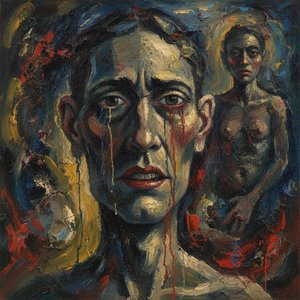
Schiele’s art is inextricably linked to the rise of Expressionism, a movement that sought to convey subjective experience and emotional truth rather than objective reality. However, labeling him simply as an “Expressionist” feels inadequate; his work possesses a unique intensity and psychological depth that sets it apart. Unlike many of his contemporaries who focused on broader social commentary, Schiele’s gaze was relentlessly inward, exploring the complexities of human emotion – anxiety, desire, isolation, and mortality – with unflinching honesty.
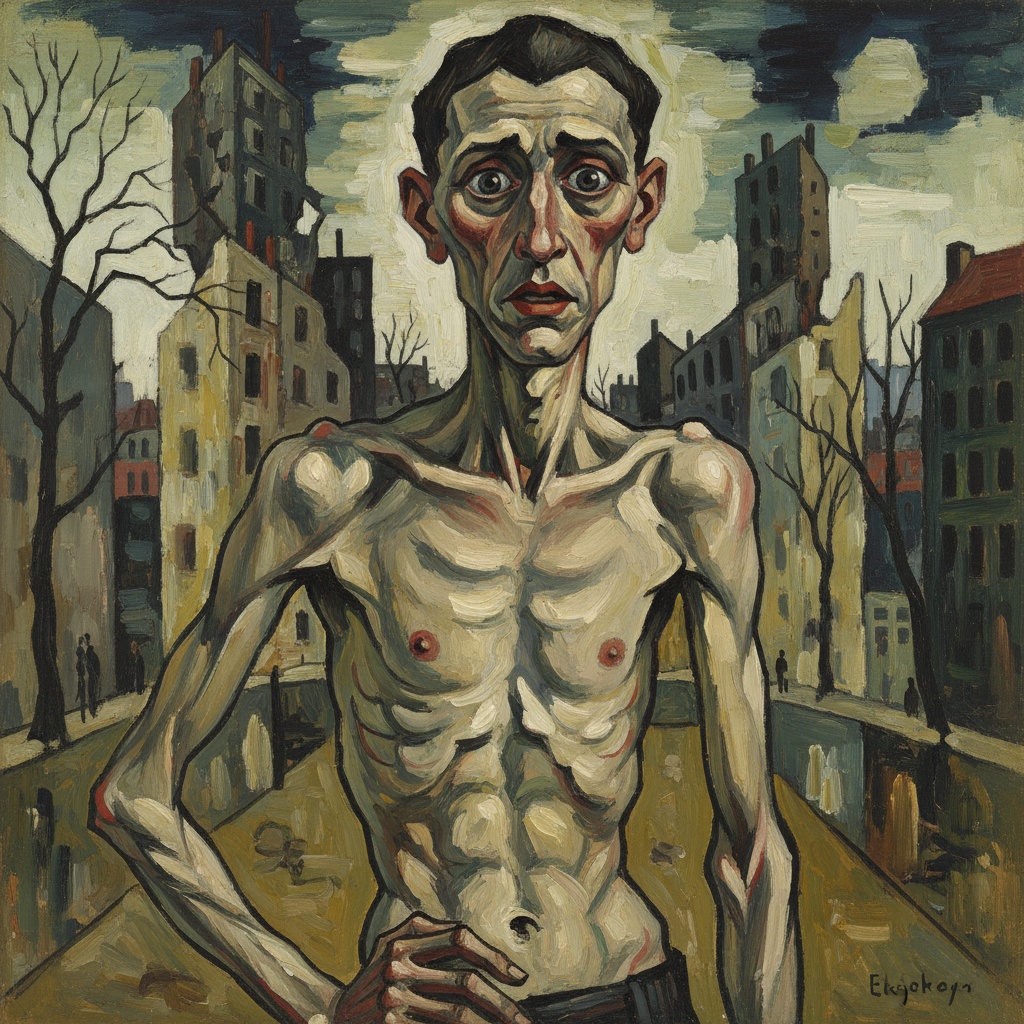
His technique is characterized by angular lines, distorted figures, and a deliberate rejection of traditional notions of beauty. Bodies are often contorted into uncomfortable poses, faces are gaunt and mask-like, and the use of color is deliberately jarring, amplifying the sense of unease. Schiele’s drawings, in particular, reveal a remarkable mastery of line – each stroke imbued with emotional weight and psychological insight. He wasn't interested in replicating form; he was intent on revealing the inner turmoil beneath the surface. This deliberate crudeness, this refusal to smooth over imperfections, became his signature, challenging viewers to confront uncomfortable truths about themselves and the human condition.
Psychological Themes & the Exploration of Sexuality in His Work
 Wikipedia: Egon Schiele
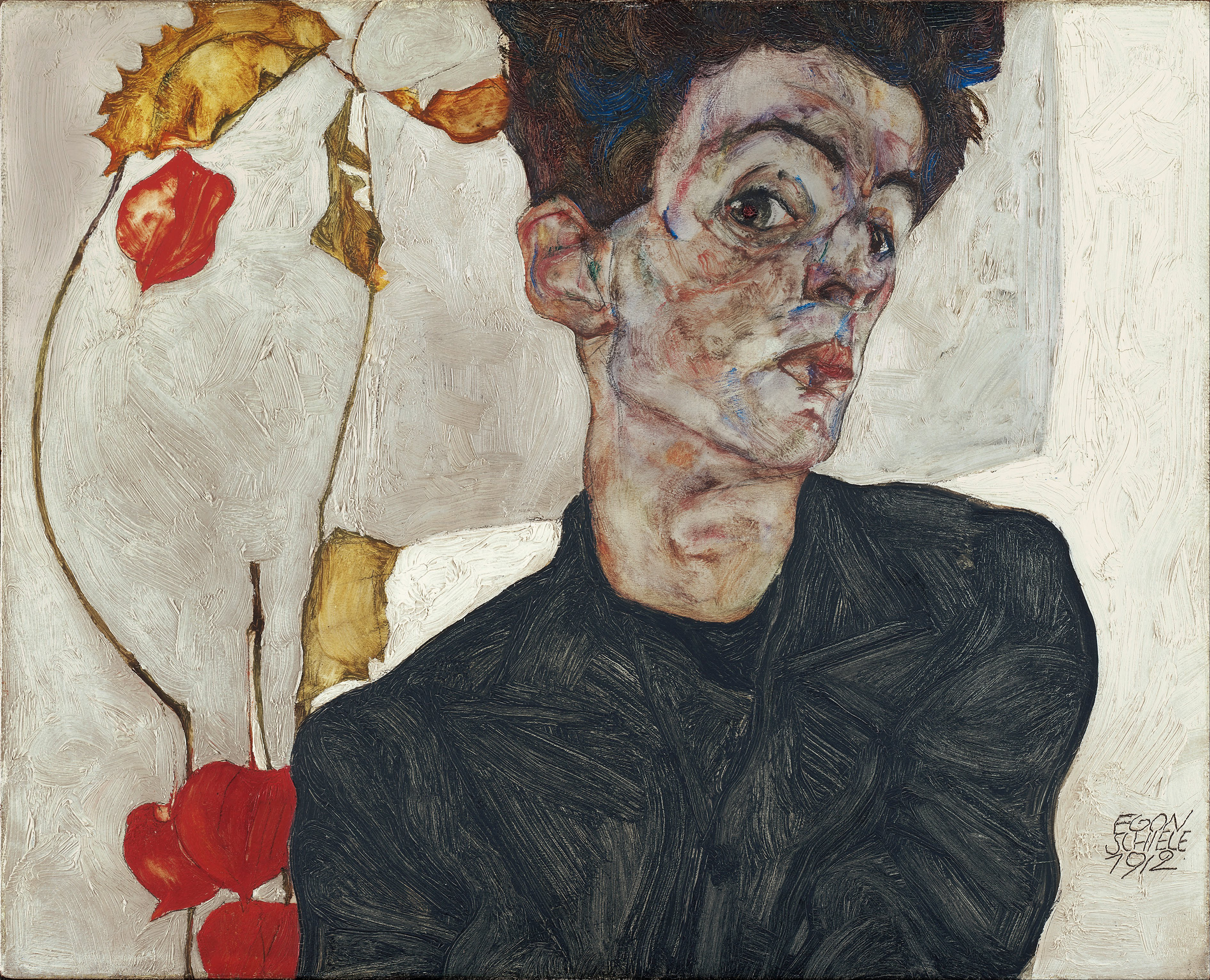
Egon Leo Adolf Ludwig Schiele (German: [ˈeːɡɔn ˈʃiːlə] ; 12 June 1890 – 31 October 1918) was an Austrian Expressionist painter. His work is noted for its intensity and its raw sexuality, and for the many self-portraits the artist produced, including ...
The exploration of sexuality is arguably one of the most defining – and controversial – aspects of Schiele’s oeuvre. His nude self-portraits, often depicted in provocative poses, were shocking for their time, challenging societal norms and confronting viewers with a raw, unidealized depiction of the human body. These weren't simply studies of form; they were explorations of identity, vulnerability, and the complexities of desire.
Beyond sexuality, Schiele’s work is deeply concerned with psychological states – anxiety, loneliness, and the fear of death permeate his paintings and drawings. Portraits are not merely representations of physical likeness but rather searing investigations into the sitter's inner life. He often depicted figures isolated in stark landscapes or confined within claustrophobic interiors, reflecting a sense of alienation and existential dread. The haunting gaze of his subjects – often directed at the viewer with unsettling intensity – invites introspection and forces a confrontation with uncomfortable truths about the human psyche. Works like “Procession,” depicting two women seemingly lost in contemplation, symbolize life’s journey fraught with uncertainty and emotional weight.
Vienna and Beyond: Schiele’s Artistic Circle & Societal Context
 Broncia Koller-Pinell
Discover Broncia Koller-Pinell (1863-1934), an Austrian Expressionist painter known for striking portraits & still lifes. Explore her Secession era works, influenced by Klimt & Schiele.
Schiele's Vienna was a city undergoing profound social and cultural change. The waning years of the Austro-Hungarian Empire were marked by political instability, intellectual ferment, and a growing sense of disillusionment. The Secession movement, with its rejection of academic traditions, provided a fertile ground for artistic experimentation. Schiele’s circle included artists like Broncia Koller-Pinell, whose striking portraits also explored themes of psychological intensity, and Max Oppenheimer (MOPP), known for his avant-garde depictions of cultural icons.
However, Schiele's work was not universally embraced. His provocative imagery often faced censorship and public outrage. In 1912, he was even arrested on charges of endangering the morals of youth due to the explicit nature of some of his drawings. This experience deeply affected him, but it also solidified his commitment to artistic freedom and his refusal to compromise his vision. Despite these challenges, Schiele continued to exhibit his work, gradually gaining recognition within a small but devoted circle of collectors and critics.
Key Works & Lasting Legacy: A Selection of Masterpieces
Among Schiele’s most iconic works are “Portrait of Gerti Schiele,” a tender yet unsettling depiction of his sister; “Self-Portrait with Physalis,” which embodies his characteristic angularity and psychological intensity; and “Setting Sun,” a poignant landscape that reflects both serenity and underlying melancholy. “Portrait of the Composer Lowenstein” exemplifies his ability to capture not just physical likeness but also the inner character of his subjects.
Schiele’s tragically short life – he died in 1918 at the age of twenty-eight during the Spanish Flu pandemic – only adds to the mystique surrounding his work. Despite his brief career, he left behind an astonishingly prolific body of work that continues to captivate and challenge audiences today. His influence on modern art is undeniable, paving the way for subsequent generations of artists who sought to explore the complexities of human emotion and the darker aspects of the psyche.
Schiele's Enduring Impact on Modern Art & Contemporary Practice
Egon Schiele’s legacy extends far beyond his immediate artistic circle. His unflinching honesty, psychological depth, and innovative technique continue to resonate with artists and viewers alike. He challenged conventional notions of beauty, paving the way for a more subjective and emotionally charged approach to portraiture and figuration.
His work remains profoundly relevant in contemporary society, offering a powerful commentary on themes of identity, vulnerability, and alienation. The Leopold Museum in Vienna houses an extensive collection of his works, providing invaluable insight into his artistic development and enduring impact. Whether you are drawn to the raw intensity of his self-portraits or the haunting beauty of his landscapes, Schiele’s art invites introspection and forces a confrontation with the complexities of the human condition. At ArtsDot.com, we offer high-quality reproductions of Schiele's masterpieces, allowing you to experience the power and emotional depth of his work firsthand. Explore our collection today and discover the enduring legacy of this extraordinary artist.