


 Podgląd w skali
 Wyślij jako kartkę
 Udostępnij
 Szczegóły dzieła

 Pobierz
 Podobne obiekty
 RTG
RTG Pokaz slajdów
Das Letzte Abendmahl

 Rozwiń treść
Ręcznie malowana reprodukcja olejowa
Ręcznie malowany obraz olejny na płótnie, wykonany na zamówienie przez naszych artystów w wybranym przez Ciebie wymiarze i oprawie. ( Zamów wydruk Przełącz na obraz)




P118B $10

P118H $10

P118W $10

P438Z $10

P508JH $12

P508YH $12

P805H $10

P805Z $10

P919BZ $10

P919G $10

P919XJ $10

P959ZH $10

P968JZ $12

W106C $8

W218G $10

W218JH $8

W218Y $10

W307PJ $10

W316G $10

W316PJ $8

W316Y $10

W398PJ $8

W4111J $10

W500HY $15

W500JH $15

W692G $12

W849H $8

W940BG $15

W953PJ $8




Wybierz spośród naszych standardowych rozmiarów, które zachowują oryginalne proporcje dzieła sztuki.

Możesz wprowadzić własne wymiary, aby dopasować obraz do konkretnej ramy lub przestrzeni. Jeśli wybrany rozmiar nie będzie odpowiadał proporcjom oryginału, przytniecie dzieło sztuki lub rozszerzymy je o dodatkowe elementy, ręcznie domalowane przez artystę. Przed rozpoczęciem produkcji wyślemy projekt cyfrowy do Twojej akceptacji.
Należy pamiętać, że podgląd na ekranie nie odzwierciedla rzeczywistego przycinania ani rozszerzania obrazu. Tylko projekt dokładnie pokaże ostateczną kompozycję.
Choć oferujemy możliwość zamówienia niestandardowych rozmiarów, zalecamy wybór wymiaru z gotowej listy, aby zachować oryginalne proporcje dzieła.
Po złożeniu zamówienia zespół ArtsDot.com skontaktuje się z klientem drogą mailową w celu uzyskania instrukcji i prześle wizualizację projektu
Dostawa na całym świecie () w ciągu 3–4 tygodni zamiast standardowych 5 tygodni. (11 Sierpień). Bez kompromisów w kwestii jakości.

Bezpłatna ekspresowa wysyłka na cały świat

Wysokiej jakości płótno lniane

Pełne ubezpieczenie przesyłki

Gwarancja zwrotu należności celnych i podatków importowych

Gwarancja wiernego odwzorowania kolorów

Polityka 60-dniowego zwrotu (tylko w przypadku wad)

Gwarancja 100% zwrotu kosztów

Zniżka przy zamówieniu wielu produktów
 Opcja ze szkłem jest dostępna wyłącznie w rozmiarach poniżej 110 cm

Das Letzte Abendmahl
Technika reprodukcji
Wymiary reprodukcji
-


Cena całkowita
$ 263
Podobne dzieła


O artyście
Willem van Herp the Elder: A Flemish Master of Baroque Life
Willem van Herp the Elder, a name perhaps less immediately recognizable than those of his celebrated contemporaries like Rubens or Van Dyck, nevertheless occupies an important and fascinating niche within the vibrant artistic landscape of 17th-century Flanders. Born around 1614 in Antwerp, a city then pulsating with commercial energy and artistic innovation, van Herp dedicated his life to capturing scenes both sacred and secular, often imbued with a distinctly Baroque flair. While initial assumptions placed him firmly within Peter Paul Rubens’s workshop, scholarly research has revealed this to be inaccurate; however, the influence of the master is undeniable, manifesting in van Herp's dynamic compositions and expressive figures. He did, however, work on touch-up copies for Matthijs Musson, an art dealer, demonstrating a connection to the prevailing artistic currents. His early training likely occurred under Damiaan Wortelmans II and Hans Biermans, providing him with a solid foundation before he registered as an independent master in the Guild of St. Luke in 1637 – a pivotal moment signifying his establishment as a professional artist. It’s speculated that van Herp may have undertaken travels abroad to broaden his artistic horizons, though concrete details remain elusive.Genre and Devotion: The Dual Pillars of Van Herp's Art
Van Herp carved out a reputation for himself through two primary avenues of artistic exploration: religious paintings and “low-life” genre scenes. These weren’t depictions of grand historical events or aristocratic portraiture, but rather intimate glimpses into the everyday lives of ordinary people. His genre scenes, such as "A Poor Company at Table in a Rustic Kitchen," offer compelling snapshots of humble settings and characters, revealing a keen observational skill and an empathetic understanding of human experience. The figures are often rendered with remarkable detail, capturing their weariness, joy, or simple dignity. Simultaneously, van Herp produced numerous religious compositions, including striking interpretations of stories like “Daniel in the Lion’s Den,” demonstrating his versatility and ability to navigate both earthly realism and spiritual narrative. These scenes aren't idealized; they present a raw and honest portrayal of faith and piety, often depicting ordinary people engaged in acts of devotion. This duality is key to understanding his artistic output; he wasn't solely focused on elevating the divine or romanticizing the mundane, but rather sought to find a compelling intersection between the two. The operation of a large workshop suggests a prolific output, potentially employing an almost industrial approach to production – a common practice during this period to meet growing demand. His style is characterized by somewhat mannered drawing and expressive figures, frequently working from prints after the works of other masters.A Tapestry of Influences: Borrowing and Adaptation
To fully appreciate van Herp’s work, one must acknowledge his masterful ability to synthesize influences from a diverse range of artistic sources. He wasn't afraid to draw upon, copy, or adapt compositions by prominent Antwerp painters – Rubens, Anthony van Dyck, Jacob Jordaens, Gerard Seghers, Jan Boeckhorst, Hendrick van Balen, Erasmus Quellinus the Younger, and Gaspar de Crayer all served as points of departure. This wasn’t simply imitation; rather, it was a process of artistic digestion and reinterpretation. He also looked to Italian masters like Raphael and Guido Reni for inspiration, demonstrating a broad cultural awareness and a willingness to engage with the wider European art scene. His frequent use of prints after the works of others – particularly those depicting biblical scenes or mythological narratives – highlights a common practice of the time, allowing artists to study and adapt established compositions while adding their own unique touches. This approach, while sometimes criticized as derivative, allowed van Herp to efficiently produce a large body of work that resonated with contemporary tastes. The resulting paintings often possess a remarkable sense of immediacy and vitality, reflecting both the influence of his predecessors and his own distinctive artistic vision.The Workshop and International Reach
Van Herp’s success was inextricably linked to the operation of a substantial workshop. This wasn't merely a space for assistants; it functioned as a fully integrated production unit, capable of producing hundreds of paintings over the course of his career. Many of these works were created under his direct supervision, but others were executed by skilled apprentices who faithfully replicated his style and techniques. The workshop’s efficiency was further enhanced by its close relationship with Antwerp art dealers, particularly Matthijs Musson, who facilitated the distribution of van Herp's paintings throughout Europe. Notably, many of his smaller works – often depicting religious subjects or scenes from everyday life – were specifically intended for export, particularly to Spain and other parts of the Iberian Peninsula. This strategic focus on international trade contributed significantly to the dissemination of Flemish Baroque style across continents. He also collaborated with fellow artists such as Jan van Kessel the Elder, Lambert de Hondt the elder, and Guillam Forchondt, often contributing figures to landscape paintings – a common practice that allowed for specialization and efficient production.Legacy and Lasting Significance
Willem van Herp the Elder died in 1677, leaving behind a substantial body of work and a legacy as a skilled craftsman who helped to spread the Flemish Baroque aesthetic across Europe and beyond. While perhaps not achieving the same level of renown as some of his more celebrated peers – Rubens or Van Dyck, for example – van Herp’s prolific output and international reach solidify his place as an important figure in the history of 17th-century art. His paintings continue to be admired for their dynamic compositions, expressive figures, and insightful depictions of human experience. He was also father to Norbertus and Willem (II) van Herp, both painters, ensuring that his artistic lineage continued for another generation. His influence is a testament to the power of adaptation, collaboration, and a keen understanding of the demands of the art market.
Willem van Herp
1614 - 1677 , Belgia
Krótka nota
- Artistic Movement Or Style: Baroque
- Artists Or Movements Influenced By This Artist: ['Raphael']
- Artists Who Influenced This Artist: ['Peter Paul Rubens']
- Date Of Birth: c. 1614
- Full Name: Willem van Herp
- Nationality: Flemish
- Notable Artworks:
- Daniel in the Lion's Den
- A Poor Company at Table
- Place Of Birth: Antwerp, Belgium
Powiązane artykuły

Złoty Wiek Niderlandów: Światło, Realizm i Kulturowe Innowacje w Malarstwie Barokowym
Odkryj fascynujący świat malarstwa holenderskiego Złotego Wieku! Poznaj arcydzieła Rembrandta, Vermeera i innych mistrzów. Analiza technik, gatunków i wpływu na sztukę europejską.
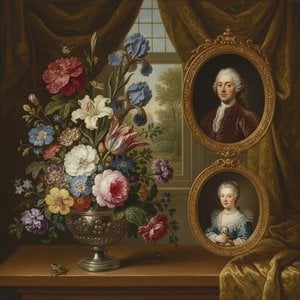
Jan van Kessel the Elder: A Baroque Master of Floral Still Life & Miniature Portraiture
Discover the exquisite detail of Jan van Kessel the Elder's Baroque floral still lifes & captivating miniatures. Explore his artistic legacy, scientific precision, and lasting influence on 17th-century Flemish painting.
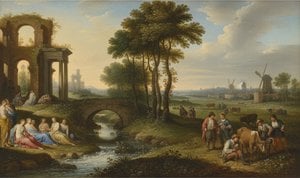
Cornelis van Poelenburch: Bridging Mannerism & the Dutch Baroque Landscape
Discover Cornelis van Poelenburch, a pivotal Dutch Baroque landscape painter bridging Mannerism & Italianate styles. Explore his life, key works, and lasting influence on 17th-century art with ArtsDot.

Abraham Hendricksz van Beyeren: Pioneering Dutch Still Life & the Banquet Tradition
Explore the captivating world of Dutch Golden Age still life with Abraham van Beyeren. Discover his innovative techniques, symbolic banquet scenes & lasting influence on art history. Learn about collecting these masterpieces.

Willem van de Velde the Elder: Master of Maritime Painting & Chronicler of the Dutch Golden Age
Discover the captivating maritime paintings of Willem van de Velde the Elder, a master chronicler of the Dutch Golden Age. Explore his unparalleled realism and lasting influence on naval art history.

