

 Podgląd w skali
 Wyślij jako kartkę
 Udostępnij
 Szczegóły dzieła

 Pobierz
 Podobne obiekty
 RTG
RTG Pokaz slajdów
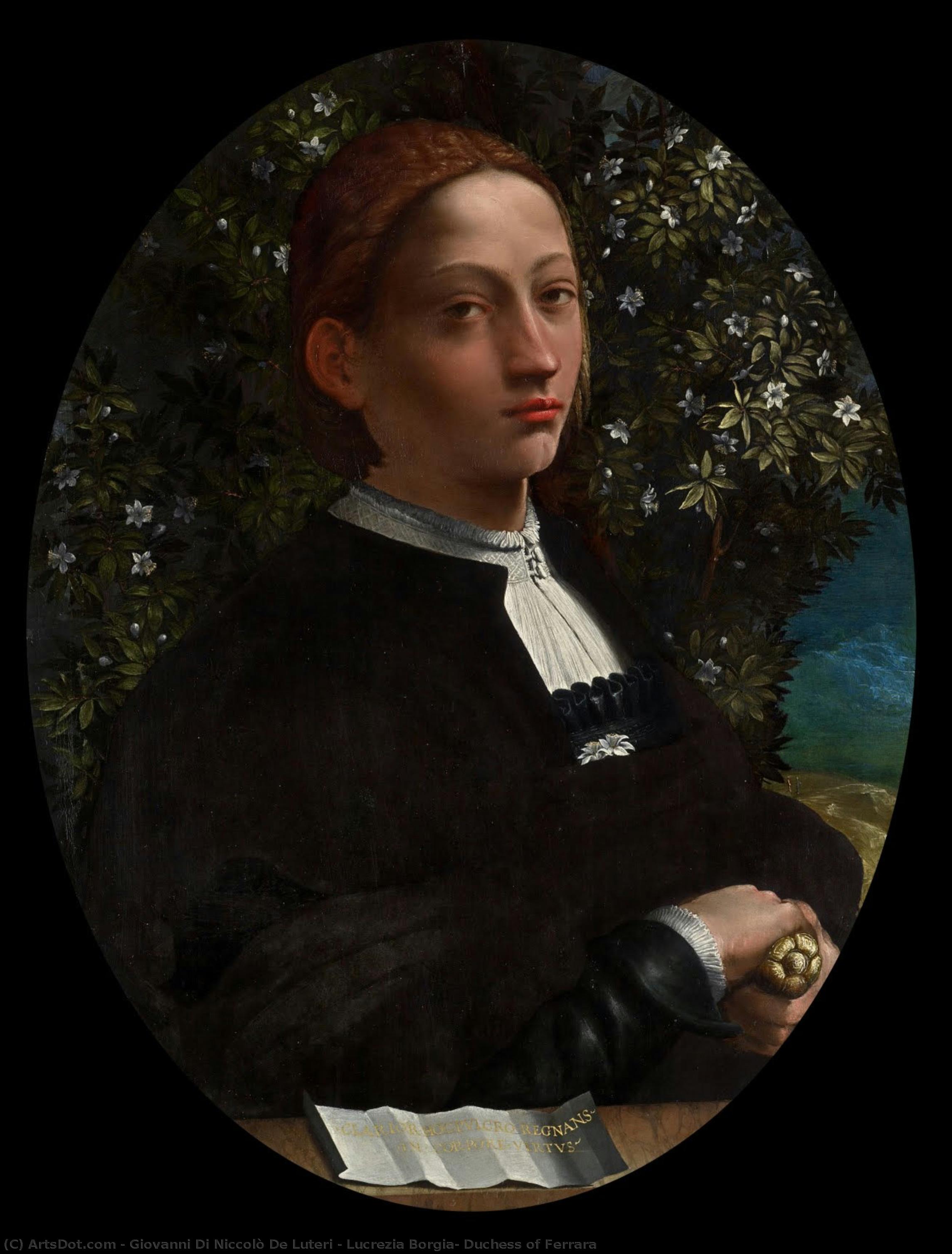
Lucrezia Borgia, Duchess of Ferrara
 1530
1530 74.0 x 57.0 cm
 National Gallery of Victoria
 Rozwiń treść
Ręcznie malowana reprodukcja olejowa
Ręcznie malowany obraz olejny na płótnie, wykonany na zamówienie przez naszych artystów w wybranym przez Ciebie wymiarze i oprawie. ( Zamów wydruk Kup obraz wysokiej rozdzielczości)




































Wybierz spośród naszych standardowych rozmiarów, które zachowują oryginalne proporcje dzieła sztuki.

Możesz wprowadzić własne wymiary, aby dopasować obraz do konkretnej ramy lub przestrzeni. Jeśli wybrany rozmiar nie będzie odpowiadał proporcjom oryginału, przytniecie dzieło sztuki lub rozszerzymy je o dodatkowe elementy, ręcznie domalowane przez artystę. Przed rozpoczęciem produkcji wyślemy projekt cyfrowy do Twojej akceptacji.
Należy pamiętać, że podgląd na ekranie nie odzwierciedla rzeczywistego przycinania ani rozszerzania obrazu. Tylko projekt dokładnie pokaże ostateczną kompozycję.
Choć oferujemy możliwość zamówienia niestandardowych rozmiarów, zalecamy wybór wymiaru z gotowej listy, aby zachować oryginalne proporcje dzieła.
Po złożeniu zamówienia zespół ArtsDot.com skontaktuje się z klientem drogą mailową w celu uzyskania instrukcji i prześle wizualizację projektu
Dostawa na całym świecie () w ciągu 3–4 tygodni zamiast standardowych 5 tygodni. (21 Sierpień). Bez kompromisów w kwestii jakości.

Bezpłatna ekspresowa wysyłka na cały świat

Wysokiej jakości płótno lniane

Pełne ubezpieczenie przesyłki

Gwarancja zwrotu należności celnych i podatków importowych

Gwarancja wiernego odwzorowania kolorów

Polityka 60-dniowego zwrotu (tylko w przypadku wad)

Gwarancja 100% zwrotu kosztów

Zniżka przy zamówieniu wielu produktów
 Opcja ze szkłem jest dostępna wyłącznie w rozmiarach poniżej 110 cm

Lucrezia Borgia, Duchess of Ferrara
Technika reprodukcji
Wymiary reprodukcji
-


Cena całkowita
$ 263
Opis dzieła
Podobne dzieła


O artyście
Giovanni di Niccolò de Luteri (Dosso Dossi): A Venetian Dreamer at Ferrara’s Court
Giovanni di Niccolò de Luteri, universally known as Dosso Dossi, stands as a singular figure within the vibrant tapestry of the Italian Renaissance. Born around 1489 in Tramacchio, Italy—a location shrouded in historical obscurity—he ascended to prominence during his lifetime as a court artist for the Este dukes of Ferrara and Modena, leaving behind an oeuvre characterized by unsettling beauty and profound psychological insight. His artistic legacy continues to fascinate scholars and collectors alike, cementing his place among the most influential painters of his era.Early Life and Training
Information regarding Dosso Dossi’s formative years remains scarce. He apprenticed under Lorenzo Costa in Ferrara, absorbing the stylistic precepts of Venetian painting—particularly those championed by Giorgione and Titian—a connection that would profoundly shape his artistic vision. Crucially, he collaborated closely with his younger brother Battista Dossi, who had also trained under Raphael, fostering a creative partnership that yielded remarkable results. This shared training instilled in both brothers a meticulous attention to detail and an understanding of humanist ideals prevalent during the Renaissance.Style and Technique: Venetian Echoes and Distorted Reality
Dosso Dossi’s distinctive style is undeniably rooted in Venetian painting, yet he transcends mere imitation. He skillfully blended Venetian luminosity with Ferrara’s artistic traditions, creating canvases imbued with a dreamlike atmosphere—a hallmark of Giorgione's work—where colors bleed into one another and spatial perspective is deliberately manipulated. His technique involved painstaking layering of oil paint, achieving astonishing textural richness and capturing subtle nuances of emotion. Perhaps most notably, Dosso Dossi employed **cryptic allegorical conceits**, embedding hidden meanings within seemingly simple compositions. Furthermore, he frequently distorted proportions—a characteristic that departed from the conventions of academic art—introducing unsettling visual surprises that challenged viewers’ perceptions of reality.Notable Works and Collaborations
Dosso Dossi's artistic output produced several masterpieces that continue to captivate audiences today. Among these are “Aeneas in the Elysian Fields,” housed at the National Gallery of Canada, Ottawa; “The Virgin Appearing to Sts John the Baptist and John the Evangelist,” residing in the Uffizi Gallery, Florence; and “Jupiter Painting Butterflies, Mercury and the Virtue,” displayed prominently at Wawel Castle, Kraków. These paintings exemplify Dosso Dossi’s ability to evoke profound psychological states through evocative imagery and masterful color palettes. His collaborations with Battista Dossi further enriched his artistic output, resulting in a cohesive stylistic vision that distinguishes him from many of his contemporaries.Legacy and Influence
Dosso Dossi's influence extended beyond his immediate circle of pupils—including Gabriele Capellini and Jacopo Panicciati—who adopted his distinctive style and techniques. He stands as a testament to the transformative power of artistic innovation, demonstrating how artists can push boundaries while simultaneously honoring established traditions. His preoccupation with unsettling distortions of proportion and luminous color palettes anticipated developments in later art movements, establishing him as a precursor to Mannerism and influencing generations of painters who followed. Dosso Dossi’s enduring fascination stems from his ability to capture the elusive realm of human emotion—a feat achieved through meticulous observation and an uncompromising commitment to artistic experimentation.
giovanni di niccolò de luteri
1542 , Italy
Krótka nota
- Artistic Movement Or Style: Ferrara School
- Artists Or Movements Influenced By This Artist: ['Gabriele Capellini']
- Artists Who Influenced This Artist:
- Giorgio Giorgione
- Titian
- Date Of Birth: c. 1489
- Date Of Death: 1542
- Full Name: Giovanni di Niccolò de Luteri
- Nationality: Italian
- Notable Artworks:
- Aeneas in the Elysian Fields
- Virgin appearing to sts John the Baptist and John the Evangelist
- Jupiter painting butterflies, Mercury and the Virtue
- Place Of Birth: Tramacchio, Italy

