
- Strona główna

- Reprodukcja obrazu olejnego
- girolamo francesco maria mazzola or mazzuoli, dit parmigianino (in french le parmesan)
 Podgląd w skali
 Wyślij jako kartkę
 Udostępnij
 Szczegóły dzieła

 Pobierz
 Podobne obiekty
 RTG
RTG Pokaz slajdów
Kobieta siedząca na ziemi / Kobieta trzymająca distaff
 Olej na płótnie
- Sztuka ścienna
- Early Mannerism
 1524
1524 23.0 x 17.0 cm
 Galeria Courtauld
 Rozwiń treść
Ręcznie malowana reprodukcja olejowa
Ręcznie malowany obraz olejny na płótnie, wykonany na zamówienie przez naszych artystów w wybranym przez Ciebie wymiarze i oprawie. ( Zamów wydruk Kup obraz wysokiej rozdzielczości)




P118B $10

P118H $10

P118W $10

P438Z $10

P508JH $12

P508YH $12

P805H $10

P805Z $10

P919BZ $10

P919G $10

P919XJ $10

P959ZH $10

P968JZ $12

W106C $8

W218G $10

W218JH $8

W218Y $10

W307PJ $10

W316G $10

W316PJ $8

W316Y $10

W398PJ $8

W4111J $10

W500HY $15

W500JH $15

W692G $12

W849H $8

W940BG $15

W953PJ $8




Wybierz spośród naszych standardowych rozmiarów, które zachowują oryginalne proporcje dzieła sztuki.

Możesz wprowadzić własne wymiary, aby dopasować obraz do konkretnej ramy lub przestrzeni. Jeśli wybrany rozmiar nie będzie odpowiadał proporcjom oryginału, przytniecie dzieło sztuki lub rozszerzymy je o dodatkowe elementy, ręcznie domalowane przez artystę. Przed rozpoczęciem produkcji wyślemy projekt cyfrowy do Twojej akceptacji.
Należy pamiętać, że podgląd na ekranie nie odzwierciedla rzeczywistego przycinania ani rozszerzania obrazu. Tylko projekt dokładnie pokaże ostateczną kompozycję.
Choć oferujemy możliwość zamówienia niestandardowych rozmiarów, zalecamy wybór wymiaru z gotowej listy, aby zachować oryginalne proporcje dzieła.
Po złożeniu zamówienia zespół ArtsDot.com skontaktuje się z klientem drogą mailową w celu uzyskania instrukcji i prześle wizualizację projektu
Dostawa na całym świecie () w ciągu 3–4 tygodni zamiast standardowych 5 tygodni. (18 Sierpień). Bez kompromisów w kwestii jakości.

Bezpłatna ekspresowa wysyłka na cały świat

Wysokiej jakości płótno lniane

Pełne ubezpieczenie przesyłki

Gwarancja zwrotu należności celnych i podatków importowych

Gwarancja wiernego odwzorowania kolorów

Polityka 60-dniowego zwrotu (tylko w przypadku wad)

Gwarancja 100% zwrotu kosztów

Zniżka przy zamówieniu wielu produktów
 Opcja ze szkłem jest dostępna wyłącznie w rozmiarach poniżej 110 cm

Kobieta siedząca na ziemi / Kobieta trzymająca distaff
Technika reprodukcji
Wymiary reprodukcji
-


Cena całkowita
$ 263
Opis dzieła
Girolamo Francesco Maria Mazzola Or Mazzuoli, Dit Parmigianino: A Master of Delicate Illusion
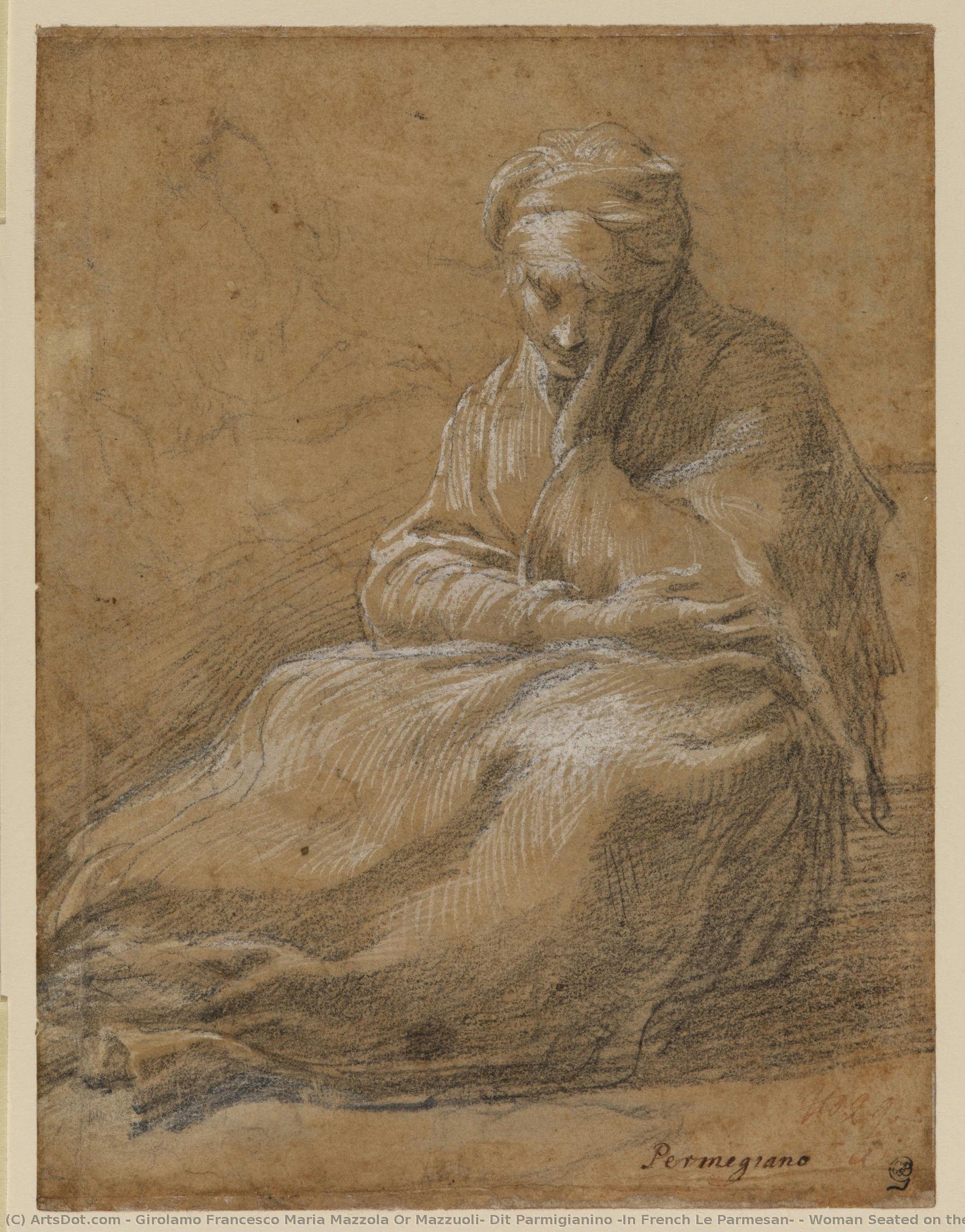
Parmigianino’s “Woman Seated on the Ground/Woman Holding a Distaff,” created around 1523-1524, stands as an emblem of Renaissance Mannerism—a movement that prioritized elegance and psychological complexity over idealized beauty. This drawing, housed in The Courtauld’s collection in London, exemplifies Parmigianino's distinctive approach to portraiture, marking him as one of the foremost innovators of his time. Rather than striving for photographic realism, he sought to capture the inner life of his subject—a woman whose serene gaze and subtly expressive posture invite contemplation.Technique and Material Considerations
The artist’s masterful manipulation of pigment is immediately apparent. Parmigianino employed black chalk alongside extensive application of white bodycolour, a technique that would have been considered unorthodox for its time. This deliberate contrast generates a luminous effect—a “chiaroscuro”—that imbues the figure with palpable volume and depth. The careful layering of chalk and colour demonstrates an unparalleled sensitivity to tonal gradations, creating a subtle interplay of light and shadow that enhances the drawing’s meditative atmosphere. Furthermore, the use of laid paper—characterized by its textured surface—contributes to the overall aesthetic quality, grounding the ethereal depiction in tangible materiality.Historical Context: Renaissance Ideals Challenged
“Woman Seated on the Ground/Woman Holding a Distaff” emerged during a period of profound artistic and intellectual transformation within Europe. The High Renaissance, championed by artists like Leonardo da Vinci and Michelangelo, had established standards for anatomical accuracy and harmonious composition—values that Parmigianino deliberately rejected. Mannerism arose as a reaction to these ideals, prioritizing expressive distortion and psychological nuance over conventional beauty. This stylistic shift reflected broader anxieties about humanist philosophy and the perceived decline of classical virtue, prompting artists to explore darker emotional territories and challenge prevailing aesthetic conventions.Symbolic Resonance: Serenity Amidst Uncertainty
The woman’s pose—seated gracefully on the ground with her hands clasped together—suggests a state of inner stillness amidst an uncertain world. The distaff she holds symbolizes fertility and labor, subtly referencing traditional roles within Renaissance society. However, Parmigianino's deliberate elongation of the figure’s limbs and torso transcends mere anatomical representation; it embodies a broader preoccupation with illusionistic space—a technique that seeks to create an impression of depth and perspective beyond what is physically present. This masterful use of visual language underscores the artist’s ambition to convey not just likeness but also psychological truth.Emotional Impact: A Portrait of Quiet Contemplation
Ultimately, “Woman Seated on the Ground/Woman Holding a Distaff” transcends its formal qualities to evoke a profound sense of serenity and introspection. The drawing's luminous palette—dominated by shades of ivory black and pale ochre—captures the subtle nuances of human emotion—a quiet gaze that speaks volumes about inner experience. Parmigianino’s achievement lies in transforming a simple depiction into an emblem of contemplative beauty—a testament to his artistic genius and enduring legacy as one of the Renaissance's most influential portraitists.Podobne dzieła


O artyście
The Grace of Distortion: The Life and Legacy of Parmigianino
Girolamo Francesco Maria Mazzola, known to the world by the evocative moniker Parmigianino, was a virtuoso of the Italian Renaissance whose brushstrokes redefined the boundaries of elegance. Born in Parma around 1503 into a family of artists, his early years were steeped in the rich visual language of the Lombardy region. As the son of a sculptor, he possessed an innate understanding of form and volume, yet it was his encounter with the expressive, emotive style of Correggio that would ignite his true genius. From this influence, Parmigianino inherited a profound ability to manipulate light and shadow, creating atmospheres that felt both ethereal and tangibly present.
As his talent matured, Parmigianino moved beyond the balanced harmonies of the High Renaissance toward the more complex, stylized realm of Mannerism. This transition was not merely a change in technique but a profound shift in artistic philosophy. He began to embrace deliberate distortions—elongating limbs, tapering necks, and twisting figures into graceful, almost impossible poses—to evoke a sense of sophisticated beauty and psychological tension. His work became a dance of sprezzatura, an effortless grace that masked the immense technical difficulty required to execute such fluid compositions.
Mastery of Form and the Florentine Zenith
The zenith of Parmigianino’s career was reached during his transformative period in Florence, where he operated under the prestigious patronage of Cardinal Giovanni Pier Luigi Farnese. It was within this vibrant intellectual circle that his most iconic imagery emerged. His masterpiece, Madonna with the Long Neck, serves as the definitive manifesto of his style. In this work, the traditional maternal warmth of the Madonna is elevated by a surreal, aristocratic elegance; the elongated neck and serpentine posture of the figures create a dreamlike quality that challenges the viewer's perception of reality.
Beyond his religious commissions, Parmigianino demonstrated an extraordinary versatility in both fresco and panel painting. His ability to command large-scale decorative schemes is evident in his work for the Palazzo Farnese, where he utilized illusionistic techniques to expand architectural spaces through paint. Whether depicting the mythological pursuit in Atteone chases the Nymph or the profound spiritual devotion found in St. Francis adoring the crucifix, his hand remained consistent in its pursuit of a refined, rhythmic beauty that felt both classical and avant-garde.
An Enduring Influence on Art History
Though his life was tragically brief—concluding in Cremona at the age of only 37—the impact of Parmigianino’s vision resonated far beyond his short years. He left behind a legacy that bridged the gap between the structured perfection of the Renaissance and the emotive, often restless energy of later Mannerist movements. His works continue to fascinate because they occupy a unique space between the recognizable world and a realm of pure, stylized aestheticism.
The significance of his contribution can be summarized through several key artistic pillars:
- Innovation of Line: He pioneered the use of the linea serpentinata, or serpentine line, which added movement and grace to static figures.
- Psychological Depth: Through subtle facial expressions and delicate poses, he introduced a layer of sophisticated ambiguity to portraiture.
- Spatial Mastery: His ability to manipulate perspective and light allowed for the creation of complex, multi-layered compositions that redefined spatial realism.
Today, Parmigianino remains a cornerstone of the Italian Renaissance canon, remembered as an artist who dared to stretch the limits of human anatomy to capture the limitless possibilities of the human spirit.

Krótka nota
- Artistic Movement Or Style: Mannerism
- Artists Or Movements Influenced By This Artist: ['European Mannerism']
- Artists Who Influenced This Artist:
- Michelangelo Buonarroti
- Raphael
- Date Of Birth: January 11, 1503
- Date Of Death: August 24, 1540
- Full Name: Girolamo Francesco Maria Mazzola or Mazzuoli
- Nationality: Italian
- Notable Artworks:
- Woman Seated on the Ground
- St. Francis adoring the crucifix
- Studies for female figures
- Place Of Birth: Parma, Italy
Powiązane artykuły

Czarne arcydzieła: Top 10 słynnych obrazów pełnych mroku i ekspresji | ArtsDot.com
Odkryj 10 słynnych obrazów, w których czerń króluje! Poznaj historie artystów, ekspresjonizm i mroczną paletę barw. Reprodukcje dzieł sztuki najwyższej jakości na ArtsDot.com – inspiracje do wnętrz i kolekcjonerstwo.

Czarne arcydzieła: 10 słynnych obrazów w odcieniach lamp black | ArtsDot.pl
Odkryj 10 arcydzieł malarstwa zdominowanych przez odcienie lamp black. Poznaj historie Rembrandta, Caravaggia i innych mistrzów. Reprodukcje obrazów najwyższej jakości na ArtsDot.com – inspiracje dla Twojego wnętrza! Eksploruj kolekcję online.
Czarne arcydzieła: 10 słynnych obrazów w odcieniach mroku | ArtsDot.pl
Odkryj 10 słynnych obrazów, w których dominuje głęboka czerń – od Rembrandta po Picassa. Poznaj historie artystów i techniki tworzenia mrocznych arcydzieł. Reprodukcje najwyższej jakości na ArtsDot.com! Eksploruj kolekcję online.

Czarne arcydzieła: 10 słynnych obrazów w odcieniach kości słoniowej i czerni | ArtsDot.pl
Odkryj 10 arcydzieł sztuki, w których dominuje moc czerni i bieli. Poznaj historie Rembrandta, Goyi, Picassa i innych mistrzów oraz ich ekspresyjne obrazy. Reprodukcje najwyższej jakości na ArtsDot.com – inspiracje dla Twojego wnętrza! Eksploruj kolekcję online.

Manneryzm w Sztuce: 10 Arcydzieł, Które Zdefiniowały Epokę | Reprodukcje Obrazów
Odkryj 10 arcydzieł manieryzmu – od Pontormo po Parmigianino! Poznaj historię, techniki i piękno włoskiego renesansu. Reprodukcje obrazów najwyższej jakości na ArtsDot.com. Eleganckie dekoracje ścienne dla Twojego wnętrza. Eksploruj kolekcję online!


