


Obraz dostosowuje się do Twoich wyborów: , .
Opis obiektu
Experience 'Nacht' by Lyonel Feininger – an evocative Expressionist cityscape bathed in moonlight. Explore the artist’s unique blend of Cubism & architectural themes.
 Rozwiń treść
Biografia artysty
Poznaj Lyonela Feiningera (1871-1956), niemieckiego amerykańskiego ekspresjonistę i mistrza Bauhaus! Eksploruj jego wyjątkowy styl łączący kubizm, estetykę szkła łagodnego oraz motywy architektoniczne.
Order your in four simple steps
Nie spiesz się. Możesz zmienić każdą odpowiedź; cena w Twoim koszyku będzie aktualizowana po każdym wyborze.
1 Pierwszy z czterech kroków
Który rozmiar wybierasz?
Te rozmiary zachowują proporcje oryginalnego obrazu. Rysunek przedstawia wybrany przez Ciebie format na ścianie, nad dwumetrową sofą.
lub podaj własne wymiary
Wybierz spośród naszych standardowych rozmiarów, które zachowują oryginalne proporcje dzieła sztuki.

Wpisz wymaganą szerokość i wysokość, aby obraz pasował do Twojej ramy lub ściany. Ponieważ jest to dzieło malowane ręcznie, w przypadku rozmiaru o innych proporcjach artysta może domalować nieco więcej wokół obrazu lub przyciąć jego fragmenty — wybór należy do Ciebie. Przed rozpoczęciem pracy prześlemy Ci cyfrową wizualizację do zatwierdzenia. Obraz widoczny na tej stronie nie przedstawia rzeczywistego efektu — jedynie wizualizacja oddaje realny rezultat.
2 Drugi z czterech kroków
W jaki sposób przygotować dzieło: w formie tuby, na krosnach czy w ramie?
Poniższe ceny dotyczą rozmiaru wybranego w pierwszym kroku.
Wybierz krawędzie płótna naciągniętego na ramę
Wybierz ramę

Białe krawędzie zł1

rozmyte krawędzie zł1

Przedłużony zł1

P118B zł10

P118H zł10

P118W zł10

P438Z zł10

P508JH zł12

P508YH zł12

P805H zł10

P805Z zł10

P919BZ zł10

P919G zł10

P919XJ zł10

P959ZH zł10

P968JZ zł12

W106C zł8

W218G zł10

W218JH zł8

W218Y zł10

W307PJ zł10

W316G zł10

W316PJ zł8

W316Y zł10

W398PJ zł8

W4111J zł10

W500HY zł15

W500JH zł15

W692G zł12

W849H zł8

W940BG zł15

W953PJ zł8

H24-GOLD zł30

H24-SILVER zł30

H36-GOLD zł45

H36-SILVER zł45
W oprawie
Profil: . Wymiar całkowity w ramie: .
3 Trzeci z czterech kroków
Czy chcieliby Państwo wprowadzić jakieś zmiany w obrazie?
Większość osób odpowiada przecząco. Ponieważ każdy obraz jest tworzony ręcznie, nasz artysta może również dostosować go do Twoich potrzeb.
Po złożeniu zamówienia zespół ArtsDot.com skontaktuje się z klientem drogą mailową w celu uzyskania instrukcji i prześle podgląd projektu
4 Krok czwarty z czterech
Kilka opcji wykończenia
Wszystkie są opcjonalne. Wybrane już odpowiedzi nie wiążą się z żadnymi dodatkowymi kosztami.
Kto jest autorem?
Dostawa na całym świecie () w ciągu 3–4 tygodni zamiast standardowych 5 tygodni. (18 Listopad). Bez kompromisów w kwestii jakości.
Tabliczka informacyjna, jak w muzeum?
Szczegóły grawerowanej brązowej tabliczki
This elegant plaque features the artist's name and the title of the artwork, finely engraved for a timeless presentation.
It is made from bronze with a refined, elegant finish. The text is precisely laser-engraved for a sharp and permanent result. Measuring 9x2 cm, the plaque is compact yet easy to read. It's built to be durable and scratch-resistant, offering a professional, museum-quality look. Mounting is simple thanks to the included adhesive backing.
Szczegóły przezroczystej tabliczki akrylowej
The plaque includes essential engraved details such as the artist's name, the title of the artwork, the date it was created, the type of media used-like oil on canvas or watercolor-a brief description of the piece, and a QR code that links to the complete artwork information.
It is crafted from clear acrylic, offering a sleek, modern appearance. The text is UV-engraved in black to ensure strong visual contrast. With a size of 10x15 cm, it ensures optimal readability. It comes equipped with two metal hooks for secure wall mounting. The plaque is designed to be weather-resistant, making it suitable for various environments, and it includes interactive features that work seamlessly with smartphone scanning.
Szczegóły czarnej tabliczki akrylowej
This elegant plaque includes engraved information such as the artist's name, the title of the artwork, the date it was created, the type of media used (like oil on canvas or watercolor), a short description of the artwork, and a QR code for quick access to more information.
The plaque itself is made from refined black acrylic with a premium finish. The text is laser-engraved in white for high contrast and readability. Its size is 10x15 cm, designed to be easy to read. It comes with two metal hooks for professional mounting. The design is sleek and fits any interior style. It is also weather-resistant and durable, with built-in digital integration for mobile compatibility.
Werniks ochronny?
Kiedy potrzebujesz dostawy?
✓ Sprawdź i zamów
Twoje dzieło, dokładnie tak, jak zamówiłeś

Nacht
Technika reprodukcji
Wymiary reprodukcji
-

Wybitny mistrz artystyczny
Większa szczegółowość, finezja i dodatkowy czas na realizację
-

Opcje oprawy reprodukcji
-
-
W przypadku dzieł sztuki lub reprodukcji, których którykolwiek z boków przekracza 105 cm (około 41 cali), rama zostanie wysłana w formie zestawu do samodzielnego montażu. Metoda ta zapewnia bezpieczną dostawę i zapobiega uszkodzeniom podczas transportu.
Wymagany profesjonalny montaż – nie jest to produkt typu DIY.
Zestaw musi zostać złożony, a płótno naciągnięte przez doświadczonego profesjonalnego ramiarza, przy użyciu kleju do drewna (brak w zestawie), kleszczy do naciągania płótna oraz ścisków, które utrzymają krosna w równej pozycji podczas schnięcia kleju. Nieprawidłowy montaż lub nierównomierne napięcie płótna może trwale uszkodzić dzieło sztuki i nie podlega naszej gwarancji.
 W przypadku dzieł sztuki lub reprodukcji, których którykolwiek z boków przekracza 105 cm (około 41 cali), rama zostanie wysłana w formie zestawu do samodzielnego montażu. Metoda ta zapewnia bezpieczną dostawę i zapobiega uszkodzeniom podczas transportu.
W zestawie znajdują się wszystkie listwy z litego drewna, precyzyjnie docięte do wymiarów.
Montaż odbywa się przy użyciu dołączonych wkrętów oraz kleju do drewna do łączenia narożników, którego zestaw nie zawiera i który musi zostać dostarczony przez ramiarza.
Wymagane są profesjonalne narzędzia, których nie ma w zestawie: kleszcze do naciągania płótna (napinacz) oraz zaciski, które pozwolą utrzymać listwy w równej pozycji podczas schnięcia kleju.
Ważne:
Do połączenia narożników niezbędny jest klej do drewna, listwy należy unieruchomić za pomocą ścisków do momentu całkowitego wyschnięcia kleju, a naciągnięcie płótna na złożoną ramę wymaga użycia kleszczy do naciągania płótna. Żaden z tych elementów nie jest dołączony do zestawu. Przed zamówieniem tego rozmiaru zalecamy konsultację z doświadczonym ramiarzem.

Etykieta obiektu
-
-

Lakier ochronny
Lakier z połyskiem (pogłębia kolory, chroni przed światłem i wilgocią)
-

Personalizacja dzieła
Przykłady możliwości personalizacji: zastąp twarz zdjęciem klienta; dodaj zwierzę domowe (np. zamień kota na psa); umieść ukrytą wiadomość w tle; zmień krajobraz lub elementy tła.
-

Ekspresowa
Dostawa na cały świat () w ciągu 3–4 tygodni zamiast standardowych 5 tygodni. (18 Listopad). Bez kompromisów w kwestii jakości.
-
Przesyłka ekspresowa
Dostawa na cały świat () w ciągu 5 tygodni. (25 Listopad).
W cenie
Cena całkowita
zł 1025
Opcja ze szkłem jest dostępna wyłącznie w rozmiarach poniżej 110 cm
W każdym zamówieniu
- Bezpłatna ekspresowa wysyłka na cały świat
- Wysokiej jakości płótno lniane
- Pełne ubezpieczenie przesyłki
- Gwarancja zwrotu należności celnych i podatków importowych
- Gwarancja wiernego odwzorowania kolorów
- 100-dniowa polityka zwrotów (tylko w przypadku wad)
- Gwarancja 100% zwrotu pieniędzy
- Zniżka przy zakupie wielu sztuk


Nacht by Lyonel Feininger: A Dreamlike Expressionist Vision
“Nacht,” meaning “Night” in German, is a captivating artwork by Lyonel Feininger that exemplifies the core tenets of Expressionism while demonstrating influences from Cubism. Created sometime during an unknown date, this piece transports viewers to a stylized and abstracted cityscape bathed in the ethereal glow of moonlight or artificial light.
Subject and Style: An Abstracted Nightscape
The artwork depicts an abstracted cityscape at night, likely inspired by German towns or villages. Feininger doesn't aim for photographic realism; instead, he prioritizes conveying a feeling—a mood of quiet contemplation tinged with melancholy. The style is distinctly Expressionist, characterized by its subjective interpretation of reality and emphasis on emotional expression over objective representation. Geometric simplification of forms, reminiscent of Cubism, further enhances the artwork’s unique visual language. Buildings are rendered as geometric blocks with pointed roofs, arranged in a seemingly chaotic yet balanced composition. A large circular form, likely representing the moon, dominates the right side of the canvas, while scattered stars punctuate the upper portion.
Technique and Materials: Watercolor's Fluidity
Feininger masterfully employs watercolor as his primary technique. The loose brushstrokes and washes of color create a fluid and atmospheric effect. Lines are used sparingly but effectively to define edges and structure, often appearing as thin, sketchy outlines that suggest movement or impermanence. The palette is predominantly cool and muted—shades of blue-green, purple, grey, and touches of orange—contributing to the somber yet peaceful mood. This technique lends a dreamlike quality to the scene, blurring the lines between reality and imagination.
Symbolism and Emotional Impact: Towers, Stars, and Contemplation
Beyond its visual appeal, “Nacht” is rich in symbolic elements. The tall, angular tower that dominates the composition could symbolize power, aspiration, or even spirituality—reaching towards the heavens amidst the nocturnal setting. The scattered stars evoke a sense of wonder and mystery, hinting at the vastness of the universe beyond the confines of the cityscape. Overall, the artwork evokes a feeling of quiet contemplation, inviting viewers to reflect on the stillness and solitude of night. It’s a powerful exploration of emotion through abstraction, characteristic of Feininger's artistic vision.
Pytania i odpowiedzi
Czy „Nacht” – Lyonel Feininger znajduje się w domenie publicznej?
Jeśli chodzi o prawa autorskie, "Nacht" znajduje się w należy do domeny publicznej – autorskie prawa majątkowe wygasły.
Kto jest autorem dzieła "Nacht"?
„Nacht” zostało stworzone przez Lyonel Feininger. Informacje na tej stronie dotyczą oryginalnego dzieła autorstwa Lyonel Feininger.
Czy kolory dzieła „Nacht” – Lyonel Feininger są żywe czy stonowane?
Dzieło „Nacht” – Lyonel Feininger charakteryzuje się nasyceniem na poziomie Subtle Color oraz intensywnością Balanced.
Więcej o tym obrazie
 Podgląd w skali 1:1
 Przełącz na wydania drukowane
 Wyślij jako kartkę
 Udostępnij
 Szczegóły dzieła
 Przewodnik

 Pobierz obraz
 Podobne obiekty
 RTG
RTG Pokaz slajdów
 Pytania i odpowiedzi
 Statystyki
Podobne dzieła


Lyonel Feininger
1871 - 1956, Stany Zjednoczone
Biografia artysty
Early Life and Artistic Roots
Lyonel Charles Adrian Feininger, a name synonymous with the vibrant intersection of Expressionism and modern art, was born in New York City on July 17, 1871. His lineage was deeply rooted in artistic heritage; his father, Karl Wilhelm Friedrich Feininger, was a celebrated German-American violinist and composer, while his mother, Elizabeth Feininger, possessed a remarkable voice as an American singer. This familial legacy of musical and artistic talent profoundly shaped Lyonel’s early development, instilling within him a deep appreciation for creative expression from a remarkably young age.
His childhood was marked by extensive travels throughout Europe, experiences that proved pivotal in shaping his artistic sensibilities. Beginning at the tender age of sixteen, he embarked on a journey to study music in Hamburg and Berlin, immersing himself in the rich cultural landscape of these European capitals. However, it wasn’t solely music that captivated him; a burgeoning interest in visual arts quickly took hold, leading him to pursue drawing studies in both cities. These formative years exposed him to diverse artistic styles and techniques, laying the groundwork for his distinctive approach to painting.
A Career Forged in Commercial Art
Following his European sojourn, Feininger established a successful career as a caricaturist, a profession that would occupy much of his time from 1894 until the mid-1930s. He quickly gained recognition for his witty and engaging comic strips, which appeared in numerous German, French, and American magazines. Titles like “The Kin-der-Kids” and “Wee Willie Winkie’s World” became immensely popular, showcasing his remarkable ability to capture character and humor with a unique graphic style. This period provided him with invaluable experience in visual communication and commercial art, honing his skills in composition, layout, and audience engagement – skills that would later prove essential to his development as a fine artist.
The Transformative Influence of Expressionism and the Bauhaus
A significant turning point in Feininger’s artistic trajectory occurred at the age of thirty-six when he decisively transitioned from commercial art to fine art. This decision coincided with the rise of Expressionism, a movement characterized by its emphasis on emotional expression and subjective experience. He eagerly embraced this burgeoning artistic philosophy, joining influential groups such as Die Brücke, Novembergruppe, and Gruppe 1919, immersing himself in the vibrant creative atmosphere of Berlin’s avant-garde scene.
In 1919, a truly momentous opportunity presented itself: he was appointed as the first faculty member at the Bauhaus, the revolutionary art school founded by Walter Gropius. This appointment marked a profound shift in his career and provided him with access to an unparalleled environment for artistic experimentation. As the master artist in charge of the printmaking workshop, Feininger exerted a considerable influence on numerous students, shaping their artistic perspectives and fostering a spirit of innovation.
A Unique Artistic Style: Cubism, Architecture, and the Sea
Feininger’s artistic style was instantly recognizable, characterized by a distinctive blend of influences. He skillfully incorporated elements of Cubism, utilizing fragmented forms and multiple viewpoints to create dynamic compositions. Simultaneously, he drew inspiration from stained glass aesthetics, employing translucent colors and intricate patterns to evoke a sense of ethereal beauty. Furthermore, his work frequently referenced architecture, particularly the imposing structures of German churches and buildings, reflecting a deep fascination with form and space.
The sea played an equally significant role in his artistic vision. He repeatedly depicted maritime scenes, capturing the power and majesty of the Baltic Sea with remarkable precision and emotional intensity. These recurring motifs—architecture, stained glass, and the sea—became hallmarks of his unique style, distinguishing his work from that of other Expressionist artists.
Major Works and a Lasting Legacy
Throughout his prolific career, Feininger produced a vast body of artwork encompassing watercolors, drawings, prints, and paintings. Notable works include “Werder I,” a captivating watercolor depicting the German landscape; “Gaberndorf II,” a poignant paper drawing capturing a moment of quiet contemplation; and “Boats,” a vibrant cubist painting that exemplifies his innovative approach to form and color. These pieces, along with countless others, demonstrate his remarkable versatility and artistic depth.
Following the rise of Nazism in 1933, Feininger emigrated to the United States, where he continued to paint and create art until his death on January 13, 1956. Despite facing significant challenges during this period, he remained a dedicated artist, producing works that reflected both his personal experiences and his enduring artistic vision. Lyonel Feininger’s legacy extends far beyond his individual creations; he is remembered as a pivotal figure in the development of Expressionism and a key contributor to the Bauhaus movement, whose innovative ideas continue to inspire artists today.
Powiązane artykuły

Clyfford Still's Abstract Expressionism: A Study of Color, Form & the Existential Landscape
Explore the profound world of Clyfford Still's Abstract Expressionism with ArtsDot. Discover his unique style, existential themes & investment potential. Expert analysis for discerning collectors.

Masterpieces of Light: The Top 25 Artworks by James McNeill Whistler
Explore the iconic masterpieces of James McNeill Whistler. Discover the essence of Tonalism and fine art on ArtsDot.com.
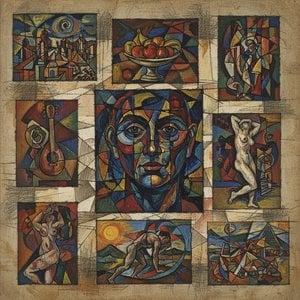
10 Arcydzieł Kubizmu Ekspresjonistycznego, które Zdefiniowały Sztukę | ArtsDot
Odkryj 10 arcydzieł kubizmu ekspresjonistycznego! Poznaj historię Picasso, Braque'a i innych mistrzów. Inspiracje wnętrzarskie i reprodukcje obrazów najwyższej jakości na ArtsDot.com – sztuka dla Twojego domu.