


 Podgląd w skali 1:1
 Wyślij jako kartkę
 Udostępnij
 Szczegóły dzieła
 Przewodnik

 Pobierz obraz
 Podobne obiekty
 RTG
RTG Pokaz slajdów
 Statystyki
Ice Scene
 Oil On Canvas
- WallArt
- Dutch Golden Age
 1610
1610 36.0 x 71.0 cm
 Muzeum Mauritshuis
 Rozwiń treść
Ręcznie malowana reprodukcja olejowa
Ręcznie malowany obraz olejny na płótnie, wykonany na zamówienie przez naszych artystów w wybranym przez Ciebie wymiarze i oprawie. ( Przełącz na wydania drukowane Przejdź do wersji cyfrowej)




P118B zł10

P118H zł10

P118W zł10

P438Z zł10

P508JH zł12

P508YH zł12

P805H zł10

P805Z zł10

P919BZ zł10

P919G zł10

P919XJ zł10

P959ZH zł10

P968JZ zł12

W106C zł8

W218G zł10

W218JH zł8

W218Y zł10

W307PJ zł10

W316G zł10

W316PJ zł8

W316Y zł10

W398PJ zł8

W4111J zł10

W500HY zł15

W500JH zł15

W692G zł12

W849H zł8

W940BG zł15

W953PJ zł8




Wybierz spośród naszych standardowych rozmiarów, które zachowują oryginalne proporcje dzieła sztuki.

Wpisz wymaganą szerokość i wysokość, aby obraz pasował do Twojej ramy lub ściany. Ponieważ jest to dzieło malowane ręcznie, w przypadku rozmiaru o innych proporcjach artysta może domalować nieco więcej wokół obrazu lub przyciąć jego fragmenty — wybór należy do Ciebie. Przed rozpoczęciem pracy prześlemy Ci cyfrową wizualizację do zatwierdzenia. Obraz widoczny na tej stronie nie przedstawia rzeczywistego efektu — jedynie wizualizacja oddaje realny rezultat.
Po złożeniu zamówienia zespół ArtsDot.com skontaktuje się z klientem drogą mailową w celu uzyskania instrukcji i prześle wizualizację projektu
Dostawa na całym świecie () w ciągu 3–4 tygodni zamiast standardowych 5 tygodni. (26 Październik). Bez kompromisów w kwestii jakości.

Bezpłatna ekspresowa wysyłka na cały świat

Wysokiej jakości płótno lniane

Pełne ubezpieczenie przesyłki

Gwarancja zwrotu należności celnych i podatków importowych

Gwarancja wiernego odwzorowania kolorów

100-dniowa polityka zwrotów (tylko w przypadku wad)

Gwarancja 100% zwrotu pieniędzy

Zniżka przy zakupie wielu sztuk
 Opcja ze szkłem jest dostępna wyłącznie w rozmiarach poniżej 110 cm

Ice Scene
Technika reprodukcji
Wymiary reprodukcji
-


Cena całkowita
zł 1010
A Frozen Moment Captured: Hendrick Avercamp’s “Ice Scene”
Hendrik Avercamp's "Ice Scene," painted in 1610, stands as an emblem of the Dutch Golden Age—a testament to meticulous observation and a masterful depiction of winter life. Housed within the Mauritshuis museum in The Hague, Netherlands, this monumental panel offers more than just a visual spectacle; it invites contemplation on the intersection of daily existence and artistic brilliance. Avercamp’s unique perspective as a mute artist profoundly shaped his approach to portraying the world around him, fostering an unparalleled sensitivity to detail and capturing the essence of a particular time and place with remarkable precision.The Artist's Vision: Beyond Silence
Born in Amsterdam in 1585, Hendrick Avercamp defied societal expectations for individuals with disabilities—a fact that ironically fueled his artistic prowess. Despite his inability to speak or hear, Avercamp possessed an extraordinary capacity for visual perception, transforming his perceived limitations into a catalyst for heightened observation and artistic innovation. His formative years were spent studying under Pieter Isaacsz, absorbing the principles of portraiture, while also benefiting from guidance from David Vinckboons, whose influence can be discerned in Avercamp’s early stylistic explorations. This dual mentorship instilled in him a foundational understanding of artistic technique alongside an acute awareness of human behavior and environment—skills that would prove invaluable throughout his prolific career.A Symphony of Detail: Technique and Composition
“Ice Scene” exemplifies Avercamp's signature style – a genre painting characterized by panoramic vistas rendered with astonishing realism. Utilizing oil paint on panel, he achieved breathtaking luminosity and textural depth through layering techniques meticulously applied to capture the icy expanse of the frozen river and its surrounding landscape. The artist’s compositional choices are equally deliberate: a high vantage point elevates the scene, presenting it as a comprehensive tableau of human activity amidst the harsh winter conditions. Hundreds of figures populate the canvas—ranging from ice skaters engaged in playful pursuits to laborers hauling goods across the snow—each rendered with painstaking accuracy and imbued with palpable emotion. The inclusion of animals – crows scavenging on a frozen horse carcass – adds an element of grim realism, grounding the idyllic portrayal of human leisure within the broader context of survival.Historical Context: Holland's Winter Idyll
The painting’s creation coincided with a period of considerable prosperity and cultural dynamism in Dutch society—the zenith of the Golden Age. During this era, artists like Avercamp sought to depict not merely what they saw but also what they felt about their surroundings. “Ice Scene” reflects the prevailing mood of optimism and resilience characteristic of the time, portraying individuals embracing winter’s challenges with courage and camaraderie. Furthermore, it speaks to a broader fascination with capturing fleeting moments of everyday life—a trend that anticipated Impressionism decades later. The painting serves as an invaluable window into the social customs and artistic sensibilities of seventeenth-century Holland, offering insights into the values and priorities of its inhabitants.Symbolic Resonance: More Than Just Landscape
Beyond its stunning visual beauty, “Ice Scene” resonates with symbolic significance. The frozen river represents both physical hardship and spiritual purification—a motif prevalent in Northern European art during this period. The figures engaged in skating symbolize vitality and joy amidst adversity, embodying the humanist ideals that underpinned the Golden Age’s artistic endeavors. Even the inclusion of the horse carcass serves as a poignant reminder of mortality—a subtle yet powerful commentary on the cyclical nature of life and death. Avercamp's masterful rendering elevates this simple winter landscape into an enduring meditation on human experience and artistic expression.Emotional Impact: A Timeless Masterpiece
“Ice Scene” continues to captivate viewers today with its evocative atmosphere and profound emotional depth. The painting’s luminous palette—dominated by whites, blues, and browns—creates a sense of serene grandeur, transporting the viewer back to a bygone era. Yet, beneath the surface tranquility lies an underlying tension—a palpable awareness of the precariousness of existence amidst the unforgiving forces of winter. Avercamp's ability to convey both beauty and melancholy speaks to the enduring power of art to illuminate the human condition—making “Ice Scene” not merely a remarkable achievement of artistic technique but also a timeless masterpiece that resonates with audiences across generations.Pytania i odpowiedzi
Co łączy "Ice Scene" z resztą twórczości Hendryk Avercamp?
W dorobku Hendryk Avercamp, "Ice Scene" wpisuje się w styl Dutch Golden Age, nawiązując do tematów takich jak dutch tradition, winter observation, detailed scene, baroque style, avercamp legacy.
Jaki kolor dominuje w kompozycji „Ice Scene” – Hendryk Avercamp?
Dominującym kolorem dzieła „Ice Scene” – Hendryk Avercamp jest Rosy Brown (#b99f80).
Czy Ice Scene jest w ogólnym ujęciu jasny?
Postrzegana jasność dzieła „Ice Scene” – Hendryk Avercamp wynosi brilliant. Można ją dopasować do oświetlenia w docelowym pomieszczeniu.
Podobne dzieła


Biografia artysty
Pionier holenderskiej zimy: Życie i sztuka Hendricka Avercampa
Hendrick Avercamp, nazwisko będące synonimem migotliwych, zamarzniętych krajobrazów Złotej Ery Holandii, urodził się w Amsterdamie 27 stycznia 1585 roku. Jego historia życia jest równie intrygująca jak jego twórczość – to opowieść naznaczona zarówno artystyczną innowacją, jak i osobistym losem. Od najmłodszych lat było widoczne, że Avercamp postrzega świat inaczej niż większość; był niemy i prawdopodobnie głuchy, co przyniosło mu czułe, choć definiujące miano „de Stomme van Kampen” – Niemowa z Kampen. To postrzegane ograniczenie nie stłumiło jednak jego artystycznego głosu, lecz być może wyostrzyło jego zdolności obserwacyjne, pozwalając mu przelewać niuanse holenderskiej zimy na płótno z niespotywaną klarownością i urokiem. Początkowo studiował w Amsterdamie u Pietera Isaacsza, portrecisty, a być może czerpał również wskazówki od Davida Vinckboonsa, którego wpływ jest widoczny w wczesnych dziełach Avercampa. W 1608 roku przeniósł się do Kampen, gdzie spędził większość swojego życia i ugruntował swoją pozycję jako wyjątkowy i ceniony artysta.Uwiecznianie zamarzniętego świata: Styl artystyczny i innowacja
Avercamp wyróżnia się jako jeden z pierwszych oddanych malarzy pejzażowych w siedemnastowiecznej Holandii, w okresie tradycyjnie zdominowanym przez portret, malarstwo historyczne i martwą naturę. Wypracował swoją niszę, specjalizując się w scenach zimowych – temacie rzadko eksplorowanym z tak konsekwentną uwagą przed jego czasami. Jego obrazy to nie tylko przedstawienia mroźnej pogody; to żywe migawki z holenderskiego życia rozgrywającego się na lodzie. Postacie jeżdżą na łyżwach, biegają na sankach, grają w kolf (formę golfa uprawianą na lodzie) i po prostu cieszą się zamarzniętymi wodami, tworząc tętniący życiem gobelin ludzkiej aktywności na tle surowego piękna zimowego krajobrazu. Umiejętność Avercampa polega na zdolności do oddania zarówno chłodu pory roku, jak i ciepła wspólnej radości. Po mistrzowsku stosował perspektywę powietrzną, subtelnie zmieniając kolory i detale, aby stworzyć przekonujące poczucie głębi, wciągając widza w te lodowe światy. Jego technika często polegała na nakładaniu akwarelowych laserunków na rysunki piórkiem i tuszem, co tworzyło delikatne i świetliste efekty. Te mniejsze dzieła były często sprzedawane jako gotowe elementy przeznaczone do kolekcjonerskich albumów – co stanowi świadectwo ich kameralnej skali i uroku.Wpływy i rozwój: Od Bruegla do holenderskiego realizmu
Choć Avercamp wypracował własny, charakterystyczny styl, nie tworzył w próżni. Wpływ flamandzkich mistrzów, takich jak Pieter Bruegel Starszy, jest widoczny w jego wczesnych kompozycjach – tętniących życiem scenach wypełnionych licznymi postaciami zaangażowanymi w codzienne czynności. Jednak Avercamp wyszedł poza zwykłe naśladownictwo, rozwijając unikalną holenderską wrażliwość, charakteryzującą się dbałością o szczegół oraz przenikliwą obserwacją światła i atmosfery. Przyjął rosnący trend realizmu w malarstwie holenderskim, wiernie portretując ubiór, narzędzia i zwyczaje swoich czasów. Jego twórczość odzwierciedla także warunki klimatyczne Małej Epoki Lodowcowej – okresu niezwykle mroźnych zim w Europie, co bez wątpienia podsycało jego fascynację zamarzniętymi krajobrazami. W przeciwieństwie do niektórych współczesnych, którzy mogli idealizować swoje tematy, Avercamp prezentował realistyczne – i często humorystyczne – spojrzenie na życie, włączając w to zabawne detale sugerujące ludzkie słabości i codzienne zdarzenia.Dziedzictwo i znaczenie historyczne
Wpływ Hendricka Avercampa na malarstwo holenderskie jest ogromny. Nie tylko spopularyzował pejzaż zimowy jako pełnoprawny temat artystycznych poszukiwań, ale także pomógł zdefiniować wyraźnie holenderskie podejście do malowania krajobrazu – kładące nacisk na realizm, efekty atmosferyczne i przedstawianie codziennego życia. Jego praca stanowiła inspirację dla późniejszych pokoleń artystów i do dziś zachwyca odbiorców. Do znaczących kolekcji prezentujących jego kunszt należą Rijksmuseum w Amsterdamie, które posiada znaczną liczbę jego obrazów, oraz Mauritshuis w Hadze. Dziedzictwo Avercampa wykracza poza jego osiągnięcia artystyczne; reprezentuje on triumf nad przeciwnościami losu, dowodząc, że ekspresja twórcza może rozkwitać nawet w obliczu osobistych trudności. Zmarł w Kampen 15 maja 1634 roku, pozostawiając po sobie dorobek, który nadal stanowi okno na tętniący życiem i często pomijany świat siedemnastowiecznej Holandii – świat zamrożony w czasie, a jednak przepełniony życiem.Ważne dzieła
-
<
- Winter Landscape with Skaters (Pejzaż zimowy z łyżwiarzami): Być może jego najbardziej ikoniczne dzieło, obraz ten stanowi przykład mistrzostwa Avercampa w chwytaniu energii i atmosfery holenderskiej zimowej sceny. <
- Street in Delfi (Ulica w Delfcie): Rzadki przykład wyjścia Avercampa poza tematykę pejzażową, ukazujący jego umiejętność przedstawiania życia miejskiego. <
- Enjoying the Ice near a Town (Czerpanie radości z lodu w pobliżu miasta): Demonstruje jego zdolność do tworzenia dynamicznych kompozycji wypełnionych licznymi postaciami zaangażowanymi w różnorodne aktywności.

Hendryk Avercamp
1585 - 1634 , Holandia
Krótka nota
- Artistic Movement Or Style: Dutch Golden Age painting
- Artists Who Influenced This Artist:
- Pieter Isaacsz
- David Vinckboons
- Date Of Birth: January 27, 1585
- Date Of Death: May 15, 1634
- Full Name: Hendrick Avercamp
- Nationality: Dutch
- Notable Artworks:
- Winter Landscape with Skaters
- Street in Delfi
- Place Of Birth: Amsterdam, Netherlands
Powiązane artykuły

Złoty Wiek Niderlandów: Światło, Realizm i Kulturowe Innowacje w Malarstwie Barokowym
Odkryj fascynujący świat malarstwa holenderskiego Złotego Wieku! Poznaj arcydzieła Rembrandta, Vermeera i innych mistrzów. Analiza technik, gatunków i wpływu na sztukę europejską.

Charles Leickert: Capturing the Dutch Golden Age Light – A Comprehensive Study of Technique, Context, and Legacy
Explore the captivating winter landscapes of Charles Leickert, a master of Dutch Golden Age light & atmosphere. Discover his techniques, symbolism, and lasting legacy – a comprehensive study for art enthusiasts and collectors.

Złoty Wiek Holandii: 10 arcydzieł, które zmieniły historię sztuki | ArtsDot.com
Odkryj 10 arcydzieł Złotego Wieku Holandii! Poznaj historię Rembrandta, Vermeera i innych mistrzów. Reprodukcje obrazów najwyższej jakości do Twojego wnętrza – ArtsDot.com.

Golden Light & Dutch Skies: Bringing the Magic of Dutch Golden Age Landscapes into Your Home
Transform your home with the breathtaking light of Dutch Golden Age landscapes. Discover how hand-painted oil reproductions of masterworks like Ruisdael and Vermeer bring timeless elegance, atmosphere, and soulful texture to modern interiors. Elevate your space with museum-quality art.
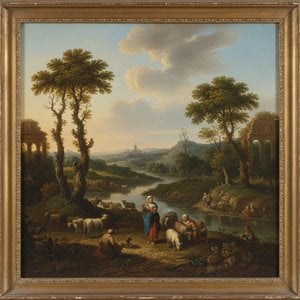
Nicolaes Berchem: Dutch Golden Age Pastoralism & the Evolution of Landscape Painting
Explore the captivating world of Nicolaes Berchem, a leading Dutch Golden Age painter. Discover his idyllic landscapes, masterful technique & lasting influence on art history. Learn more at ArtsDot.

