


Obraz dostosowuje się do Twoich wyborów: , .
Biografia artysty
Explore Getulio Alviani's innovative optical & kinetic art! Known for 'Superficie a testura vibratile,' his work blends illusion, aluminum, and dynamic visual experiences.
 Rozwiń treść
Ten utwór podlega ochronie prawem autorskim
Dzieło sztuki prezentowane na tej stronie podlega ochronie prawem autorskim, co oznacza, że nie mamy prawa do tworzenia ani sprzedaży jego identycznej reprodukcji. Ochrona ta jest egzekwowana na mocy umów międzynarodowych, takich jak Konwencja berneńska oraz przez przepisy prawa krajowego, w tym te określone w Prawo autorskie USA – Tytuł 17.
Jako pełną szacunku i legalną alternatywę oferujemy personalizowane, malowane ręcznie dzieła sztuki inspirowane oryginałem. Nasi wykwalifikowani i profesjonalni artyści starannie analizują styl, nastrój oraz artystyczną esencję pierwowzoru, aby stworzyć nowe, unikalne dzieło, które przywołuje te same emocje – pozostając jednocześnie w pełni oryginalną kreacją.
Metoda ta jest w pełni zgodna z przepisami prawa autorskiego, ponieważ nie polega na kopiowaniu ani powielaniu chronionego dzieła. Stanowi ona kreatywną reinterpretację – nowy obraz, który czerpie inspirację z oryginału, ale nie jest z nim tożsamy.
Zamów swój w czterech prostych krokach
Nie spiesz się. Możesz zmienić każdą odpowiedź; cena w Twoim koszyku będzie aktualizowana po każdym wyborze.
1 Pierwszy z czterech kroków
On which medium should it be printed?
Canvas is printed with giclée inks and can be stretched or framed like a painting; paper comes flat, or framed behind glass.
2 Drugi z czterech kroków
Który rozmiar wybierasz?
Te rozmiary zachowują proporcje oryginalnego obrazu. Rysunek przedstawia wybrany przez Ciebie format na ścianie, nad dwumetrową sofą.
lub podaj własne wymiary
Wybierz spośród naszych standardowych rozmiarów, które zachowują oryginalne proporcje dzieła sztuki.

Wpisz wymaganą szerokość i wysokość, aby dopasować grafikę do ramy lub ściany. Wydruk można jedynie przyciąć, nigdy nie powiększając go poza oryginalny obraz, dlatego format o innych proporcjach spowoduje utratę części kompozycji. Przed rozpoczęciem druku prześlemy Ci cyfrowy podgląd do zatwierdzenia. Obraz wyświetlany na tej stronie nie pokazuje rzeczywistego przycięcia — jedynie podgląd oddaje ten efekt.
3 Trzeci z czterech kroków
W jaki sposób przygotować dzieło: w formie tuby, na krosnach czy w ramie?
Poniższe ceny dotyczą rozmiaru wybranego w pierwszym kroku.
Wybierz krawędzie płótna naciągniętego na ramę
Wybierz ramę

Białe krawędzie zł1

rozmyte krawędzie zł1

Przedłużony zł1

P118B zł10

P118H zł10

P118W zł10

P438Z zł10

P508JH zł12

P508YH zł12

P805H zł10

P805Z zł10

P919BZ zł10

P919G zł10

P919XJ zł10

P959ZH zł10

P968JZ zł12

W106C zł8

W218G zł10

W218JH zł8

W218Y zł10

W307PJ zł10

W316G zł10

W316PJ zł8

W316Y zł10

W398PJ zł8

W4111J zł10

W500HY zł15

W500JH zł15

W692G zł12

W849H zł8

W940BG zł15

W953PJ zł8

H24-GOLD zł30

H24-SILVER zł30

H36-GOLD zł45

H36-SILVER zł45
W oprawie
Profil: . Wymiar całkowity w ramie: .
4 Krok czwarty z czterech
Kilka opcji wykończenia
Wszystkie są opcjonalne. Wybrane już odpowiedzi nie wiążą się z żadnymi dodatkowymi kosztami.
Dostawa na cały świat () w ciągu 2 tygodni zamiast standardowych 4/5 tygodni. (21 Listopad)
Tabliczka informacyjna, jak w muzeum?
Szczegóły grawerowanej brązowej tabliczki
This elegant plaque features the artist's name and the title of the artwork, finely engraved for a timeless presentation.
It is made from bronze with a refined, elegant finish. The text is precisely laser-engraved for a sharp and permanent result. Measuring 9x2 cm, the plaque is compact yet easy to read. It's built to be durable and scratch-resistant, offering a professional, museum-quality look. Mounting is simple thanks to the included adhesive backing.
Szczegóły przezroczystej tabliczki akrylowej
The plaque includes essential engraved details such as the artist's name, the title of the artwork, the date it was created, the type of media used-like oil on canvas or watercolor-a brief description of the piece, and a QR code that links to the complete artwork information.
It is crafted from clear acrylic, offering a sleek, modern appearance. The text is UV-engraved in black to ensure strong visual contrast. With a size of 10x15 cm, it ensures optimal readability. It comes equipped with two metal hooks for secure wall mounting. The plaque is designed to be weather-resistant, making it suitable for various environments, and it includes interactive features that work seamlessly with smartphone scanning.
Szczegóły czarnej tabliczki akrylowej
This elegant plaque includes engraved information such as the artist's name, the title of the artwork, the date it was created, the type of media used (like oil on canvas or watercolor), a short description of the artwork, and a QR code for quick access to more information.
The plaque itself is made from refined black acrylic with a premium finish. The text is laser-engraved in white for high contrast and readability. Its size is 10x15 cm, designed to be easy to read. It comes with two metal hooks for professional mounting. The design is sleek and fits any interior style. It is also weather-resistant and durable, with built-in digital integration for mobile compatibility.
Werniks ochronny?
Kiedy potrzebujesz dostawy?
✓ Sprawdź i zamów
Your print, as you ordered it

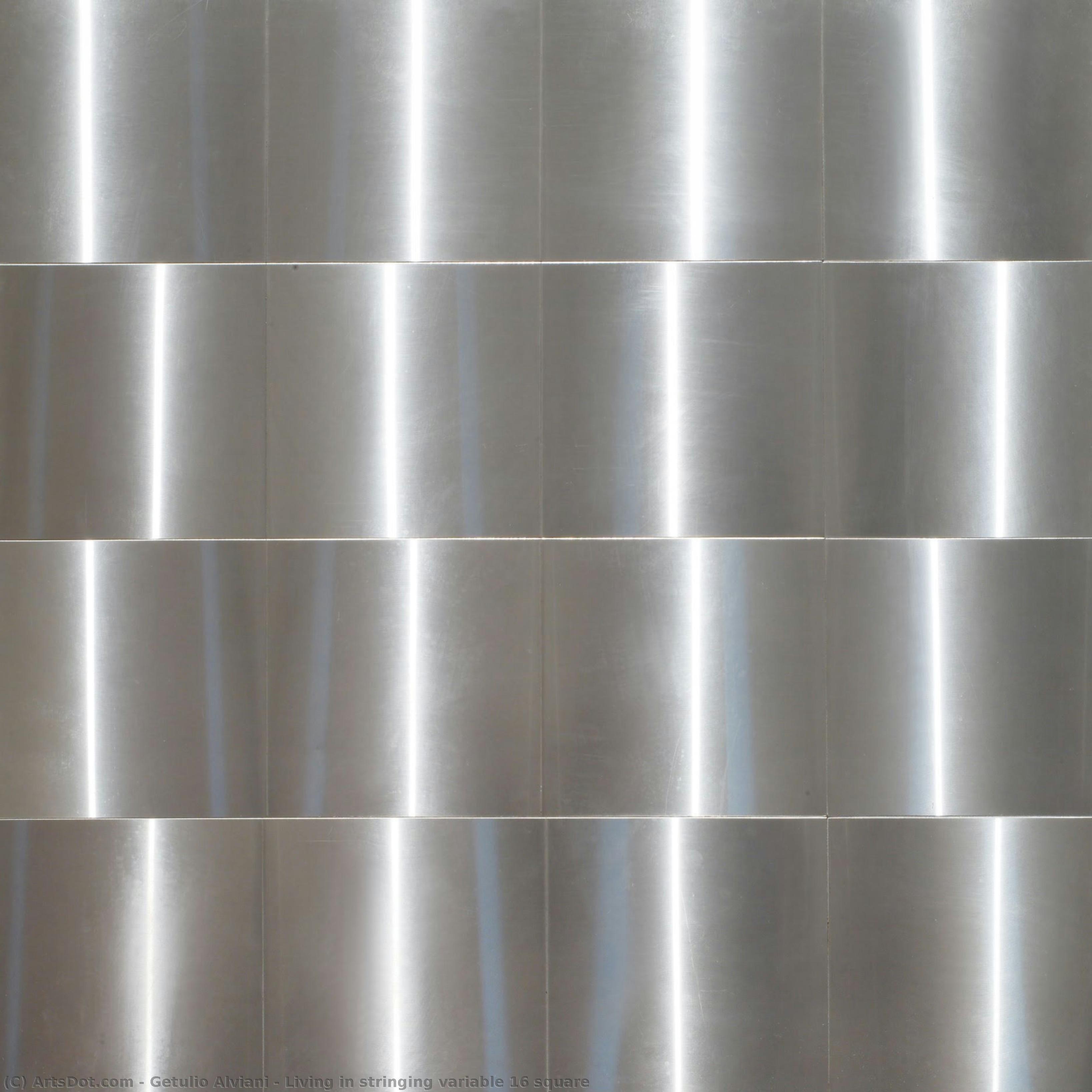
Living in stringing variable 16 square
Technika reprodukcji
Wymiary reprodukcji
-

Opcje oprawy reprodukcji
-
-
W przypadku dzieł sztuki lub reprodukcji, których którykolwiek z boków przekracza 105 cm (około 41 cali), rama zostanie wysłana w formie zestawu do samodzielnego montażu. Metoda ta zapewnia bezpieczną dostawę i zapobiega uszkodzeniom podczas transportu.
Wymagany profesjonalny montaż – nie jest to produkt typu DIY.
Zestaw musi zostać złożony, a płótno naciągnięte przez doświadczonego profesjonalnego ramiarza, przy użyciu kleju do drewna (brak w zestawie), kleszczy do naciągania płótna oraz ścisków, które utrzymają krosna w równej pozycji podczas schnięcia kleju. Nieprawidłowy montaż lub nierównomierne napięcie płótna może trwale uszkodzić dzieło sztuki i nie podlega naszej gwarancji.
 W przypadku dzieł sztuki lub reprodukcji, których którykolwiek z boków przekracza 105 cm (około 41 cali), rama zostanie wysłana w formie zestawu do samodzielnego montażu. Metoda ta zapewnia bezpieczną dostawę i zapobiega uszkodzeniom podczas transportu.
W zestawie znajdują się wszystkie listwy z litego drewna, precyzyjnie docięte do wymiarów.
Montaż odbywa się przy użyciu dołączonych wkrętów oraz kleju do drewna do łączenia narożników, którego zestaw nie zawiera i który musi zostać dostarczony przez ramiarza.
Wymagane są profesjonalne narzędzia, których nie ma w zestawie: kleszcze do naciągania płótna (napinacz) oraz zaciski, które pozwolą utrzymać listwy w równej pozycji podczas schnięcia kleju.
Ważne:
Do połączenia narożników niezbędny jest klej do drewna, listwy należy unieruchomić za pomocą ścisków do momentu całkowitego wyschnięcia kleju, a naciągnięcie płótna na złożoną ramę wymaga użycia kleszczy do naciągania płótna. Żaden z tych elementów nie jest dołączony do zestawu. Przed zamówieniem tego rozmiaru zalecamy konsultację z doświadczonym ramiarzem.

Etykieta obiektu
-
-

Lakier ochronny
Lakier z połyskiem (pogłębia kolory, chroni przed światłem i wilgocią)
-

Ekspresowa
Dostawa na cały świat () w ciągu 2 tygodni zamiast standardowych 4/5 tygodni. (21 Listopad)
-
Przesyłka ekspresowa
Dostawa na cały świat () w ciągu 4-5 tygodni. (28 Listopad).
W cenie
Cena całkowita
zł 247
Opcja ze szkłem jest dostępna wyłącznie w rozmiarach poniżej 110 cm
W każdym zamówieniu
- Bezpłatna ekspresowa wysyłka na cały świat
- Wysokiej jakości płótno lniane
- Pełne ubezpieczenie przesyłki
- Gwarancja zwrotu należności celnych i podatków importowych
- Gwarancja wiernego odwzorowania kolorów
- 100-dniowa polityka zwrotów (tylko w przypadku wad)
- Gwarancja 100% zwrotu pieniędzy
- Zniżka przy zakupie wielu sztuk


 Podgląd w skali 1:1

 Zamów ręcznie malowaną reprodukcję
 Wyślij jako kartkę
 Udostępnij
 Szczegóły dzieła
 Przewodnik


 Pobierz obraz
 Podobne obiekty
 RTG
 Pokaz slajdów
 Pytania i odpowiedzi
 Statystyki
Podobne dzieła


Getulio Alviani
1939 - 2018, Italy
Biografia artysty
A Pioneer of Optical Dynamics: The Life and Art of Getulio Alviani
Getulio Alviani, born in Udine, Italy, in 1939 and passing away in Milan in 2018, stands as a pivotal figure in the evolution of post-war abstract art. He wasn’t merely a painter or sculptor; he was an ‘inventor in plasticity,’ as he described himself—a relentless explorer of visual perception, light, and movement. His early life hinted at his future path, demonstrating a keen aptitude for design and geometric drawing even as a child. While initially enrolled at the Venice Art School, Alviani quickly found traditional academic approaches limiting, preferring instead to immerse himself in the study of classical masterpieces and practical work assisting local architects with technical projects like etchings. This blend of artistic appreciation and hands-on experience laid the foundation for his unique approach. He began working within industrial design, a realm that would profoundly shape his aesthetic sensibilities and provide crucial insights into the relationship between form, function, and perception.From Industrial Design to Kinetic Exploration
The late 1950s marked a turning point in Alviani’s career as he delved deeper into the complexities of “production” and “construction.” His initial foray into art involved designing electric pipes, winning a competition that showcased his innovative thinking. This led to a position as artistic director for Ave, a prominent company, where he honed his skills in graphic design and visual communication. However, it was during this period that Alviani’s fascination with the interplay of light and reflective surfaces began to take hold. Working within a factory environment, he observed polished aluminum surfaces and recognized their potential to create dynamic visual effects through manipulation—polishing and abrasion became tools for unlocking new perceptual experiences. This experimentation culminated in his landmark series, “Superfici a testura vibratile” (Vibrating Texture Surfaces), which would propel him onto the international art stage. These weren’t static objects but rather carefully constructed surfaces designed to interact with light, shifting and changing depending on the viewer's angle of observation. In 1961, his invitation to the Zagreb exhibition “Nove Tendencije” connected him with a network of like-minded artists exploring optical and kinetic art—Julio Le Parc, François Morellet, and Enrico Castellani among them. This exchange of ideas was crucial in solidifying Alviani’s commitment to a dynamic art that actively engaged the viewer.The Milan Years: Dialogue with Masters and International Recognition
Alviani's move to Milan in 1962 proved transformative. The city became his base, fostering collaborations and dialogues with some of Italy’s most influential artists—Lucio Fontana, Piero Manzoni, Max Bill, and Bruno Munari. Fontana, particularly, recognized the potential in Alviani’s work, acquiring several “surfaces” and demonstrating a keen understanding of their innovative qualities. This period saw Alviani refine his techniques and explore new avenues within optical art. He wasn't simply interested in creating illusions; he sought to understand *how* perception itself functioned. His participation in the 1964 Venice Biennale, sharing space with Enrico Castellani, further cemented his reputation. The pinnacle of early recognition came in 1965 with an invitation to William C. Seitz’s groundbreaking exhibition “The Responsive Eye” at MoMA in New York. This show, dedicated to Kinetic and Programmed Art, brought Alviani's work to a global audience, and the museum’s acquisition of one of his pieces—used as a poster image for subsequent exhibitions—underscored its significance. His inclusion in Documenta 4 in Kassel in 1968 further solidified his position within the international art community.A Legacy of Interaction: Beyond Painting and Sculpture
Throughout the 1970s, Alviani expanded his artistic horizons, traveling to South America and accepting a directorship at the Jesús Soto Museum of Modern Art in Ciudad Bolívar, Venezuela. This period broadened his perspective and reinforced his commitment to fostering dynamic art experiences. While primarily known for his “Superfici a testura variabile” – polished aluminum works that reflected light in ever-changing hues – Alviani’s artistic output was remarkably diverse. He explored “chromodynamic surfaces,” investigating primary color interactions, and created mesmerizing “mirrors” with their illusion of rings formed on reflective metal. His work consistently challenged the boundaries between painting, sculpture, and design. Alviani wasn't content to simply create objects; he aimed to create experiences. He authored a book on Josef Albers in 1988, demonstrating his deep engagement with art theory and history, and collaborated with Giancarlo Pauletto on a volume dedicated to Michel Seuphor. His work continues to be actively traded in international auctions, prized for its intellectual rigor, formal precision, and captivating visual effects. Getulio Alviani’s legacy lies not only in his stunning creations but also in his unwavering commitment to exploring the fundamental principles of perception and interaction—a pursuit that continues to inspire artists today.Powiązane artykuły
Poza Reprezentację: Eksploracja Radykalnej Geometrii Suprematyzmu i Jego Duchowych Podstaw
Odkryj fascynujący świat suprematyzmu Kazimierza Malewicza! Analiza teorii, kluczowych dzieł i duchowego wymiaru tego przełomowego kierunku w sztuce abstrakcyjnej. Ekskluzywne spojrzenie dla kolekcjonerów i miłośników historii sztuki.

Geometria Sztuki: 10 Arcydzieł Abstrakcji Geometrycznej | ArtsDot.com
Odkryj 10 arcydzieł abstrakcji geometrycznej! Poznaj historię Mondriana, Kandinskiego i Maleвича. Inspiracje wnętrzarskie z malarstwem abstrakcyjnym – reprodukcje najwyższej jakości na ArtsDot.com. Eksploruj kolekcję online!

Pietro da Cortona: Baroque Grandeur & the Synthesis of Roman Painting
Explore the life & masterpieces of Pietro da Cortona, a defining figure of the Italian Baroque. Discover his stunning frescoes at Palazzo Barberini and lasting influence on Roman art history. Learn more with ArtsDot.