- Strona główna

- Druk na płótnie
- Edward Hopper
- Nocne Ptaki, Instytut Sztuki w Chicago, Chica

 Zamów reprodukcję Kup cyfrowy obraz
 Udostępnij
 Udostępnij
 Szczegóły dzieła
 Dodaj do ulubionych

 Pobierz
 Podobne obiekty
 RTG
RTG
 Pokaz slajdów
Nocne Ptaki, Instytut Sztuki w Chicago, Chica
 Olej na płótnie
- WallArt
- American Realism
 1942
1942- Nowoczesność
 84.0 x 152.0 cm
 Rozwiń treść
Giclée / Wydruk artystyczny
Druk giclée lub płótno o jakości muzealnej z szybką realizacją i szerokim wyborem opcji wykończenia.




P118B $10

P118H $10

P118W $10

P438Z $10

P508JH $12

P508YH $12

P805H $10

P805Z $10

P919BZ $10

P919G $10

P919XJ $10

P959ZH $10

P968JZ $12

W106C $8

W218G $10

W218JH $8

W218Y $10

W307PJ $10

W316G $10

W316PJ $8

W316Y $10

W398PJ $8

W4111J $10

W500HY $15

W500JH $15

W692G $12

W849H $8

W940BG $15

W953PJ $8




Wybierz spośród naszych predefiniowanych rozmiarów, które zachowują oryginalne proporcje dzieła sztuki.

Możesz wprowadzić własne wymiary, aby dopasować dzieło do konkretnej ramy lub przestrzeni. Jeśli wybrany rozmiar nie będzie odpowiadał proporcjom oryginalnego obrazu, przytniecie dzieło lub rozszerzymy obraz za pomocą odbicia lustrzanego lub jednolitego wypełnienia krawędzi. Przed rozpoczęciem produkcji prześlemy cyfrową wizualizację do Twojej akceptacji.
Prosimy pamiętać, że podgląd na ekranie nie odzwierciedla faktycznego przycinania ani rozszerzania. Tylko wizualizacja dokładnie pokaże końcową kompozycję.
Mimo dostępności niestandardowych rozmiarów, zalecamy wybór wymiaru z listy zdefiniowanej, aby zachować oryginalne proporcje.
Dostawa na cały świat () w ciągu 2 tygodni zamiast standardowych 4/5 tygodni. (13 Lipiec)

Bezpłatna ekspresowa wysyłka na cały świat

Wysokiej jakości płótno lniane

Pełne ubezpieczenie przesyłki

Gwarancja zwrotu należności celnych

Gwarancja pełnego zgodności kolorystycznej

Polityka 60-dniowego zwrotu (tylko w przypadku wad)

Gwarancja 100% zwrotu pieniędzy

Zniżka przy większych zamówieniach
 Opcja szkła jest dostępna wyłącznie w rozmiarach poniżej 110 cm

Nocne Ptaki, Instytut Sztuki w Chicago, Chica
Giclée / Wydruk artystyczny
Wymiary reprodukcji
-


Cena całkowita
-
Opis obiektu kolekcjonerskiego
Nocne Światła i Samotność Miasta: O Obrazie Edwarda Hoppera „Night Hawks”
Edward Hopper, mistrz amerykańskiego realizmu, w swoim najbardziej znanym dziele, „Night Hawks” z 1942 roku, uchwycił esencję samotności współczesnego życia. Obraz ten, przedstawiający późną noc w jasnej restauracji, stał się ikoną amerykańskiej kultury i głębokim studium ludzkiej izolacji nawet w tętniącym życiem mieście. Hopper nie ograniczył się do prostego odzwierciedlenia rzeczywistości; stworzył dzieło pełne symboliki i emocjonalnego napięcia, które rezonuje z odbiorcami po dziś dzień. „Night Hawks” to nie tylko obraz, ale okno na duszę XX-wiecznej Ameryki, a jego wpływ na sztukę i popkulturę jest niezaprzeczalny.Realizm i Duch Amerykańskiej Sceny
Hopper był przedstawicielem nurtu amerykańskiego realizmu, odwracając się od europejskich awangard i koncentrując się na autentycznym portrecie codziennego życia w Stanach Zjednoczonych. Jego prace charakteryzują się niezwykłą dbałością o szczegóły oraz psychologiczną głębią. Odmówił on idealizacji rzeczywistości, ukazując ją taką, jaka jest – z jej cieniem i blaskiem, nadzieją i rozczarowaniem. „Night Hawks” doskonale wpisuje się w ten nurt, dokumentując atmosferę i niepokój narodu borykającego się z wyzwaniami nowoczesności. Hopper był kluczową postacią w tworzeniu obrazu “The American Scene”, a jego dzieła stanowią bezcenny zapis epoki.Kompozycja i Technika: Gra Światła i Formy
Hopper mistrzowsko operuje geometrycznymi formami i silnymi liniami poziomymi, aby zbudować kompozycję obrazu, podkreślając zarówno stabilność, jak i separację. Duże szklane okno restauracji działa jako bariera wizualna, izolując postaci od ciemności otaczającego miasta. Jego technika opiera się na starannie nakładanych warstwach oleju, z gładkimi, dopracowanymi pociągnięciami pędzla, które wzmacniają realizm sceny. Kluczowym elementem obrazu jest sposób wykorzystania światła – ostre, sztuczne blask wydobywający się z restauracji kontrastuje z głębokimi odcieniami błękitu i zieleni nocy. To właśnie gra świateł nadaje dziełu jego wyjątkowy charakter i emocjonalny ładunek.Symbolika i Ciężar Współczesności
Pozornie prosta tematyka obrazu skrywa bogactwo symbolicznego znaczenia. Restauracja „Phillies” reprezentuje tymczasowe schronienie, ulotne połączenie w anonimowym środowisku miejskim. Brak interakcji między postaciami – barmanem i trzema klientami – podkreśla motywy samotności i braku komunikacji. Puste ulice sugerują izolację i przemijającą naturę współczesnego istnienia. Hopper nie oferuje gotowych odpowiedzi; prezentuje poruszającą obserwację kondycji ludzkiej. Obraz ten, namalowany krótko po ataku na Pearl Harbor, odzwierciedla również lęk i niepewność Ameryki w czasie wojny, choć nie nawiązuje do niej bezpośrednio. To migawka narodu zmagającego się ze zmianą, stratą i nieznaną przyszłością.Emocjonalny Rezonans i Trwała Popularność
„Night Hawks” nadal fascynuje widzów, ponieważ dotyka uniwersalnych emocji – samotności, alienacji i poszukiwania więzi. Jego trwały apel tkwi w zdolności do wywoływania poczucia cichej kontemplacji i zachęcania do introspekcji. Niezależnie od tego, czy zdobi nowoczesną przestrzeń życiową, czy eleganckie biuro, reprodukcja tego arcydzieła dodaje warstwę intelektualnej głębi i emocjonalnego rezonansu. Obraz ten jest nie tylko świadectwem przeszłości, ale także uniwersalnym komentarzem na temat ludzkiej kondycji, który pozostaje aktualny w każdym czasie.Podobne dzieła sztuki


Biografia artysty
A Solitude Observed: The Life and Art of Edward Hopper
Edward Hopper, a name inextricably linked to the quietude and subtle melancholy that permeated 20th-century American life, wasn’t simply a painter of scenes; he was a poet of light and shadow, a chronicler of modern isolation. Born in Nyack, New York, in 1882, to middle-class parents of Dutch ancestry, Hopper's early years provided a stable upbringing that nurtured his artistic inclinations. From childhood sketches meticulously dated and signed, it became evident that keen observation and an innate talent for drawing were central to his being. Though initially encouraged towards commercial illustration – a pragmatic suggestion from his parents – Hopper’s ambitions leaned toward fine art, leading him to the New York School of Art where he studied under William Merritt Chase and Robert Henri. These formative years instilled not only technical skill but also an appreciation for realism and a commitment to depicting the world as he saw it—unvarnished and honest. The writings of Ralph Waldo Emerson resonated deeply with Hopper, reinforcing his sense of individualism and acute observation – qualities that would become hallmarks of his artistic vision. Early travels to Paris exposed him to Impressionism, yet Hopper quickly diverged from its fleeting brushstrokes, forging a path uniquely his own.Finding His Voice: Realism and the American Scene
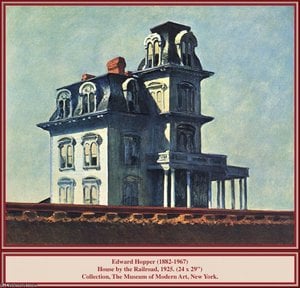
Hopper’s artistic journey wasn't immediate or effortless. He grappled with discovering his distinctive voice, experimenting with various styles before settling into the realism that would define his career. This wasn’t mere replication of reality; it was a distillation of its essence, stripping away extraneous detail to reveal underlying emotional truths. His paintings began to focus on everyday scenes – houses, diners, offices, hotel rooms – imbued with a sense of stillness and often, loneliness. He possessed an extraordinary ability to capture the psychological states of his subjects, hinting at narratives without explicitly stating them. The precise rendering of light and shadow became crucial, not merely as descriptive elements but as emotional cues, creating atmospheres that were both captivating and unsettling. House by the Railroad (1925), an early masterpiece, exemplifies this approach—a seemingly simple composition radiating a profound sense of isolation and mystery. Hopper’s printmaking, often overlooked, ran parallel to his painting, sharing similar themes and stylistic qualities, demonstrating his mastery across mediums. He wasn't interested in grand historical narratives or allegorical symbolism; he focused on the mundane, elevating it through careful observation and emotional resonance.Iconic Visions: Nighthawks and Beyond
While Hopper’s career unfolded gradually, certain works catapulted him to widespread recognition. Nighthawks (1942), arguably his most famous painting, became an instant icon of American culture. The late-night diner scene, bathed in stark fluorescent light, perfectly encapsulates the alienation and anonymity of modern urban life. The figures within are lost in their own thoughts, disconnected from one another despite their proximity—a poignant commentary on the human condition. Gas (1940), with its striking portrayal of a roadside gas station, showcases Hopper’s fascination with American landscapes and the burgeoning automobile culture. Other notable works like *Automat*, *Office in a Small City*, and *Summertime* each offer unique insights into the complexities of 20th-century American society. These paintings weren't merely depictions of places; they were explorations of mood, psychology, and the subtle dramas unfolding within ordinary settings. His wife, Josephine Nivison Hopper, played a vital role not only as his lifelong companion but also as a frequent model, contributing significantly to the characterization of his female figures.Themes and Legacy: A Lasting Influence
Several recurring themes permeate Hopper’s oeuvre. Urban isolation is perhaps the most prominent—the sense of loneliness experienced by individuals even amidst crowds. He explored the American landscape, both rural and urban, often emphasizing its starkness and emptiness. His work delves into psychological realism, probing the inner lives of his subjects with a sensitivity that transcends mere representation. There’s also an undercurrent of nostalgia for a simpler past, juxtaposed with an acknowledgement of the complexities and anxieties of modern life. Hopper's influence on subsequent artists is undeniable. His unique style has inspired countless painters, including Pierre Sanford Ross, and continues to resonate with contemporary artists seeking to capture the essence of human experience. His paintings remain highly sought after by collectors and are exhibited in major museums worldwide, solidifying his place as a pivotal figure in American art history. More than just an artist, Edward Hopper was a visual philosopher, offering profound insights into the human condition through his masterful use of light, shadow, and composition.- His legacy lies not only in the beauty of his paintings but also in their enduring ability to provoke thought, evoke emotion, and remind us of the quiet solitude that often defines our lives.
- Hopper’s work continues to captivate audiences because it speaks to universal themes of loneliness, isolation, and the search for meaning in a rapidly changing world.
- His paintings have become iconic representations of American culture, often used to symbolize the anxieties and aspirations of the 20th century—and beyond.
- Hopper’s aesthetic has profoundly influenced filmmakers (like Alfred Hitchcock) and writers, inspiring countless works that explore similar themes of alienation and psychological tension.

Edward Hopper
1931 - 1967 , Stany Zjednoczone
Kluczowe informacje
- Artistic Movement Or Style: Realizm
- Artists Or Movements Influenced By This Artist: ['Ross']
- Artists Who Influenced This Artist:
- Chase
- Henri
- Date Of Birth: 22 lipca 1882
- Date Of Death: 15 maja 1967
- Full Name: Edward Hopper
- Nationality: Amerykański
- Notable Artworks:
- Nighthawks
- Dom samotny
- Gas
- Place Of Birth: Nyack, USA
Powiązane artykuły

Szkoła Ashcan: Realizm miejski i demokratyzacja sztuki amerykańskiej
Poznaj Szkołę Ashcan – rewolucyjny ruch artystyczny, który zdemokratyzował amerykańską sztukę na początku XX wieku. Analiza twórczości Henriego i jego uczniów, wpływ na realizm społeczny oraz dziedzictwo tego wyjątkowego nurtu.

Echoes of Urban Life: A Visual Exploration of Street Scenes in Art History
Explore the captivating world of realism in art history! Discover iconic street scenes & genre paintings from masters like Courbet & Brown. Expert analysis & museum-quality reproductions at ArtsDot.

Edward Hopper: 25 Arcydzieł Malarstwa Pełnych Emocji i Amerykańskiej Duszy | ArtsDot.com
Odkryj 25 arcydzieł Edwarda Hoppera – malarstwa pełnych samotności, realizmu i amerykańskiej duszy. Poznaj historie kultowych obrazów, inspiracje wnętrzarskie i wyjątkową atmosferę jego dzieł. Reprodukcje najwyższej jakości na ArtsDot.com

Concrete Visions: Exploring the Urban Landscape in Painting – From Realism to Contemporary Art
Explore the evolution of cityscape painting from Realism to contemporary art with ArtsDot. Discover key artists & invest in timeless urban visions. Expert guidance, museum-quality reproductions.

25 Arcydzieł Musée d'Orsay: Monet, Van Gogh i Inni – Inspiracje do Twojego Domu
Odkryj 25 arcydzieł Musée d'Orsay! Poznaj historie Monet, Van Gogha i Degasa. Inspiracje wnętrzarskie z impresjonizmem i postimpresjonizmem. Reprodukcje obrazów najwyższej jakości na ArtsDot.com.