Portret Floris van Dyck

Przewodnik po 6 najsłynniejszych obrazach, których autorem jest Floris van Dyck

Aktualizacja: Październik 2026 · ranking według naszego wskaźnika popularności (liczba wyszukiwań, wizyt i zamówień dla każdego dzieła) · 6 dzieł Floris van Dyck w naszym katalogu

W skrócie

Najsłynniejszym dziełem Floris van Dyck jest Laid Table with Cheeses and Fruit (detail) (1615). Znajdziesz je w Rijksmuseum w Amsterdam. Kolejne na liście są Laid Table with Cheese, Fruit and a Berkemeyer (1610) oraz Laid Table (1622). W naszym katalogu znajduje się 6 dzieł autorstwa Floris van Dyck; niniejszy przewodnik wyróżnia 6 najsłynniejszych z nich, podając rok powstania, muzeum oraz historię każdego z nich.

1575 – 1651, Delft Najwięcej dzieł: Rijksmuseum

10 najważniejszych obrazów artysty Floris van Dyck, które warto znać

1
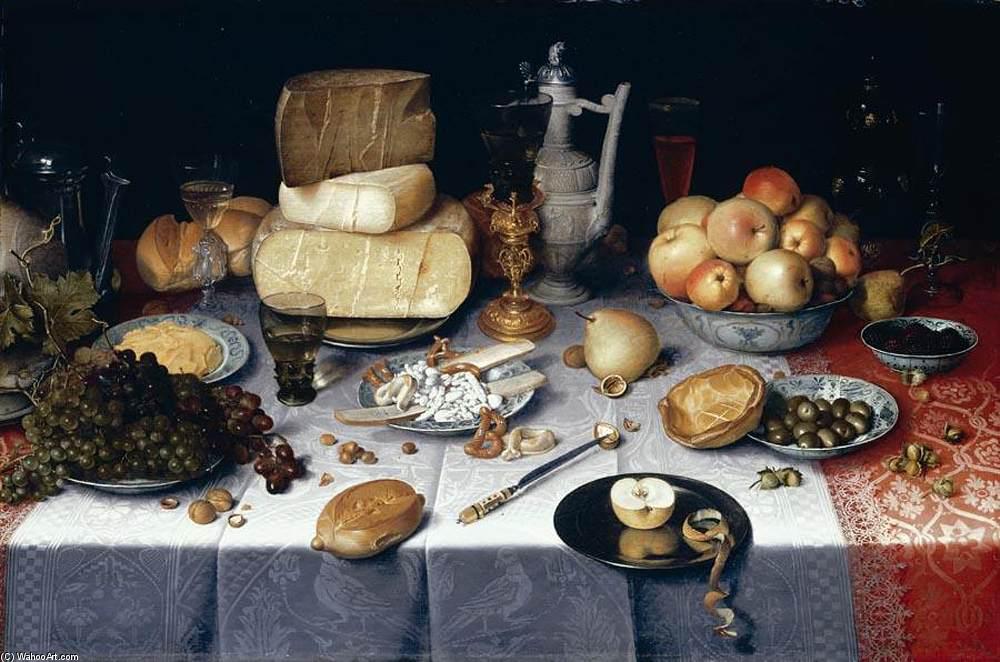
Laid Table with Cheeses and Fruit (detail) (1615) autorstwa Floris van Dyck

Laid Table with Cheeses and Fruit (detail)

1615 · Oil · Rijksmuseum, Amsterdam

In the quiet, contemplative realm of Dutch Golden Age still life, few artists captured the ephemeral beauty of a moment as exquisitely as Floris Claesz van Dijck. His work, Laid Table with Cheeses and Fruit (detail), serves as a breathtaking masterclass in the art of observation. At first glance, the viewer is greeted by a scene of deceptive simplicity: a table draped in white cloth, scattered with the bountiful offerings…

Hand-painted oil reproduction from $175 29 × 35 cm
Zamów ręcznie malowane Poznaj jej historię

Co najczęściej malował Floris van Dyck

Cztery tematy najczęściej pojawiające się w tych dziełach, z których każdy wraz z jego najbardziej znanym przykładem.

Gdzie możesz zobaczyć obrazy artysty Floris van Dyck

3 muzeów, w których znajduje się najwięcej obrazów z tej strony.

Muzea Miasto Dzieła artysty Floris van Dyck Obrazy z tej listy
Rijksmuseum, AmsterdamRijksmuseum Amsterdam 2 Laid Table with Cheeses and Fruit (detail), Laid Table with Cheeses and Fruit
National Gallery, LondynNational Gallery Londyn 1 Laid Table
Frans Halsmuseum, HarenFrans Halsmuseum Haren 1 Still-Life with Fruit, Nuts and Cheese

Rok po roku: najsłynniejsze dzieła Floris van Dyck

Dzieła Floris van Dyck z różnych lat obejmują okres 13 lat, od 1610 do 1622. Przejrzyj je rok po roku.

Dzieła według lat

Wybierz rok, aby zobaczyć jego dzieła.

Floris van Dyck: szybkie odpowiedzi na pytania o obrazy

Jakie jest najsłynniejsze dzieło Floris van Dyck?Zobacz odpowiedź

Na szczycie listy znajduje się Laid Table with Cheeses and Fruit (detail) (1615), Rijksmuseum, Amsterdam. Tuż za nim: Laid Table with Cheese, Fruit and a Berkemeyer (1610) i Laid Table (1622).

W jakim wieku Floris van Dyck stworzył/a Laid Table with Cheeses and Fruit (detail)?Zobacz odpowiedź

40 lat. Floris van Dyck urodził się w 1575, a Laid Table with Cheeses and Fruit (detail) pochodzi z 1615.

Ile dzieł Floris van Dyck znajduje się w Twoim katalogu?Zobacz odpowiedź

W naszym katalogu znajduje się 6 dzieł artysty Floris van Dyck, datowanych od 1610 do 1622.

W których muzeach można zobaczyć słynne dzieła Floris van Dyck?Zobacz odpowiedź

Większość z nich znajdziesz w Rijksmuseum (Amsterdam), National Gallery (Londyn) i Frans Halsmuseum (Haren). Powyższa lista muzeów zawiera pełne zestawienie.

Kiedy Floris van Dyck stworzył swoje najsłynniejsze dzieła?Zobacz odpowiedź

W 1610, bardziej niż w jakimkolwiek innym czasie: 2 z 6 dzieł na tej stronie pochodzi właśnie z tego okresu, w tym Laid Table with Cheese, Fruit and a Berkemeyer.

Jakie są pierwsze i ostatnie słynne dzieła Floris van Dyck?Zobacz odpowiedź

Najwcześniejsze dzieło pochodzi z Laid Table with Cheese, Fruit and a Berkemeyer (1610), a najnowsze z Laid Table (1622).

Które słynne obrazy Floris van Dyck znajdują się w Rijksmuseum?Zobacz odpowiedź

Na tej stronie możesz zobaczyć 2 dzieł znajdujących się w Rijksmuseum, Amsterdam, w tym Laid Table with Cheeses and Fruit (detail) i Laid Table with Cheeses and Fruit.

Gdzie mogę zamówić reprodukcję Floris van Dyck?Zobacz odpowiedź

Tak. Każdy obraz na tej stronie jest dostępny jako ręcznie malowana reprodukcja olejowa lub wydruk, w rozmiarze dopasowanym do Twoich potrzeb. Aby złożyć zamówienie, wystarczy przejść na stronę wybranego obrazu.

Historia Floris van Dyck

The Master of the Banquet Still Life

In the quiet, contemplative realm of the Dutch Golden Age, few artists captured the ephemeral beauty of a moment as exquisitely as Floris Claesz van Dijck. A pioneer of the still-life genre, his work serves as a breathtaking masterclass in the art of observation. Born in Delft, Netherlands, his early life and travels would eventually shape him into one of the most significant figures in the development of the banketje, or banquet still life. This specific subgenre, characterized by tables laid with bountiful offerings of cheese, fruit, nuts, and fine tableware, found its definitive voice through his meticulous brushwork.

Van Dijck's artistic journey was marked by a profound connection to the broader European art scene. Around 1600, he was documented in Rome, where he moved within influential circles, including a friendship with Joseph van Arpino. This period of exposure to Italian influences likely contributed to the sophisticated light and texture found in his later works. Upon returning to the Netherlands in 1606, he settled in Haarlem, a city that would become his primary home and the stage for his greatest achievements. In this vibrant artistic hub, he became an established presence, eventually joining the Haarlem Guild of St. Luke and serving as its dean.

A Symphony of Light and Texture

The true magic of Van Dijck’s oeuvre lies in his ability to breathe life into inanimate objects. He did not merely paint surfaces; he explored the very essence of matter. Through a masterful manipulation of illumination, he created a world where one can almost feel the velvety skin of an apple or the cool, reflective sheen of a polished pewter plate. Unlike the more aggressive shadows seen in the works of the Caravaggisti, Van Dijck employed a soft, diffused glow that sculpted his subjects, creating an illusion of depth and tactile reality.

His technical prowess allowed him to differentiate between various states of existence with extraordinary precision:

  • The crispness of a fruit's skin under the light.
  • The translucent delicacy of a fine wine glass.
  • The heavy, crumbly richness of a piece of cheese.
This level of descriptive detail transformed simple meal scenes into profound sensory experiences, inviting the viewer to linger on the beauty of the mundane.

Legacy and Historical Significance

Beyond his individual technical skill, Floris Claesz van Dijck holds a vital place in art history as an innovator. Alongside Nicolaes Gillis, he is credited with inventing the ontbijt, or breakfast and banquet display piece. His influence rippled through the Dutch Golden Age, shaping the trajectories of subsequent painters such as Pieter Claesz and Roelof Koets. He acted as a bridge between the stylized elegance of Mannerism and the robust naturalism of the Baroque period.

While his surviving works are remarkably rare—with fewer than twenty known pieces existing today—their impact remains monumental. Most of his masterpieces are now preserved in prestigious institutions like the Rijksmuseum and the National Gallery, serving as enduring testaments to a man who could turn a simple table setting into a profound exploration of light, order, and the fleeting nature of life.