Portrett av Jacques Bellange

Din guide til de 17 mest kjente maleriene av Jacques Bellange

Oppdatert October 2026 · rangert etter vår popularitetsscore (søk, besøk og bestillinger for hvert verk) · 17 verk av Jacques Bellange i vår katalog

Kort fortalt

Jacques Bellanges mest kjente verk er The Three Marys at the Tomb (1620). Du finner det på British Museum i London. Neste på listen er Amazon on horseback (1606) og Annunciation of Mary. Vi har 17 verk av Jacques Bellange i vår katalog; denne guiden har plukket ut de 17 mest kjente, med årstall, museum og historien bak hvert verk.

1575 – 1616, Bassigny Northern mannerism Flest verk: British Museum

De 10 viktigste maleriene av Jacques Bellange du bør kjenne til

1
The Three Marys at the Tomb (1620) av Jacques Bellange

The Three Marys at the Tomb

1620 · Engraving · British Museum, London

Jacques Bellange’s “The Three Marys at the Tomb,” painted around 1620, is not merely a depiction of a biblical scene; it's a profound meditation on grief, faith, and the mysteries surrounding Christ’s death and resurrection. This arresting engraving, now housed within the walls of the Art Institute of Chicago, offers a rare glimpse into the intensely personal style of a Northern Mannerist artist largely obscured by history – Jacques Bellange…

2
Amazon on horseback (1606) av Jacques Bellange

Amazon on horseback

1606 · Etching · Château de Chantilly, Chantilly

In the delicate yet commanding lines of Jacques Bellange’s Amazon on horseback, we encounter a window into the enigmatic world of Northern Mannerism. Created in 1606, this evocative work transcends mere illustration, offering instead a dramatic tableau of power and myth. The subject—a woman clad in regal, flowing attire—perches atop her steed with an air of sovereign authority. As she grips her sword, the viewer is immediately drawn into a…

Tallene 11 til 17: flere malerier av Jacques Bellange

Jacques Bellanges malerier, periode for periode

Hva Jacques Bellange malte mest av

De fire motivene som forekommer hyppigst i disse verkene, hver med sitt mest kjente eksempel.

Hvor du kan se maleriene til Jacques Bellange

De 5 museene som innehar flest av maleriene på denne siden.

Museum By Verker av Jacques Bellange Malerier fra denne listen
British Museum, LondonBritish Museum London 2 The Three Marys at the Tomb, The Annunciation
Château de Chantilly, ChantillyChâteau de Chantilly Chantilly 2 Amazon on horseback, Gentleman in ancient costume
Staatliche Kunsthalle Karlsruhe, KarlsruheStaatliche Kunsthalle Karlsruhe Karlsruhe 2 Annunciation of Mary, Angel of the Annunciation
Royal Library i Windsor, WindsorRoyal Library i Windsor Windsor 1 Hurdy-Gurdy Player
Eremitasjen, St. PetersburgEremitasjen St. Petersburg 1 Lamentation

År for år: de mest kjente verkene til Jacques Bellange

Her er et tiår med Jacques Bellange, mer eller mindre: 10 år fra 1606 til 1615, vist år for år gjennom de mest kjente verkene.

Verk per år

Velg et år for å se verkene fra det året.

Jacques Bellange: raske svar om maleriene

Hva er det mest kjente maleriet til Jacques Bellange?Se svaret

Øverst på listen står The Three Marys at the Tomb (1620), British Museum, London. Rett bak følger: Amazon on horseback (1606) og Annunciation of Mary.

Hva er de 10 viktigste maleriene til Jacques Bellange?Se svaret

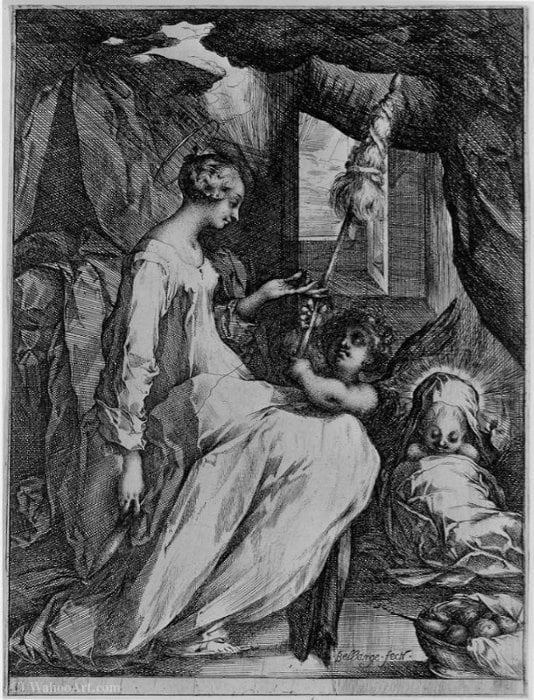
The Three Marys at the Tomb, Amazon on horseback, Annunciation of Mary, Angel of the Annunciation, Gardener with basket, a sequence of four teachers, The Virgin with a Spindle, he Virgin and Child with the Magdalen and Saint Anne, Military figures outside a city, Balthasar og Melchior, seen from behind, wearing a mantle trimmed with fur and a hat adorned with feathers. Du finner årstallet og museet for hvert av dem i listen ovenfor.

Hvor mange verk av Jacques Bellange finnes i katalogen din?Se svaret

Vi har 17 verk av Jacques Bellange i vår katalog, datert fra 1606 til 1615.

I hvilke museer kan du se de berømte verkene til Jacques Bellange?Se svaret

Du finner de fleste av dem i British Museum (London), Château de Chantilly (Chantilly) og Staatliche Kunsthalle Karlsruhe (Karlsruhe). Listen over museer gir en fullstendig oversikt.

Når skapte Jacques Bellange sine mest kjente verk?Se svaret

I 1606, mer enn på noe annet tidspunkt: 2 av de 17 verkene på denne siden stammer fra den tiden, Amazon on horseback av dem.

Hva er Jacques Bellanges første og siste kjente verk?Se svaret

Det eldste verket her er Amazon on horseback (1606); det nyeste er Lamentation (1615).

Hvilke motiver malte Jacques Bellange oftest?Se svaret

Mourning (2), Virgin (2) og Portrait (2) av 17 verk på denne siden.

Hvilket medium er mest fremtredende i Jacques Bellange sine malerier?Se svaret

Engraving, brukt i 2 av 17 verk på denne siden.

Hvilken stil eller retning er Jacques Bellange kjent for?Se svaret

Northern mannerism, som du kan se i verkene på denne siden.

Hvilke berømte malerier av Jacques Bellange finnes på British Museum?Se svaret

Du kan se 2 av verkene på denne siden på British Museum, London, inkludert The Three Marys at the Tomb og The Annunciation.

Hvor kan jeg bestille en reproduksjon av Jacques Bellange?Se svaret

Ja. Alle malerier på denne siden er tilgjengelige som håndmalte oljereproduksjoner eller trykk, i den størrelsen som passer deg. Åpne maleriets side for å bestille.

Jacques Bellanges historie

A Shadowy Master of the Northern Mannerist Spirit

Jacques Bellange remains one of the most enigmatic and captivating figures in the history of European printmaking. A master of the Northern Mannerist style, his life was lived in the twilight of the late Renaissance, a period defined by elongated forms, theatrical tension, and an almost feverish psychological intensity. Though much of his personal biography remains shrouded in the mists of the early 17th century, his artistic legacy is vibrantly clear through the intricate lines of his etchings. Born around 1575 in the Bâse-les-Vosges region of France, Bellange emerged from a landscape of shifting borders and intense religious fervor, eventually finding his creative home within the sophisticated courtly circles of Nancy.

The traces of his early life are as delicate and elusive as his etchings. While historical records regarding his family origins are sparse, scholars often point to his rapid ascent within the Duchy of Lorraine as evidence of a significant, perhaps even noble, connection. There is much speculation that he may have been the illegitimate son of a high-ranking patron, a theory supported by the prestigious title of "knight" attributed to him and his seamless integration into the court of the Dukes of Lorraine. By 1595, he was already established in La Mothe, honing a craft that would soon transform the medium of printmaking into a vehicle for profound emotional expression.

The Elegance of the Lorraine Court

Bellange’s career reached its zenith under the patronage of Henri II and Philippe III, the Dukes of Lorraine. This period of courtly stability provided him with the luxury of time and resources, allowing him to refine a technique that was uniquely his own. Unlike many of his contemporaries who focused on the clarity of the High Renaissance, Bellange embraced the complexities of Mannerism. His work is characterized by a restless energy, where figures seem to twist and writhe with an almost supernatural grace. In the halls of Nancy, he developed a visual language that blended the sacred with the profane, creating works that were as much about the human psyche as they were about religious devotion.

His mastery of the etching needle allowed him to manipulate light and shadow with unprecedented drama. Through the meticulous use of hatching and cross-hatching, he could conjure textures ranging from the heavy folds of ancient drapery to the weathered skin of a street performer. This technical prowess is perhaps most evident in his ability to imbue even the simplest subject with a sense of profound mystery. Whether depicting a noble figure or a common musician, Bellange’s hand is unmistakable, leaving behind a trail of silvery, luminous lines that seem to vibrate with life.

A Legacy Etched in Light and Shadow

The true significance of Jacques Bellange lies in his ability to capture the ephemeral. His oeuvre serves as a window into a world of intense spiritual struggle and theatrical beauty. Some of his most enduring works demonstrate this range:

  • The Three Marys at the Tomb: A striking example of his religious gravity, where dramatic figures and intricate details converge to create a moment of profound biblical tension.
  • Hurdy-Gurdy Player: A masterpiece of character study, showcasing his ability to use complex linework to capture the hunched, weary essence of a street musician, imbuing a common subject with deep psychological depth.
  • Gentleman in Ancient Costume: An exploration of the Mannerist obsession with historical fantasy and stylized elegance, featuring a warrior adorned in attire that evokes a sense of mythic grandeur.

Though his life was cut short in 1616, Bellange’s influence endured far beyond the borders of Lorraine. His rediscovery in the 20th century brought a renewed appreciation for the expressive potential of the etched line and the enduring power of the Mannerist aesthetic. Today, he is celebrated not merely as a court artist, but as a pioneer who pushed the boundaries of printmaking, leaving an indelible mark on the history of Western art through his hauntingly beautiful, shadow-drenched visions.

Alle 17 verk av Jacques Bellange →