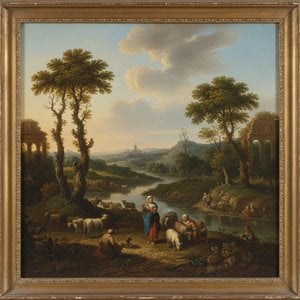
Et gyllent lys over pastorale drømmer: Livet og kunsten til Nicolaes Pietersz Berchem
Nicolaes Pietersz Berchem, et navn som klinger i takt med den nederlandske gullalderens idylliske landskap, var mer enn bare en maler; han var en atmosfærens arkitekt, en drømmevever badet i gyllent lys. Han ble født i Haarlem i 1620, og hans kunstneriske reise utspilte seg i en periode med bemerkelsesverdig transformasjon for Nederland – en tid definert av blomstrende handel, vitenskapelig nysgjerrighet og en dyp verdsettelse av den naturlige verden. Berchem skildret ikke bare landskap; han skapte stemningsfulle scener fylt med klassiske allusjoner, milde fortellinger og en varig følelse av ro som fortsetter å trollbinde betraktere flere århundrer senere. Hans historie er en beretning om kunstnerisk lærlingtid, italiensk inspirasjon og til slutt en varig arv som en mester av pastoral skjønnhet. Grunnlaget for hans ferdigheter ble lagt i hans egen familie, med faren, Pieter Claesz, som var en berømt stillebensmaler hvis innflytelse utvilsomt formet den unge Nicolaes' blikk for detaljer og komposisjon. Likevel søkte unge Nicolaes bredere instruksjon og gikk i lære under en bemerkelsesverdig rekke nederlandske mestre: Jan van Goyen, kjent for sine subtile tonale landskap; Pieter de Grebber, beundret for sine dynamiske komposisjoner; Jan Baptist Weenix, som han senere skulle reise til Italia med; samt Jan Wils og Claes Cornelisz Moeyaert. Disse mangfoldige innflytelsene utgjorde fundamentet for Berchems allsidige stil og ga ham det kjærlige kallenavnet «Berghem» – en leken vri på familienavnet som stammet fra anekdoter i Van Goyens verksted, eller kanskje var knyttet til farens hjemby, Berchem nær Antwerpen – noe som tilførte den høyt aktede kunstneren et snev av sjarmerende uformellhet.Den italiske oppvåkningen
Det avgjørende øyeblikket i Berchems kunstneriske utvikling kom mellom 1642 og 1645, da han reiste til Italia sammen med Jan Baptist Weenix. Dette var ikke bare en geografisk forflytning, men en fordypning i en verden som skulle forme hans estetiske visjon dyptgående. Det italienske landskapet, med sine bølgende åser, antikke ruiner og solfylte utsikter, tente en lidenskap i Berchem. Han fylte skissebøker med tegninger av klassisk arkitektur, pastorale scener og det livlige livet han møtte; han absorberte Italias romantiske ånd og forberedte seg på å overføre den til lerretet ved sin hjemkomst til Nederland. Denne opplevelsen markerte et vendepunkt som skiftet fokuset hans mot det som skulle bli kjent som den «nederlandske italiske» stilen – en sjanger preget av idealiserte fremstillinger av det italienske landskapet, infundert med nordeuropeisk realisme og nitidig oppmerksomhet på detaljer. Han kopierte ikke bare; han internaliserte essensen av Italia, dets lys, dets atmosfære og dets følelse av tidløs skjønnhet, klar til å gjenskape det gjennom sitt eget unike kunstneriske prisme.En produktiv mester av lys og atmosfære
Ved sin retur til Haarlem etablerte Berchem seg raskt som en ledende skikkelse i den nederlandske italiske landskapstradisjonen. Han produserte et forbløffende antall malerier – estimater antyder over 850, selv om mange verk har blitt feilaktig tilskrevet over tid – noe som vitner om både hans enorme produktivitet og vedvarende popularitet. Hans landskap er umiddelbart gjenkjennelige på sitt varme, gyldende lys, som ofte bader scenene i det myke skjæret fra soloppgang eller skumring. Denne lysstyrken er ikke bare en teknisk bragd; den gjennomtrengs maleriene med en følelse av stillhet, nostalgi og tidløs skjønnhet. Berchem malte ikke bare det han *så*; han malte hvordan han *følte* om det han så, noe som skapte en emosjonell resonans som drar betrakteren inn i scenen. Komposisjonene hans er nøye balanserte, ofte med klassiske ruiner som stemningsfulle påminnelser om fortiden, side om side med figurer engasjert i pastorale aktiviteter – gjeter som passer sine flokker, reisende som hviler ved en bekk, eller mytologiske scener som utspiller seg i idylliske omgivelser. Han var også svært ettertraktet for sin ferdighet som *staffage*-maler, der han tilførte fengslende menneske- og dyrefigurer til verkene av andre kunstnere som Allaert van Everdingen og Gerrit Dou, og beriket deres komposisjoner med liv og narrative detaljer. Fremtredende eksempler inkluderer «Jeger som hviler», «Bonde som spiller dreielire for en kvinne og et barn», «Landskap med en nymfe og en satyr» og «Vadestedet».Arv og varig innflytelse
Nicolaes Pietersz Berchems innflytelse strakte seg langt utover hans egen produktive karriere. Han var en dedikert lærer som fostret talentene til en rekke kunstnere, inkludert Abraham Begeyn, Johannes van der Bent, hans sønn Nicolaes, Isaack Croonenbergh, Simon Dubois, Karel du Jardin og potensielt til og med Jan Frans Soolmaker. Hans kunstneriske visjon resonnerte med etterfølgende generasjoner, og påvirket spesielt den franske rokokkomaleren Jean-Baptiste Pillement og de nederlandske landskapsmalerne innen «Cleves-romantikken», som Barend Cornelis Koekkoek. Han døde i Amsterdam i 1683 og etterlot seg en arv som fortsetter å lyse opp kunstverdenen med sitt gylne lys og sine pastorale drømmer. Berchems bidrag ligger i hans mesterlige brobygging mellom nordlig realisme og sørlig romantikk. Han imiterte ikke bare italienske landskap; han tolket dem på nytt gjennom et distinkt nederlandsk blikk, og skapte en unik stil som feiret både naturens skjønnhet og menneskets tilknytning til den. Hans malerier fortsetter å bli beundret for sin tekniske dyktighet, sin stemningsfulle atmosfære og sin tidløse appell – et vitnesbyrd om hans status som en sann mester fra den nederlandske gullalderen. Hans arbeid forblir en gripende påminnelse om en tid da kunsten ikke bare søkte å representere verden, men å opphøye den.Spørsmål og svar
Hvor kan jeg se Nicolaes Berchem sine kunstverk i et 3D-galleri?
Et virtuelt besøk er mulig: siden 3D-museum til Nicolaes Berchem presenterer kunstnerens verk i et tredimensjonalt galleri.
Hvor kan jeg finne statistikk om verkene til Nicolaes Berchem?
En Statistikk-side finnes for Nicolaes Berchem, som presenterer statistikk om kunstnerens verk på denne nettsiden.
Hvor og når ble Nicolaes Berchem født?
Nicolaes Berchem ble født i Haarlem i 1620.