Ignacio Pinazo Camarlench: Liv og ettermæle
Tidlig liv og utfordringer
- Født: Valencia, Spania i 1849 inn i en fattig familie.
- Pinazo møtte motgang tidlig i livet, da han ble tvunget til å bidra til familiens inntekt fra ung alder.
- Han arbeidet som sølvsmed, flisemaler og viftedekoratør før han påbegynte sin formelle kunstneriske utdannelhet.
- Hans mors død som følge av kolera og farens bortgang førte til at han vokste opp sammen med sine besteforeldre.
- I 1864 ble han skrevet inn ved San Carlos Academy of Fine Arts i Valencia, samtidig som han fortsatte å arbeide som hattemaker for å forsørge seg selv.
Kunstnerisk utvikling og påvirkning
- Pinazos kunstneriske karriere startet rundt 21-årsalderen, og han oppnådde sin første suksess i Barcelona tre år senere.
- Hans tidlige verk fokuserte på konvensjonelle historiske temaer, men gjennomgikk en dramatisk endring etter en avgjørende reise til Roma i 1873.
- Inspirert av sine reiser omfavnet han motiv fra familielivet, nakne figurer og scener fra dagliglivet – noe som foregrep stilen til Joaquine Sorolla y Bastida og Francisco Domingo.
- Et andre lengre opphold i Roma (1876–1881), finansiert av et stipend, foredlet hans impresjonistiske tilnærming ytterligere.
- Han utviklet en stil preget av mørke farger – svart, brunt og jordtoner – side om side med impresjonismens glitrende palett, ofte utført med raske og energiske penselstrøk.
Store prestasjoner og anerkjennelse
- Pinazo mottok oppdrag fra den valencianske aristokratiet, inkludert markien av Benicarló.
- Han vant sølvmedaljer ved kunstutstillinger i 1881 og 1885, etterfulgt av gullmedaljer i 1887 og 1899.
- Han ble tildelt en kongelig medalje for sine kunstneriske bidrag.
- I 1912 æret byen Valencia ham ved å oppkalle en gate etter ham.
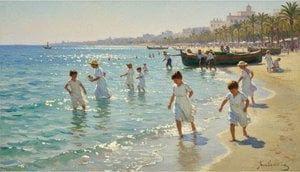
- Merkverdige verk: Las hijas del Cid, Los últimos momentos del rey Don Jaime el Conquistador, El guardavía og Barca en la playa.
Privatliv og familie
- Pinazo giftet seg med Teresa Martinez Montfort, og de fikk to sønner, Ignacio og Jose, som begge også ble malere.
- Han flyttet midlertidig til Bétera under en koleraepidemi i Valencia i 1884, hvor han bodde på villaen “Maria”, eid av bankmannen Jose Jaumandreu.
Historisk betydning og ettermæle
- Pinazo regnes som en av de mest fremtredende valencianske kunstnerne fra slutten av det 19. århundre, og han fungerte som en bro mellom tradisjonelle stiler og de fremvoksende impresjonistiske teknikkene.
- Hans arbeid gir et verdifullt innblikk i det spanske samfunnet og dagliglivet i hans samtid.
- Den største samlingen av hans malerier og tegninger oppbevares ved Institut Valencià d'Art Modern (IVAM), selv om de ikke alltid er utstilt permanent. Hans verk kan også finnes i Museu de Belles Arts de València og Museo del Prado.
- Død: Godella, Spania i 1916, 67 år gammel, etter å ha etterlatt seg en betydelig kunstnerisk arv.
Spørsmål og svar
I hvilke kunstretninger arbeidet Ignacio Pinazo?
Verkene til Ignacio Pinazo kan bla gjennom etter kunstretning på Ignacio Pinazo sin Alle retninger-side.
Hvor mange kunstverk av Ignacio Pinazo er tilgjengelige for gjennomgang?
Du kan bla gjennom 178 kunstverk verk av Ignacio Pinazo på siden Alle kunstverk.
Hvor finner man Ignacio Pinazo sine kunstverk kategorisert etter motiv?
Ignacio Pinazo sine verk kan utforskes etter motiv på kunstnerens Motivatlas-side.