Franz Bischoffs lysende ettermæle
Franz Albert Bischoff står som en lavmælt, men innflytelsesrik skikkelse i amerikansk kunsthistorie – en maler hvis penselstrøk fanget lysets flyktige vesen og det sjelefredede landskapet i California. Han ble født i 1864 i Steinschönau am Inn i Østerrike, og hans tidlige år var dypt forankret i de rike dekorative tradisjonene fra Østerrike-Ungarn. Denne grunnleggende opplæringen innen anvendt design, akvarell og keramisk dekorasjon ga ham en nitid sans for detaljer og en dyp respekt for fargeharmoni. Da han emigrerte til USA i en alder av femten år, bar han med seg en følsomhet fra den gamle verden som etter hvert skulle smelte sammen med den spirende optimismen i det amerikanske vesten, og skape en stil som var både teknisk presis og emosjonelt resonanssterk.
Etter hvert som karrieren hans utfoldet seg gjennom de industrielle landskapene i New York, Ohio og Michigan, oppnådde Bischoff først betydelig anerkjennelse gjennom den delikate kunsten med porselensmaling. Denne disiplinen krevde en ekstraordinær mestring av fargeblanding og fine detaljer, ferdigheter som senere skulle bli selve kjennetegnet på hans landskapskomposisjoner. Hans evne til å manipulere subtile lasurer og vasker gjorde det mulig for ham å puste liv inn i porselenet, noe som fungerte som en forløper til de eteriske kvalitetene man finner i hans senere oljeverker. Det var nettopp dette unike skjæringspunktet mellom dekorativ presisjon og atmosfærisk sensitivitet som definerte hans kunstneriske identitet i overgangen fra keramikkens nitidige verden til de ekspansive utsynene ved den amerikanske grensen.
Impresjonismen og det californiske lyset
Den sanne metamorfosen av Bischoffs kunstnerskap skjedde ved hans ankomst til California, hvor den dramatiske topografien og de unike atmosfæriske forholdene bød på en ny muse. Ved å omfavne impresjonismens prinsipper, søkte han å fange de flyktige øyeblikkene av lys som definerer denne regionen. Teknikken hans ble en sofistikert dialog mellom delikate akvarellvasker og subtile oljeglasurer, noe som resulterte i lerreter som ser ut til å gløde innenfra. Han besatt en sjelden evne til å destillere kompleks visuell informasjon til harmoniske komposisjoner, enten han skildret fjellkjedenes rå majestet eller de myke kysttåkene ved Stillehavet.
Hans samlede verk fungerer som et levende arkiv over naturverdenen i en transformativ æra i amerikansk historie. Gjennom hans øyne opplever vi blant annet:
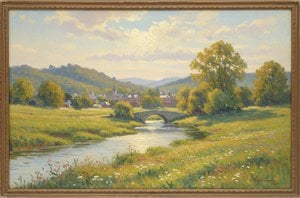
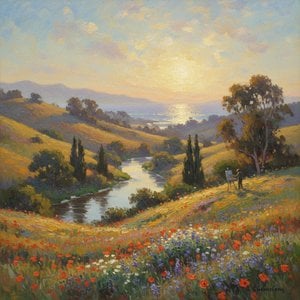
- Cloud Shadows: Et mesterverk fra 1912 der dramatiske fjell og livlige trær vekkes til live gjennom et impresjonistisk blikk, og tilbyr et fredfullt glimt inn i naturens krefter.
- Mist-Veiled Days, Monterey: En stemningsfull utforskning av kystatmosfæren, der samspillet mellom tåke og hav demonstrerer hans mestring av tonale nyanser.
Et varig inntrykk på kunsthistorien
Utover den rene gjengivelsen av landskap, legemliggjør Bischoffs arbeid en følelse av nostalgi og ærbødighet for det uberørte landskapet. Hans malerier, som det mesterlige Landscape at Saint Valery-sur-Somme, demonstrerer en evne til å bygge bro mellom hans europeiske røtter og hans amerikanske erfaringer, ved å forene den strukturerte elegansen fra hans opplæring med den ville, spontane energien langs kysten av California. Han malte ikke bare det han så; han malte hvordan lyset føltes, og gav sine motiver en følelse av fred og bestandighet.
Den historiske betydningen av Franz Bischoff ligger i hans rolle som en brobygger mellom dekorativ kunst og klassisk landskapsmaleri. Ved å bringe nitidheten fra porselensmalingen over til den storslåtte skalaen i impresjonistisk oljemaleri, skapte han en nisje som var helt unik for ham selv. I dag forblir hans verk høyt aktet for sin evne til å transportere betrakteren til en svunnen tid preget av oppdagelser og naturlig prakt, og minner oss om den vedvarende kraften i et delikat penselstrøk og en lysende visjon.
Spørsmål og svar
Hvor kan jeg finne statistikk om verkene til Franz Bischoff?
Siden Besøksstatistikk for Franz Bischoff presenterer statistikk beregnet ut fra kunstverkene til kunstneren som er oppført på denne nettsiden.
Finnes det en kronologisk oversikt over Franz Bischoff?
Karriereløp til Franz Bischoff er en rullebar tidslinje som presenterer kunstnerens verk i kronologisk rekkefølge, gruppert i kapitler etter ulike perioder i karrieren.
Hvordan finner jeg verk av Franz Bischoff innenfor et spesifikt tema?
For å finne verk av Franz Bischoff innen et spesifikt tema, kan du bruke kunstnerens Søk etter nøkkelord-side, som grupperer kunstverkene etter nøkkelord.