

The Power of Narrative Tension: Exploring Dramatic Scenes in Art History

Innholdsfortegnelse
Introduction: The Allure of Dramatic Narrative in Art
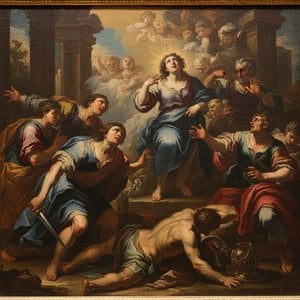 The Dramatic Flourish: Exploring Baroque Painting's Emotional Intensity & Artistic Innovations
Explore the dramatic world of Baroque painting! Discover its history, defining characteristics, iconic artists like Caravaggio & Rubens, and lasting influence on Western art. Expert insights for collectors.
From the earliest cave paintings depicting hunts to the grand religious narratives adorning Renaissance ceilings, humanity has always been captivated by storytelling through visual art. Yet, it is not merely the *story* itself that holds our attention, but rather the manner in which it is conveyed – the emotional weight, the psychological tension, and the skillful manipulation of atmosphere. Certain periods and artists have excelled at harnessing these elements, creating works that transcend simple representation and plunge us directly into the heart of the scene. The Baroque era, in particular, stands as a testament to this power, with its emphasis on dynamism, emotion, and a masterful command of light and shadow.
Chiaroscuro & Tenebrism: Mastering Light and Shadow for Emotional Impact
 Chiaroscuro & Emotional Resonance: Exploring Dramatic Light in Western Painting
Explore the captivating world of chiaroscuro & tenebrism! Discover Caravaggio's influence, Baroque masters, and the enduring power of dramatic lighting in art history. Learn about these techniques with ArtsDot.
At the heart of much of this dramatic intensity lies the technique of chiaroscuro, an Italian term meaning “light-dark.” While employed by artists throughout history, it was in the hands of masters like Caravaggio that it evolved into something truly revolutionary: tenebrism. Chiaroscuro broadly refers to the use of strong contrasts between light and dark to create depth and volume. Tenebrism, however, takes this concept to an extreme, plunging much of the canvas into darkness while spotlighting key figures or moments with a harsh, almost theatrical illumination. This isn’t simply about realism; it's about psychological impact. The sudden contrast draws the eye, heightens emotional response, and creates a sense of mystery and foreboding. Think of Rembrandt’s portraits – the faces emerging from deep shadow, their inner lives illuminated by a single source of light. Or consider Caravaggio’s “The Calling of Saint Matthew,” where the divine intervention is signaled not through radiant glory, but through a beam of light cutting through the gloom of a tavern.
Biblical Scenes and Baroque Intensity: A Focus on Ribera, Cavallino, and De Lairesse
 Samson and Delilah
Witness the dramatic intensity of Jusepe de Ribera's 'Samson and Delilah'! This Baroque masterpiece captures a biblical tale with raw realism, featuring powerful figures & evocative storytelling.
The Baroque period saw a flourishing of dramatic biblical scenes, often chosen for their inherent emotional potential. Jusepe de Ribera, known as Lo Spagnoletto, was a master of this genre. His “Samson and Delilah” is a visceral depiction of the moment of betrayal, rendered with raw realism and intense psychological tension. The figures are powerfully built, their expressions conveying both physical struggle and emotional turmoil. Similarly, Bernardo Cavallino’s “Lot and His Daughters” presents a haunting vision of desperation and moral ambiguity within a desolate landscape. He skillfully blended Caravaggio's chiaroscuro with the serene aesthetic of Murillo, creating a unique and compelling style. Beyond Italy and Spain, artists like Gérard de Lairesse explored dramatic light in their own way, exemplified by his masterpiece “Baptism of Christ,” where the divine presence is conveyed through an ethereal glow and emotive scenes.
Beyond the Canvas: Psychological Depth and Storytelling Techniques
 Jusepe de Ribera
Explore the dramatic Baroque paintings of Jusepe de Ribera (Lo Spagnoletto)! Master of tenebrism & intense realism, famed for powerful religious scenes & martyrdoms. A key Spanish artist alongside Velázquez & Zurbarán.
The power of these paintings extends beyond mere technical skill. Baroque artists were adept at understanding human psychology and using it to their advantage. They weren’t simply depicting events; they were exploring themes of faith, doubt, betrayal, and redemption. The use of gesture, expression, and composition all contributed to this narrative depth. Consider the way Ribera uses foreshortening in “Samson and Delilah” – the contorted bodies and strained muscles convey a sense of physical struggle that is almost palpable. The choice of props and setting also played a crucial role. A dimly lit tavern, as in Caravaggio’s works, suggests a world of sin and temptation, while a desolate cave landscape, like that in Cavallino's painting, evokes feelings of isolation and despair. These artists understood that the most compelling stories are not simply told, but *felt*.
The Enduring Legacy of Dramatic Composition in Western Art
The influence of Baroque dramatic composition extends far beyond the 17th century. Artists throughout history have drawn inspiration from the techniques pioneered by Caravaggio and his followers. From Rembrandt’s introspective portraits to the emotionally charged scenes of Romantic painters like Delacroix, the power of light and shadow continues to captivate audiences today. Even in contemporary art, we see echoes of this legacy – in film noir, for example, where dramatic lighting is used to create a sense of suspense and mystery. The fundamental principles remain the same: use contrast to draw the eye, evoke emotion, and tell a compelling story.
Collecting Dramatic Works: Considerations for Building a Powerful Collection
For the discerning collector, acquiring works that embody this dramatic spirit can be deeply rewarding. When considering such pieces, look beyond mere subject matter and focus on the artist’s mastery of light and shadow, their ability to convey emotion, and the overall psychological impact of the work. Authenticity is paramount, as is provenance – understanding the history of ownership adds value and context. ArtsDot
offers a curated selection of handmade oil paintings reproducing these masterpieces, allowing you to bring the power of Baroque art into your home. We provide detailed information about each artist and artwork, ensuring that you make an informed decision. Furthermore, our customization options allow you to tailor size and framing to suit your individual taste and space. Building a collection is not simply about acquiring beautiful objects; it’s about investing in stories, emotions, and the enduring legacy of artistic genius.Relaterte artikler

The Evocative Power of Warmth: Exploring Emotional Resonance in Paintings
Explore the power of warm colors in art history! Discover how masters used reds, oranges & yellows to evoke emotion. Expert insights on Baroque drama, interior design & finding your perfect palette. ArtsDot offers handmade reproductions.


Shadows of Drama: Exploring the Artistic Power & Historical Context of Tenebrism
Explore the captivating world of tenebrism! Discover Caravaggio's revolutionary techniques, its spread across Europe, & lasting influence on Baroque art. A comprehensive guide for art enthusiasts.
Chiaroscuro & Emotional Resonance: Exploring Dramatic Light in Western Painting
Explore the captivating world of chiaroscuro & tenebrism! Discover Caravaggio's influence, Baroque masters, and the enduring power of dramatic lighting in art history. Learn about these techniques with ArtsDot.

Illuminating Shadows: A Comprehensive Exploration of 17th-Century Painting – Themes, Techniques, and Enduring Legacy
Explore the captivating world of 17th-century painting! Discover Baroque masters like Rembrandt & Caravaggio, learn about chiaroscuro techniques, and delve into Dutch Golden Age realism. Expert insights for art lovers & collectors.

