
- Forsiden

- Artikler
- Beyond Representation: Exploring Emotional Resonance & Formal Innovation in Abstract Art
Beyond Representation: Exploring Emotional Resonance & Formal Innovation in Abstract Art
Innholdsfortegnelse
The Genesis of Abstraction: From Representation to Inner Vision
Abstract expressionism in the United States emerged as a distinct art movement in the aftermath of World War II and gained mainstream acceptance in the 1950s, a shift from the American social realism of the 1930s influenced by the Great Depression an...
The story of abstract art isn’t a sudden rupture with the past, but rather a gradual unfolding—a quiet rebellion against centuries of representational tradition. It began not with a rejection of beauty, but with a desire to express something beyond it; to capture inner states, spiritual truths, and emotional resonances that defied literal depiction. Artists like Wassily Kandinsky, at the dawn of the 20th century, felt constrained by the limitations of portraying the visible world. His groundbreaking works, such as *Improvisation 11* (1910), weren’t attempts to render objects, but rather explorations of color and form as independent entities—vibrant expressions of a deeply personal inner landscape. This wasn't merely aesthetic experimentation; it was a quest for a new visual language capable of conveying the intangible. The Bauhaus school further fueled this evolution, emphasizing the fundamental elements of design – line, shape, color – as powerful forces in their own right, divorced from narrative or imitation.
But the seeds of abstraction truly blossomed in the aftermath of World War II, when artists grappled with a world irrevocably changed by trauma and disillusionment. The horrors witnessed during and after the war shattered any lingering faith in traditional values and modes of representation. How could one adequately depict such devastation? How could art possibly capture the profound sense of loss and anxiety that permeated society? For a generation of American artists, abstraction offered a path forward—a way to express raw emotion, existential angst, and universal human experiences without resorting to literal imagery. This burgeoning movement found its epicenter in New York City, transforming it from a regional art hub into the global center of artistic innovation.
Color as Emotion: The Psychological Impact of Palette & Hue
 Mark Rothko
Explore Mark Rothko's (1903-1970) iconic Color Field paintings & Abstract Expressionism. Discover the emotional depth & lasting impact of this pivotal modern artist.
Color is not merely a visual element; it’s a potent psychological force, deeply intertwined with our emotions and perceptions. Master painters throughout history have intuitively understood this connection, harnessing the power of color palettes to evoke specific moods and meanings within their work. Consider the fiery intensity of reds and oranges—often associated with passion, energy, and even aggression—or the calming serenity of blues and greens, which evoke feelings of peace, tranquility, and nature. The strategic deployment of color is a subtle yet profoundly impactful art form.
Paul Klee’s work stands as a testament to this nuanced understanding. His paintings aren't simply colorful compositions; they are carefully orchestrated emotional landscapes. He layered colors with symbolic intent, creating a sense of poetic introspection and inviting viewers to delve into the depths of their own subconscious. The interplay of hues in his pieces isn’t arbitrary—it’s a deliberate attempt to evoke specific feelings and associations. Understanding these principles allows us to appreciate how artists like Klee use color not just to depict what they see, but how they feel.
Action Painting vs. Color Field: Divergent Paths to Abstract Expression
Abstract Expressionism wasn’t a monolithic style; it encompassed a diverse range of approaches, united by a shared commitment to abstract forms but diverging in their methods and expressive goals. Two primary branches emerged: Action Painting and Color Field painting, each representing a distinct path towards emotional expression.
Action Painting, perhaps the most iconic manifestation of the movement, prioritized the physical act of creation itself. Artists like Jackson Pollock famously abandoned traditional brushes and easels, instead pouring, dripping, and flinging paint onto canvases laid directly on the floor. This wasn’t about carefully planned compositions; it was about spontaneous gesture, raw energy, and the artist's direct engagement with the medium. Willem de Kooning, another key figure in this branch, employed aggressive brushstrokes and distorted forms to convey a sense of emotional intensity and psychological turmoil. In contrast, Color Field painting offered a more contemplative approach. Artists like Mark Rothko and Barnett Newman focused on large expanses of color—soft-edged rectangles or simple 'zips'—to evoke meditative moods and explore the boundaries between color and space.
Formalism and the Pursuit of Pure Aesthetics in Abstract Art
In art history, formalism is the study of art by analyzing and comparing form and style. Its discussion also includes the way objects are made and their purely visual or material aspects. In painting, formalism emphasizes compositional elements such ...
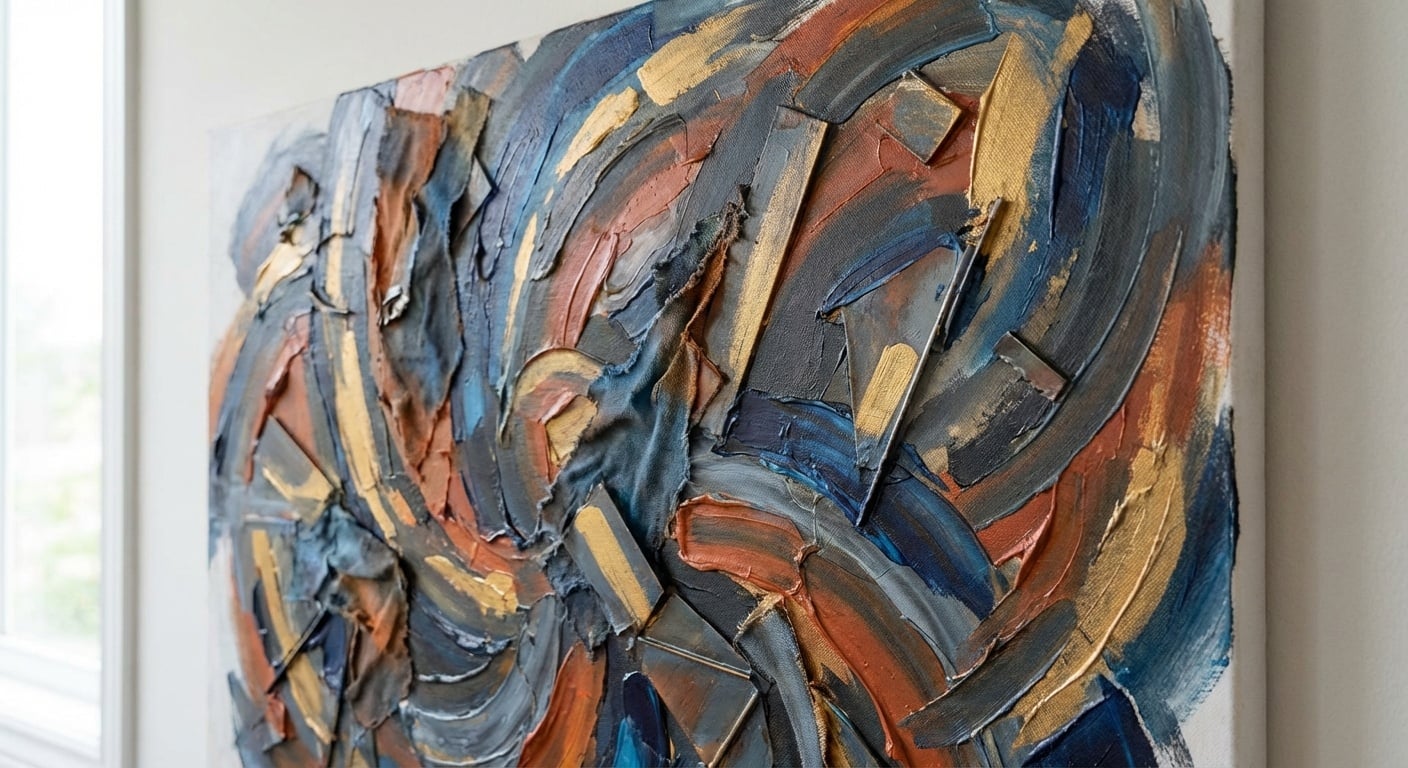
Underlying much of the abstract expressionist project was a fascination with formalism – an approach to art that prioritizes visual elements over narrative content or historical context. For many artists, the canvas itself became the arena for exploring pure aesthetics: the interplay of line, shape, color, and texture. This wasn’t about rejecting meaning altogether, but rather shifting its locus from external representation to internal experience. The brushstroke, the layering of paint, the very materiality of the work—these were not merely means to an end, but ends in themselves.
Jasper Johns’ ‘Figure’, with its thick impasto and chaotic yet controlled forms, exemplifies this focus on formal qualities. The painting doesn't depict a recognizable figure; instead, it presents a complex interplay of grey and brown hues, inviting viewers to contemplate the visual experience itself. This emphasis on form allowed artists to create works that were intensely personal and subjective, free from the constraints of traditional iconography.
Abstract Expressionism's Enduring Legacy and Influence on Contemporary Art
The impact of Abstract Expressionism reverberates through contemporary art even today. Its radical embrace of subjectivity paved the way for subsequent movements like Pop Art, Minimalism, and Post-Painterly Abstraction. The emphasis on process and materiality continues to inspire artists across a wide range of disciplines, from painting and sculpture to performance and installation art.
The movement’s legacy extends beyond aesthetics; it fundamentally altered our understanding of what art *can* be. It challenged the notion that art must represent something external, instead asserting its power as a direct expression of human emotion and experience. The spirit of experimentation and innovation fostered by Abstract Expressionism continues to drive artistic exploration in the 21st century.
Collecting Abstract Art: Insights for Discerning Investors
For collectors, abstract art presents both unique opportunities and challenges. Unlike representational works with readily identifiable subjects, assessing the value of an abstract painting requires a keen eye for quality, composition, and historical context. Look beyond surface appeal and consider the artist’s technique, their place within the broader movement, and the emotional resonance of the work.
Investing in established masters like Rothko, Pollock, and de Kooning remains a sound strategy, but emerging artists also offer exciting potential. Research provenance carefully, consult with art advisors, and prioritize works that genuinely resonate with your aesthetic sensibilities. A well-chosen abstract painting is not merely an investment; it’s a source of enduring beauty and intellectual stimulation.
At ArtsDot.com, we offer a curated selection of handmade oil paintings and museum-quality prints, allowing you to bring the masterpieces of Abstract Expressionism into your home. Our commitment to quality craftsmanship and personalized service ensures that every purchase is a rewarding experience. Explore our collection today and discover the transformative power of abstract art.
Relaterte artikler

Utover Representasjonen: Å Dekode Emosjon og Mening i Moderne Abstrakt Kunst
Utforsk dybden i moderne abstrakt kunst! Lær å dekode emosjon og mening med eksperthjelp. Finn unike malerier for din samling – museumskvalitet & personlig veiledning.


