

 Forhåndsvisning
 Kjøp trykk
 Send
Send Del med andre


 Last ned bildet
 Liknende objekter
 Røntgenundersøkelse
 Lysbildefremvisning
Venus Anatomené
 Olje på lerret
- Veggkunst
- Høyrenessansen
 1520
1520- Renessansen
 76.0 x 57.0 cm
 Scottish National Gallery of Modern Art
Titian Ramsay Peale II (1799 – 1885)
«Death of Actaeon» av Titian Ramsay Peale II er en håndmalet oljemaleri reproduksjon på lerret malt av en av våre dyktige kunstnere. Alle våre Titian Ramsay Peale II oljemalerier reproduseres med høy museeal kvalitet av våre mesterkunstnere ved hjelp av...
Scottish National Gallery of Modern Art (Edinburgh, United Kingdom)
Utforsk moderne og samtidskunst ved Scottish National Gallery of Modern Art! Oppdag mangfoldige samlinger, utstillinger og arkitektoniske mesterverk i Edinhavs to unike gallerier.
Titian Ramsay Peale II’s “Venus Anadyomene”: A Renaissance Echo in the New World
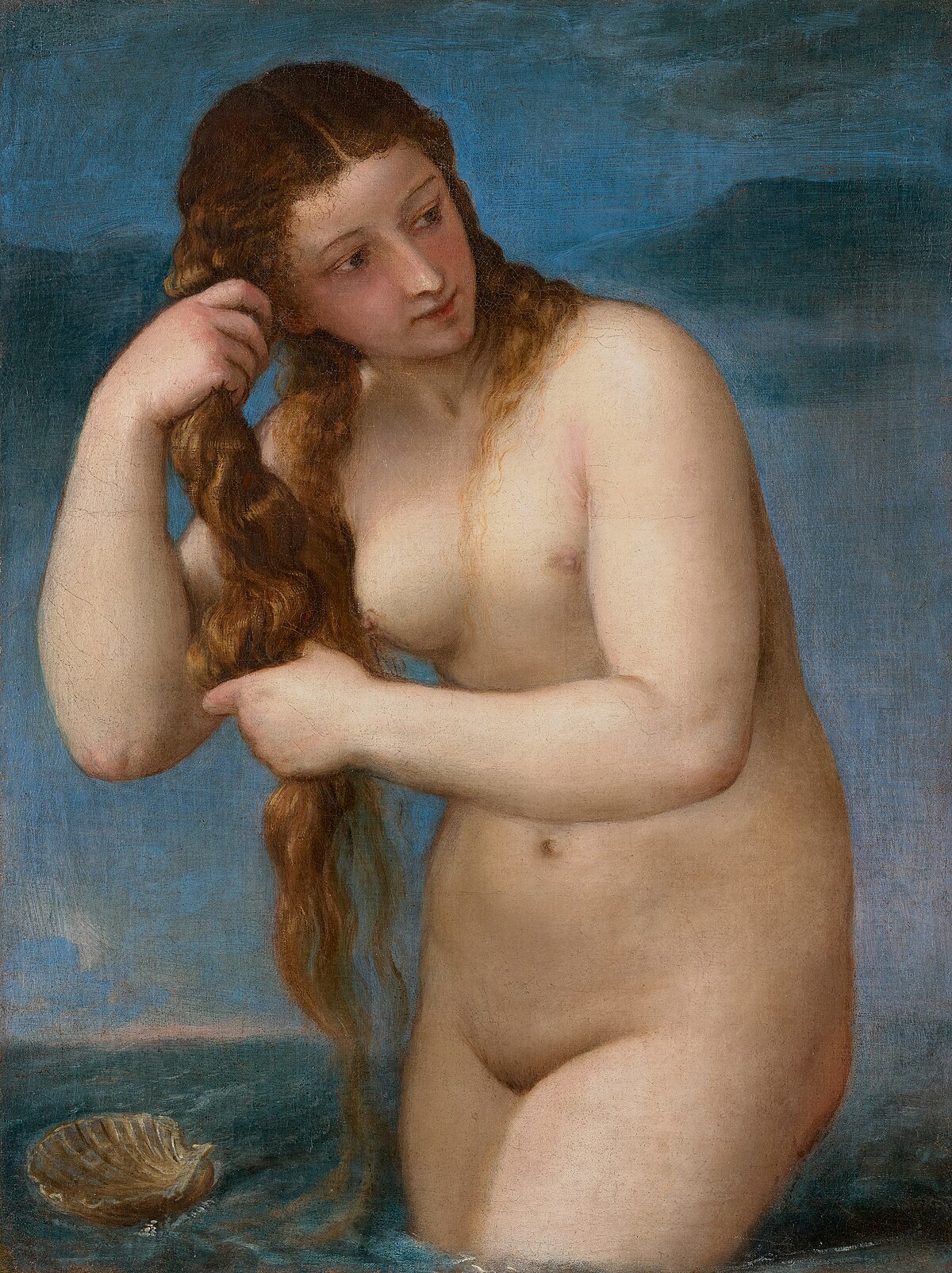
The painting "Venus Anadyomene," created by Titian Ramsay Peale II around 1520, transcends mere depiction; it constitutes a profound dialogue between classical ideals and the burgeoning spirit of American identity. Peale, deeply influenced by Venice’s artistic heritage and his father’s prominent role in establishing America's inaugural museum—a testament to both artistic expression and scientific inquiry—crafted this oil on canvas masterpiece not simply as an aesthetically pleasing image, but as a deliberate affirmation of his own skill and a reflection of the era’s fervent fascination with antiquity. Currently residing at the Scottish National Gallery of Modern Art in Edinburgh, “Venus Anadyomene” unveils a captivating glimpse into a world where Renaissance principles were being reimagined through distinctly American eyes. At its core, “Venus Anadyomene” embodies the classical narrative surrounding Venus's emergence from the sea – a potent symbol resonating with rebirth, beauty, and fecundity. Peale masterfully captures this pivotal moment, portraying Venus in a dynamic posture; her luxuriant hair cascades down her torso as she seems to contemplate its length or playfully scratch her head. This subtle gesture—a nuanced shift of focus—injects an unexpected intimacy into the scene, drawing the viewer into a private realm, imbued with vulnerability. The backdrop, delicately rendered with mountainous forms and bathed in serene azure hues, furnishes depth and context without overshadowing the central figure. Careful manipulation of light and shadow amplifies the painting’s three-dimensionality, fostering a palpable sense of realism—a characteristic highly valued during the High Renaissance.Artistic Technique and Compositional Choices
Peale's technical prowess is immediately discernible in the meticulous detail with which he renders every element within the composition. The texture of Venus’s hair, the folds of her drapery, and even subtle reflections shimmering upon the water are executed with remarkable precision. He employs *sfumato*, a technique characterized by blurring edges and achieving soft transitions between colors—a masterful choice that contributes significantly to the painting's ethereal luminescence. Notably, the composition achieves balance, guiding the viewer’s gaze naturally from Venus’s face towards her flowing hair and subsequently back to the tranquil mountainous landscape. Strategic placement of the seashell at the base of the scene subtly reinforces the mythological narrative, anchoring the image firmly within its classical origins.Symbolism and Historical Context
Beyond the immediate visual representation of Venus rising from the sea, “Venus Anadyomene” overflows with symbolic significance. The goddess herself embodies not only beauty but also love, desire, and prosperity—values held sacred in Renaissance society. The act of scratching her head can be interpreted as a gesture indicative of self-awareness or perhaps vulnerability, suggesting that even divine beings are subject to earthly concerns. Furthermore, Peale’s decision to depict Venus in this particular pose—a departure from earlier artistic conventions—mirrors the evolving aesthetic sensibilities of the period. Aligning with broader trends prioritizing psychological depth and emotional complexity within female figures, “Venus Anadyomene” stands as a landmark achievement reflecting the transformative cultural landscape of America during Peale’s lifetime. His father, Charles Willson Peale, spearheaded the establishment of America's first museum—a bold demonstration of commitment to both artistic innovation and scientific advancement – values powerfully embodied in this enduring masterpiece.A Legacy Enduring Through Reproduction
Today, “Venus Anadyomene” remains a testament to Titian Ramsay Peale II’s artistry and his indelible contribution to American art history. The Scottish National Gallery of Modern Art provides an exceptional venue for appreciating its beauty and significance within a contemporary framework. For those eager to experience the allure of this iconic painting firsthand, ArtsDot.com offers exquisitely crafted oil painting reproductions that faithfully recapture the original's nuanced detail and atmospheric ambiance. These handmade reproductions serve as tangible conduits connecting viewers to a remarkable work of art—ensuring that “Venus Anadyomene’s” legacy continues to inspire and captivate audiences for generations to come.Explore exquisite oil painting reproductions of "Venus Anadyomene" at ArtsDot.com
- Painting by 'Titian Ramsay Peale Ii' | Titian Ramsay Peale Ii:Venus Anadyomene
- Painting by 'Tiziano Vecellio (Titian)' | Tiziano Vecellio (Titian):Venus Anadyomene
- Painting by 'Titian Ramsay Peale Ii' | Titian Ramsay Peale Ii:Portrait of Ranuccio Farnese
- Painting by 'Titian Ramsay Peale Ii' | Titian Ramsay Peale Ii:The Bravo
Experience the beauty of “Venus Anadyomene” with a handmade oil painting reproduction from ArtsDot.com.
Om dette kunstverket
- Tittel: Venus Anatomené
- Kunstner: Titian Ramsay Peale II
- År: 1520
- Opprinnelige mål: 76.0 x 57.0 cm
- Format: Portrettformat
- Opphavsrettslig status: Fritatt for opphavsrett
- Utstillingssted: Scottish National Gallery of Modern Art
- Bevegelse: Høyrenessansen
- Medium: Olje på lerret
- Fargepalett: Jordnær
Kort om verket
- Notable elements: Håndklædeslukning, fletninger
- Artist: Titian Ramsay Peale II
- Artistic style: Høyrenessansen
- Title: Venus Anadyomene
- Location: Scottish National Gallery of Modern Art, Edinburgh
- Influences:
- Apelles
- Klassisk kunst
- Year: 1520
QR-kode


