Portret van Lovis Corinth

Maak kennis met de 100 beroemdste schilderijen van Lovis Corinth

Bijgewerkt in oktober 2026 · gerangschikt op basis van onze populariteitsscore (zoekopdrachten, bezoeken en bestellingen per kunstwerk) · 501 werken van Lovis Corinth in onze catalogus

Kortom

Als u één schilderij van Lovis Corinth kent, is het waarschijnlijk In het Slachthuis (1893). Wilhelmine met een bal (1915) en Portrait of the Painter Paul Eugène Gorge (1908) maken de drie werken compleet die mensen direct herkennen. Onze catalogus bevat 501 werken van Lovis Corinth. Hieronder vindt u de 100 bekendste werken, elk met het jaartal, de locatie en wat het werk zo bijzonder maakt.

1858 – 1925, Gvardejsk Expressionist painting Meeste werken: Berlinische Galerie

Begin hier: de top 10 schilderijen van Lovis Corinth

1
In het Slachthuis (1893) door Lovis Corinth

In het Slachthuis

1893 · Olieverf op canvas

Dynamische weergave van arbeid en industrie Lovis Corinth's "In het Slachthuis" is een krachtige weergave van de rauwe intensiteit en fysieke inspanning die gepaard gaat met slachten. Dit kunstwerk uit 1893 legt de bedrijvige scène van vleesverwerking vast met een dynamische compositie die de kijker rechtstreeks het hart van de actie in trekt. De centrale focus ligt op een groot stuk vlees dat door verschillende figuren wordt opgehesen, wat symbool…

3
Portrait of the Painter Paul Eugène Gorge (1908) door Lovis Corinth

Portrait of the Painter Paul Eugène Gorge

1908 · Acrylic On Canvas · Staatsgalerie Moderner Kunst, München

Lovis Corinth’s “Portrait of the Painter Paul Eugène Gorge,” completed in 1908, transcends mere representation; it embodies a pivotal moment in German Expressionism and offers a profound glimpse into Corinth’s artistic vision. Housed within the Staatsgalerie Moderner Kunst in Munich, this oil on canvas painting isn't simply a likeness of another artist—it’s a carefully constructed meditation on identity, creativity, and the complexities of human experience.

4
Self Portrait with a Glass (1907) door Lovis Corinth

Self Portrait with a Glass

1907 · Acrylic On Canvas · Nationale Galerie Praag, Praag

This reproduction captures the essence of Corinth’s artistic vision, faithfully recreating the painting’s textural richness and emotive depth. Ideal for enhancing any interior space or serving as a source of inspiration for collectors seeking artwork that speaks to the human condition.

5
Reclining Female Nude (1907) door Lovis Corinth

Reclining Female Nude

1907 · Acrylic On Canvas · Österreichische Galerie Belvedere, Wenen

Reclining Female Nude – A Study in Expressionist Sensuality The painting “Reclining Female Nude,” created by Lovis Corinth in 1907, stands as a cornerstone of Expressionism’s exploration of the human psyche. More than just a depiction of nudity—though undeniably sensual—it delves into themes of vulnerability, desire, and the confrontation with primal instincts. Corinth's masterful technique employs bold brushstrokes and vibrant color palettes to convey not merely what is seen but…

6
Portrait of Georg Brandes (1925) door Lovis Corinth

Portrait of Georg Brandes

1925 · Oil On Canvas · Koninklijk Museum voor Schone Kunsten Antwerpen, Antwerpen

Lovis Corinth’s “Portrait of Georg Brandes” stands as a cornerstone of German Expressionism, capturing not merely likeness but profound psychological insight. Painted in 1925, this monumental canvas – measuring 92 x 70 cm and currently residing at the Koninklijk Museum voor Schone Kunsten in Antwerp – transcends mere representation; it’s an immersive experience into Brandes' inner world and Corinth’s masterful artistic vision.

7
Last Self Portrait (1925) door Lovis Corinth

Last Self Portrait

1925 · Oil On Canvas · Kunsthaus Zürich, Zürich

Lovis Corinth's "Last Self Portrait," painted in 1925, isn’t merely a depiction of an individual; it’s a profound meditation on identity, mortality, and the very nature of self-awareness. Created during a period of intense personal struggle for the artist – marked by the loss of his beloved wife – the painting vibrates with a palpable sense of melancholy and introspection. Corinth, a master of capturing raw emotion through bold brushwork…

8
The Singer Frieda Halbe (1905) door Lovis Corinth

The Singer Frieda Halbe

1905 · Oil On Canvas · Österreichische Galerie Belvedere, Wenen

Lovis Corinth's "The Singer Frieda Halbe," painted in 1905, is a captivating portrait that exemplifies the artist’s transition from late Impressionism towards early Expressionism. Measuring 120 x 90 cm and currently residing at the Österreichische Galerie Belvedere in Vienna, Austria, this oil on canvas piece offers a compelling window into the artistic sensibilities of the era and showcases Corinth's remarkable ability to capture both physical likeness and emotional depth.

9
Cesare Borgia (Arthur Kraft) (1914) door Lovis Corinth

Cesare Borgia (Arthur Kraft)

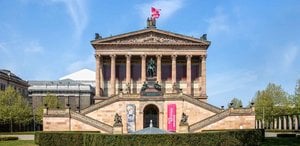
1914 · Oil On Canvas · Alte Nationalgalerie, Berlijn

In the evocative portrait Cesare Borgia (Arthur Kraft), created in 1914, we encounter a moment where history and raw emotion collide through the masterful hand of Lovis Corinth. This vertical oil painting transcends mere likeness, offering instead a theatrical and deeply psychological study of a man ensconced in the grandeur of traditional attire. The subject, captured with an intense presence, sits upon a chair that seems almost secondary to the…

10
Self-portrait in armor (1914) door Lovis Corinth

Self-portrait in armor

1914 · Oil On Canvas · Hamburger Kunsthalle, Hamburg

A man stares directly through the canvas, his gaze steady and unyielding. He is encased in metallic armor, the silvery surfaces catching a sharp light that descends from the upper left. This light carves deep shadows into the folds of his skin and the contours of the breastplate, creating a sense of immense physical volume. The armor is not a smooth, polished surface but a landscape of heavy impasto, where…

Meer favorieten van Lovis Corinth, van 11 tot 100

11Homeric Laughter, First Version (1909) door Lovis CorinthHomeric Laughter, First Version1909 · Bayerische Staatsgemäldesammlungen 12Portrait of Frau Schreiber (1902) door Lovis CorinthPortrait of Frau Schreiber1902 · Staatliche Kunstsammlungen 13Male Portrait (1879) door Lovis CorinthMale Portrait1879 · Hamburger Kunsthalle 14Large Self Portrait at the Walchensee (1924) door Lovis CorinthLarge Self Portrait at the Walchensee1924 · Bayerische Staatsgemäldesammlungen 15Paradise (1911) door Lovis CorinthParadise1911 16Cat's Breakfast (1913) door Lovis CorinthCat's Breakfast1913 17Fishermen's Cemetery at Nidden (1893) door Lovis CorinthFishermen's Cemetery at Nidden1893 · Bayerische Staatsbibliothek 18Portrait of Gerhart Hauptmann (1900) door Lovis CorinthPortrait of Gerhart Hauptmann1900 · Kunsthalle Mannheim 19Hans Rosenhagen (1899) door Lovis CorinthHans Rosenhagen1899 · Alte Nationalgalerie 20Portrait of Dr Ferdinand Mainzer (1899) door Lovis CorinthPortrait of Dr Ferdinand Mainzer1899 · National Gallery 21Reclining Nude (1899) door Lovis CorinthReclining Nude1899 · Kunsthalle Bremen 22Porträt Albert Kaumann (1910) door Lovis CorinthPorträt Albert Kaumann1910 · Hamburger Kunsthalle 23Anny Schaumberg with a doll (1886) door Lovis CorinthAnny Schaumberg with a doll1886 · Nationaal Museum in Warschau 24Italian Woman in a Yellow Chair (1912) door Lovis CorinthItalian Woman in a Yellow Chair1912 · Niedersächsisches Landesmuseum 25Male Nude (1886) door Lovis CorinthMale Nude1886 · Yale University Art Gallery 26Still Life with Chrysanthemums and Amaryllis (1922) door Lovis CorinthStill Life with Chrysanthemums and Amaryllis1922 · Österreichische Galerie Belvedere 27Study for the Painting "Die Totenklage" (1908) door Lovis CorinthStudy for the Painting "Die Totenklage"1908 · Staatliche Kunstsammlungen Dresden 28Self-Portrait (1917) door Lovis CorinthSelf-Portrait1917 · Art Institute of Chicago 29Female Nude on Studio Stool (1885) door Lovis CorinthFemale Nude on Studio Stool1885 30The Eighty-Year-Old Woman (1882) door Lovis CorinthThe Eighty-Year-Old Woman1882 31Portrait of Herr Fehleisen (1883) door Lovis CorinthPortrait of Herr Fehleisen1883 32Portrait of a Gentleman (1883) door Lovis CorinthPortrait of a Gentleman1883 33Portrait of the Aunt in Moterau (1880) door Lovis CorinthPortrait of the Aunt in Moterau1880 34Portrait of Ohm in Moterau (1880) door Lovis CorinthPortrait of Ohm in Moterau1880 35Old Italian woman (1883) door Lovis CorinthOld Italian woman1883 36Laughing Girl (1883) door Lovis CorinthLaughing Girl1883 37Portrait des the Artist Albertus Wirth (1884) door Lovis CorinthPortrait des the Artist Albertus Wirth1884 38On the Balcony in Bordighera (1912) door Lovis CorinthOn the Balcony in Bordighera1912 · Museum Folkwang 39Sunday Peace (1887) door Lovis CorinthSunday Peace1887 40Portrait of the Father Franz Heinrich Corinth with Letter (1887) door Lovis CorinthPortrait of the Father Franz Heinrich Corinth with Letter1887 · Kunstforum Ostdeutsche Galerie 41Old Woman (1887) door Lovis CorinthOld Woman1887 42Portrait of the Actor Hugo Rogall (1890) door Lovis CorinthPortrait of the Actor Hugo Rogall1890 43The old drinker (1889) door Lovis CorinthThe old drinker1889 44Woman Reading (1888) door Lovis CorinthWoman Reading1888 45Falschspieler (1887) door Lovis CorinthFalschspieler1887 46Sitting female nude (1886) door Lovis CorinthSitting female nude1886 47Parisian with a high comb (1886) door Lovis CorinthParisian with a high comb1886 48Nude Girl (1886) door Lovis CorinthNude Girl1886 · Minneapolis Institute of Art 49Portrait of a Woman with hat (1898) door Lovis CorinthPortrait of a Woman with hat1898 · Lenbachhaus 50Portrait of the Painter Karl Strathmann (1895) door Lovis CorinthPortrait of the Painter Karl Strathmann1895 51Group of Women (Friends, large version) (1904) door Lovis CorinthGroup of Women (Friends, large version)1904 · Staatliche Kunstsammlungen Dresden 52Portrait of Frau Schreiber (1901) door Lovis CorinthPortrait of Frau Schreiber1901 53Portrait of the Painter Fritz Rumpf (1901) door Lovis CorinthPortrait of the Painter Fritz Rumpf1901 · Berlinische Galerie 54Demon (1899) door Lovis CorinthDemon1899 55Black Shadows (1903) door Lovis CorinthBlack Shadows1903 · Hamburger Kunsthalle 56Portrait Ruederer (1904) door Lovis CorinthPortrait Ruederer1904 57Three graces (1904) door Lovis CorinthThree graces1904 · Bayerische Staatsgemäldesammlungen 58Portrait of Gertrud Mainzer with Lucie (1901) door Lovis CorinthPortrait of Gertrud Mainzer with Lucie1901 59Portrait of the sculptor Friedrich (1904) door Lovis CorinthPortrait of the sculptor Friedrich1904 · Fogg Museum 60Portrait of Eduard, Count Keyserling (1900) door Lovis CorinthPortrait of Eduard, Count Keyserling1900 · Neue Pinakothek 61Hymn to Michelangelo (1911) door Lovis CorinthHymn to Michelangelo1911 · Lenbachhaus 62Draft for Orpheus (1908) door Lovis CorinthDraft for Orpheus1908 · Staatliche Kunstsammlungen Dresden 63Judgment of Paris (1907) door Lovis CorinthJudgment of Paris1907 · Staatliche Kunstsammlungen Dresden 64Portrait of Frau Douglas (1909) door Lovis CorinthPortrait of Frau Douglas1909 · Museum der bildenden Künste 65Two Female Nudes (1910) door Lovis CorinthTwo Female Nudes1910 66Standing Nude (1911) door Lovis CorinthStanding Nude1911 · Niedersächsisches Landesmuseum 67The Apostle Paul (1911) door Lovis CorinthThe Apostle Paul1911 · Kunsthalle Mannheim 68Young Woman in the Greenery (1911) door Lovis CorinthYoung Woman in the Greenery1911 69Spoils of War (1911) door Lovis CorinthSpoils of War1911 · Museum Kunstpalast 70Charlotte Corinth at her Dressing Table (1911) door Lovis CorinthCharlotte Corinth at her Dressing Table1911 · Hamburger Kunsthalle 71The Capture of Samson (1907) door Lovis CorinthThe Capture of Samson1907 · Landesmuseum Mainz 72Magdalena Weeping (1911) door Lovis CorinthMagdalena Weeping1911 · Alte Nationalgalerie 73Höllenfragment [Hell, fragment] (1911) door Lovis CorinthHöllenfragment [Hell, fragment]1911 74Portrait of a man in a slouch hat (after Frans Hals) (1907) door Lovis CorinthPortrait of a man in a slouch hat (after Frans Hals)1907 · New Gallery 75Der Fanatiker (1911) door Lovis CorinthDer Fanatiker1911 · Museum Georg Schäfer 76Ice Skating Rink in The Tiergarten, Berlin (1909) door Lovis CorinthIce Skating Rink in The Tiergarten, Berlin1909 77Self Portrait as Standard Bearer (1911) door Lovis CorinthSelf Portrait as Standard Bearer1911 78The Large Martyrdom (1907) door Lovis CorinthThe Large Martyrdom1907 79Angelica with Dragon (1914) door Lovis CorinthAngelica with Dragon1914 · Berlinische Galerie 80Portrait of a Man (1914) door Lovis CorinthPortrait of a Man1914 · Berlinische Galerie 81Ariosto (1914) door Lovis CorinthAriosto1914 · Berlinische Galerie 82The Suitors Fighting Odysseus (1913) door Lovis CorinthThe Suitors Fighting Odysseus1913 · Berlinische Galerie 83Veiled Dancer (1913) door Lovis CorinthVeiled Dancer1913 84Portrait of Rudolf Rittner as "Florian Geyer" (II. Version) (1912) door Lovis CorinthPortrait of Rudolf Rittner as "Florian Geyer" (II. Version)1912 85Wilhelmine in Traditional Costume (1913) door Lovis CorinthWilhelmine in Traditional Costume1913 86Girl, Undressing (1917) door Lovis CorinthGirl, Undressing1917 87Self-Portrait in Fur and Fur Cap (1916) door Lovis CorinthSelf-Portrait in Fur and Fur Cap1916 88Portrait of a Woman (1917) door Lovis CorinthPortrait of a Woman1917 89Self-Portrait as a Nuremberg Landsknecht (1913) door Lovis CorinthSelf-Portrait as a Nuremberg Landsknecht1913 90The Hairdresser (1915) door Lovis CorinthThe Hairdresser1915 · Alte Nationalgalerie 91Thomas (1912) door Lovis CorinthThomas1912 · Yale University Art Gallery 92Homer (1914) door Lovis CorinthHomer1914 · Berlinische Galerie 93Odysseus in the battle with the suitors (1913) door Lovis CorinthOdysseus in the battle with the suitors1913 · Berlinische Galerie 94Ruggiero and His Page (1914) door Lovis CorinthRuggiero and His Page1914 · Berlinische Galerie 95The Rose – Portrait of Lucie Mainzer (1914) door Lovis CorinthThe Rose – Portrait of Lucie Mainzer1914 96Death and the Maiden (1913) door Lovis CorinthDeath and the Maiden1913 97Old Man in Armour (1915) door Lovis CorinthOld Man in Armour1915 98Grandmother and Granddaughter (1919) door Lovis CorinthGrandmother and Granddaughter1919 · Niedersächsisches Landesmuseum 99Portrait of Admiral Alfred von Tirpitz (1917) door Lovis CorinthPortrait of Admiral Alfred von Tirpitz1917 100Portrait of Frau Luther (1911) door Lovis CorinthPortrait of Frau Luther1911 · Niedersächsisches Landesmuseum

Schilderijen van Lovis Corinth, periode voor periode

Wat Lovis Corinth het meest schilderde

De vier onderwerpen die het vaakst voorkomen in deze werken, elk met zijn bekendste voorbeeld.

Waar u de schilderijen van Lovis Corinth kunt bekijken

De 8 musea met de meeste schilderijen op deze pagina.

Museum Stad Werken van Lovis Corinth Schilderijen uit deze lijst
Berlinische Galerie, BerlijnBerlinische Galerie Berlijn 10 Portrait of the Painter Fritz Rumpf, Angelica with Dragon, Portrait of a Man
Hamburger Kunsthalle, HamburgHamburger Kunsthalle Hamburg 15 Self-portrait in armor, Male Portrait, Porträt Albert Kaumann
Alte Nationalgalerie, BerlijnAlte Nationalgalerie Berlijn 20 Cesare Borgia (Arthur Kraft), Hans Rosenhagen, Magdalena Weeping
Niedersächsisches Landesmuseum, HannoverNiedersächsisches Landesmuseum Hannover 17 Italian Woman in a Yellow Chair, Standing Nude, Grandmother and Granddaughter
Staatliche Kunstsammlungen Dresden, DresdenStaatliche Kunstsammlungen Dresden Dresden 8 Study for the Painting "Die Totenklage", Group of Women (Friends, large version), Draft for Orpheus
Österreichische Galerie Belvedere, WenenÖsterreichische Galerie Belvedere Wenen 11 Reclining Female Nude, The Singer Frieda Halbe, Still Life with Chrysanthemums and Amaryllis
Lenbachhaus, MünchenLenbachhaus München 15 Portrait of a Woman with hat, Hymn to Michelangelo
Bayerische Staatsgemäldesammlungen, MünchenBayerische Staatsgemäldesammlungen München 5 Homeric Laughter, First Version, Large Self Portrait at the Walchensee

Lovis Corinth decennium voor decennium: elk een meesterwerk

Werken per decennium

Kies een decennium om het meesterwerk te bekijken.

Uw vragen over de schilderijen van Lovis Corinth

Welk schilderij van Lovis Corinth is het meest bekend?Bekijk het antwoord

De lijst wordt aangevoerd door In het Slachthuis (1893). Direct daarna volgen Wilhelmine met een bal (1915) en Portrait of the Painter Paul Eugène Gorge (1908).

Hoe oud was Lovis Corinth toen In het Slachthuis werd gemaakt?Bekijk het antwoord

35 jaar oud. Lovis Corinth werd geboren in 1858, en In het Slachthuis dateert uit 1893.

Wat zijn de 10 bekendste schilderijen van Lovis Corinth?Bekijk het antwoord

In het Slachthuis, Wilhelmine met een bal, Portrait of the Painter Paul Eugène Gorge, Self Portrait with a Glass, Reclining Female Nude, Portrait of Georg Brandes, Last Self Portrait, The Singer Frieda Halbe, Cesare Borgia (Arthur Kraft) en Self-portrait in armor. U vindt het jaar en het museum van elk werk in de bovenstaande lijst.

Hoeveel schilderijen heeft Lovis Corinth gemaakt?Bekijk het antwoord

We hebben 501 werken van Lovis Corinth in onze catalogus, gedateerd van 1879 tot 1925.

Waar kun je de beroemde schilderijen van Lovis Corinth bekijken?Bekijk het antwoord

U vindt de meeste van deze werken in Berlinische Galerie (Berlijn), Hamburger Kunsthalle (Hamburg) en Alte Nationalgalerie (Berlijn). De bovenstaande museumlijst geeft een volledig overzicht.

Wanneer schilderde Lovis Corinth de bekendste werken?Bekijk het antwoord

In 1910s, meer dan op welk ander moment dan ook: 42 van de 100 werken op deze pagina dateren uit die tijd, waarvan Wilhelmine met een bal een specifiek werk.

Welke beroemde schilderijen van Lovis Corinth kwamen als eerste en als laatste?Bekijk het antwoord

Het oudste werk hier is Male Portrait (1879); het meest recente is Portrait of Georg Brandes (1925).

Welke onderwerpen komen het meest voor in de schilderijen van Lovis Corinth?Bekijk het antwoord

Man (10), Portrait (7) en Woman (5), van de 100 werken op deze pagina.

Met welke materialen schilderde Lovis Corinth het meest?Bekijk het antwoord

Oil On Canvas, gebruikt in 24 van de 100 werken op deze pagina.

Bij welke kunststroming hoorde Lovis Corinth?Bekijk het antwoord

Expressionist painting en Expressionist landscape, zoals u kunt zien aan de werken op deze pagina.

Welke werken van Lovis Corinth zijn te zien in het Berlinische Galerie?Bekijk het antwoord

U kunt 8 van de werken op deze pagina zien in het Berlinische Galerie, Berlijn, waaronder Portrait of the Painter Fritz Rumpf, Angelica with Dragon en Portrait of a Man.

Kan ik een reproductie krijgen van een schilderij van Lovis Corinth?Bekijk het antwoord

Ja. Elk schilderij op deze pagina is verkrijgbaar als handgeschilderde olieverfreproductie of als print, in de maat die bij u past. Open simpelweg de pagina van het schilderij om te bestellen.

Maak kennis met Lovis Corinth

A Life Forged in Paint: The World of Lovis Corinth

Lovis Corinth, geboren Franz Heinrich Louis op 21 juli 1858 in de Pruisische provincie Oost-Pruisen, was een figuur die de tumultueuze overgang van de 19e naar het begin van de 20e eeuwse kunstwereld belichaamde. Zijn reis was geen van onmiddellijke erkenning, maar eerder een geleidelijke evolutie, gevoed door onvermoeid studie, diverse invloeden en uiteindelijk persoonlijke tragedie. Corinth’s vroegste jaren waren geworteld in de landelijke landschappen van zijn geboorteplaats, Tapiau, waar zijn vader als leerlooier werkte. Deze vroege blootstelling aan de fysieke arbeid en de ruwe schoonheid van de natuur zou subtiel doorschemeren in zijn latere werk, zelfs midden in meer verfijnde stijlinvloeden. Hij begon aanvankelijk zijn studie aan de Academie van Königsberg in 1876, maar realiseerde zich snel dat academische traditie alleen niet aan zijn artistieke ambities zou voldoen. Een periode van reizen volgde, die hem naar München, Antwerpen en uiteindelijk Parijs leidde – elk stadje als een cruciale tussenstap in zijn ontwikkeling. In München absorbeerde hij de nauwkeurige realisme gepromoot door Ludwig von Löfftz, waardoor zijn waarnemingsvaardigheden werden verfijnd en zijn techniek werd beheerst. Antwerpen introduceerde hem aan de dramatische Barok intensiteit van Rubens, terwijl Parijs hem blootstelde aan de opkomende Impressionistische beweging, hoewel zijn eerste reactie aanvankelijk een terughoudende observatie was in plaats van onmiddellijke omarming.

From Naturalism to a Synthesis of Styles

Corinth’s artistieke ontwikkeling werd niet gekenmerkt door snelle revoluties, maar door een geleidelijke assimilatie en synthese van diverse invloeden. Zijn vroege werk leunde zwaar op naturalisme, weerspiegelend de heersende academische normen van die tijd. Schilderingen zoals “In the Slaughterhouse” (1878), met zijn onverbogen weergave van dierlijke kadavers, tonen dit toewijding aan representatie, toch verschijnen zelfs hier al een opkomende emotionele intensiteit. Het onderwerp zelf – gruwelijk en visceraal – hint naar een bereidheid om ongemakkelijke waarheden te confronteren, een kenmerk dat later in zijn werk steeds prominenter zou worden. Zijn tijd doorgebracht met het bestuderen van de oude meesters, met name Rubens, instilleddeed hem een liefde voor dynamische composities en expressieve penseelstreken. Echter, zijn blootstelling aan Impressionisme – aanvankelijk bekeken met scepsis – bleek uiteindelijk transformatief te zijn. Hij nam de gebroken kleur en vluchtige lichteffecten van Monet of Renoir niet simpelweg over; in plaats daarvan integreerde hij deze elementen in zijn eigen unieke visie, waardoor een stijl ontstond die impressionistische levendigheid met een Duits karakter combineerde. Deze synthese zou uiteindelijk hem positioneren als een brug tussen Impressionisme en Expressionisme, twee bewegingen die het artistieke landschap van het begin van de 20e eeuw bepaalden.

A Master of Portraiture and Landscape

Hoewel Corinth verschillende genres door zijn carrière verkende – waaronder biblieke scènes en mythologische onderwerpen – is hij vooral herinnerd als een meester in portretten en landschappen. Zijn portretten waren niet alleen bedoeld om fysieke gelijkenis vast te leggen; het was een poging om de psychologische dieptes van zijn onderwerpen te doorbreken, hun innerlijke levens te onthullen door subtiele gebaren, expressieve ogen en zorgvuldig overwogen composities. Hij bezat een opmerkelijke vaardigheid om karakter en emotie met verbazingwekkende beknoptheid over te brengen. Vergelijkbaar hierbij waren zijn landschappen niet simpelweg weergaven van landschapsschilderingen, maar emotionele reacties op de natuur. De Walchensee-regio in het Beierse Alpengebergte werd een bijzonder bron van inspiratie, die hem een schat aan motieven opleverde die hij herhaaldelijk verkende in zijn latere jaren. Deze schilderijen worden gekenmerkt door hun levendige kleuren, dynamische penseelstreken en een gevoel van ruwe energie dat Corinth’s eigen passie voor de natuur weerspiegelt. Hij was niet geïnteresseerd in idyllische representaties; in plaats daarvan zocht hij om de ongeregelde kracht en inherente drama van het landschap vast te leggen.

Tragedy, Resilience and Lasting Legacy

Een cruciale gebeurtenis in Corinth’s leven – en waarschijnlijk ook in zijn artistieke ontwikkeling – was een beroerte die hij in december 1911 leed. De verlamming die dit veroorzaakte aan de linkerzijde van zijn lichaam bedreigde zijn carrière in feite te beëindigen. Toezichmend met onwrikbare vastberadenheid en het steunende handje van zijn vrouw, Charlotte Berend-Corinth, leerde hij opnieuw schilderen, zich aanpassend aan zijn fysieke beperkingen en een nog expressievere stijl ontwikkelend. Deze periode markeerde een keerpunt in zijn werk, omdat zijn schilderijen steeds krachtiger, gestileerder en emotioneel geladen werden. Hij omarmde een losser penseel en intensere kleuren, anticiperend op de stijlinnovaties die de Expressionistische beweging zouden definiëren. Corinth’s invloed strekte zich uit verder dan zijn eigen schilderkunst; hij was ook een gerespecteerde leraar en schrijver over kunst, waarbij hij essays publiceerde zoals “On Learning to Paint” in 1908, die inzichten bood in zijn artistieke filosofie en techniek. Hij diende als president van de Berlijnse Secessie van 1915 tot aan zijn dood in 1925, progressieve kunstideeën promootend en een levendige creatieve gemeenschap bevorderend. Lovis Corinth’s nalatenschap ligt niet alleen in zijn opmerkelijke oeuvre, maar ook in zijn onwrikbare toewijding aan artistieke integriteit en zijn vermogen om persoonlijke tragedie te transformeren in diepgaande artistieke expressie. Hij blijft een sleutelfiguur in de geschiedenis van Duitse kunst, een meester die twee tijdperken verbond en een onuitwisbare stempel op generaties kunstenaars achterliet.

Alle 501 werken van Lovis Corinth →